
Siamese Cat
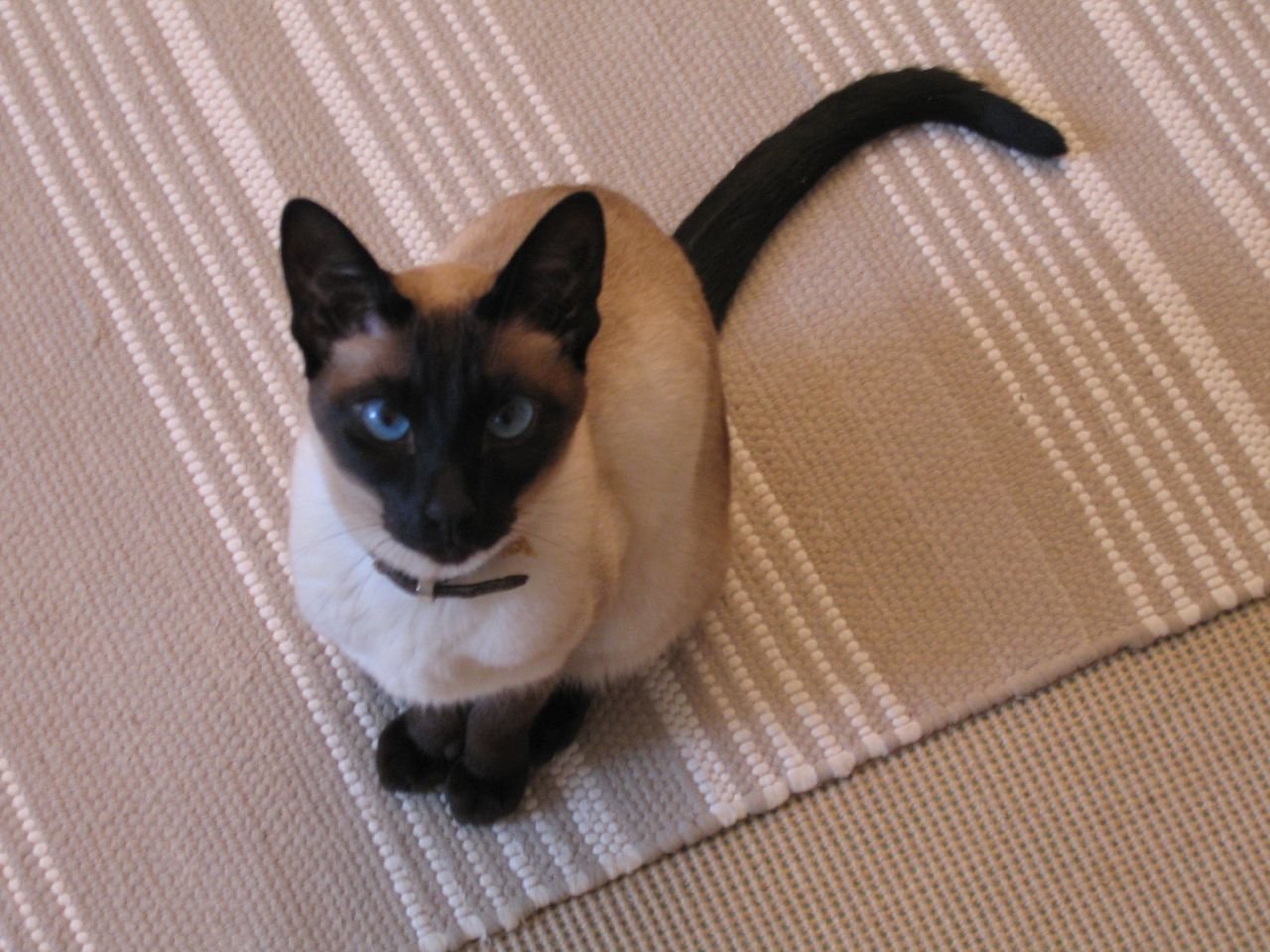
Siamese cats captivate attention with their striking blue eyes, distinctive color points, and elegant bodies. These remarkable felines boast a rich heritage dating back centuries, making them one of the world’s most recognized and cherished cat breeds. Their unmistakable appearance is matched only by their charismatic personality and expressive nature.
Understanding Siamese cat personality is essential for potential owners, as these intelligent creatures form deep bonds with their humans and communicate through their famous vocalization. Beyond their social behavior, this comprehensive guide explores everything from Siamese cat lifespan (typically 12-20 years) to ideal Siamese cat weight, common health concerns, and characteristic behaviors. Whether you’re considering adding this magnificent breed to your family or simply fascinated by these blue-eyed beauties, this article provides all the essential information you need to appreciate what makes Siamese cats truly special.
The Royal Origins of Siamese Cats
The regal Siamese cat traces its ancestry to the ancient kingdom of Siam, now known as Thailand. These majestic felines stand among the oldest naturally developed cat breeds in the world, with their distinctive appearance and noble demeanor reflecting centuries of reverence and careful breeding.
From ancient Thailand to modern homes
The earliest documentation of Siamese cats appears in a collection of ancient manuscripts called the Tamra Maew (“The Cat-Book Poems”), dating between the 14th and 18th centuries . These historical texts, now preserved in Thailand’s National Library, contain some of the first known depictions and descriptions of cats with the distinctive pointed pattern characteristic of the Siamese breed.
During this era, Siamese cats were exclusively associated with Thai royalty and nobility. They were highly esteemed companions in the royal courts and considered symbols of prosperity . For centuries, these cats were so treasured that they rarely left the kingdom, remaining a closely guarded treasure of Siam.
The breed’s name itself reflects its geographic origin—”Siamese” referring to cats from Siam, the country’s official name until 1939 . Their deep connection to Thai culture is evident in the many references to them in ancient writings, where they were often described as being “as rare as gold” .
Despite their long history in Thailand, the precise age of the breed remains somewhat mysterious. However, most evidence points to the Siamese being descendants of the Wichien Maat (or Thai breed), making them one of the oldest known cat breeds with documented lineage .
The legend of temple guardians
Fascinating legends surround these elegant felines. According to Thai folklore, Siamese cats served as sacred temple guardians, entrusted with protecting valuable religious artifacts . Their vigilant nature and intelligent demeanor made them ideal protectors of sacred spaces.
One enchanting legend explains their distinctive physical traits. The story tells of temple cats who were tasked with guarding a precious golden vase. The cats stared at the treasure with such intensity that their eyes became permanently crossed, and they curled their tails around the vase so tightly that they developed kinked tails . While modern breeding has eliminated these traits as standard features, the legend persists as a charming explanation for characteristics seen in early Siamese cats.
Perhaps most intriguing is the spiritual significance attached to these cats. In ancient Siamese belief, when a royal or noble person died, their soul would enter the body of a Siamese cat . These cats would then be taken to temples where they lived in luxury, served the finest foods, and adorned with jewelry . Relatives would visit these temple cats, finding comfort in the belief that their departed loved ones lived on through these sacred animals .
How they reached the West
The Siamese cat’s journey to Western households began in the late 19th century. The first documented Siamese to reach the United States arrived in 1878, a cat appropriately named “Siam” who was given as a gift to Lucy Hayes, wife of President Rutherford B. Hayes . This diplomatic gift from an American consul stationed in Bangkok marked the beginning of America’s fascination with the breed .
Shortly afterward, in 1884, the British Consul-General in Bangkok, Edward Blencowe Gould, brought a breeding pair named Pho and Mia to England as a gift for his sister . This pair produced three kittens—Duen Ngai, Kalohom, and Khromata—who made their public debut at London’s Crystal Palace Show in 1885 . Although these kittens unfortunately died shortly after the exhibition, they created such a sensation that more Siamese cats were soon imported to Europe.
The growing popularity of the breed led to the establishment of the first cat fanciers club dedicated to Siamese cats in the United Kingdom by 1902 . By 1906, the Cat Fanciers’ Association in the United States had officially recognized the breed . From these royal beginnings, the Siamese cat transformed from an exotic rarity to one of the world’s most beloved and recognizable cat breeds.
Traditional vs Modern Siamese: What’s the Difference?
Looking at modern Siamese cats alongside their traditional counterparts reveals a fascinating study in deliberate breeding evolution. Many cat enthusiasts are surprised to learn that today’s sleek, angular Siamese bears little resemblance to the breed that first captivated Western audiences over a century ago. This dramatic transformation reflects changing esthetic preferences and showcases how human intervention has reshaped one of the world’s most recognizable cat breeds.
Old-style (Thai) vs wedge-head Siamese
The differences between traditional and modern Siamese cats are immediately apparent in their physical appearance. Traditional Siamese, often called “Thai” or “applehead” Siamese, feature rounded heads, plump cheeks, and moderately proportioned bodies. Their faces display a gentle apple-like curve with a slight dip in the profile rather than the sharp angles seen in contemporary varieties. These cats typically have broader chests, sturdier bone structure, and more moderate body types—neither especially slender nor particularly heavy.
In contrast, modern or “wedge-head” Siamese possess extremely triangular faces that create a distinctive profile. Their heads form perfect triangles from the tip of the nose to the tips of the ears when viewed from the front. These contemporary Siamese sport notably elongated bodies, extremely slim legs, long necks, and almond-shaped eyes that slant toward the ears. Their ears themselves are dramatically larger, set wider apart, and positioned more toward the side of the head compared to traditional varieties.
The differences extend beyond facial structure to overall body composition. Traditional Siamese maintain a moderate body weight, balancing athleticism with substance, whereas modern Siamese tend to be significantly lighter and more svelte, with virtually no body fat and highly defined musculature visible beneath their close-lying coats.
How breeding shaped their look
The dramatic transformation from traditional to modern Siamese didn’t happen overnight but resulted from decades of selective breeding following the breed’s introduction to Western countries. Initially, early imported Siamese cats resembled their Thai ancestors—sturdy cats with round faces and moderate features. Throughout the mid-20th century, specifically from the 1950s through the 1970s, Western breeders began deliberately selecting for increasingly exaggerated features.
This period marked a significant shift in breed standards as judges and fanciers developed preferences for more extreme characteristics. Breeders consistently selected cats with longer, more angular heads, larger ears, thinner bodies, and more elongated limbs. Each generation became progressively more stylized until, by the 1980s, the modern “extreme” or “hyper-typed” Siamese had become standardized in cat shows across North America and Europe.
Interestingly, this selective breeding not only changed the Siamese’s appearance but consequently affected certain aspects of health and behavior as well. The more extreme head shape in modern variants occasionally correlates with dental issues due to altered jaw structure, and some breeders report subtle differences in vocalization patterns between the traditional and modern types.
Why both types still exist today
The continued existence of both traditional and modern Siamese cats reflects the divided preferences among enthusiasts and the resilience of dedicated preservation breeders. As the show-ring Siamese evolved toward its current extreme form, a significant contingent of breeders and owners maintained their commitment to preserving the original, moderate type that first captivated Western audiences.
In recent decades, there has been a noticeable resurgence of interest in traditional Siamese. This revival stems partly from concerns about potential health issues in extremely typed cats and partly from esthetic preferences for the more moderate appearance. Many people find the rounder, more approachable face of the traditional Siamese appealing and reminiscent of the cats they remember from childhood.
Today’s cat fancy has made room for both varieties. Various registries now recognize the traditional type under names like “Thai,” “Old-style Siamese,” or “Classic Siamese,” allowing these cats to compete in their own classes rather than against their modern counterparts. Meanwhile, the contemporary wedge-headed Siamese continues to enjoy popularity among those who appreciate its striking, elegant appearance.
For potential owners, the choice between traditional and modern Siamese often comes down to esthetic preference, as both types generally exhibit the breed’s signature affectionate personality, intelligence, and vocal nature. Nonetheless, first-time Siamese owners sometimes find the traditional variant slightly more robust and potentially easier to care for, particularly in families with children.
Recognizing a Siamese: Appearance and Coat Colors
The unmistakable pointed pattern of Siamese cats makes them instantly recognizable even to casual observers. Their distinctive appearance combines elegant body structure with a fascinating color distribution that sets them apart from virtually all other cat breeds. Understanding the unique characteristics of the Siamese helps both cat fanciers and potential owners appreciate the breed’s special qualities.
Point coloration and how it works
First and foremost, the Siamese’s signature feature—its colored points—results from a fascinating genetic peculiarity called temperature-sensitive albinism. This unique form of partial albinism stems from a mutation in tyrosinase, an enzyme essential for melanin production . What makes this enzyme extraordinary is its heat sensitivity; it simply fails to function at normal body temperatures but activates in cooler areas below 33°C (91.4°F) .
This temperature-dependent mechanism explains why Siamese cats develop darker coloration only on their extremities—face, ears, paws, and tail—where body temperature naturally runs slightly cooler. The central portions of their bodies, maintaining higher temperatures, inhibit the enzyme’s activity, resulting in lighter coloration.
Remarkably, all Siamese kittens are born completely white or cream-colored . The point pattern gradually develops during their first few weeks of life, with color appearing first in the cooler regions of their tiny bodies. By approximately four weeks of age, their points become sufficiently distinguishable to identify which color variety they are . This color development continues throughout life, with many Siamese darkening as they age .
Additionally, environmental temperature plays a notable role in a Siamese’s appearance. Cats living in warmer climates typically develop lighter coats and less pronounced points than those in cooler regions . This environmental responsiveness explains why the same cat might appear slightly different depending on the season.
Common coat colors: seal, blue, lilac, chocolate
The four classic Siamese color varieties officially recognized by major cat associations each have distinctive characteristics:
- Seal Point: The original and most recognized Siamese color, featuring deep brown—almost black—points contrasting against a cream or fawn body . Seal points have the darkest body color of all Siamese varieties, which tends to darken further with age . Their nose leather and paw pads match their point color .
- Chocolate Point: These cats display warm milk-chocolate colored points against an ivory-white body . Distinctly lighter than seal points, chocolate points maintain their light body color throughout life . Their nose leather and paw pads have a characteristic cinnamon-pink hue .
- Blue Point: Exhibiting slate-blue to gray points against a glacial white body with bluish tint . Blue points represent a diluted version of the seal point coloration . These cats have distinctly cool-toned coats compared to other varieties, with slate-colored nose leather and paw pads .
- Lilac Point: The most dilute and delicate color, featuring pinkish-gray points against a glacial white body . Sometimes called “frost points” in America , lilac points maintain the lightest body color of all varieties even as they age . Their nose leather and paw pads show a soft lavender-pink color .
Interestingly, color inheritance in Siamese follows specific genetic patterns. Both seal and chocolate are dominant over their dilute counterparts (blue and lilac), and specific breeding combinations are required to produce certain colors . For example, both parents must carry the dilute gene to produce blue or lilac kittens .
Eye color and body shape
Perhaps equally famous as their coat pattern are the Siamese’s striking eyes. All purebred Siamese cats possess deep, vivid blue eyes . Unlike most other cat breeds whose kittens are born with blue eyes that later change color, the Siamese’s eyes remain persistently blue throughout their lives . The eyes typically have an almond shape, appearing slightly slanted toward the nose in harmony with the cat’s facial structure .
The modern Siamese body type is distinctively svelte and elegant. Their medium-sized frame features long, tapering lines with fine bones and firm muscles . The body appears tubular and elongated, with shoulders and hips continuing the same sleek lines . Their legs are slim yet proportional to their bodies, complemented by a long, slender, whip-like tail .
Furthermore, the Siamese head forms a distinctive wedge shape, creating a triangle from the tip of the nose to each ear tip . Their large ears are positioned more toward the sides of the head, adding to their unique profile . This elegant combination of features culminates in one of the most recognizable silhouettes in the feline world.
Personality Traits That Set Them Apart
Beyond their striking appearance, what truly makes Siamese cats extraordinary is their vibrant personality. Unlike many cat breeds that maintain an air of aloofness, Siamese cats possess a distinctive character that often surprises first-time owners with its depth and complexity.
Affectionate and people-oriented
Siamese cats form exceptionally strong bonds with their humans, often described as “dog-like” in their devotion. They typically attach deeply to one particular person, following them from room to room like a shadow . This breed doesn’t merely tolerate human company—they actively seek it out and become genuinely distressed when denied attention.
Their affection manifests in numerous charming ways. A Siamese will show love through slow blinking (cat kisses), cheek rubbing, head bunting, and wrapping their tail around your leg . These cats aren’t content to simply be near you—they want to be on you, preferably draped across your shoulders or curled into your lap the moment you sit down .
Interestingly, this extreme attachment comes with a caveat: Siamese cats frequently suffer from separation anxiety when left alone for extended periods . Their dependent nature makes them ideal for households where someone is typically present throughout the day. Alternatively, adopting two Siamese cats can help alleviate loneliness, as they readily form bonds with feline companions .
Vocal and expressive
Perhaps the most famous personality trait of Siamese cats is their extraordinary vocalization. Their distinctive, low-pitched meows—sometimes called “meezers”—sound almost conversational . A Siamese rarely makes noise without purpose; their vocalizations range from gentle chirps to dramatic yowls, each with specific communicative intent .
Their expressive nature extends beyond mere noise. Siamese cats are remarkably adept at communicating their needs, desires, and displeasures through body language, facial expressions, and of course, their signature loud voice. As one owner aptly put it, “If a Siamese wants something, they won’t be shy about letting you know” .
This communicative disposition reflects their exceptional intelligence. Siamese cats rank among the smartest breeds, capable of learning tricks, opening doors, turning on faucets, and even manipulating television sets . Their cleverness, coupled with high energy levels, means they require substantial mental and physical stimulation to prevent boredom.
Do they get along with kids and pets?
Surprisingly for such a seemingly sophisticated breed, Siamese cats typically excel in busy households. They generally form wonderful relationships with children, particularly those who understand proper handling . Their playful, energetic nature makes them perfect playmates, while their sociable temperament means they rarely hide away during family activities.
“One of my favorite stories came from a family in York,” recounts a breeder. “Their seven-year-old son had been desperate for a cat, and their chocolate point Siamese, Mabel, quickly became his best friend. She followed him to the school gate every morning (on a lead), and waited by the door every afternoon” . This exemplifies the profound connections Siamese can form with youngsters.
Regarding other pets, Siamese cats often develop strong bonds with dogs, especially when introduced gradually. Their social, high-energy personality frequently matches a dog’s playfulness . Some Siamese even adopt dog-like behaviors, sitting for treats or playing fetch .
For multi-pet households, the key lies in proper introductions and respect for boundaries. While incredibly social, Siamese cats expect to be the center of attention and may display slight jealousy if they feel overlooked .
Feeding Your Siamese: Diet and Nutrition Tips
Proper nutrition forms the cornerstone of health for the athletic and energetic Siamese cat. Their lean, muscular bodies require specific dietary attention to support both their high activity levels and their unique physiological needs. Finding the right balance in their diet isn’t just about maintaining their sleek physique—it’s about promoting optimal health throughout their potentially long lifespan.
Wet vs dry food: what’s best?
The debate between wet and dry cat food holds particular importance for Siamese cats. Wet food contains approximately 70-80% water compared to dry food’s mere 10% moisture content . This significant difference matters primarily because many cats don’t naturally drink enough water to stay properly hydrated.
Wet food offers several advantages for Siamese cats. First, it helps maintain hydration, reducing the likelihood of kidney issues and urinary tract problems—conditions that can affect cats with inadequate water intake. Second, wet food typically contains higher protein content with fewer carbohydrates, aligning better with the natural carnivorous diet of felines . Third, its rich aroma appeals strongly to cats, whose sense of smell is significantly more developed than their sense of taste .
Conversely, dry food has its benefits too. It typically supports dental health through its mild abrasive surface that helps control tartar buildup . Additionally, it can sit in a bowl all day without spoiling, allowing for the natural grazing behavior many cats prefer .
Essentially, a combination of both food types often provides the best solution. This “mixed feeding” approach respects cats’ natural feeding behavior while offering the nutritional advantages of both food types .
Nutritional needs by age
A Siamese cat’s nutritional requirements evolve throughout their life. Kittens experience rapid growth and need approximately 250-280 calories daily between 8 weeks and 6 months . This developmental stage requires high-quality protein and healthy fats, ideally delivered through 3-4 small meals daily .
Adult Siamese cats thrive on consistency—typically two meals daily, one morning and one evening . An average healthy adult Siamese (8-10 pounds) needs roughly 200-240 calories per day . Quality protein should remain the cornerstone of their diet, ideally from real meat or fish sources .
Senior Siamese (over 10 years) face changing metabolism and nutritional needs. They typically require fewer calories—approximately 160-200 daily —but need highly digestible protein sources that won’t strain aging kidneys. Senior formulas containing joint-supporting nutrients like glucosamine become increasingly beneficial as they age .
Avoiding obesity in active cats
Despite their naturally athletic build, Siamese cats can become overweight, particularly when living exclusively indoors . Obesity shortens cats’ lives and contributes to chronic inflammatory pain . Fortunately, several effective strategies can help maintain a Siamese’s ideal weight:
- Portion control – Measure food precisely rather than free-feeding, as Siamese can overeat when bored
- Scheduled mealtimes – Establishing consistent feeding times minimizes begging and helps regulate metabolism
- Interactive feeding – Puzzle feeders and food-dispensing toys slow eating pace while providing mental stimulation
- Regular activity – Increase both indoor and outdoor playtime to burn calories and maintain muscle mass
- Monthly weight checks – Regular weigh-ins help identify concerning trends early
For most Siamese, the ideal weight ranges from 3.5-5.5 kg (7.7-12.1 pounds), with males typically heavier than females . A high-quality diet rich in animal protein will help your Siamese feel satisfied while supporting their lean musculature .
Remember that treats, though hard to resist giving to such charming cats, should comprise no more than 10% of your Siamese’s daily calorie intake . With thoughtful nutrition and proper activity, your Siamese can maintain their distinctive sleek physique throughout their life.
Training and Enrichment for Smart Cats
Intellectual stimulation proves just as vital as physical care for the remarkably intelligent Siamese breed. These cats possess minds that crave engagement, making appropriate training and enrichment essential components of responsible ownership.
Why Siamese cats need mental stimulation
Indoor Siamese cats frequently experience chronic boredom when confined to repetitive environments with little to challenge their active minds. This understimulation takes both mental and physical tolls that many owners fail to recognize. The lack of mental exercise can lead to anxiety and depression, often manifesting in destructive behaviors. Moreover, the stress from inadequate stimulation can contribute to serious health conditions including obesity, type 2 diabetes, and chronic urinary tract infections.
A bored Siamese will quickly become destructive—scratching furniture, chewing wires, or constantly meowing for attention. In fact, many behavioral issues stem directly from insufficient mental exercise. These intelligent cats need both physical activity and cognitive challenges to maintain their overall wellbeing.
Clicker training and leash walking
Clicker training provides an excellent solution for mental stimulation while simultaneously strengthening the bond between Siamese cats and their owners. This training method uses a handheld device that makes a distinct clicking sound when pressed, marking the exact moment a cat performs a desired behavior.
The process begins by creating an association between the click sound and rewards—typically treats. Once established, the clicker becomes a powerful tool for teaching various behaviors from basic commands like “sit” to more complex tricks. Siamese cats, given their intelligence, often excel at clicker training compared to other breeds.
Leash training represents another valuable skill for Siamese cats. The process requires patience and typically involves several steps:
- Introduce the harness indoors without the leash, rewarding your cat only while wearing it
- Attach the leash and allow your cat to walk freely with it hanging loose
- Let your cat experience slight leash tension in controlled indoor settings
- Practice walking indoors with gentle guidance before attempting outdoor adventures
Most Siamese cats can learn leash walking within 2-3 months with consistent practice. Short, positive training sessions yield better results than lengthy, frustrating ones.
Fun games and puzzle toys
Puzzle feeders provide excellent mental workouts while slowing eating pace, making them ideal for Siamese cats. These devices require cats to manipulate parts to release food, satisfying their natural hunting and problem-solving instincts. Instead of simply offering meals in bowls, consider using puzzle feeders to make eating an engaging activity.
Additional enrichment ideas include:
- Treasure hunts with hidden treats around the house
- Interactive toys like feather wands that simulate prey
- Cat trees and vertical spaces for climbing and exploration
- DIY enrichment using household items like cardboard rolls or paper bags
Home-made puzzles can be as effective as store-bought options—a simple cardboard box with holes cut for paws to fish out toys provides hours of entertainment. These activities not only prevent boredom but also help reduce unwanted behaviors by channeling energy appropriately.
Ultimately, investing time in training and enrichment addresses the Siamese cat’s fundamental needs for both mental and physical stimulation, resulting in a happier, healthier, and more well-adjusted companion.
Health Concerns to Watch Out For
Vigilant healthcare represents a crucial aspect of Siamese cat ownership, as these elegant felines face several breed-specific health challenges. Understanding these conditions helps owners provide proactive care throughout their cat’s life.
Common genetic issues: PRA, asthma, amyloidosis
Progressive Retinal Atrophy (PRA) affects many Siamese cats, causing gradual blindness as photoreceptor cells in the retina deteriorate. This genetic condition typically manifests between one and two years of age, beginning with night blindness before progressing to complete vision loss .
Respiratory problems, primarily asthma and bronchial disease, appear frequently in this breed. Siamese cats may develop coughing, wheezing, and labored breathing when affected . Their brachycephalic facial structure sometimes contributes to these respiratory challenges .
Perhaps most concerning is amyloidosis—a condition where abnormal proteins build up in vital organs like the liver and kidneys. Symptoms include weight loss, lethargy, jaundice, and excessive drinking or urination . This serious condition can lead to organ failure if left untreated .
Dental care and regular vet visits
Dental issues affect approximately 85% of cats visiting veterinarians . Siamese cats seem particularly susceptible to gingivitis and periodontal disease, often developing problems between 7-10 months of age .
Regular tooth brushing using enzymatic cat toothpaste (never human toothpaste) helps prevent tartar buildup . Dental treats and specialized diets can supplement—but not replace—brushing .
Professional veterinary examinations remain essential, ideally annually for adults and twice yearly for seniors .
Signs your Siamese may be unwell
Watch for these warning indicators:
- Persistent bad breath (beyond normal cat breath)
- Red, swollen, or bleeding gums
- Changes in eating habits or weight loss
- Excessive drinking or urination
- Difficulty breathing or wheezing
- Lethargy or behavioral changes
Early intervention often leads to better outcomes, making prompt veterinary attention vital whenever concerning symptoms appear .
Grooming and Daily Care Essentials
Caring for a Siamese cat’s physical needs involves minimal maintenance compared to many other breeds, making them ideal companions for busy owners who still want a stylish feline friend.
Brushing and coat maintenance
Fortunately, Siamese cats have short, fine coats that require minimal grooming. A weekly brushing session with a soft bristle brush or grooming glove helps remove loose hair and distribute natural oils for a glossy appearance. Siamese typically shed less than other breeds, experiencing just two seasonal molts annually – spring (losing winter coat) and autumn (growing it back) . For their sensitive skin, less is more – bathing should only happen when visibly necessary using cat-specific gentle shampoos .
Ear, eye, and dental hygiene
Monthly ear checks prevent wax buildup and potential infections. Use a vet-approved ear cleaner and cotton ball to gently clean only the outer ear . For their almond eyes, wiping away any discharge with a damp cloth prevents tear staining . Dental care demands special attention as Siamese are prone to gingivitis starting between 7-10 months of age . Brush their teeth 2-3 times weekly using cat-safe toothpaste .
Creating a safe and stimulating home
Indeed, Siamese cats’ curious nature necessitates a properly cat-proofed environment. Remove toxic plants, secure windows, and hide electrical cords . Primarily, provide vertical spaces – cat trees, perches, and shelves satisfy their love of heights . These “Velcro cats” thrive on interaction, so interactive toys and puzzle feeders prevent boredom between play sessions .
Conclusion
Siamese cats undoubtedly stand among the most extraordinary feline companions available to modern pet owners. Their journey from Thai temple guardians to beloved household pets spans centuries, yet their distinctive characteristics remain as captivating as ever. The striking blue eyes, pointed coloration, and sleek physique make these cats instantly recognizable, whether you prefer the rounder traditional Thai style or the angular modern variety.
Beyond their stunning appearance, however, Siamese cats truly shine through their remarkable personality. Their vocal, affectionate nature creates deep bonds with their human families, while their intelligence demands proper mental stimulation through training and enrichment activities. Though relatively low-maintenance regarding grooming, Siamese owners should nevertheless remain vigilant about potential health concerns, particularly genetic issues like PRA, asthma, and amyloidosis.
Proper nutrition proves essential for maintaining the Siamese’s sleek physique, with a combination of quality wet and dry food typically offering the best balance. Additionally, regular veterinary care, especially dental maintenance, helps ensure these cats enjoy their potentially long 12-20 year lifespan.
First-time Siamese owners might feel surprised by how different these cats behave compared to more independent breeds. Their dog-like devotion, constant communication, and need for companionship require owners willing to engage actively with their pets. Still, those who appreciate an intelligent, interactive cat find the Siamese’s personality absolutely worth the extra attention.
Whether drawn to their fascinating history, striking appearance, or charismatic temperament, Siamese cats continue to captivate cat lovers worldwide. These blue-eyed beauties offer a perfect balance of elegance and playfulness, sophistication and silliness, independence and devotion. For the right owner, a Siamese cat provides not just a pet but a truly engaged companion who will actively participate in family life for many wonderful years.