
Scottish Fold Cat
Scottish Fold cats captivate animal lovers worldwide with their uniquely folded ears and expressive round faces. Despite their immense popularity on social media and in households, many admirers don’t fully understand the genetic mutation behind those adorable ears.
The Scottish Fold’s distinctive characteristics extend beyond just ear shape, encompassing a sweet temperament, moderate activity level, and adaptable nature. Furthermore, these cats typically maintain a medium-sized build weighing between 9-13 pounds, with a lifespan ranging from 11-14 years when properly cared for. However, potential owners should understand that the same genetic mutation responsible for their charming appearance can also cause significant health challenges.
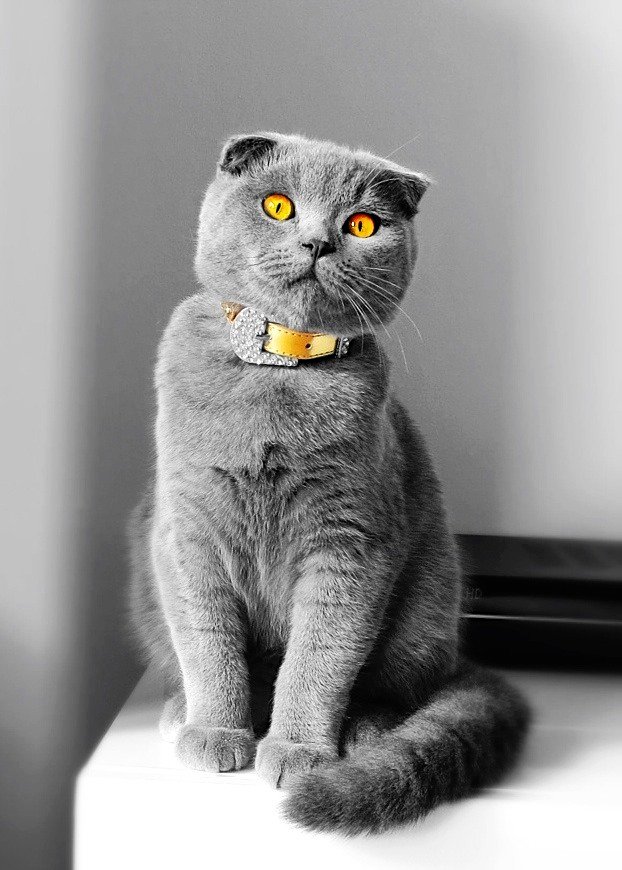
In this comprehensive guide, we’ll explore everything about the Scottish Fold breed – from their endearing personality traits to the controversial ethical questions surrounding their breeding. Whether you’re considering bringing one into your home or simply curious about these distinctive felines, you’ll discover the complete picture behind those famous folded ears.
What Makes the Scottish Fold So Unique?
The Scottish Fold stands out in the world of feline companions with a look that’s immediately recognizable. Their distinctive appearance stems from a natural genetic mutation that creates an undeniably charming visual effect.
Folded ears and their visual appeal
The most striking feature of Scottish Fold cats is undoubtedly their uniquely folded ears that bend forward and downward toward the front of the head. This characteristic gives them a distinctive cap-like appearance that many find irresistible . The ears fold tightly against the skull, creating a silhouette unlike any other domestic cat breed.
Many admirers compare Scottish Folds to owls because of this distinctive ear positioning . The smaller and more tightly folded the ears, the more desirable they are considered in breed standards . This unique feature emerged as a spontaneous genetic mutation first discovered in Scotland during the 1960s .
Notably, the ear fold results from an incomplete dominant gene affecting the cartilage of the ears . While this creates their signature look, it’s important to understand that this same mutation affects cartilage throughout the body—a crucial consideration for potential owners that we’ll explore in later sections.
Round face and large eyes
Beyond their ears, the Scottish Fold exemplifies roundness in virtually every aspect of their appearance. One word perfectly describes this breed: ROUND . Their faces feature a well-rounded cranium, firm chin, rounded whisker pads, and a broad muzzle .
The large, expressive eyes of the Scottish Fold significantly contribute to their appeal. These wide-open, perfectly circular eyes are set well apart on the face, separated by a broad nose . Their eyes should correspond with their coat color, though blue-eyed and odd-eyed variations are permitted in white, bi-color, and van pattern cats .
This combination of rounded features creates what many describe as a “sweet” or “open” expression . Scottish Folds often evoke comparisons to teddy bears or pixies due to their soft, rounded features and expressive countenance . Their prominent cheeks, particularly notable in males who develop a somewhat jowly appearance, further enhance their distinctive look .
Straight-eared Scottish Folds
Surprisingly, every Scottish Fold kitten is born with straight ears . Between 18 and 24 days of age, the ears may begin to fold—but only in kittens carrying the specific gene responsible for this trait . Generally, about 50% of kittens in a litter will develop folded ears while the rest maintain straight ears .
The straight-eared variants are officially called Scottish Straights . These cats share all the other charming characteristics of Scottish Folds—the round face, sweet expression, and pleasant temperament—simply without the folded ears .
Scottish Straights play a vital role in responsible breeding programs. Since breeding two folded-ear cats together can lead to severe health problems, Scottish Straights are essential breeding partners . Each breeding pair for the Scottish Fold must include a cat with non-folded ears to reduce health risks .
While only folded-ear examples can be shown in certain cat competitions, making them particularly popular, the straight-eared variety remains crucial to maintaining the breed’s health . The primary distinction between Scottish Folds and Scottish Straights is merely the ear position—everything else about their appearance and personality remains consistent .
Understanding these unique characteristics helps explain why Scottish Fold cats have captured the hearts of cat enthusiasts worldwide. Their distinctive appearance combined with their sweet nature makes them truly special companions.
The Genetics Behind the Folded Ears
Behind the Scottish Fold’s adorable appearance lies a fascinating genetic story that explains both their distinctive ears and their potential health challenges. Understanding this genetic foundation is essential for anyone considering this breed as a pet.
What causes the ear fold?
The signature folded ears of Scottish Fold cats result from a specific genetic mutation in the TRPV4 gene. Specifically, it’s a single base change (c.1024G>T) that causes an amino acid substitution—replacing valine with phenylalanine (p.V342F) . This mutation affects a calcium-permeable ion channel that plays a crucial role in cartilage development throughout the body .
Initially, all Scottish Fold kittens are born with straight ears. The folding process typically begins around 3 to 4 weeks of age as the kitten develops . This timing coincides with the expression of the mutated gene that affects cartilage formation.
The mutation was first discovered as a spontaneous genetic change in a farm cat in Scotland. It’s classified as an autosomal dominant trait, meaning a cat only needs to inherit one copy of the mutated gene to display the folded ears . Importantly, this same mutation hasn’t been identified in any other cat breed outside the Scottish Fold lineage .
Heterozygous vs. homozygous gene expression
The genetic terminology is critical to understanding Scottish Fold health. Cats can have three possible genetic combinations:
- Heterozygous (Fd/fd) – These cats have one copy of the mutated gene and one normal gene. They display folded ears and may develop mild to moderate osteochondrodysplasia (abnormal cartilage and bone development) .
- Homozygous (Fd/Fd) – These cats inherit two copies of the mutated gene and suffer from severe osteochondrodysplasia, with devastating effects on cartilage and bone development .
- Normal (fd/fd) – These cats, sometimes called Scottish Straights or Scottish Fold variants, have normal ears and no associated joint or bone issues .
The severity of health problems correlates directly with the genetic makeup. Although earlier research suggested heterozygous cats might be unaffected by skeletal issues, more recent studies indicate that even cats with one copy of the mutation (heterozygous) will develop milder forms of osteochondrodysplasia if followed for a sufficiently long timeframe .
For this reason, ethical breeders never mate two folded-ear cats together, as this creates a 25% chance of producing homozygous kittens with severe health problems . Instead, responsible breeding programs always pair a folded-ear cat with a straight-eared cat, resulting in approximately half the kittens having folded ears (heterozygous) and half having straight ears (normal) .
Why all folded-ear cats carry the mutation
Every Scottish Fold cat with folded ears—without exception—carries at least one copy of the TRPV4 mutation . This is because the ear fold is a direct expression of this genetic change. The mutation affects TRPV4’s ability to function properly at the cell surface, leading to altered mechanical signal transduction in cartilage cells .
In essence, the same genetic change that creates those adorable folded ears simultaneously causes the cartilage abnormalities throughout the body . Consequently, it’s impossible to breed Scottish Folds with completely folded ears without the associated genetic mutation that affects their cartilage.
Research has confirmed that the mutation is absent in 648 unaffected cats tested, further proving its unique connection to the Scottish Fold breed . Moreover, scientists have determined that this mutation gives the TRPV4 channels a higher basal activity and increased response to certain conditions, affecting how cartilage cells develop and function .
This intricate relationship between gene, ear shape, and skeletal health explains why breeding practices for Scottish Folds remain controversial among veterinarians and animal welfare organizations. The genetic reality is that the breed-defining characteristic is inseparable from the potential health concerns—a fact that every potential owner should consider carefully.
Common Health Issues in Scottish Folds
The adorable looks of Scottish Fold cats come with significant health concerns that every potential owner should understand before bringing one home. These cats face several breed-specific medical issues directly linked to the same genetic mutation that creates their signature folded ears.
Osteochondrodysplasia explained
Osteochondrodysplasia (OCD), often called “Scottish Fold Disease,” affects all Scottish Fold cats with folded ears to some degree . This inherited condition causes abnormal development of cartilage and bone throughout the body . The very mutation that gives these cats their distinctive folded ears simultaneously affects cartilage development in their entire skeletal system.
Signs of this condition typically begin appearing between 4 and 6 months of age and progressively worsen as the cat ages . Essentially, the TRPV4 gene mutation that produces the folded ears creates a fundamental defect in cartilage formation throughout the body.
The severity of osteochondrodysplasia varies depending on whether cats inherit one copy of the gene (heterozygous) or two copies (homozygous). Cats with two copies develop severe skeletal abnormalities early in life, including substantial exostosis (abnormal bone growth) around their distal extremities . In contrast, heterozygous cats typically develop milder joint disorders later in life .
Arthritis and joint pain
The cartilage abnormalities from osteochondrodysplasia inevitably lead to painful arthritis in affected joints. In fact, according to one study, 90% of cats older than 12 years of age showed arthritic changes visible on X-rays, but Scottish Folds develop this condition much earlier .
Common symptoms of arthritis in Scottish Folds include:
- Reluctance to move or jump
- Abnormal posture or walking style
- Stiffness and limping (often worse in hindlimbs)
- Decreased joint flexibility
- Reclusive behavior and decreased energy
As the disease progresses, affected cats may develop fused joints in the tail, ankles, and knees . The condition typically affects the hind legs more severely than the front legs, with many cats developing a stiff, stilted gait . Ordinarily, cats excel at hiding pain, making detection challenging until the condition has significantly progressed .
Treatment options, mostly palliative rather than curative, include pain medications like gabapentin, NSAIDs such as meloxicam, and newer treatments like monoclonal antibodies targeting nerve growth factor . Joint supplements containing glucosamine and chondroitin may help reduce pain and minimize cartilage damage .
Other risks: cardiomyopathy and kidney disease
Beyond skeletal issues, Scottish Fold cats face heightened risks for other serious health conditions. Hypertrophic cardiomyopathy (HCM), the most common form of heart disease in cats, appears with concerning frequency in Scottish Folds . This condition causes thickening of the heart muscle walls, reducing the heart’s ability to pump blood effectively throughout the body .
Many cats with HCM show no obvious symptoms until the disease is advanced. Some warning signs include labored breathing, lethargy, and in severe cases, hindlimb paralysis from blood clots . Regular veterinary check-ups, including cardiac examinations, can help detect this condition early.
Another significant concern is polycystic kidney disease (PKD). A study in Japan found that 54% of tested Scottish Fold cats carried the PKD1 mutation responsible for this condition . PKD causes fluid-filled cysts to develop in the kidneys, which multiply and grow over time, impairing kidney function . Symptoms typically appear in cats between 3 and 10 years of age, though some may not show signs until later .
Each of these health conditions requires ongoing veterinary care and management. Together, they significantly impact the quality of life and potentially reduce the lifespan of affected Scottish Fold cats. Accordingly, many veterinarians and animal welfare organizations have raised ethical concerns about breeding cats with these known health risks.
Personality and Temperament
Beyond their distinctive physical appearance, Scottish Fold cats are treasured for their exceptional temperament and charming personality traits. These cats have become worldwide favorites not only for their unique ears but primarily for their sweet disposition and adaptable nature.
Affectionate and loyal
Scottish Folds stand out as exceptionally loving companions who form deep, meaningful bonds with their human families. These cats are widely recognized for their extremely affectionate nature, making them perfect for people seeking a devoted feline friend . Their gentle, loving demeanor makes them especially endearing as they thrive in environments where they receive consistent attention .
Unlike some independent cat breeds, Scottish Folds typically develop strong attachments to their owners. Many owners report that these cats will follow them from room to room, quietly observing daily activities or seeking companionship throughout the day . This behavior showcases their loyalty and desire to be involved in family life.
Interestingly, Scottish Folds often bond closely with all household members rather than selecting a single favorite person . Of course, individual personalities can vary—some Scottish Folds may become particularly attached to one specific person in the household, showing a dog-like loyalty that’s somewhat unusual among feline breeds .
These cats express their affection through gentle means—settling nearby, offering soft purrs, or quietly seeking lap time. They’re affectionate without being clingy, preferring calm companionship over constant attention .
Good with kids and other pets
For families with children or other animals, Scottish Folds typically make wonderful additions to the household. Their patient, tolerant nature allows them to handle the sometimes enthusiastic play of younger family members . The breed’s gentle temperament and social disposition often make them well-suited for households with kids and other animals .
Scottish Folds earn high marks for being kid-friendly and pet-friendly in temperament assessments . Their non-aggressive demeanor helps them integrate smoothly into multi-pet homes, even getting along well with cat-friendly dogs . This adaptability makes them versatile companions for various living situations.
Even in busier households, Scottish Folds typically maintain their calm demeanor. They adjust well to noisy environments—including homes with dogs or young children—and aren’t easily intimidated by new surroundings . This resilience coupled with their sweet nature creates an ideal family pet.
Important to realize, appropriate supervision remains essential:
- Always monitor interactions between cats and young children
- Teach children to respect the cat’s space and handle them gently
- Introduce new pets gradually in controlled environments
Low vocalization and calm demeanor
One of the most appreciated qualities of Scottish Folds is their relatively quiet nature. Unlike some more vocal breeds, these cats are known for their soft, tiny voices that many owners find charming . They typically communicate only when necessary, making them excellent companions for apartment dwellers or those preferring a more peaceful home environment .
Their overall temperament tends toward calm and composed. Scottish Folds are rarely hyperactive, preferring short bursts of playful energy followed by relaxed cuddling sessions . They display an even temperament—neither overly active nor completely sedentary—striking a comfortable balance that fits well with most lifestyles .
Scottish Folds’ intelligence adds another dimension to their appeal. They enjoy interactive games and toys that challenge their minds, especially those that fly or flutter . Their curious nature and problem-solving abilities make them engaging companions who can entertain themselves but also appreciate interactive playtime with their humans.
Key personality traits commonly associated with Scottish Folds include:
- Sweet and loving disposition
- Loyal and people-oriented behavior
- Intelligent and curious mind
- Easygoing and adaptable nature
- Gentle and mild-mannered temperament
For potential owners who work away from home, it’s worth noting that Scottish Folds generally don’t appreciate lengthy solitude. Their social nature means they can become lonely if left alone for extended periods . Some owners solve this by adopting pairs of Scottish Folds who can keep each other company during human absences .
Caring for a Scottish Fold
Proper care routines are fundamental to maintaining your Scottish Fold’s health and happiness throughout their life. Their unique physical characteristics require specific attention to ensure they remain comfortable and healthy for years to come.
Grooming needs for short and long hair
The grooming requirements for Scottish Folds vary depending on their coat length. Short-haired Scottish Folds need relatively minimal maintenance with weekly brushing to remove loose hair and prevent shedding . A gentle slicker brush or soft-bristle brush works perfectly for these weekly sessions, keeping their coat smooth without irritating their skin.
In comparison, long-haired Scottish Folds demand more dedicated attention. These fluffier felines require brushing two to three times weekly to prevent tangles and mats from forming . Some owners of long-haired varieties even prefer daily brushing to keep their cats looking their best .
For both varieties, grooming sessions offer an excellent opportunity to bond with your cat. Additionally, regular brushing helps:
- Distribute natural oils through the coat
- Remove dead hair before it’s shed around your home
- Decrease hairball formation
- Allow you to check for skin issues
Bathing is rarely necessary for Scottish Folds unless they become especially dirty . When bathing is required, always use a cat-specific shampoo to avoid irritating their sensitive skin .
Dental and nail care
Dental health is critically important for Scottish Fold cats. Dental disease ranks among the most common chronic health problems in cats who don’t receive regular oral care . Ideally, you should brush your Scottish Fold’s teeth daily using a cat-friendly toothbrush and toothpaste .
If daily brushing seems challenging, aim for at least two to three times per week . Supplementing brushing with dental chews and toys designed for oral health can help reduce plaque buildup between brushings . Regular veterinary dental check-ups likewise help maintain healthy teeth and gums.
Nail care is equally essential. Trim your Scottish Fold’s claws every two to three weeks to maintain a healthy length and prevent them from snagging on furniture or causing discomfort . Many cats initially resist nail trimming, so start gradually and offer treats as positive reinforcement . For cats who remain uncomfortable with the process, consider seeking help from a professional groomer or veterinarian .
Flea, tick, and heartworm prevention
Regular parasite prevention is crucial even if your Scottish Fold lives exclusively indoors. Contrary to popular belief, no home is completely protected from mosquitoes that can transmit heartworm disease . In fact, one retrospective study found that 27% of cats diagnosed with heartworm infection were housed exclusively indoors .
Heartworm prevention is particularly critical for cats because, unlike dogs, there is no safe and effective treatment once a cat is infected . Even a single heartworm can prove fatal to a feline companion .
For comprehensive protection, consider these preventative measures:
- Use veterinary-approved flea and tick products recommended by your veterinarian
- Maintain year-round prevention regardless of season
- Never use dog flea and tick products on cats as they contain permethrins that can be fatal to felines
- Consider products that combine protection against multiple parasites
Prevention options include topical treatments, oral medications, and collars specifically designed for cats . Your veterinarian can recommend the most suitable product based on your cat’s specific needs and lifestyle.
Remember to check your Scottish Fold’s distinctive folded ears regularly, as their unique shape can sometimes trap debris or moisture . Use a vet-approved ear cleaner to gently remove any buildup and prevent infections.
Living Environment and Lifestyle Needs
Creating an optimal living space for your Scottish Fold requires careful consideration of their unique physical characteristics and behavioral tendencies. The right environment plays a crucial role in your cat’s overall happiness and health, primarily concerning their joint health needs.
Indoor vs. outdoor living
First and foremost, Scottish Folds are best suited for indoor living where their gentle nature and delicate joints can be protected from unpredictable dangers outside. In urban environments, letting cats roam freely exposes them to risks like traffic accidents, fights with other animals, and potential poisoning. Indoor cats typically enjoy longer lifespans and lower risk of injuries.
In reality, most veterinarians recommend keeping Scottish Folds exclusively indoors, as their characteristic joint issues make them particularly vulnerable to injuries from jumping, climbing, or navigating rough terrain. These concerns are even more significant considering the progressive nature of osteochondrodysplasia in Folds with folded ears.
For cats craving outdoor experiences, safer alternatives exist:
- Enclosed catios or secure outdoor spaces
- Supervised yard time in predator-free areas
- Harness and leash walks in controlled environments
Many Scottish Fold owners find that creating an “escape-proof” home requires vigilance, as open windows and doors present constant challenges. As a result, those keeping these cats indoors must be particularly mindful about home modifications to prevent unwanted escapes.
Activity level and playtime
Naturally, Scottish Folds exhibit moderate energy levels compared to more athletic breeds. They typically prefer shorter play sessions rather than extended periods of activity, making them suitable companions for those seeking a more relaxed pet. These cats often enjoy brief, engaging playtimes followed by longer rest periods.
To support healthy joint function while providing needed stimulation, offer toys that encourage gentle movement without excessive jumping. Puzzle feeders, treat-dispensing toys, and feather wands perfectly engage their hunting instincts without stressing their joints.
Interestingly, many Scottish Folds enjoy playing fetch—a game that satisfies their playful nature while allowing them to control their exertion level. Regular but moderate play helps maintain a healthy weight, which is particularly important given their predisposition to joint issues.
Creating a calm and engaging space
Alongside understanding their activity needs, creating a comfortable environment requires attention to specific Scottish Fold preferences. These cats appreciate having designated spaces where they can retreat when overwhelmed or tired. Providing cozy beds in quiet corners gives them necessary sanctuary.
To create an ideal environment:
- Offer vertical spaces like cat trees or wall-mounted shelves that allow observation without difficult jumps
- Position comfortable resting spots near windows for mental stimulation
- Include scratching posts and pads to satisfy natural scratching behavior
- Rotate toys regularly to maintain interest and prevent boredom
Cat trees deserve special consideration for Scottish Folds. Models with ramps rather than tall jumps between platforms accommodate their joint limitations while satisfying their desire for elevated perches. These structures let them observe household activities from a safe vantage point.
On balance, Scottish Folds thrive in calm, organized environments with gentle enrichment options. Their curious yet quiet nature means they enjoy thoughtful surroundings filled with cozy hideaways, soft blankets, and window perches. A peaceful, hazard-free space with enriching elements helps your Scottish Fold feel secure, stimulated, and content in their home.
Ethical Concerns and Breeding Controversy
The controversy surrounding Scottish Fold cats extends far beyond veterinary clinics and into legal frameworks worldwide. Their distinctive folded ears, while visually appealing, have sparked intense ethical debates regarding the breeding of cats with known genetic mutations that cause pain and suffering.
Why some countries ban breeding
Several nations have enacted outright bans on breeding Scottish Fold cats due to welfare concerns. The Netherlands prohibited their breeding since 2014 , followed by Austria in 2020 and parts of Belgium in 2021 . Ironically, Scotland—the breed’s birthplace—does not support breeding these cats . Parts of Australia, including Victoria, have also banned breeding Scottish Folds under legislation preventing breeding of animals with heritable defects .
The primary reason for these bans is straightforward: the genetic mutation causing the folded ears (affecting the TRPV4 gene) simultaneously causes osteochondrodysplasia, a painful condition affecting cartilage and bone development throughout the body . This mutation makes it impossible to breed a cat with folded ears without associated health problems.
Registry recognition and bans
Major cat registries hold conflicting positions regarding Scottish Folds. The Governing Council of the Cat Fancy (GCCF) in the UK excluded Scottish Folds as a recognized breed in 1974 due to crippling deformities . Similarly, the Fédération Internationale Féline (FIFe) refuses to recognize the breed .
Nevertheless, American organizations including the Cat Fanciers’ Association (CFA) and The International Cat Association (TICA) continue to recognize and register Scottish Folds . This inconsistency reflects differing approaches to animal welfare standards globally.
British veterinary officials maintain a clear stance against the breed. “We strongly advise members of the public not to try to acquire cats of this breed,” states the GCCF . Despite these warnings, the cats remain highly sought-after, often commanding premium prices.
The debate over quality of life
The central ethical question remains: is it morally acceptable to breed cats for a purely cosmetic trait when that trait is directly linked to pain and disability? The British Veterinary Association has called for a complete end to breeding Scottish Folds over these concerns .
Many veterinarians argue that breeding cats who will inevitably develop arthritis due to a genetic abnormality is both irresponsible and cruel . According to the Royal Society for the Prevention of Cruelty to Animals (RSPCA), “it is unethical to breed from animals with a genetic mutation that is known to cause painful deformities and disease” .
Beyond professional opinions, the welfare issue extends to how cats communicate—Scottish Folds’ ear positions limit their ability to express themselves to other cats through ear movements . For white Scottish Folds, the genetic complications can be even more severe, as they are often born deaf .
The ethical debate continues without resolution, with cat fanciers divided between those prioritizing animal welfare and those who believe careful breeding practices can mitigate the worst health outcomes.
Cost, Adoption, and Ownership Considerations
Acquiring a Scottish Fold cat represents a substantial financial commitment beyond just the initial purchase price. Understanding both upfront costs and long-term expenses helps prospective owners prepare adequately for these unique felines.
Price range for kittens
The cost of purchasing a Scottish Fold kitten varies considerably based on several factors. From reputable breeders, expect to pay between INR 84,380 and INR 295,331 , with most quality kittens falling in the INR 168,760-210,951 range. In major Indian cities, prices typically range from INR 20,000 to INR 40,000 , with metropolitan areas commanding premium prices.
Variations exist depending on:
- Pedigree and lineage quality
- Ear fold degree (tighter folds often cost more)
- Coat color and pattern rarity
- Whether the kitten is already spayed/neutered
Adoption presents a more affordable alternative, with fees typically between INR 2,953 and INR 42,190 .
Ongoing care costs
Monthly expenses for a Scottish Fold typically range from INR 6,750 to INR 16,876 , including:
- Premium cat food (INR 1,687-5,906 monthly)
- Cat litter (INR 843-2,109 monthly)
- Grooming supplies (INR 500-2,000 monthly)
- Pet insurance (INR 843-4,219 monthly)
Annual medical costs add approximately INR 6,328 to INR 84,380 , covering vaccinations, check-ups, and potential treatments for breed-specific conditions.
Finding a responsible breeder or rescue
Above all, seek breeders registered with reputable cat associations who conduct genetic testing on their breeding cats . Legitimate breeders should:
- Allow virtual tours of their facility
- Provide comprehensive health records
- Have clear contracts and health guarantees
- Never accept untraceable payment methods
Certainly watch for red flags like significantly lower prices than average, refusal to share medical records, or selling kittens too young . For those open to adoption, breed-specific rescues occasionally have Scottish Folds available , offering loving homes to cats in need while avoiding ethical breeding concerns.
Conclusion
Scottish Fold cats undeniably capture hearts with their distinctive folded ears and sweet expressions. Their gentle temperament, moderate activity level, and compatibility with children and other pets make them wonderful companions for many households. Nevertheless, the genetic reality behind those adorable ears cannot be overlooked.
The same mutation creating their signature look simultaneously causes painful joint conditions affecting their quality of life. Therefore, potential owners must consider both the joys and challenges of Scottish Fold ownership. Regular veterinary care, appropriate environmental modifications, and consistent grooming routines become essential responsibilities rather than optional care.
Ethical questions surrounding Scottish Fold breeding deserve serious consideration before bringing one home. While several countries have banned their breeding outright, others continue to register them despite veterinary concerns. Alternatively, adopting a Scottish Fold in need offers a compassionate solution that avoids supporting controversial breeding practices.
Financial readiness matters equally when considering a Scottish Fold. Beyond the initial purchase price, these cats require significant ongoing investment in quality food, preventative care, and potential medical treatments for breed-specific conditions.
Scottish Fold cats certainly bring unique charm and companionship to those fortunate enough to share their lives. Their distinctive appearance combined with their loving nature explains their tremendous popularity. Responsible ownership, however, demands awareness of their special needs, commitment to their welfare, and acknowledgment of the ethical complexities surrounding this remarkable breed.