
Maine Coon Cat
Maine Coon cats stand as the largest domesticated feline breed, with some exceptional males weighing up to 25 pounds. Despite their impressive size, these gentle giants are known for their sweet, friendly temperament that makes them ideal companions for families of all types.
These magnificent felines possess distinct characteristics that set them apart from other breeds. Maine Coon behavior often resembles that of dogs—they enjoy playing fetch, following their owners around, and can even be trained to perform simple tricks. Their sociable nature doesn’t mean they’re overly demanding; instead, they strike a perfect balance between affection and independence. With a Maine Coon lifespan typically ranging from 12-15 years, these cats become long-term family members. Their substantial Maine Coon weight and unique physical features like tufted ears, bushy tails, and rectangular body structure certainly contribute to their majestic appearance.
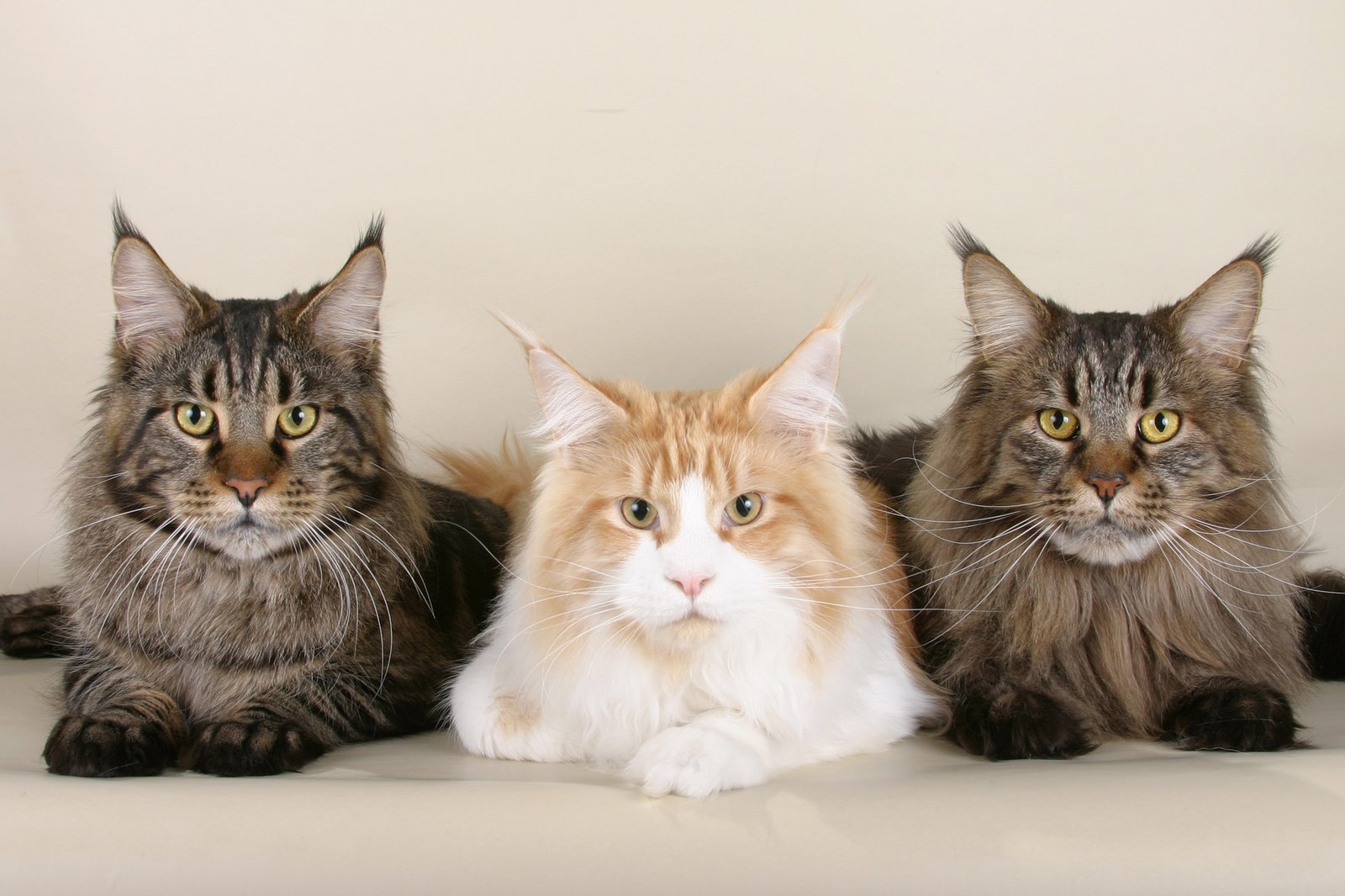
This comprehensive guide explores everything you need to know about Maine Coon cats—from their mysterious origins and distinctive physical traits to their healthcare needs and training possibilities. Additionally, we’ll help you determine if this remarkable breed is the right fit for your home and lifestyle.
The Origins of the Maine Coon
The fascinating history of the Maine Coon is shrouded in mystery and folklore. Unlike many pedigreed cats with meticulously documented lineages, these majestic felines emerged naturally in the harsh climate of New England, with their true origins debated among cat enthusiasts for centuries.
Myths and legends behind the breed
The Maine Coon’s mysterious beginnings have spawned several colorful legends that attempt to explain their distinctive appearance. Perhaps the most enduring tale suggests these cats resulted from impossible crossbreeding between domestic cats and raccoons. This myth likely originated from their bushy, ringed tails and common brown tabby coloring that resembles raccoon markings . While biologically impossible since cats and raccoons belong to entirely different species, this charming misconception persisted among early settlers who sought to explain the cats’ unique features.
Another captivating legend connects the breed to French royalty. According to this tale, when Marie Antoinette attempted to escape France during the revolution in 1793, she loaded Captain Samuel Clough’s ship with her most precious possessions—including six beloved Turkish Angora or possibly Siberian cats. Although the queen never reached American shores, her feline companions supposedly landed safely in Wiscasset, Maine, where they bred with local short-haired cats, eventually developing into the Maine Coon breed .
A third popular story involves a sea captain named Charles Coon who kept long-haired cats aboard his vessels. When his ship would dock in New England ports, his cats would come ashore and mate with local felines. As long-haired kittens began appearing in litters throughout coastal towns, people allegedly called them “Coon’s cats” because they resembled the captain’s own pets .
Scientific theories and genetic studies
Moving beyond folklore, modern genetic research provides more concrete answers about Maine Coon origins. Phylogenetic studies reveal that Maine Coons belong to the Western European monophyletic cat branch but form the closest relationship with random-bred cat populations in the Northeastern United States, particularly the New York region .
Notably, these cats are descended from felines brought to New England by Puritan settlers during the 1600s and 1700s. Of all European cats, they share the closest genetic relationship with cats found in the United Kingdom . This scientific evidence contradicts the Norwegian Forest Cat connection theory, as those breeds fall under different genetic sub-branches.
What makes Maine Coons resemble Norwegian and Siberian Forest cats isn’t direct relatedness but rather convergent evolution. All three breeds developed in harsh winter climates where natural selection favored similar traits: thick, water-resistant coats, tufted ears, large bodies, and snowshoe-like paws—all adaptations perfectly suited for survival in cold environments .
Through natural selection rather than deliberate breeding programs, only the hardiest cats with specific physical characteristics survived New England’s brutal winters. These evolutionary pressures gradually shaped the distinctive features we recognize in Maine Coons today .
How the breed got its name
The name “Maine Coon” combines two essential elements of the breed’s identity—geographic origin and distinctive appearance. The first component simply acknowledges Maine as their native state, where they eventually became the official state cat .
The “Coon” portion has multiple possible explanations. Most commonly, it references the misconception about raccoon hybridization, inspired by their bushy tails and typical brown tabby coloring . Although scientifically impossible, this folk explanation stuck in popular culture.
Alternatively, the name might honor Captain Charles Coon, whose long-haired ship cats reportedly mated with local felines when docked in New England ports . Whenever long-haired kittens resembling his cats appeared in litters, locals supposedly called them “Coon’s cats” .
The first documented mention of Maine Coons in writing appeared in 1861’s “The Book of the Cat,” which referenced a cat named “Captain Jenks of the Horse Marines.” The author, F.R. Pierce, noted about the breed’s mysterious origins: “As to how and when they came, I would say… They just ‘growed,’ for their advent reaches far back beyond the memory of the oldest inhabitant” .
By the late 19th century, Maine Coons had gained significant recognition, even winning “Best Cat” at the first major cat show in New York City in 1895 . However, their popularity temporarily declined with the introduction of more exotic breeds like Persians, before experiencing a revival in the 1950s that established them as one of America’s most beloved cat breeds.
Physical Traits That Set Maine Coons Apart
With their imposing presence and distinctive physical characteristics, Maine Coon cats captivate feline enthusiasts worldwide. These extraordinary cats possess a unique combination of physical attributes that make them instantly recognizable among domestic cat breeds.
Size and body structure
Maine Coons hold the title of largest non-hybrid domestic cat breed. Male Maine Coons typically weigh between 18 to 22 pounds (8.2 to 10 kg) when fully grown, whereas females are somewhat smaller, averaging 12 to 15 pounds (5.4 to 6.8 kg) . Their height ranges from 10 to 16 inches, with some exceptional individuals reaching even greater stature .
What truly distinguishes these gentle giants is their rectangular, muscular body structure. Maine Coons possess a solid, rugged build with broad chests and substantial legs that support their impressive weight . Their bodies are long yet proportionate, creating a balanced appearance without any exaggerated features .
One fascinating aspect of Maine Coon development is their slow maturation process. While most cats reach full size within a year, Maine Coons continue developing until they’re three to five years old . This gradual growth gives owners the joy of watching their companions become increasingly majestic over time.
Coat texture and seasonal changes
The Maine Coon’s magnificent coat serves both esthetic and practical purposes. These cats boast a heavy, shaggy double coat consisting of three distinct layers: long guard hairs that repel water and dirt, middle awn hairs for insulation, and a soft, dense undercoat that traps warmth .
This luxurious fur undergoes remarkable seasonal transformations. During winter months, their undercoat thickens considerably, providing essential insulation against harsh weather . As summer approaches, they shed this extra layer, revealing a somewhat sleeker summer coat . This natural adaptation helps Maine Coons regulate body temperature year-round.
Interestingly, despite its impressive length and volume, the Maine Coon coat is relatively low-maintenance compared to other long-haired breeds. The silky texture means it doesn’t mat as easily, although regular brushing (2-3 times weekly) remains essential to prevent tangles .
Common coat colors and patterns
Maine Coon cats showcase an astonishing variety of colors and patterns—over 75 different combinations according to the Cat Fanciers Association . The most iconic is the brown classic tabby, featuring distinctive swirling patterns and the characteristic “M” marking on the forehead .
These magnificent felines come in five main solid colors: black, white, blue (a distinctive gray with blue undertones), cream, and red (often called ginger or orange) . Beyond solids, you’ll find tabbies in classic, mackerel, and ticked patterns, plus striking smoke varieties where only the hair tips show color .
Gold and silver Maine Coons are considered the rarest color variations, resulting from an uncommon inhibitor gene that reduces pigmentation in the undercoat . The breed standard excludes chocolate, lavender, and Himalayan (pointed) patterns, maintaining the natural appearance that helped these cats survive harsh New England winters .
Unique features like ear tufts and bushy tails
Several distinctive traits instantly identify a Maine Coon. Perhaps most recognizable are their impressive ear tufts—lynx-like fur points extending from their large, wide-set ears . These tufts serve a practical purpose, helping to keep their ears warm in cold weather .
Their magnificent tail equals approximately three-quarters of their body length, resembling a raccoon’s tail with its flowing, feathery appearance . This extraordinary appendage serves multiple functions beyond beauty—it helps with balance and can wrap around their body like a built-in blanket during cold weather .
Maine Coons also possess large, tufted paws with extra fur between the toes, creating natural “snowshoes” that facilitated movement across snowy terrain during their evolutionary development . A leonine ruff around the neck (more pronounced in males) completes their regal appearance, developing fully as the cat matures .
These physical adaptations—once essential for survival in harsh New England winters—now contribute to the distinctive appearance that makes Maine Coon cats among the most recognizable and beloved feline companions worldwide.
Understanding the Maine Coon Personality
Beyond their impressive size and distinctive appearance, the Maine Coon’s extraordinary personality truly makes this breed a standout companion. Often described as “gentle giants,” these cats possess a unique temperament that combines affection, intelligence, and adaptability, making them beloved family pets worldwide.
Affectionate but independent
Maine Coon cats strike an ideal balance between showing affection and maintaining independence. They form strong bonds with their human families yet remain self-sufficient. These sociable felines enjoy human company and often follow their favorite people from room to room, inserting themselves into every interesting situation . They’re affectionate without being demanding—they want to be close but aren’t typically clingy or needy .
Unlike many cats who prefer solitude, Maine Coons actively seek interaction with their humans. They demonstrate their affection through gentle purring, rubbing, or cuddling . Nevertheless, their slightly independent nature means they often prefer settling next to you rather than directly on your lap . This perfect balance makes them ideal for families who want an interactive pet without constant attention demands.
Dog-like behaviors and quirks
One of the most fascinating aspects of Maine Coon temperament is their remarkably dog-like behavior. Their loyalty rivals that of canine companions—they frequently wait behind doors for their owners and enthusiastically greet them upon returning home . Many Maine Coon owners report that these cats converted “dog people” into “cat people” through their engaging personalities .
These intelligent felines display several canine-like traits that surprise first-time owners:
- They’re highly trainable and can learn tricks, respond to commands, and even walk on leashes
- Many enjoy playing fetch, bringing toys back to their owners for repeated throwing
- They communicate through a variety of soft chirps, trills, and melodious meows rather than typical cat vocalizations
- Some Maine Coons show unusual interest in water—playing, bathing, or even swimming in it
Their playful, intelligent nature means they’re constantly investigating household activities. As one owner describes, they act like “supervisors,” getting involved in whatever projects their humans undertake . This interactive quality makes living with a Maine Coon an entertaining, enriching experience.
How they interact with children and pets
The Maine Coon’s gentle, patient temperament makes them outstanding companions for families with children. These cats are remarkably tolerant of the noise and activity in busy households . Their calm, steady disposition allows them to handle the sometimes unpredictable nature of children’s play without becoming stressed or aggressive .
Multiple sources describe Maine Coons as having special connections with children. They often gravitate toward kids, enjoying the attention while reciprocating with affection . Their protective instincts even lead some to act as “babysitters” or guardians for young family members . Furthermore, Maine Coons enjoy playing interactively with children who treat them gently—participating in games like hide-and-seek or chasing toys .
Equally impressive is their compatibility with other pets. Maine Coons typically coexist peacefully with other household animals, including other cats and cat-friendly dogs . Their laid-back, self-assured nature helps them take new situations in stride . For families with existing pets, Maine Coons generally integrate smoothly, sometimes greeting newcomers with a casual attitude that seems to say, “Hi, I’m here and I’m stopping” .
This extraordinary combination of traits—affectionate yet independent, dog-like yet distinctly feline, patient with children yet playfully engaging—creates a personality profile that explains why Maine Coon cats have become one of America’s most cherished feline companions.
Health Conditions to Watch For
Despite their robust appearance and playful demeanor, Maine Coon cats are susceptible to several hereditary health conditions. Responsible ownership involves understanding these potential issues, recognizing early warning signs, and knowing when to seek veterinary care.
Hypertrophic cardiomyopathy (HCM)
Hypertrophic cardiomyopathy stands as the most common form of heart disease in Maine Coons, characterized by abnormal thickening of the heart walls that prevents efficient blood pumping . This genetic condition affects a significant percentage of the breed, with one study finding the A31P mutation present in approximately 34% of Maine Coons globally .
HCM typically develops during adolescence, becoming more severe in young adulthood . Males may develop the disease earlier and more severely than females, often showing signs around 19 months compared to 29 months in females .
Early symptoms include lethargy and breathing difficulties, progressing to more serious complications:
- Blood clots and thromboembolism
- Acute pain or paralysis in hind legs
- Irregular heartbeat and weak pulse
- Fluid buildup affecting breathing
Diagnosis requires cardiac ultrasound, and veterinarians recommend annual echocardiograms once a Maine Coon reaches about six years of age . For prevention, genetic testing helps identify carriers before breeding, while maintaining proper weight and moderate exercise supports heart health.
Spinal muscular atrophy (SMA)
SMA affects Maine Coon cats specifically, causing progressive muscle weakness in the hind limbs due to loss of motor neurons in the lower spinal cord . This inherited condition first presents at around 3-4 months of age when kittens begin showing subtle tremors and an unsteady gait .
As SMA progresses, affected kittens lose jumping ability by five months and develop distinctive swaying of the hindquarters . Though not fatal or painful, SMA significantly impacts mobility, with some severely affected cats moving by crawling on their front legs .
The condition has an autosomal recessive inheritance pattern, meaning cats need to inherit the mutated gene from both parents to develop SMA . Genetic testing identifies both affected cats and carriers, helping breeders prevent producing affected kittens.
Hip dysplasia and joint issues
Hip dysplasia affects approximately 24.9% of all Maine Coons, with males (27.3%) showing slightly higher prevalence than females (23.3%) . This orthopedic disorder involves the malformation of the hip socket and ball, leading to painful bone-on-bone contact as the joint loosens over time .
Clinical signs include limping, reluctance to jump, pain when the hip is touched, and persistent licking of the hip area . The condition can be diagnosed definitively through x-rays and is often more severe in bilateral cases, which represent 56% of affected cats .
Treatment options range from weight management and anti-inflammatory medications to surgical interventions like femoral head removal or artificial hip replacement in severe cases . Regular exercise that strengthens hip muscles without overexertion helps manage symptoms in mildly affected cats.
Polycystic kidney disease (PKD)
PKD affects Maine Coons through the progressive development of fluid-filled cysts in the kidneys, sometimes extending to the liver and pancreas . These cysts are present from birth but grow larger over time, eventually disrupting kidney function and leading to renal failure .
Most cats don’t show symptoms until around seven years of age, when signs may include increased thirst, weight loss, lethargy, vomiting, and frequent urination . Diagnosis typically involves ultrasound imaging, which can detect cysts from an early age, well before clinical signs develop .
No specific treatment exists for PKD itself, though supportive care similar to chronic kidney disease management helps extend quality of life . Genetic testing allows identification of affected cats before symptoms appear, supporting responsible breeding practices.
Dental and gum health
Maine Coons show particular susceptibility to dental issues, with 8 in 10 eventually developing gum and tooth problems . As a breed, they’re especially prone to juvenile gingivitis, which often occurs during teething between 5-12 months of age .
Some kittens experience an enzyme issue where gums try to grow over teeth as the body seemingly rejects them . This condition requires anti-inflammatory treatment rather than tooth extraction, contrary to what some veterinarians might recommend .
Regular dental check-ups with veterinarians familiar with Maine Coon-specific dental issues are essential, as their large size and rapid growth can lead to misdiagnosis of normal breed characteristics as health problems . Establishing good dental hygiene practices early helps prevent more serious complications later in life.
Feeding and Nutrition Tips
Proper nutrition forms the cornerstone of your Maine Coon’s health, given their unique physiology as the largest domestic cat breed. Their extended growth period—continuing until 3-5 years of age—creates distinct nutritional demands throughout their lives .
Choosing the right food for kittens and adults
Maine Coon cats require diets rich in high-quality animal protein, which should constitute at least 50% of their food . As obligate carnivores, they thrive on meat-based diets that support their substantial muscle development.
For kittens, select foods specifically formulated for growth that provide the extra calories and nutrients needed during their extended development phase. Premium brands like Royal Canin (which offers Maine Coon-specific formulas), Purina Pro Plan, and Blue Buffalo provide appropriate kitten options .
Adult Maine Coons benefit from high-quality commercial options in several forms:
- Premium dry food: Look for options listing real meat as the first ingredient with minimal fillers or grains
- Wet food: Provides additional moisture and protein—brands like Hill’s Science Diet, Royal Canin, and Weruva offer excellent options
- Raw/homemade diets: Some owners opt for biologically appropriate raw food (BARF) diets, though these require careful planning to ensure balanced nutrition
How much to feed based on size and age
Maine Coon kittens require frequent small meals—4-6 daily for those under six months, gradually reducing to 3 meals by 9-12 months . Free-feeding is often recommended for kittens under six months to support their rapid growth .
For adult males weighing 13-16 pounds, daily caloric needs range from 450-500 calories if moderately active . Larger, very active males (16-20+ pounds) may need 550-600 calories daily . Females, typically smaller at 8-12 pounds, require proportionally less.
As a practical guide, an average 15-pound adult Maine Coon requires approximately 375-525 calories daily, depending on activity level . Importantly, neutered cats experience a 20% reduction in energy needs without decreased appetite, requiring careful portion control .
Special dietary needs and supplements
Maine Coons may benefit from certain supplements, primarily after kittenhood. Joint support becomes crucial given their size, with many owners beginning supplementation around 2-3 years of age . Beneficial joint supplements include:
- Glucosamine (500-1000mg daily)
- Chondroitin sulfate (200-400mg daily)
- MSM (250-500mg daily)
Omega-3 fatty acids play a vital role in maintaining their lustrous coat while reducing inflammation. The recommended dosage ranges from 100-300mg combined EPA and DHA daily . Moreover, adequate taurine is essential for heart health, particularly important for Maine Coons prone to hypertrophic cardiomyopathy .
Remember that high-quality commercial cat food is designed to provide complete nutrition, making true vitamin deficiencies uncommon in healthy cats . Always consult with a veterinarian before adding supplements, as inappropriate additions can potentially harm rather than help.
Grooming and Maintenance Needs
Maintaining the magnificent coat of your Maine Coon requires consistent care and attention. Their dense, semi-long double coat may be naturally more resistant to matting than other long-haired breeds, yet it still demands regular maintenance to keep it in peak condition.
Brushing and coat care routines
The Maine Coon’s water-resistant double coat benefits from regular brushing—ideally 2-3 times weekly for adults, increasing to 3-4 times weekly during seasonal shedding periods . For effective grooming, select appropriate tools: a slicker brush for detangling, wide-tooth comb for managing knots, and de-shedding tools for removing loose undercoat . Focus your brushing efforts on areas prone to matting—behind the ears, armpits, belly, and around the tail base .
Begin with short grooming sessions, concentrating on one body area at a time, and offer treats as positive reinforcement . Introduce this routine early in your cat’s life to establish familiarity with being handled, which simplifies grooming as they mature .
Bathing tips for water-loving cats
Although Maine Coons don’t require frequent baths thanks to their water-repellent coat, occasional washing (every 1-3 months) helps maintain cleanliness . Prior to bathing, thoroughly brush your cat to remove any mats or tangles, as wet fur can tighten knots and potentially cause pain . Trim nails beforehand to prevent accidental scratches during the bath .
Always use cat-specific shampoo and conditioner formulated for long coats, as human products can irritate feline skin . After bathing, wrap your Maine Coon in thick towels to absorb moisture, then thoroughly dry them—the drying process often takes longer than the bath itself .
Nail trimming and ear cleaning
Regular nail trims every 2-3 weeks prevent overgrowth and reduce scratching damage . When clipping, cut only the white tip of the claw, staying well away from the quick (the pink area containing blood vessels) .
For ear care, check weekly for blockages, redness, or abnormal odors . Clean gently with a cat-specific ear cleanser, removing wax and dirt from the external ear area using finger cots or a clean washcloth .
Preventing matting and shedding
A consistent grooming schedule serves as your best defense against matting and excessive shedding. For severe shedding seasons (typically spring and fall), daily brushing may be necessary . Pay special attention to high-friction areas where mats commonly develop .
Should you discover a small mat, gently work it out with your fingers or a detangling tool. For stubborn mats or large tangles, consult a professional groomer rather than using scissors near your cat’s skin . Moreover, proper nutrition rich in omega fatty acids supports coat health from within, reducing shedding and maintaining fur quality .
Training and Enrichment Activities
Maine Coons possess remarkable intelligence that rivals many dog breeds, making them exceptionally receptive to training and enrichment activities. Their curious, playful nature combined with their problem-solving abilities creates perfect opportunities for mental stimulation that strengthens your bond while keeping these gentle giants happy.
Litter box and basic training
First and foremost, Maine Coons typically adapt quickly to litter box training. When bringing a kitten home, immediately show them the litter box location by gently placing them inside and demonstrating a digging motion with their paw . For newly adopted adult cats, confine them initially to a single room with their litter box, food, and water until they establish good habits .
Choose a large, open litter box in a quiet location away from feeding areas, filled with 3-4 inches of clumping litter . Throughout the first week, place your Maine Coon in the box after meals, naps, and playtime to reinforce the habit . Clean the box daily to accommodate their natural cleanliness preferences.
Fun tricks and commands
Maine Coons can master an impressive repertoire of tricks thanks to their dog-like temperament. Begin with simple commands like “come” when called or name recognition . Progress to teaching “high five” by holding a treat in your closed hand until your cat paws at it, then adding the verbal cue . Many owners report success teaching their Maine Coons to fetch toys and return them for repeated throwing .
For best results, keep training sessions short (under 15 minutes) and use positive reinforcement exclusively . Maine Coons respond well to food motivation but may become bored with repetitive drills, so maintain variety in your practice sessions.
Interactive toys and puzzle feeders
Interactive toys provide essential mental stimulation for these intelligent felines. Automated teaser wands, motion-activated mice, and electronic toys that move unpredictably satisfy their hunting instincts . Puzzle feeders serve dual purposes—they slow down eating while challenging their problem-solving abilities .
For Maine Coons specifically, select sturdy toys designed for their larger size and stronger paws . Rotate toys regularly to maintain interest, as boredom can lead to stress and unwanted behaviors .
Leash training and outdoor time
Surprisingly, many Maine Coons adapt well to leash training. Start by introducing a cat-specific harness indoors for short periods, associating it with treats and praise . Once comfortable, allow your cat to wear the harness while dragging the leash behind them before you hold it . After mastering indoor walking, transition to a secure, quiet outdoor area where your cat can explore at their own pace .
Alternatively, consider creating a “catio” (cat patio)—an enclosed outdoor space where your Maine Coon can safely experience fresh air, sunlight, and outdoor stimulation without the risks of unsupervised roaming .
Is a Maine Coon Right for Your Family?
Considering a Maine Coon as your next family member requires careful assessment of your living environment, time availability, and financial resources. Their unique requirements demand thoughtful preparation beyond typical cat ownership.
Space and time requirements
Maine Coons need a minimum of 20 square feet of living space spread across different rooms . Larger than average cats, they require both horizontal territory and vertical climbing opportunities. These gentle giants need sturdy furniture that accommodates their substantial size and weight . Most importantly, Maine Coons thrive on human interaction—plan for daily engagement including playtime, grooming, and companionship to prevent depression and behavior issues .
Ideal home environments
While Maine Coons can adapt to medium-sized apartments, they flourish in larger homes with outdoor viewing opportunities . Their social nature makes them excellent companions for families with children and other pets . For apartment dwellers, consider leash-walking or creating a secure “catio” for outdoor stimulation . First-time owners should evaluate whether their living situation provides defined zones and pathways rather than focusing solely on square footage .
Costs and long-term care considerations
Initial costs for a Maine Coon range from ₹21,095 to ₹63,285 . Monthly expenses typically include:
- Premium food: ₹3,000-₹5,000
- Veterinary care: ₹500-₹1,000
- Grooming supplies/services: ₹2,000-₹3,000 per visit
- Litter/supplies: ₹1,000-₹2,000
Altogether, expect monthly maintenance between ₹5,000-₹9,000 plus occasional unexpected healthcare costs .
Conclusion
Maine Coon cats truly stand as remarkable companions that combine impressive size with gentle temperaments. Throughout their history, these natural-born survivors developed distinctive physical characteristics that helped them thrive in harsh New England winters – from their tufted ears and snowshoe paws to their magnificent bushy tails.
Despite their imposing appearance, Maine Coons possess wonderfully balanced personalities. Their dog-like behaviors charm even dedicated “dog people,” while their patient nature makes them excellent companions for children and other pets. Though generally healthy, awareness of potential genetic conditions like hypertrophic cardiomyopathy and hip dysplasia allows owners to provide appropriate preventative care.
Certainly, Maine Coons require commitment – from regular grooming sessions to engaging their intelligent minds with interactive play and training. Their substantial size necessitates spacious environments with sturdy furniture and climbing opportunities. Nevertheless, the investment pays tremendous dividends through their affectionate companionship and entertaining antics.
Before welcoming a Maine Coon into your home, assess your living situation, schedule, and budget carefully. These magnificent felines thrive with families who appreciate their unique blend of independence and sociability. For those ready to embrace the responsibility, a Maine Coon offers 12-15 years of loyal companionship, gentle affection, and the distinctive joy that comes from sharing your life with one of nature’s most impressive domestic cats.