
Korat Cat
Korat cats stand out as one of the most remarkable feline companions for those seeking an intelligent and devoted pet. These silvery-blue beauties from Thailand captivate owners with their heart-shaped faces, luminous green eyes, and extraordinary bond with humans.
Indeed, the Korat cat characteristics extend beyond their striking appearance. Their behavior typically showcases a perfect balance of playfulness and calm demeanor, while their temperament remains consistently affectionate and attentive. Though relatively rare outside Thailand, Korats are gaining popularity worldwide for their moderate size, with the average Korat cat weight ranging between 6-10 pounds. Furthermore, their impressive Korat cat lifespan of 15+ years means they become long-term family members rather than just pets.
This comprehensive guide explores everything potential and current Korat owners need to know—from their ancient Thai origins to their unique personality traits that make them exceptional companions. You’ll discover why these “good luck cats” might be the perfect addition to your home and how to ensure they thrive under your care.
Breed Origins and Cultural Significance
Ancient and revered, the Korat cat holds a special place in Thai history and culture that extends back hundreds of years. Unlike many domesticated breeds that evolved through selective breeding, the Korat has remained remarkably consistent in appearance and characteristics throughout the centuries.
The Korat’s roots in Thailand
The Korat originates from the northeastern plateau of Thailand, specifically from the Korat province (now known as Nakhon Ratchasima) . This region is characterized by large granite outcrops, where these silver-blue cats could naturally blend with their surroundings . The Thai people don’t actually call them “Korats” in their homeland – the breed is known as “Si-Sawat” (pronounced “see-sah-what”) .
This ancient breed appears in the Tamra Maew (“The Cat-Book Poems”), a manuscript dating back to the Ayutthaya period between 1350 and 1767 . This historical document, now preserved in Bangkok’s National Library, features illustrations and descriptions of seventeen “good luck” cats of Thailand, with the Korat prominently included .
The name “Korat” itself was established when King Rama V (also known as Chulalongkorn) was asked where this distinctive blue cat had come from . The name “Si-Sawat” carries multiple meanings in Thai culture – it refers to the grayish-light-greenish color of the cat, similar to the seed of the non-edible Look Sawat fruit that grows wild in Thailand. Moreover, “sawat” itself means prosperity or good fortune .
Symbol of good luck and prosperity
The cultural significance of the Korat in Thailand cannot be overstated. These cats are considered sacred symbols of good luck, happiness, and prosperity . Their importance is such that they’re often referred to as the “good luck cat” of Thailand, not the Siamese as many might assume .
Traditionally, Korats were never sold – they were only presented as gifts to those held in high esteem . One of the most notable customs involves giving Korats in pairs as wedding gifts to newlyweds, symbolizing a blessing of prosperity and fertility for the new household . This practice underscores how deeply the Korat is woven into Thai spiritual and cultural traditions.
Additionally, Korats play a role in Thai agricultural ceremonies. The cats are paraded through villages in northeastern Thailand and sprinkled with water during rituals designed to bring vital rain to rice crops . Their association with prosperity extends beyond personal good fortune to community wellbeing and agricultural abundance.
How they came to the West
The journey of the Korat to Western countries began in the late 19th century. The first documented appearance outside Thailand occurred in 1889, when Korats were shown at cat exhibitions in Great Britain under the misclassification “Blue Siamese” . However, these silver-blue cats didn’t conform to judges’ perception of Siamese cats and subsequently disappeared from Western shows by 1901 .
The true establishment of Korats in the West began several decades later. The pivotal moment came in 1959 when Cedar Glen Cattery in Oregon imported the first breeding pair to the United States – a male named Nara and a female named Darra . These cats were gifts from a breeder in Bangkok’s Mahajaya Cattery . Almost every Korat in America today can trace their ancestry back to this original pair .
Subsequently, the breed gained official recognition in the United States through the efforts of dedicated breeders, achieving championship status with cat associations in 1966 . Korats arrived in Britain much later, with the first imports reaching the country in March 1972 . A pregnant female named Saeng Duan and an unrelated male kitten called Sam became the foundation of British Korat breeding programs .
Today, despite their expanding global presence, Korats remain relatively uncommon outside their homeland, preserving their status as a rare and cherished breed with an unbroken lineage to their ancient Thai ancestors.
Physical Traits That Make Korats Stand Out
The Korat’s appearance is instantly recognizable to cat enthusiasts, with several standout physical characteristics that set this breed apart from other blue cats. These distinctive traits have remained consistent throughout the breed’s long history, making the Korat one of the oldest stable cat breeds that has maintained its original appearance across centuries .
Heart-shaped face and green eyes
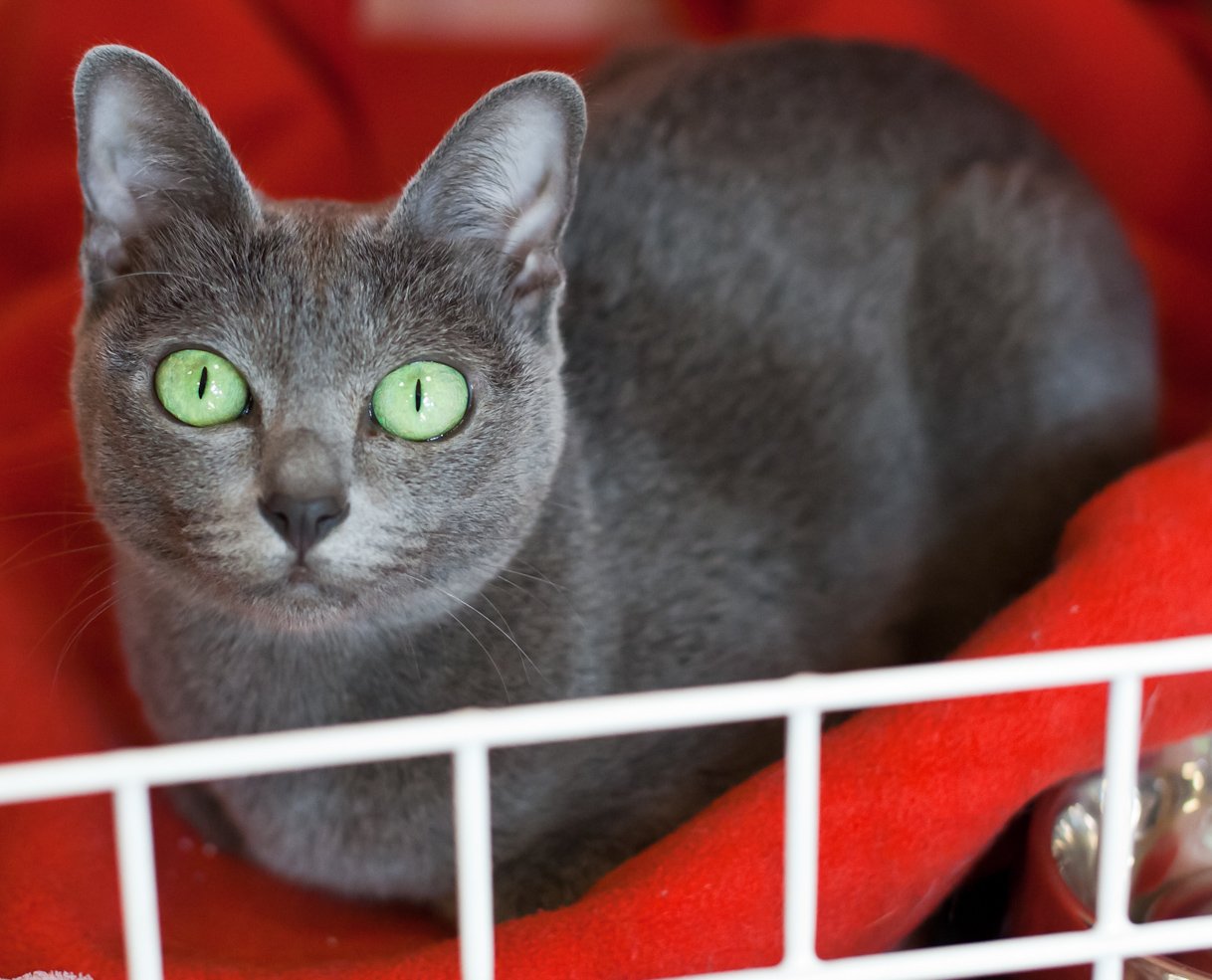
First of all, the Korat’s most distinguishing feature is its heart-shaped face, which is visible when looking at them head-on . This heart shape is formed by prominent cheekbones, with eyebrow ridges creating the upper curves of the heart, while the sides of the face gently curve down to the chin to complete this distinctive contour . This sweet facial structure gives the Korat a plush, loving expression .
Equally important are the Korat’s eyes, which are extraordinarily large and luminous, appearing almost oversized for their face . These striking peepers create an intensity of gaze that’s hard to ignore. The eye color itself follows a fascinating developmental journey: Korats are born with blue eyes, which transition to amber or golden-green during adolescence, before finally reaching their mature bright green color . Interestingly, this color development can take anywhere from two to four years to complete , highlighting the Korat’s slow maturation process.
The ears further enhance the cat’s alert expression, being large, rounded, and set high on the head . Combined with those expressive eyes, these features create a face that’s both intelligent and endearing.
Silvery-blue coat and muscular build
The Korat’s coat is another remarkable feature, consisting of short, fine fur with a unique coloration described in Thailand as “rain-cloud gray” . What makes this coat special is its silver-tipping effect – each hair is lighter blue at the root, transitions to a deeper blue up the shaft, and ends with a silvery tip . This creates a shimmering appearance that Thais poetically refer to as “sea foam” .
Unlike some other breeds, Korats possess a single coat rather than a double coat . The fur lies close to the body with a glossy, smooth texture that feels silky to the touch. Notably, Korats come exclusively in this silver-blue color; it’s one of the few cat breeds limited to a single coat color .
Beneath this stunning coat lies a surprisingly solid frame. Despite their medium size, Korats have a compact, muscular build that carries more weight than one might expect . Their bodies feature broad chests with good space between the forelegs, and they possess a semi-cobby body type – neither compact nor svelte . This muscle structure gives them a feeling of “hard coiled spring power” and unexpected heaviness when picked up .
Differences from similar breeds like Russian Blue
Given their similar coloring, Korats are frequently confused with Russian Blues, despite originating from countries over 3,000 miles apart . For those seeking to tell them apart, several key distinctions exist:
- Face shape: The Korat’s heart-shaped face contrasts with the Russian Blue’s more wedge-shaped or apple-shaped face .
- Coat structure: Perhaps the most significant difference lies in their fur – Korats have a single coat, while Russian Blues possess a double coat with dense, plush guard hairs .
- Eye color: Although both breeds have green eyes, the specific shade differs. Russian Blues display emerald green eyes, whereas Korats develop a bright peridot green color .
- Body structure: Korats tend to be more muscular and compact, while Russian Blues typically have a slenderer, more graceful body type .
The Korat’s unique combination of heart-shaped face, luminous green eyes, silver-tipped blue coat, and muscular build creates an unmistakable appearance that cat lovers have treasured for centuries. These physical traits not only make them beautiful companions but also connect them to their ancient heritage as Thailand’s lucky cats.
Understanding the Korat Personality
The heart and soul of any cat lies in its personality, and the Korat cat possesses one of the most distinctive temperaments in the feline world. Behind those luminous green eyes and silver-blue coat beats the heart of a deeply devoted companion whose character traits make them extraordinary pets for the right household.
Affectionate and loyal nature
Fundamentally, the Korat is defined by its remarkable loyalty and affection toward human family members. These cats form intense emotional bonds with their owners, often following their favorite person from room to room throughout the day . Many owners describe Korats as “Velcro cats” because they strongly dislike being left alone for extended periods . This clingy behavior stems from their deep attachment rather than insecurity.
Throughout their lives, Korats demonstrate their affection in unmistakable ways. They frequently curl up as close as possible during cuddle time and actively participate in family activities. Their devotion runs so deep that they typically choose one special person as their favorite, though they remain affectionate with the entire household .
Given that Korats thrive on companionship, they can develop separation anxiety if regularly left alone for many hours. For busy households, some experts recommend considering a second Korat as a companion . Their social nature makes them perfect for owners who enjoy an interactive relationship with their pets.
High intelligence and curiosity
In addition to their loving nature, Korats possess remarkable intelligence that sets them apart from many other breeds. These cats are exceptionally bright, inquisitive, and always seeking mental stimulation . Their sharp minds enable them to quickly learn tricks and solve puzzles, making interactive toys an excellent investment for keeping them mentally engaged .
As such, Korats exhibit a playful yet thoughtful approach to their environment. They enjoy exploring their surroundings and investigating new objects—sometimes to the point of nosiness. Owners often notice their Korats inspecting purses, coats, or other personal items out of sheer curiosity . This investigative nature reflects their need for mental engagement rather than destructive tendencies.
Their intelligence pairs with an active disposition that alternates between energetic play sessions and quiet companionship. A Korat will typically switch between “full-blown active mode” and being “glued to your side,” depending on the time of day and household energy level .
Sensitivity to human emotions
Perhaps the most remarkable aspect of Korat cat behavior is their extraordinary sensitivity to human emotions. These intuitive felines seem to possess an almost uncanny ability to detect their owner’s moods and respond appropriately . When you’re feeling down, a Korat will often attempt to provide comfort through their presence and gentle affection .
In contrast to more independent breeds, Korats remain highly attuned to their family’s emotional state. They can sense when it’s time for play and when quiet companionship is needed . This emotional intelligence creates a unique bond that many owners describe as deeper than typical pet relationships.
At the same time, this sensitivity extends to their environment as well. Korats generally prefer calm, stable homes and may become stressed in chaotic or loud settings . Their dislike of sudden noises and preference for peaceful surroundings reflects their gentle temperament .
Key personality traits that make Korats special companions:
- Gentle and soft-spoken with a melodious voice when they do vocalize
- Patient and gentle during play, especially with children
- Observant and communicative through body language
- Reserved with strangers initially but warm and affectionate with family
For those seeking a cat with depth of character, the Korat offers an unparalleled combination of intelligence, loyalty, and emotional sensitivity that makes each day with them a joy. Their balanced temperament provides both playful engagement and soulful companionship—truly the best of both worlds in a feline friend.
Social Behavior and Interaction
Beyond their striking looks and distinct personality traits, the social dynamics of Korat cats reveal why they excel as family companions. These gentle felines develop intricate relationships within their households that showcase their exceptional capacity for meaningful connections.
Bonding with family members
Korats thrive on building deep, lasting bonds with their human families. They attach themselves firmly to their owners, becoming a close-knit part of the household fabric . These silver-blue felines demonstrate extraordinary loyalty, forming especially strong connections with their primary caregivers.
Nevertheless, what sets Korats apart is their need for constant interaction and attention . They don’t simply tolerate human company—they actively seek and require it. Consequently, Korats become unhappy if their social needs aren’t met. As highly social creatures, they experience genuine distress when left alone for extended periods .
The intensity of their attachment manifests in their preference for physical closeness. Korats frequently express affection by settling in as close as possible during cuddle sessions . They particularly excel as lap cats, happily following their preferred family members throughout the day . This persistent companionship stems from genuine affection rather than neediness—a Korat simply wants to be where you are.
How they behave with children and other pets
When it comes to children, Korats typically display remarkable patience and gentleness. Their sweet-natured temperament makes them excellent companions for families with older children . Simultaneously, Korats maintain their dignity, preferring interaction on their terms .
To begin with, Korats engage with kids through gentle play, making them suitable family pets . Their intelligence allows them to adapt their play style around children, avoiding rough interactions. For instance, they enjoy interactive games like fetch while remaining mindful of their strength .
Regarding other animals, Korats generally demonstrate compatibility but require proper introductions:
- They can form good relationships with other cats, particularly fellow Korats
- They adapt well to cat-friendly dogs with patient socialization
- They may initially show territorial behavior over their human companions
- They sometimes exhibit jealousy if another pet receives significant attention
For successful introductions to other cats, a gradual approach works best. Keeping new cats separated initially allows adjustment to scents before visual contact through baby gates, eventually progressing to supervised interactions in neutral territory . With time and proper introductions, most Korats adapt positively to multi-pet households.
Tendency to follow their humans
Perhaps the most endearing aspect of Korat cat behavior is their shadow-like tendency to follow their humans everywhere. This “velcro cat” quality stems from their curious, inquisitive nature combined with genuine interest in their owner’s activities .
Interestingly, Korats don’t just passively follow—they actively investigate. Their intelligence drives them to understand what you’re doing, often leading to their nosing through personal belongings like purses or coats . This behavior reflects their desire to participate in your daily life.
Throughout the day, Korats typically alternate between two modes: full energetic activity or complete attachment to your side . This pattern creates a rhythm of interaction that many owners find deeply satisfying. Their following behavior serves as both companionship and entertainment.
Because of this strong attachment, separation can be challenging for Korats. Many owners find that providing another feline companion helps alleviate the stress of unavoidable absences . Without proper companionship, Korats may become withdrawn or unhappy , emphasizing why understanding their social needs is crucial for their wellbeing.
Playfulness and Mental Stimulation
Playfulness remains a cornerstone of Korat cat behavior throughout their lives, with these intelligent felines maintaining their kittenish enthusiasm well into their senior years. Unlike some breeds that mellow dramatically with age, Korats preserve their playful spirit regardless of how old they get. This playfulness, paired with their remarkable intelligence, creates a unique combination that requires proper mental and physical outlets.
Favorite games and toys
Korats demonstrate clear preferences when it comes to playtime activities. These silver-blue cats particularly enjoy “fishing” games involving toys on strings that mimic prey movement. Many Korats even learn to play fetch, happily retrieving mouse toys or small balls thrown by their owners. This retrieving behavior showcases their dog-like qualities and desire to engage directly with their human companions.
Physically, Korats appreciate having access to tall perches. You’ll often find your Korat surveying their domain from the highest point available, whether that’s atop a cat tree or looking out from a window ledge. This climbing tendency satisfies both their exercise needs and their desire to monitor household activities.
Most noteworthy about Korat playtime is their preference for interactive toys over solo play options. According to experienced owners, Korats consider playtime as bonding time, soaking up every minute of positive interaction with their human companions. Their favorite activities typically include:
- Chasing feathered wand toys
- Batting at interactive toys
- Playing fetch games
- Cuddling sessions (which they consider a form of play)
- Perching up high to observe their domain
Importance of interactive play
For Korats, interactive play transcends mere entertainment—it’s vital for their emotional and physical well-being. Experts recommend scheduling two or three daily play sessions of 10-15 minutes each to keep your Korat mentally and physically stimulated. Regular play helps prevent obesity while strengthening the bond between cat and owner.
Interactive play involves using wand-type toys to create prey-like movements that stimulate your cat’s natural hunting instincts. When you move the toy like prey, wiggling, darting, and creeping around the room, it allows your Korat to focus completely on being the hunter rather than both predator and prey. This type of stimulation is particularly valuable for indoor Korats who need outlets for their natural behaviors.
Even older Korats maintain their playfulness, as age seldom diminishes their enthusiasm. Senior Korats will still enthusiastically chase mouse toys or bat at feathered wands with kitten-like energy. Correspondingly, consistent play sessions help prevent cognitive decline as they age, ensuring they remain sharp and engaged throughout their lives.
Training potential and puzzle toys
The Korat’s exceptional intelligence makes them comparatively easy to train. These cats are quick learners who appreciate mental challenges and routine. Through positive reinforcement, Korats can learn various behaviors—some owners have successfully taught their Korats to walk on leashes, use litter boxes consistently, and respond to basic commands.
Above all, puzzle toys represent an excellent investment for keeping Korats mentally engaged. These clever felines possess outstanding problem-solving skills and genuinely enjoy the challenge of figuring out how to extract treats or food from puzzle feeders. Food-dispensing toys are particularly effective as they tap into the cat’s natural foraging instincts while preventing boredom.
For optimal mental stimulation, consider rotating different types of puzzle toys to keep experiences fresh and challenging. Korats will appreciate food-dispensing puzzles, sliding compartment games, and toys that require strategic pawing to release rewards. As can be seen with most intelligent breeds, mental under-stimulation often leads to behavioral issues, making these enrichment activities essential rather than optional for Korat owners.
Care and Grooming Needs
Maintaining your Korat’s health and appearance requires minimal effort compared to many other feline breeds. These Thai treasures come equipped with several physical characteristics that make grooming relatively simple, yet regular care remains essential for their overall wellbeing.
Low-shedding coat maintenance
The Korat’s sleek, fine coat ranks among their most appealing physical traits from a maintenance perspective. Unlike cats with thick undercoats, Korats possess a single-layer coat that lies close to the body and sheds minimally throughout the year . This makes them an excellent choice for those who prefer a cleaner home environment.
Brushing once weekly with a soft-bristle brush or grooming glove suffices to keep their silvery-blue fur in top condition . This regular brushing serves multiple purposes – it removes loose hairs, maintains coat shine, and helps prevent hairballs . During spring, you might need to increase brushing frequency slightly as they shed their winter coat .
Primarily self-groomers by nature, Korats rarely require bathing unless they’ve gotten particularly dirty during their explorations . Their natural cleanliness means you’ll seldom need to deal with the stress of a full bath.
Dental, ear, and nail care
Dental health deserves special attention with Korats. Despite having generally good teeth, dental disease affects 50-90% of cats by age four . Brushing their teeth at least twice weekly using cat-specific toothpaste helps prevent periodontal issues . Establishing this routine early in your Korat’s life makes the process significantly easier for both of you .
For ear care, check weekly for wax buildup, debris, or signs of infection . Clean only when necessary using vet-recommended solutions on a cotton ball, gently wiping the inside of the ear toward the tip . Importantly, never insert cotton swabs into your cat’s ear canal, as this risks causing injury .
Nail maintenance requires trimming approximately every two weeks . When cutting, be careful to avoid the “quick” – the pink area containing blood vessels and nerves . Simply trim the white tip of each nail to prevent overgrowth that could curl into paw pads and cause discomfort .
Tips for stress-free grooming
Creating positive associations with grooming starts with patience and timing. For best results, schedule grooming sessions when your Korat is already relaxed, perhaps after a meal when they’re naturally calm .
Keep sessions brief – 5-10 minutes maximum – to prevent stress . If your Korat shows signs of distress, postpone and try again later rather than forcing the issue. With this approach, most Korats gradually accept routine grooming.
Essential grooming supplies for your Korat include:
- Soft-bristle brush or grooming glove
- Cat-specific toothpaste and toothbrush
- Quality nail clippers designed for cats
- Ear cleaning solution recommended by your vet
After each successful grooming session, reward your Korat with treats and affection . This positive reinforcement helps them associate grooming with pleasant experiences, making future sessions increasingly stress-free.
Health Considerations for Korats
Even with their robust constitution, Korat cats face certain health challenges that potential and current owners should understand. Knowing these breed-specific concerns enables proactive care that can significantly extend your silver-blue companion’s quality of life.
Genetic conditions like GM1 and GM2
First of all, Korats may inherit serious neurological disorders called gangliosidoses, specifically GM1 and GM2. These rare genetic conditions affect the nervous system, causing progressive neurological dysfunction and premature death .
GM1 gangliosidosis symptoms typically begin around 3 months of age, with affected kittens developing tremors, ataxia (loss of coordination), and dysmetria . As the disease progresses, cats experience blindness and seizures, with most cases becoming terminal by 9-10 months of age .
GM2 gangliosidosis follows a similar but faster progression. Symptoms appear as early as 4 weeks with fine head tremors, followed by rapid deterioration leading to death before 8 months .
Fortunately, both conditions have an autosomal recessive inheritance pattern, meaning cats must inherit two copies of the defective gene (one from each parent) to develop the disease . Reputable breeders screen breeding stock for these conditions, making genetic testing essential before purchasing a Korat kitten .
Dental disease and obesity risks
Dental disease remains exceedingly common, affecting between 50-90% of cats older than four years . Without regular care, plaque builds up on teeth, eventually leading to tartar accumulation, gum inflammation, and potentially serious infections .
Besides dental concerns, obesity poses a major risk. Excess weight contributes to various illnesses and deaths in cats . Research suggests carrying extra pounds may shorten a cat’s life by up to two years and trigger arthritis onset two years sooner .
Despite having naturally muscular builds, Korats can develop weight issues, primarily due to:
- Diet quality and quantity
- Metabolic factors
- Activity level
- Age-related changes
Preventive care and vet checkups
Preventive healthcare forms the cornerstone of maintaining your Korat’s wellbeing. Regular veterinary visits allow for early detection of health issues before they become emergencies .
Annual examinations should include comprehensive dental assessments, weight monitoring, and screening for breed-specific conditions . Additionally, establishing a tailored preventive health plan with your veterinarian helps address your Korat’s individual needs .
Primarily, home dental care plays a crucial role in prevention. Regular tooth brushing with cat-specific toothpaste can significantly reduce dental disease risk . Similarly, maintaining appropriate weight through portion control and regular exercise helps prevent obesity-related conditions .
With proper preventive care and management of genetic predispositions, most Korats enjoy healthy lives spanning 15-20 years . This impressive lifespan reflects both their naturally robust constitution and the benefits of proactive healthcare.
Feeding and Nutrition Tips
Proper nutrition forms the foundation of your Korat cat’s health, requiring careful attention throughout their various life stages.
Balanced diet for different life stages
Adult Korats require approximately 240-340 calories daily , with needs varying based on activity level and age. Kittens need more frequent feeding—3-4 meals daily—to support their rapid development , with calorie needs around 300 kcal daily . Senior Korats benefit from adjusted nutrition focusing on joint health and reduced calories to prevent weight gain .
High-quality protein remains essential across all life stages, as Korats thrive on meat-based diets . Look for foods where meat or meat byproducts appear among the first ingredients listed . For optimal health, provide a combination of wet and dry foods—wet food supports hydration and urinary health, whereas dry kibble helps maintain dental health .
Avoiding overfeeding and obesity
Despite their naturally muscular build, Korats face obesity risks that can shorten lifespan by up to two years . Establish specific mealtimes instead of free-feeding, which often contributes to weight problems . Measure portions carefully using recommended guidelines from your veterinarian, as food packaging typically overestimates appropriate serving sizes .
Scheduled weigh-ins help track your cat’s body condition effectively. Monthly weight checks, either at home or at your veterinarian’s office, allow for early detection of concerning weight trends .
Supplements and sensitive stomach care
Some Korats may develop sensitive stomachs, benefiting from specialized diets . Signs of digestive sensitivity include frequent vomiting or diarrhea. For these cats, select foods formulated specifically for sensitive digestion, featuring highly digestible ingredients and omega-3 fatty acids to combat inflammation .
Consider supplements for specific health concerns after veterinary consultation. Options may include joint support for aging Korats, probiotics for digestive health, or omega fatty acids for coat condition . Never introduce supplements without professional guidance .
Conclusion
Korat cats certainly stand out as exceptional companions for those seeking a devoted, intelligent, and affectionate feline friend. Throughout their long history from ancient Thailand to modern homes worldwide, these silver-blue beauties have maintained the same distinctive traits that make them treasured pets. Their heart-shaped faces, luminous green eyes, and shimmering coats capture attention, while their personalities truly win hearts.
Above all, the Korat’s balance of playful energy and devoted companionship makes them perfect for many households. Unlike cats that remain aloof, Korats actively participate in family life, following their favorite humans and responding to emotional needs with remarkable sensitivity. Their intelligence allows them to learn tricks, solve puzzles, and engage meaningfully with their environment, therefore preventing boredom while strengthening bonds with owners.
Though Korats require minimal grooming effort due to their low-shedding single coat, they nevertheless need consistent preventive healthcare to address potential concerns like dental disease, obesity, and genetic conditions. Regular veterinary checkups, appropriate nutrition across all life stages, and mental stimulation through interactive play ensure these cats remain healthy companions for their impressive 15-20 year lifespan.
Additionally, understanding the Korat’s social needs remains essential for their wellbeing. These “velcro cats” thrive on human interaction and may struggle with extended periods alone. Providing another feline companion or ensuring regular attention helps these sensitive creatures feel secure and content in their environment.
Ultimately, bringing a Korat into your home means welcoming a piece of living history – a cat whose appearance and character have remained unchanged for centuries while still offering the perfect combination of playfulness, affection, and loyalty. For those willing to meet their needs for companionship and care, a Korat offers an unparalleled bond that truly exemplifies why these ancient “good luck cats” continue bringing joy and prosperity to modern families worldwide.