
Devon Rex Cat
The Devon Rex cat defies typical feline stereotypes with its otherworldly appearance and dog-like personality. Unlike conventional cats, these unique companions sport distinctive curly coats, oversized ears, and mischievous expressions that immediately capture attention.
Despite their alien-like appearance, Devon Rex cats possess temperaments perfectly suited for family life. Their playful nature and affectionate disposition make them exceptional companions for households with children and other pets. Additionally, these medium-sized felines typically maintain a healthy weight between 6-9 pounds throughout their 9-15 year lifespan. The Devon Rex characteristics that truly set them apart include their minimal shedding, high intelligence, and remarkable ability to form strong bonds with their human families.
This guide explores everything you need to know about this extraordinary breed – from their striking physical traits to their care requirements – helping you decide if the Devon Rex might be your family’s perfect match.
What Makes the Devon Rex Stand Out
From the moment you first encounter a Devon Rex, you realize this is no ordinary house cat. Their eye-catching appearance stems from a spontaneous genetic mutation that first appeared in England during the late 1950s . The result? A feline that turns heads and captures hearts with its truly distinctive features.
Unique coat and appearance
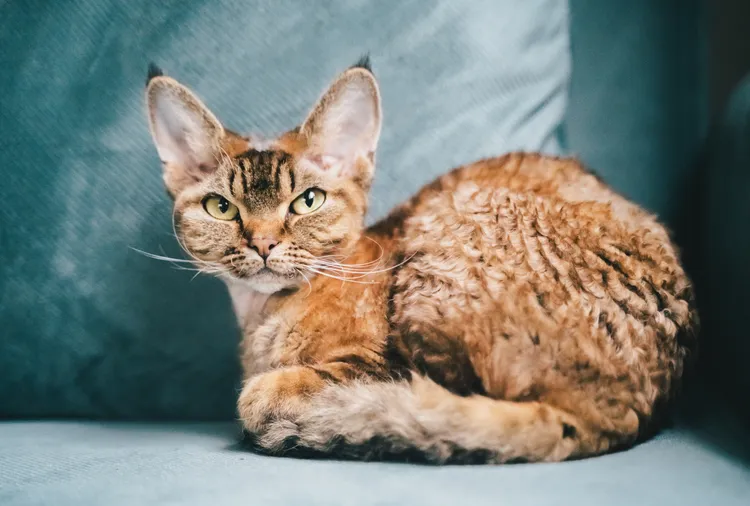
The Devon Rex possesses a slender yet surprisingly muscular body that exudes athleticism . Medium in size, these cats typically display a lean frame complemented by longish legs . One glimpse of their silhouette reveals why cat enthusiasts often describe them as having a “pixie-like” quality .
Furthermore, these cats have a broad but slightly elongated head that creates a wedge shape when viewed from the front . This distinctive profile is characterized by a series of three convex curves formed by the outer edge of the ear lobes, prominent cheekbones, and whisker pads . In profile, you’ll notice a strongly marked stop at the nose, with the forehead curving back to a flat skull .
Their eyes add another dimension to their charm—large, oval-shaped, and set wide apart, they can come in virtually any color . These expressive eyes contribute significantly to what The Cat Fanciers’ Association describes as their “elfin expression” .
Elf-like features and large ears
The most striking feature of the Devon Rex has to be their extraordinary ears. Remarkably large and set very low on the head, these ears are extremely wide at the base—so much so that the outside base extends beyond the line of the face’s wedge . They taper to rounded tops and are well-covered with fine fur .
These oversized ears, combined with their high cheekbones, short muzzle, and large eyes, create that characteristic elfin look that distinguishes them from all other breeds . Some admirers even compare their appearance to aliens or extraterrestrials from science fiction !
Another unique feature is their whiskers and eyebrows, which are crinkled and twisted due to the same genetic mutation affecting their coat . These whiskers are notably short and often tightly curled, sometimes appearing almost invisible . However, they’re also quite fragile and break off easily, creating what some have charmingly called “designer stubble” .
Curly fur and minimal shedding
The Devon Rex’s coat is genuinely special—short, fine, and extraordinarily soft to the touch . Many describe it as suede-like or downy . Their fur forms loose waves or ripples, especially along the back and sides, creating a distinctive “rexed” appearance .
This unique texture results from a lack of guard hairs (the coarse outer layer typical in most cats) . The Devon Rex gene is different from that which curls the coat of other rex-type cats, such as the Cornish Rex . When Devon Rex cats and Cornish Rex cats are crossed, they produce litters of straight-coated kittens .
The coat is shorter in some areas than others—very short on the head, ears, neck, paws, chest, and abdomen, while slightly longer on the back, sides, upper legs, and tail . Consequently, some Devon Rex cats may even have bare patches on their necks and bellies—a perfectly normal trait for the breed .
As a bonus for potential owners, these cats are low-shedders . While no cat is truly hypoallergenic, the Devon Rex produces lower levels of the Fel d1 protein—the primary allergen for most people with cat allergies . This makes them a potentially better choice for allergy sufferers, though individual reactions may vary.
Their coats come in an impressive variety of colors and patterns—any color or combination is acceptable within breed standards . This includes solid colors, tabby patterns, two-color combinations, and even complex shadings .
Personality Traits That Win Hearts
Beyond their striking appearance, what truly makes the Devon Rex cat breed stand out is their extraordinary personality. Many owners claim their Devon Rex behaves more like a blend of cat, dog, and monkey than a typical feline – a testament to their multifaceted character that wins hearts with remarkable ease.
Playful and energetic
The Devon Rex possesses boundless energy that manifests in delightfully entertaining ways. Often described as “clownish” in their antics, these cats bring constant amusement to their households. Their playful spirit remains vibrant throughout much of their lives, although they typically mellow somewhat as they age, transforming from hyperactive kittens into affectionate “cuddle bugs” .
These cats display an extraordinary level of activity that sets them apart from many other breeds. Devon Rex cats are famous for their acrobatic abilities – swinging from curtains, climbing wallpaper, and generally causing lovable mischief around the home . Their exuberance has earned them colorful nicknames like “little terrors” and “monkeys in cats’ clothing,” reflecting their penchant for high-flying adventures .
Moreover, Devon Rex cats have a particular fondness for perching in elevated positions. Their natural agility allows them to leap effortlessly to the highest point in any room, whether that’s a bookshelf, refrigerator top, or even your shoulders . This climbing behavior satisfies their instinctual need for vertical territory while providing them with excellent vantage points to observe all household activities.
Affectionate and people-oriented
Perhaps the most endearing quality of the Devon Rex is their exceptional devotion to their human companions. Unlike the independent stereotype often associated with cats, Devon Rex cats are extraordinarily people-oriented. They form deep bonds with their owners and truly thrive on human interaction .
Indeed, these affectionate felines are frequently called “Velcro cats” because of their tendency to stick close to their favorite people . They’ll happily follow you from room to room, unwilling to miss a moment of potential interaction . Many owners report their Devon Rex greeting them at the door upon arrival home – a behavior more commonly expected from canine companions .
Their desire for physical closeness is particularly noteworthy. Devon Rex cats love nothing more than curling up on laps, snuggling under blankets, or perching parrot-like on their owner’s shoulders . As social creatures, they generally don’t enjoy being left alone for extended periods . Fortunately, they typically get along well with other pets, making multi-pet households an excellent environment for meeting their social needs .
The Devon Rex’s social nature extends beyond their immediate family. Visitors to homes with Devon Rex cats often find themselves thoroughly investigated before they’ve even had a chance to sit down . This intense curiosity about new people reflects their generally outgoing and friendly disposition.
Highly intelligent and curious
In addition to their playful and affectionate nature, Devon Rex cats possess remarkable intelligence. Their quick minds and natural curiosity make them exceptionally trainable – a rare quality among feline companions .
These clever cats can learn an impressive range of behaviors. Many Devon Rex owners successfully teach their pets to play fetch, walk on a leash, or respond to basic commands . Some have even mastered more advanced skills like using a standard toilet instead of a litter box . Their eagerness to please combined with their intelligence makes training sessions a rewarding bonding experience .
Furthermore, Devon Rex cats benefit tremendously from mental stimulation. Puzzle feeders, interactive toys, and games that challenge their problem-solving abilities help keep their active minds engaged . Without adequate mental exercise, these intelligent cats may channel their creativity into mischievous behavior .
Their curiosity drives them to explore every nook and cranny of their environment. Don’t be surprised to discover your Devon Rex investigating behind furniture or squeezing into seemingly impossible spaces – it’s simply their inquisitive nature at work . This same curiosity makes them excellent candidates for clicker training and other interactive learning experiences .
The Devon Rex’s extraordinary combination of playfulness, affection, and intelligence creates a companion unlike any other – a cat that captures hearts with its enthusiasm for both adventure and cuddles.
Is the Devon Rex Good With Kids and Other Pets?
When it comes to family compatibility, the Devon Rex stands out as an ideal companion for households of all compositions. These sociable felines embrace family life with enthusiasm, creating harmonious relationships with children and fellow pets alike.
Gentle with children
Devon Rex cats demonstrate remarkable patience and tolerance with youngsters, making them excellent companions for families with children of all ages. Their affectionate disposition and high tolerance for handling allow them to withstand the sometimes unpredictable interactions that occur with kids . Unlike more reserved breeds that prefer admiration from a distance, the Devon Rex actively seeks involvement in family activities.
These cats possess a playful spirit that naturally complements the energy of children. Their interactive nature creates countless opportunities for bonding through games like chasing toys or hide-and-seek . Many families report that their Devon Rex cats quickly become central figures in household dynamics—following children around, participating in activities, and even providing bedtime companionship.
One Sydney family shared that their Devon Rex named Pixie not only plays enthusiastically with their children but also sleeps beside them at night, offering both comfort and companionship . This level of engagement demonstrates why the Devon Rex is often described as the perfect choice for tight-knit families looking to incorporate a cat into their daily lives .
Of course, as with any pet-child relationship, adult supervision remains essential, particularly with younger children. Teaching children to handle the cat gently and respect its space creates the foundation for a positive, long-lasting bond . Recognizing when your Devon Rex needs a break prevents overstimulation and ensures pleasant interactions for both the child and feline.
Gets along with other cats and dogs
The Devon Rex’s sociable temperament extends beyond human relationships to interactions with other household pets. Their outgoing and curious nature helps them accept and frequently enjoy the company of other animals . Many Devon Rex owners find that these cats actually prefer having company and may become lonely if left alone for extended periods .
These cats typically get along well with other felines and cat-friendly dogs . Their playful temperament often complements the energy levels of other pets, providing mutual stimulation and companionship . One Melbourne family highlighted their Devon Rex’s remarkable adaptability when schedules changed, noting the cat’s resilience and consistently loving nature .
For optimal results, early socialization significantly increases the likelihood of harmonious relationships among pets . The Devon Rex’s friendly disposition combined with proper introductions creates an environment where multi-pet households can thrive harmoniously.
Tips for smooth introductions
Introducing a Devon Rex to your home requires thoughtful planning, primarily because these highly social kittens remain sensitive to new environments . Following proven methods for introductions promotes long-term confidence and security rather than relying on their initial bravery, which might actually mask stress.
For introducing your Devon Rex to other pets, follow this graduated approach:
- Scent Exchange – Swap bedding between pets to familiarize them with each other’s scent .
- Visual Introduction – Allow them to see each other through a baby gate or cracked door .
- Supervised Meetings – Arrange short, controlled interactions without forcing either animal to engage; simply ignoring each other is perfectly acceptable .
When introducing a Devon Rex to dogs specifically, maintaining control of the dog at all times remains critical—using a leash, collar, or harness throughout initial meetings . Even if your dog has previous experience with cats or kittens, never allow free access during early introductions .
Remember that stress significantly predicts illness in cats according to research (Stella et al., 2013) . Since cats excel at masking stress, the introduction process requires patience and careful observation. The timeline varies considerably—anywhere from a few days to several weeks depending on individual temperaments .
Throughout this process, create positive associations by offering treats and soft-spoken encouragement . While a resident cat may initially hiss or avoid the newcomer, careful introductions and positive reinforcement typically lead to tolerance or even bonding between pets .
With proper socialization and considerate introductions, the Devon Rex can become the social centerpiece of your household—forming meaningful connections with both human and animal family members.
Daily Care and Grooming Needs
Caring for a Devon Rex involves understanding their unique physical traits that require specific attention. While these felines have minimal grooming needs compared to long-haired breeds, their distinctive features benefit from regular, targeted care to keep them healthy and comfortable.
Bathing and skin care
Unlike most cats who rarely need baths, the Devon Rex benefits from occasional bathing primarily due to their unique coat structure. Their lack of guard hairs (the protective outer layer of fur) leads to oilier skin and coat compared to other felines . Regular bathing helps remove excess oils that might otherwise irritate their sensitive skin.
Most Devon Rex cats should be bathed every few weeks using a gentle, cat-specific shampoo . The key is finding the right balance—bathing too frequently can strip essential oils and cause dryness, whereas too infrequently allows oil buildup . After bathing, thoroughly dry your Devon Rex to prevent chilling, as their thin coats offer minimal insulation.
Between baths, you can maintain skin health by:
- Gently wiping their coat with a damp cloth or pet-safe wipes to remove dirt and distribute natural oils
- Monitoring for signs of irritation, dryness, or rashes
- Limiting sun exposure, especially for cats with lighter fur, as their minimal coat offers little sun protection
Ear and nail maintenance
The Devon Rex’s remarkably large ears require consistent attention. Their ears tend to accumulate wax, oils, and dirt more readily than other breeds . Weekly inspection followed by gentle cleaning with a vet-approved solution helps prevent infections and discomfort.
When cleaning their ears:
- Use a soft cloth or cotton ball moistened with a vet-approved cleaning solution
- Gently wipe the visible parts of the ear
- Never insert anything into the ear canal
- Check for unusual discharge or odor, which warrants veterinary attention
For nail care, trim your Devon Rex’s claws every 2-3 weeks . Regular trimming prevents nails from becoming overgrown, splitting, or snagging on furniture and fabrics. Use cat-specific nail clippers and be careful not to cut too close to the quick—the pink area visible in lighter nails that contains blood vessels and nerves .
How to groom the delicate coat
The Devon Rex’s curly coat requires extremely gentle handling. Typically described as a “wash-and-wear” breed, their grooming needs are minimal yet specific . The most important rule: avoid over-brushing. Their delicate curls break easily with too much brushing, potentially creating bald patches .
Instead of traditional brushing, consider these gentler alternatives:
- Stroke the coat with your hands or a soft chamois leather to distribute natural oils
- Use a soft grooming glove or damp cloth once weekly to remove loose hairs
- For minimal brushing (no more than once weekly), choose only soft-bristled brushes
Remember that even with their minimal shedding, Devon Rex cats still appreciate occasional gentle grooming sessions . Their curls are remarkably fragile, so always use a light touch to prevent breakage.
Contrary to what you might expect, avoid rubber grooming gloves as these can damage their delicate fur . Their whiskers and eyebrows are similarly fragile and should never be trimmed .
With these straightforward care practices, your Devon Rex will remain comfortable, clean, and healthy while maintaining their characteristic elfin appearance and soft, touchable coat.
Feeding and Nutrition Tips
The unique metabolism of the Devon Rex means these cats have specific nutritional requirements that support their energetic lifestyle and overall health. Understanding their dietary needs is essential for maintaining their wellbeing throughout their lifespan.
Portion control and feeding schedule
Devon Rex cats typically possess hearty appetites paired with unusually fast metabolisms . This combination requires careful attention to feeding routines to ensure proper weight management. Most adult Devon Rex cats thrive on two measured meals daily , yet some may require additional calories, especially during cooler months .
For kittens, more frequent feeding is necessary. Devon Rex kittens grow rapidly and need a nutrient-rich diet supporting their development. Typically, kittens should receive 3-4 small meals throughout the day until they reach approximately one year of age . This feeding frequency ensures they obtain sufficient calories to sustain their growth spurts.
Portion control remains vital regardless of age. Even with their active nature, these cats can develop weight issues if overfed. Many owners find success with measured meals rather than free-feeding, primarily if their Devon Rex shows weight management challenges . Following veterinary recommendations for portion sizes based on your cat’s specific needs helps maintain their ideal weight .
Recommended food types
Fundamentally, the Devon Rex benefits from high-quality, protein-rich cat food that supports their energetic lifestyle . As obligate carnivores, they require meat-based diets with sufficient animal protein . Their active nature often means they need formulations designed for energetic cats .
When selecting food, consider these nutritional priorities:
- High-quality protein sources to maintain muscle mass
- Balanced fat content (approximately 21% for active adults)
- Essential nutrients like taurine for heart health
- Omega-3 and Omega-6 fatty acids for skin and coat health
Many veterinarians recommend offering both wet and dry food. This combination provides dental benefits from crunchy kibble while ensuring adequate moisture intake from wet food . For kittens under 12 months, kitten-specific formulations containing approximately 34% protein and 21% fat support healthy development .
As your Devon Rex transitions from kitten to adult food around their first birthday, make changes gradually to prevent digestive upset . By their senior years (7-12 years), consult your veterinarian about adjusting their diet to accommodate changing nutritional needs .
Hydration and water preferences
Adequate hydration plays a critical role in maintaining kidney health for all cats, including the Devon Rex . Regardless of diet type, fresh water should always be available and changed frequently—ideally twice daily .
Many Devon Rex owners notice their cats have distinct preferences regarding water. Some strategies to encourage proper hydration include:
- Using cat water fountains to keep water moving and appealing
- Placing water bowls away from food dishes (cats naturally prefer separate eating and drinking locations)
- Adding ice cubes on warm days to keep water refreshing
- Using filtered water for improved taste and purity
For cats that tend toward dehydration, incorporating wet food into their diet serves as an effective way to increase moisture intake . This approach supports urinary tract health while ensuring they receive adequate hydration throughout the day.
Ultimately, the Devon Rex doesn’t have breed-specific dietary requirements beyond what any healthy cat needs . Nevertheless, their active lifestyle and sometimes higher metabolism mean paying particular attention to calorie content and meal frequency. With proper nutrition tailored to their energy needs, your Devon Rex will maintain their characteristic playfulness and health throughout their life.
Common Health Concerns to Watch For
While Devon Rex cats are generally healthy, they face certain genetic predispositions requiring attentive monitoring. Understanding these conditions helps owners recognize early warning signs and seek timely veterinary care.
Hypertrophic cardiomyopathy (HCM)
Hypertrophic cardiomyopathy stands as the most common heart disease affecting cats, including the Devon Rex breed. This condition causes thickening of heart muscle walls, decreasing heart function and potentially leading to blood clots that obstruct circulation . Many affected cats display no obvious symptoms initially, making regular cardiac screenings essential for early detection.
As HCM progresses, cats may exhibit rapid breathing, labored breathing, or lethargy. In advanced cases, this condition can lead to congestive heart failure or sudden cardiac death . Although no cure exists, medication can manage symptoms and improve quality of life. Importantly, reputable breeders should conduct genetic testing for HCM to reduce its prevalence in breeding lines.
Polycystic kidney disease (PKD)
Polycystic kidney disease affects several cat breeds including Devon Rex. This inherited condition causes multiple fluid-filled cysts to develop in the kidneys from birth . Initially, these cysts appear small but gradually enlarge, eventually disrupting kidney function and leading to kidney failure.
Most affected cats show no symptoms until later in life—typically around seven years of age . As PKD progresses, cats may display increased thirst, frequent urination, decreased appetite, and weight loss. While no cure exists, supportive treatments including specialized diets and medications can manage symptoms. Genetic testing can identify carriers before breeding, making it vital to obtain kittens only from breeders who screen for this condition.
Hip dysplasia and patellar luxation
These skeletal conditions affect the Devon Rex’s mobility and comfort. Hip dysplasia occurs when the ball-and-socket joint between the hip and thigh bones forms improperly, creating a grinding motion that leads to pain and mobility issues . Signs include difficulty jumping, climbing stairs, or abnormal gait patterns.
Patellar luxation involves the kneecap (patella) sliding out of its normal position . Severity varies considerably—mild cases may cause occasional lameness while severe instances may require surgical intervention. Both conditions can predispose cats to arthritis as they age, making weight management and joint support crucial elements of long-term care.
Devon Rex myopathy
This breed-specific muscle disorder represents perhaps the most concerning genetic condition for Devon Rex cats. Also called congenital myasthenic syndrome, this hereditary condition causes generalized muscle weakness, particularly affecting the head, neck, and shoulders .
Symptoms typically emerge between three and 23 weeks of age, progressing in severity until approximately nine months when the condition typically stabilizes . Affected kittens may show head bobbing, inability to raise their head properly, and a high-stepping forelimb gait. Severely affected cats may experience difficulty swallowing, putting them at risk of choking—potentially leading to fatal complications .
Devon Rex myopathy is inherited as an autosomal recessive trait, meaning cats must inherit two copies of the gene mutation (one from each parent) to develop the condition . A DNA test is now available, enabling breeders to identify carriers and affected cats, underscoring the importance of purchasing kittens only from breeders who conduct comprehensive genetic screening.
Training and Enrichment Ideas
The intelligence and curiosity of Devon Rex cats make them exceptionally receptive to training and enrichment activities. These clever felines benefit from mental stimulation that challenges their quick minds and provides outlets for their boundless energy.
Clicker training and tricks
Devon Rex cats respond remarkably well to clicker training methods. This approach uses a distinct clicking sound to mark desired behaviors, immediately followed by rewards. First, introduce your cat to the clicker by making the sound and offering a treat until they associate the click with rewards. Subsequently, you can begin teaching specific behaviors, clicking precisely when they perform correctly.
For cats sensitive to noise, a soft-click device or even a consistent verbal marker like “yes” works effectively. Many Devon Rex owners successfully teach their cats to fetch small objects—a natural extension of their playful personalities. Furthermore, these bright felines can master impressive tricks including sitting on command, high-fives, jumping through hoops, and even retrieving specific toys .
The key to success lies in keeping sessions brief (just a few minutes), using high-value treats, and maintaining a positive, fun atmosphere. Remember that Devon Rex cats view these activities as enjoyable bonding time rather than formal training .
Interactive toys and puzzle feeders
To keep your Devon Rex mentally engaged, rotate different toys weekly to prevent boredom . Battery-operated toys that mimic prey movements, feather wands, and laser pointers provide excellent physical exercise. Puzzle feeders that require problem-solving to access treats are particularly beneficial for their sharp minds .
These intelligent cats excel with toys that challenge them to think and work for rewards. In fact, many puzzle toys can extend mealtime, providing both mental stimulation and portion control for these energetic felines.
Creating vertical spaces for climbing
Devon Rex cats have a natural instinct to climb and observe their surroundings from elevated positions. Cat trees with multiple levels, tunnels, and platforms satisfy both their physical exercise needs and mental stimulation requirements . Placing these structures near windows adds additional enrichment by allowing them to watch outdoor activities .
Wall-mounted shelves or “cat highways” offer excellent alternatives for homes with limited floor space . These vertical spaces fulfill several needs—they provide security (cats feel safer up high), exploration opportunities, and territory marking without damaging furniture . For maximum effectiveness, include different heights to encourage jumping and climbing throughout their environment.
History and Origin of the Devon Rex
The captivating history of the Devon Rex began with a single curly-coated kitten born in rural England, whose genetic legacy would establish one of the most distinctive cat breeds in existence.
The story of Kirlee
The Devon Rex tale starts on July 15, 1959, in Buckfastleigh, Devon, England, where an unusual curly-coated kitten appeared in a litter born to a feral cat . This remarkable kitten, named Kirlee, caught the attention of Miss Beryl Cox, who recognized his unique appearance . Curiously, a local tomcat known for the ringlets hanging from his tail was suspected to be Kirlee’s father . This theory gained credibility as Kirlee ultimately proved to be a carrier of long hair .
How the breed was developed
Upon reading a newspaper article featuring another curly-coated cat, Cox realized Kirlee’s potential significance . Arrangements were made for Brian Stirling-Webb to purchase Kirlee as a valuable addition to existing Rex breeding efforts . Originally, breeders assumed Kirlee shared the same genetic mutation as the previously discovered Cornish Rex .
Nonetheless, breeding trials yielded surprising results—Kirlee produced only straight-coated kittens when mated with Cornish Rex carriers . This conclusively demonstrated that Kirlee possessed an entirely different mutation . Consequently, breeders embarked on a separate program to perpetuate this distinctive trait . Within merely 10 years of discovery, the breed gained recognition in Britain . The first Devon Rex arrived in America in 1968, with official Cat Fanciers’ Association recognition following in 1979 .
Difference from Cornish Rex
Despite originating in neighboring counties, the Devon and Cornish Rex mutations arose independently . These breeds appear superficially similar yet are genetically distinct—crossing them produces exclusively straight-coated offspring . The Devon Rex exhibits a more wedge-shaped head versus the egg-shaped Cornish Rex profile . This genetic distinction confirms that two separate mutations occurred independently within remarkably close geographic proximity .
Conclusion
Throughout this guide, we’ve explored what makes the Devon Rex truly exceptional among feline companions. Though their alien-like appearance might initially seem strange, these cats quickly win hearts with their extraordinary personalities and adaptability to family life.
Undoubtedly, the Devon Rex offers a rare combination of qualities that appeal to cat enthusiasts seeking something beyond the ordinary. Their minimal shedding paired with maximum affection creates a perfect balance for busy households. Additionally, their playful antics provide endless entertainment while their intelligence opens possibilities for training that most cat breeds simply cannot match.
Rather than demanding constant grooming, these wash-and-wear companions thrive with minimal maintenance. However, their unique physical traits still require thoughtful care—particularly their delicate ears and sensitive skin. Similarly, their higher metabolism necessitates careful attention to nutrition throughout their lives.
While health concerns exist, as with any purebred cat, responsible breeding practices have significantly improved the overall wellness of the Devon Rex population. Therefore, finding a reputable breeder who conducts appropriate genetic testing remains essential when bringing one of these special cats into your home.
The Devon Rex stands as living proof that the most extraordinary companions often come in unusual packages. From their humble beginnings with Kirlee in rural England to their status as beloved family pets worldwide, these elfin felines continue to charm everyone they meet with their dog-like loyalty and monkey-like playfulness.
For families seeking a cat that breaks the mold of typical feline aloofness—one that actively participates in household life—the Devon Rex proves ideal. Their ability to bond deeply with humans while maintaining their mischievous spirit creates a companion unlike any other in the feline world.
After all, when a cat combines the loyalty of a dog, the playfulness of a monkey, and the distinctive appearance of a mythical creature, perhaps they truly do deserve the title of “perfect family pet.”