
American Shorthair
American Shorthair cats rank among America’s most beloved feline companions, combining working-cat hardiness with a friendly, adaptable disposition. These medium to large-sized felines descended from European cats that crossed the Atlantic with early settlers, earning their place in American homes through exceptional rodent-catching abilities.
Known for their balanced temperament, American Shorthair cats display affectionate yet independent behavior that suits various household dynamics. They typically enjoy a healthy lifespan of 15-20 years when properly cared for. Adult males generally reach a weight of 11-15 pounds, while females remain slightly smaller at 8-12 pounds. Additionally, their characteristic muscular build and dense coat come in over 80 color and pattern combinations, making each American Shorthair visually distinctive.
This comprehensive guide explores everything potential and current American Shorthair owners should know—from personality traits and physical characteristics to proper nutrition, healthcare needs, and enrichment requirements. Whether you’re considering adding this classic breed to your family or seeking to better understand your feline companion, you’ll discover why veterinarians often recommend these sturdy, good-natured cats for households of all types.
Understanding the American Shorthair Personality
The personality of an American Shorthair cat strikes a remarkable balance between friendliness and self-sufficiency. These cats possess an even-tempered nature that makes them perfect companions for various household situations. Let’s explore what makes their character so appealing to cat lovers across the country.
Affectionate but independent
American Shorthair cats show genuine affection without being overly demanding. These felines will happily follow their favorite people from room to room , yet they rarely become clingy. Instead, they maintain a healthy independence that cat owners appreciate.
Unlike some breeds that constantly seek attention, American Shorthairs enjoy affection on their own terms. They typically prefer sitting alongside you rather than being cradled or carried . This unique combination of loving behavior without neediness makes them ideal for busy households.
These cats score 4 out of 5 on the “lap cat” scale , indicating their affectionate nature. However, they also value their personal space. Many American Shorthairs will curl up in sunny spots for hours , perfectly content with their own company. This self-sufficient attitude doesn’t diminish their bond with owners—it simply means they can entertain themselves during your absence.
Adaptability and temperament
Perhaps most notably, American Shorthairs are remarkably adaptable cats. They adjust easily to different living environments, from spacious houses to cozy apartments . Their even-tempered disposition helps them remain calm in various situations, making them excellent companions for people with changing lifestyles.
Playful and curious nature
Despite their laid-back reputation, American Shorthairs possess a playful spirit and natural curiosity. Their intelligence (rated 4 out of 5) drives them to explore their surroundings and engage with interactive toys.
These cats enjoy:
- Chasing feather toys and laser pointers
- Playing with catnip-filled mice
- Interactive puzzles and games
- Observing their environment from hidden vantage points
American Shorthairs maintain their playful disposition well into their senior years . Nevertheless, they know when to switch from play mode to relaxation. This balanced energy level means they’re neither hyperactive nor sluggish—rather, they adapt their activity to the household’s rhythm.
Their hunting heritage remains evident in their behavior. Many American Shorthair owners appreciate these cats’ natural talent for catching household pests like insects . This instinct also manifests in their play style, as they particularly enjoy toys that mimic prey movements.
How they interact with children and pets
One of the American Shorthair’s most endearing qualities is their excellent compatibility with children. These cats behave gently around kids and demonstrate remarkable patience. Their tolerant nature makes them ideal family pets, as they rarely become irritated by the sometimes unpredictable behavior of young children.
In multi-pet households, American Shorthairs truly shine. They score 4 out of 5 for compatibility with dogs , indicating their willingness to coexist peacefully with canine companions. Proper introductions are important, but once established, these relationships typically flourish .
However, their strong hunting instincts may emerge around smaller pets. Birds and other small animals might trigger their predatory behavior , so supervision is recommended in such situations.
American Shorthairs are not particularly vocal cats, scoring just 1 out of 5 for chattiness . Instead of meowing constantly, they communicate through soft chirps and sweet squeaking sounds. This quiet demeanor contributes to their reputation as undemanding housemates.
In essence, the American Shorthair personality combines the best qualities cat lovers seek: affection without clinginess, playfulness without hyperactivity, and compatibility with family members of all species. Their balanced temperament makes them excellent companions for first-time cat owners and experienced feline enthusiasts alike.
Physical Traits and Appearance
The distinctive appearance of the American Shorthair reflects its heritage as a working breed, combining functionality with esthetic appeal. These cats possess a well-balanced physique that communicates strength and agility without sacrificing grace or proportion.
Size and build
American Shorthair cats fall within the medium to large size category, with notable differences between males and females. Males typically weigh between 11-15 pounds , while females remain somewhat smaller at 6-12 pounds . According to precise measurements, the average American Shorthair stands 8-10 inches tall with a body length of 12-15 inches .
The breed’s body structure follows specific proportions that create its characteristic silhouette. When viewed from the side, an American Shorthair’s body can be divided into three equal parts: from breastbone to elbow, from elbow to front of hindleg, and from hindleg to the rear . Furthermore, the tail length equals the distance from shoulder blades to the tail’s base .
What truly defines the American Shorthair’s build is its muscular, powerful frame. These cats feature:
- A broad, straight back
- Well-developed shoulders and chest
- Muscular hindquarters
- Thick, strong legs of medium length
This sturdy construction serves a practical purpose, as the breed was developed for strength, endurance, and agility . Even today’s show-quality American Shorthairs maintain this working cat physique, with females being proportionally smaller but equally well-balanced .
Coat colors and patterns
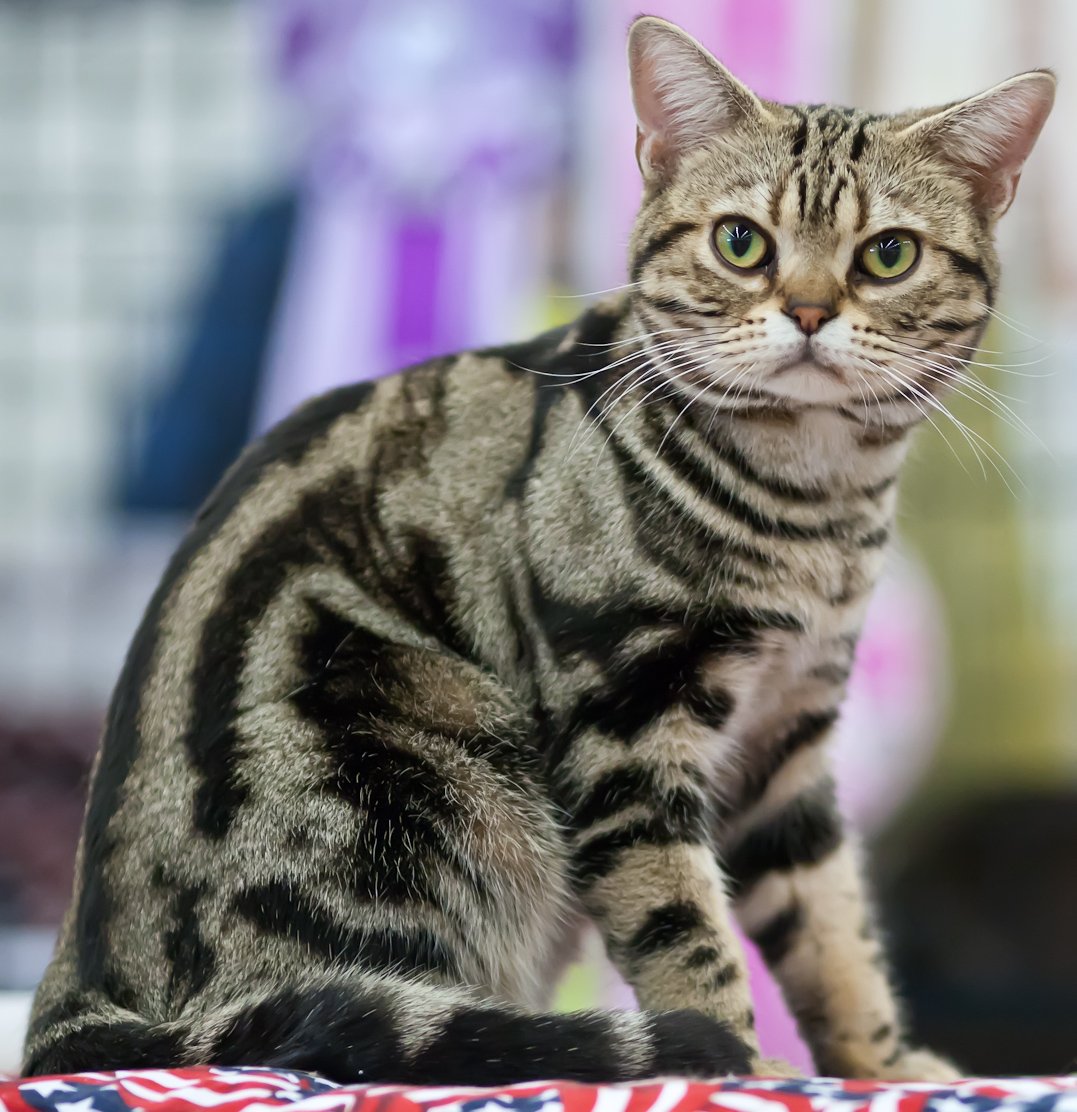
One of the most fascinating aspects of the American Shorthair is the remarkable variety in coat colors and patterns. The breed is recognized in more than 80 different color and pattern combinations , making it one of the most diverse cat breeds in appearance.
The coat itself is short, thick, and hard in texture . This dense coat served a practical purpose historically, protecting the cat from moisture, cold, and minor skin injuries . Regional and seasonal variations in coat thickness are normal, with the coat becoming notably longer and thicker during winter months .
Among the numerous color options, some of the most common include:
- Solids: Black, white, blue, red, and cream
- Tabbies: Silver, brown, blue, red, and cream in classic, mackerel, or ticked patterns
- Bi-colors: White with unbrindled portions of another color
- Tortoiseshell and Calico: Various combinations of black, red, blue, cream, and white
The silver tabby pattern stands out as one of the most popular and recognized varieties . In this pattern, the ground color is a pale, clear silver with dense black markings . This creates a striking contrast that many breed enthusiasts particularly value.
Eye color variations
Eye color in American Shorthairs correlates closely with coat color and adds another dimension to the breed’s diverse appearance. The eyes themselves are large and wide-set, with an upper lid shaped like half an almond and a fully rounded lower lid curve .
Gold eyes dominate across most color varieties, including black, blue, red, cream, tortoiseshell, and most tabby patterns . Green to hazel eyes are typical in silver tabbies, with green being the preferred shade . Consequently, eye color serves as an important feature in distinguishing between certain coat varieties.
White American Shorthairs present a unique case, as they may have either deep blue or gold eyes . Some white cats even display heterochromia—one blue eye and one gold eye—which is perfectly acceptable according to breed standards .
The combination of eye shape and color creates the bright, clear, and alert expression that typifies the American Shorthair face. Along with the broad head, full cheeks, and medium-short muzzle , these features complete the distinctive look that cat fanciers have come to cherish in this quintessentially American breed.
A Look Back: History and Origins
The rich history of the American Shorthair cat begins with a transatlantic voyage that would forever change the feline landscape of North America. These hearty felines have journeyed from European ships to become one of America’s most recognized native breeds, with a heritage as industrious as the nation they now call home.
From ship cats to American homes
The journey of the American Shorthair began on European vessels crossing the Atlantic Ocean to the New World. Historical evidence confirms that several shorthaired cats were brought aboard the Mayflower in 1620 , accompanying the Pilgrims to Plymouth Rock. One fascinating account, preserved in a family Bible, mentions a calico female who made the Mayflower journey and produced a litter of kittens soon after arriving at Plymouth Rock .
These initial feline immigrants might not have been the first to reach American shores. Some records suggest cats may have arrived even earlier with settlers of Jamestown or Spanish explorers in Florida . As European colonization expanded, more cats were imported specifically to manage rodent populations in growing settlements .
Initially, these early American cats were valued primarily for their practical skills rather than appearance. Historical documents from 1634 credit these hardworking felines with saving New England crops from squirrels and chipmunks . Throughout the 17th century, these cats flourished alongside pioneers, gradually developing into what would become the native North American shorthair cat .
Why they were prized for rodent control
The American Shorthair’s ancestors earned their passage to the New World through exceptional hunting abilities. These “ship’s cats” protected valuable food stores from mice during the long and perilous ocean voyages . Once established in American colonies, they continued this vital role, protecting food supplies and helping control disease-spreading rodents .
Their value as working cats became especially apparent during periods of severe rodent infestation:
- 1749 – Shorthair cats were specifically brought to Pennsylvania to control a severe rat plague
- 1849 – During the San Francisco Gold Rush, miners paid approximately INR 4219.02 each for proven rodent-hunting cats from the SS Ohio
- 1884 – During the San Francisco rat plague, these cats sold for between INR 4219.02 to INR 8438.05 apiece
Beyond their practical value, these cats evolved specific traits that helped them thrive in their new environment. Over time, they developed special characteristics to cope with North American climate and conditions . Their dense coat provided protection against harsh winters while working outdoors, and their muscular build facilitated efficient hunting .
As settlements grew, farmers and miners began selecting kittens not just for hunting prowess but for appealing colors, bold patterns, and general conformation . Simultaneously, nature’s selection process favored the healthiest, most intelligent cats, creating a breed with remarkable hybrid vigor and longevity .
Recognition as a breed in 1966
Although these cats had been working in America for centuries, formal recognition came much later. The breed was exhibited at the first American cat show in 1895 . Subsequently, the Cat Fanciers Association (CFA) recognized them as one of its founding breeds in 1906, initially under the name “Domestic Shorthair” .
The first officially registered Domestic Shorthair was Champion Belle of Bradford, an orange tabby male born in England on June 1, 1900 . As interest in cat breeding grew, enthusiasts began deliberately developing these native cats, selecting the best specimens to create a breed with specific traits .
A significant turning point came in 1961 when a group of West Coast breeders formed the American Shorthair Cat Association with the explicit purpose of renaming the breed . Their efforts proved successful when, in 1966, the breed was officially renamed “American Shorthair” . This name change served two important purposes: it better represented their “all-American” origins and clearly differentiated them from other short-haired breeds .
The renaming effectively distinguished these purebred cats with specific traits from the many random-bred shorthairs found throughout the country . Since receiving this distinctive name, the American Shorthair has maintained its popularity, consistently ranking among the most beloved cat breeds in the United States .
Grooming and Shedding Needs
Maintaining your American Shorthair cat’s coat requires less effort than many other breeds, yet consistent grooming remains essential for their health and appearance. These practical cats have evolved a dense, protective coat that serves them well, primarily requiring regular maintenance to keep them looking and feeling their best.
How often to brush
Despite their self-grooming nature, American Shorthair cats benefit significantly from weekly brushing sessions . This moderate frequency strikes the perfect balance—enough to maintain coat health without overwhelming your schedule or your feline friend. Weekly brushing effectively prevents mats while removing loose fur .
For optimal results, use a specific technique:
- First, utilize a metal comb to loosen dead fur, working from head to tail
- Then, follow with a bristle or rubber brush to collect the loosened hair
- Always brush in the direction the fur grows, being gentle around sensitive areas like the face and belly
These brushing sessions do more than maintain appearance. First thing to remember, they distribute natural skin oils throughout the coat, promoting healthier skin and shinier fur . Moreover, regular grooming creates valuable bonding time with your American Shorthair .
Managing seasonal shedding
American Shorthair cats typically shed throughout the year, with noticeable increases during spring and fall seasons . This natural process helps them regulate body temperature and maintain coat health. Certainly, indoor cats may experience more consistent, year-round shedding with less pronounced seasonal peaks .
To effectively manage shedding:
- Increase brushing frequency during heavy shedding periods
- Consider using a rubber curry brush which works exceptionally well for short-haired cats
- Ensure proper hydration, as it supports skin elasticity and healthy coat
- Maintain consistent nutrition with adequate protein and essential fatty acids
Regular brushing remains the most effective shedding management strategy, as it removes loose fur before it ends up on your furniture or in your cat’s stomach as hairballs . Persistent or excessive shedding might indicate underlying health issues like stress, dietary problems, or allergies . Hence, consult your veterinarian if you notice dramatic changes in shedding patterns, especially when accompanied by skin irritation or bald patches .
Other grooming essentials
Beyond brushing, comprehensive care for your American Shorthair includes several additional grooming practices . Dental care stands as a primary concern—daily tooth brushing helps prevent dental problems common in this breed .
Ear cleaning should become part of your regular routine as well. Check ears weekly for debris, wax buildup, or signs of infection . This practice helps you catch potential issues before they become serious problems.
Nail trimming constitutes another essential grooming task. Trim your American Shorthair’s claws as needed to prevent overgrowth . Still, remember to provide appropriate scratching posts as these fulfill both physical and psychological needs for your cat.
Professional grooming sessions can be beneficial occasionally . These thorough cleanings complement your at-home care routine, particularly during heavy shedding periods or if your cat develops mats that you cannot safely remove.
Regular grooming sessions actually offer an excellent opportunity to monitor your cat’s overall health . Use this time to check for any irregularities such as new lumps, wounds, or parasites . This proactive approach can help identify potential health issues early, potentially extending your American Shorthair’s lifespan.
Common Health Concerns to Watch For
While American Shorthairs are generally robust cats with impressive lifespans of 15-20 years, they remain susceptible to specific health conditions that require vigilant monitoring. Understanding these potential issues helps owners provide proper preventive care and seek timely veterinary attention when needed.
Hypertrophic cardiomyopathy
Hypertrophic cardiomyopathy (HCM) ranks as the most common heart disease affecting cats, with American Shorthairs potentially facing higher risks than other breeds . This condition causes the heart muscle to thicken abnormally, decreasing the heart’s efficiency and potentially leading to serious complications.
Early detection proves challenging as cats naturally hide illness. Typically, owners first notice rapid breathing, lethargy, and poor appetite . These symptoms may appear sudden but often indicate the cat has been silently suffering for weeks or months . As HCM progresses, affected cats may experience:
- Difficulty breathing
- Decreased activity levels
- Poor appetite and weight changes
- Potential heart failure
Vigilant owners should schedule regular cardiac screenings, primarily because HCM can remain undiagnosed in early stages . When selecting an American Shorthair kitten from a breeder, verify that parent cats have been screened for this condition .
Obesity and diabetes
Weight management represents a critical health concern for American Shorthairs. Approximately 35-50% of cats suffer from obesity, making it the most common nutritional disorder in felines . This epidemic has serious implications, as excess weight contributes significantly to numerous illnesses and potentially shortens a cat’s lifespan by up to two years .
Obesity directly increases the risk of diabetes mellitus, which has risen from 0.08% to 1.2% in the United States over three decades . For American Shorthairs specifically, genetic predisposition combined with poor diet and insufficient exercise creates the perfect conditions for diabetes development .
Warning signs of diabetes include:
- Weight loss despite healthy appetite
- Excessive thirst and frequent urination
- Increased hunger
The relationship between these conditions is clear—obese cats become hyperinsulinemic, which triggers hypersecretion of amylin . Eventually, this process damages pancreatic islets, potentially leading to diabetes . Fortunately, proper weight management through portion control, appropriate diet, and regular exercise can significantly reduce these risks.
Dental and urinary issues
Dental disease affects 50-90% of cats older than four years, making it extraordinarily common in American Shorthairs without regular tooth care . This progressive condition begins with plaque buildup, which hardens into tartar, eventually causing gingivitis and potentially periodontitis .
Signs of dental problems include:
- Bad breath
- Red, inflamed gums
- Tartar buildup
- Difficulty eating
- Excessive drooling
Implementing regular tooth brushing with cat-specific dental products and scheduling professional cleanings can prevent these issues . Importantly, untreated dental disease can lead to infection affecting internal organs .
Urinary tract problems represent another significant concern. Approximately 12.2% of cats experience urinary disorders annually, with male cats facing 27% higher odds than females . When your American Shorthair urinates outside the litter box, this behavior typically signals distress rather than disobedience .
Feline Lower Urinary Tract Diseases (FLUTD) encompass various conditions with similar symptoms. Watch for urination on cool surfaces, bloody urine, straining with minimal production, or crying in the litterbox . These signs warrant immediate veterinary attention, as blocked males face a potentially fatal emergency if unable to urinate .
Through proactive health monitoring, appropriate nutrition, and regular veterinary care, many of these common health concerns can be effectively managed, helping your American Shorthair maintain optimal wellbeing throughout their life.
Feeding and Nutrition Guidelines
Proper nutrition forms the foundation of health for your American Shorthair cat. These hardy felines thrive on well-balanced diets that honor their natural nutritional needs while supporting their active lifestyle and muscular build. Let’s examine the nutritional requirements that keep these cats healthy throughout their long lives.
Ideal diet composition
American Shorthair cats are obligate carnivores, requiring diets high in animal proteins, moderate amounts of fat, and minimal carbohydrates . This dietary profile mirrors what these cats evolved to consume as skilled hunters. A nutritionally complete diet for your American Shorthair must contain:
- High-quality animal proteins (meat, poultry, or fish as primary ingredients)
- Essential fatty acids for coat health and energy
- Vitamins and minerals in appropriate amounts
- Taurine, an amino acid crucial for heart and vision
Indeed, protein should constitute approximately 35% of your American Shorthair’s diet . This high protein requirement supports muscle maintenance and provides essential amino acids that cats cannot produce themselves.
Typically, quality commercial cat foods formulated according to AAFCO (Association of American Feed Control Officials) standards will meet these nutritional requirements . Therefore, look for foods labeled as “complete and balanced” with an AAFCO statement on the packaging .
Wet vs. dry food
The debate between wet and dry cat food represents a critical decision for American Shorthair owners. Each type offers distinct advantages worth considering.
Wet food contains approximately 70-80% moisture compared to only 6-10% in dry food . This significant difference makes wet food valuable for increasing your cat’s water intake, potentially reducing urinary tract issues—a concern highlighted in the health section . Canned food’s rich aroma often appeals to pickier eaters, as cats rely heavily on smell when selecting food .
Dry kibble, alternatively, offers convenience and economy. It has a longer shelf life, doesn’t require refrigeration, and generally costs less per serving . Furthermore, dry food can benefit dental health through its mild abrasive action against teeth .
Neither option is inherently superior. In fact, many veterinarians recommend a “mixed feeding” approach that combines both food types . This strategy:
- Respects cats’ natural preference for multiple small meals
- Provides textural variety that many cats appreciate
- Balances the hydration benefits of wet food with the dental advantages of dry
When storing dry food, keep it in airtight containers to maintain freshness . For wet food, refrigerate unused portions and discard after 24 hours .
How much to feed based on age and weight
Feeding appropriate amounts prevents obesity—a common issue in American Shorthairs that can lead to diabetes and other health problems.
For adult American Shorthairs, calorie needs average approximately 20 calories per pound of body weight daily . Given their typical weight range (11-15 pounds for males, 6-12 pounds for females), this translates to roughly 240-340 calories per day . Adjust this baseline depending on your cat’s activity level, age, and metabolism.
Feeding schedules should follow this general pattern:
- Kittens (4-12 weeks): Feed 3-4 meals daily with moistened food
- Kittens (3-6 months): Feed 2-3 meals daily
- Adult cats: Feed 2 meals daily or free-feed dry food with portion control
- Senior cats: Continue with 2-3 smaller meals, potentially increasing calories if muscle loss occurs
Monitor your cat’s body condition regularly by feeling their ribs and observing their waistline. You should be able to feel the ribs with slight pressure and see a defined waist when viewed from above. Adjust portions accordingly if your cat gains or loses too much weight.
Throughout all life stages, fresh water must remain constantly available . This simple yet vital requirement supports overall health, digestion, and helps prevent urinary issues common in domestic cats.
Exercise and Enrichment Tips
Keeping your American Shorthair cat both physically active and mentally stimulated is vital for their wellbeing. These cats maintain their playful nature well into their senior years, requiring proper outlets for their natural instincts.
Interactive toys and games
American Shorthair cats thrive on hunting-based play that satisfies their predatory instincts. Daily playtime of 20-30 minutes, ideally split into two sessions, provides optimal exercise . These cats especially enjoy wand toys with prey-like lures that mimic mice, birds, bugs, or snakes .
For independent play, consider:
- Puzzle feeders that dispense treats when manipulated
- Catnip-filled toys that encourage engagement
- Battery-operated toys that move unpredictably
- Simple items like crumpled paper or cardboard boxes
Interactive play strengthens your bond with your cat while providing crucial exercise. Fundamentally, these activities allow your American Shorthair to express their natural hunting behaviors in a healthy way.
Importance of climbing and scratching
Vertical space remains essential for American Shorthairs. Cat trees, wall-mounted shelves, and window perches offer opportunities to climb, observe their surroundings, and ambush “prey” during playtime . These structures fulfill their instinctive desire to seek higher ground.
Scratching posts serve multiple purposes beyond nail maintenance. They allow cats to stretch their muscles, mark territory through scent glands in their paws, and relieve stress . For maximum effectiveness, ensure scratching posts stand at least three feet tall, allowing your cat to fully extend while scratching .
How to prevent boredom
Toy rotation effectively maintains interest—store unused toys in airtight containers with catnip and reintroduce them periodically . Window access with bird feeders outside provides endless entertainment .
Environmental enrichment fundamentally addresses cats’ natural needs. Create comfortable window perches for birdwatching, provide hiding spots, and incorporate sensory elements like cat grass or safe plants .
Regular play prevents obesity, anxiety, and destructive behaviors like inappropriate scratching or excessive meowing . Ultimately, enrichment isn’t just about entertainment—it satisfies your American Shorthair’s innate hunting, climbing, and exploring instincts, creating a happier, healthier companion.
Is the American Shorthair Right for You?
Considering adding an American Shorthair to your household? These adaptable felines fit remarkably well into various living situations, yet certain environments and owner characteristics better complement their natural temperament.
Best home environments
American Shorthair cats demonstrate exceptional adaptability, thriving equally in spacious country houses or cozy city apartments . The physical space matters less than the mental stimulation provided . These versatile cats adjust effortlessly to their surroundings, making them perfect companions regardless of your living situation .
What truly matters for an American Shorthair’s happiness isn’t square footage but rather:
- Access to windows for observation
- Vertical spaces for climbing
- Interactive toys for mental engagement
These intelligent cats can adapt to smaller spaces provided they receive proper stimulation and attention . Most importantly, they tolerate being left alone during the day, making them ideal for working professionals .
Compatibility with other pets
American Shorthairs typically display excellent compatibility with other household animals. These sociable felines generally get along well with other cats, often forming bonds and engaging in playful interactions with their feline companions . Coupled with their even temperament, they usually coexist peacefully with cat-friendly dogs .
Remember that while they have strong hunting instincts, proper introductions help establish harmonious relationships in multi-pet households . Primarily, gradual introductions and initially providing separate spaces for each animal will minimize stress .
What type of owner they thrive with
The laid-back American Shorthair suits diverse owner types. Families often find them ideal companions as they demonstrate patience with children when handled gently . Their moderate playfulness combined with independence means they don’t demand constant attention .
Single adults appreciating affectionate yet self-sufficient companions will find the American Shorthair particularly rewarding . Fundamentally, these cats appreciate interaction on their terms—sometimes curling in your lap but often preferring to sit alongside you .
Busy individuals benefit from this breed’s ability to entertain themselves with toys while maintaining a balanced, affectionate relationship with their humans .
Conclusion
American Shorthair cats truly stand as a testament to the perfect balance between working cat functionality and affectionate companionship. Throughout their journey from European ship cats to beloved American household pets, they’ve maintained their distinctive blend of independence and friendliness. These cats bring together remarkable adaptability, moderate grooming needs, and generally robust health, making them suitable companions for various living situations.
Above all, the American Shorthair’s even temperament sets them apart from many other breeds. Their ability to interact gently with children while maintaining healthy boundaries demonstrates why families consistently choose these balanced felines. Meanwhile, their self-sufficiency appeals to busy professionals who appreciate a cat that can entertain itself during the workday without developing separation anxiety.
Physically, American Shorthairs offer stunning variety with their 80+ color and pattern combinations, yet they maintain the muscular, sturdy build that served them well throughout American history. This combination of beauty and functionality remains one of their most appealing characteristics.
Certainly, prospective owners should consider the potential health challenges these cats might face, particularly regarding cardiac health, weight management, and dental care. Nevertheless, with proper nutrition, regular veterinary checkups, and appropriate enrichment, American Shorthairs typically enjoy impressively long lives of 15-20 years.
The American Shorthair ultimately represents an ideal middle ground for many cat enthusiasts – neither overly demanding nor completely aloof, active yet calm, and affectionate without being clingy. Their proven track record as devoted family members, efficient mousers, and adaptable companions explains their enduring popularity across America. Whether you live in a bustling apartment or spacious farmhouse, an American Shorthair will likely adjust to your lifestyle while bringing their distinctive charm and character into your home for many years to come.