
Somali Cat
Somali cats often captivate attention with their fox-like appearance, striking ticked coats, and bushy tails. Despite being relatively uncommon, these felines have gained popularity among cat enthusiasts who appreciate their unique blend of beauty and personality.
The Somali cat characteristics extend beyond their gorgeous exterior. Their playful and energetic Somali cat behavior makes them exceptional companions for active households. Additionally, the Somali cat temperament balances affection with independence, creating a pet that enjoys interaction without being overly demanding. Though their average Somali cat lifespan ranges from 12-15 years, proper care can extend their time with you, while their moderate Somali cat weight of 6-10 pounds makes them a manageable size for most homes.
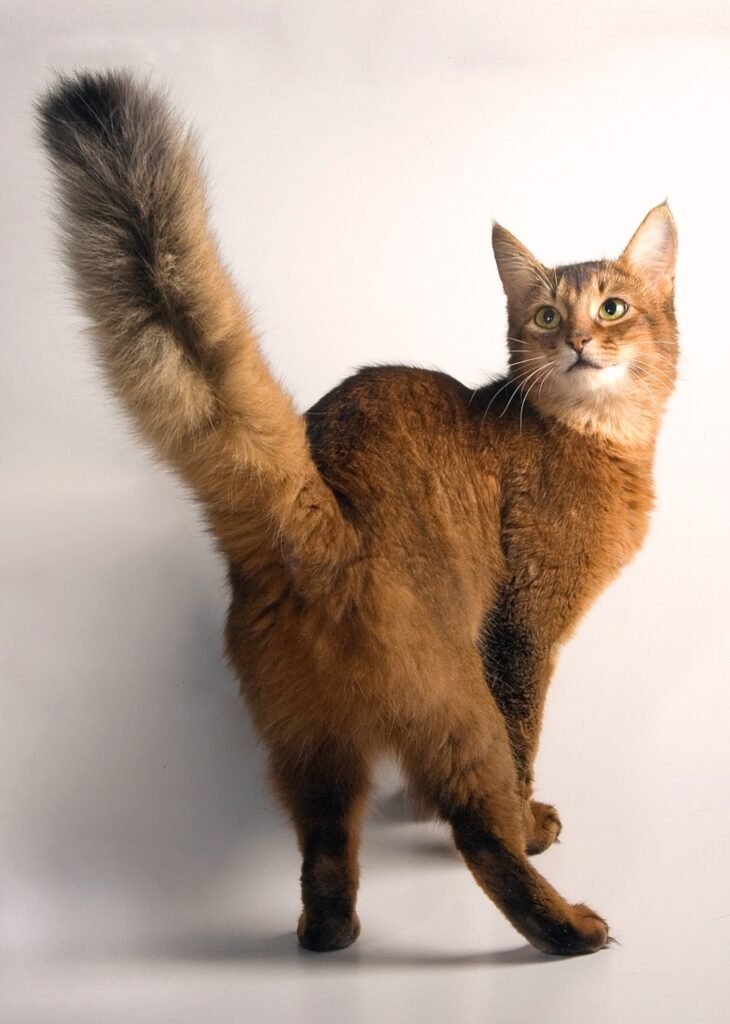
Whether you’re considering adopting this stunning breed or simply fascinated by their distinctive traits, this comprehensive guide explores everything from their mysterious origins to daily care requirements. Undoubtedly, understanding what makes these cats special helps potential owners determine if the fox-like feline is the perfect addition to their family.
The Origin Story of the Somali Cat
The Origin Story of the Somali Cat
From Abyssinian to Somali: A genetic twist
The elegant Somali cat emerged not through deliberate creation, but rather as a genetic surprise within Abyssinian breeding programs. At its core, the Somali is simply a long-haired version of the Abyssinian cat, resulting from a recessive gene that created an entirely new breed .
The longhair gene was initially introduced into the Abyssinian breed in the early 1900s , although the exact manner remains a subject of speculation. One compelling theory suggests that following the devastation of World War II, the Abyssinian population dwindled dramatically to potentially fewer than 12 cats . This population bottleneck necessitated the introduction of other breeds to maintain viable breeding lines, subsequently introducing the longhair gene into the Abyssinian genetic pool.
For decades, these “different” kittens were considered undesirable accidents. Two shorthair Abyssinian parents carrying the recessive gene could produce longhaired kittens, yet two longhaired cats could never produce shorthaired offspring . Since the gene for short hair is dominant, these longhaired variations appeared sporadically, often puzzling breeders who weren’t expecting the fluffier result.
The role of breeders in shaping the breed
The turning point for these longhaired Abyssinians came in the 1940s when British breeder Janet Robertson exported several Abyssinian kittens to Australia, New Zealand, and North America . Among the descendants of these cats, occasional kittens with longer, fuzzier coats began appearing.
The first documented longhaired Abyssinian in North America, “Raby Chuffa of Selene,” appeared in 1953 . Subsequently, in 1963, Canadian breeder Mary Mailing entered a longhaired Abyssinian into a local pet show where judge Ken McGill recognized something special and requested one for breeding purposes .
Nevertheless, the true champion of the emerging breed was American Abyssinian breeder Evelyn Mague. After discovering that two of her cats—Lynn-Lee’s Lord Dublin and Lo-Mi-R’s Trill-By—carried the longhair gene, Mague began deliberately working with these “different” cats . Trill-By (affectionately called “Trilly”) became the foundation of the United States Somali breed, born on May 25, 1965 .
Rather than hiding these longhaired variations, Mague actively sought other breeders with similar cats. She connected with Canadian breeders like Don Richings, who worked with kittens from McGill. Together, these pioneering breeders faced considerable opposition—they were often “ridiculed, shunned, and treated deplorably by many of the Abyssinian breeders and judges” . Yet their perseverance ultimately paid off.
Systematic breeding of the Somali cat began in America, and the breed gradually gained acceptance internationally :
- 1979: Recognized by the Cat Fanciers’ Association (CFA) in North America
- 1982: Accepted in Europe
- 1991: Broadly (though not universally) accepted internationally
Why the name ‘Somali’?
The name “Somali” reveals a thoughtful geographical connection rather than indicating the breed’s country of origin. Evelyn Mague deliberately chose a name of equal stature to Abyssinian, selecting “Somali” because Somalia borders Abyssinia (modern-day Ethiopia) .
This naming choice represents what Mague called “a unique interpretation of the Ethiopian-Somali conflict” . Her charming rationale was that since land borders between countries are human creations, the genetic borders between the Abyssinian cat and its longhaired variant were equally artificial . The name acknowledged both the close relationship between the breeds and their distinct identities.
Interestingly, as the Somali gained recognition, the breed found particular popularity in Australia, where they are bred “almost to the exclusion of the Abyssinian” . Today’s Somali cats carry forward this unexpected genetic legacy, reminding us how serendipity and dedicated breeding can transform an “undesirable variation” into one of the most visually striking cat breeds in existence.
What Makes the Somali Cat So Visually Striking
What Makes the Somali Cat So Visually Striking
The majestic Somali cat stands out in the feline world with its distinctive appearance that has earned it the apt nickname “Fox Cat.” Beyond just being a longhaired version of the Abyssinian, these cats possess a unique combination of physical traits that make them truly spectacular companions.
Ticked coat and color variations
At the heart of the Somali’s visual appeal lies its extraordinary coat with ticking—a genetic pattern where each hair shaft contains multiple bands of color. Remarkably, a single hair may feature between 4 and 20 alternating color bands from root to tip . This ticking creates a shimmering effect as the cat moves, giving the coat remarkable depth and dimension.
The texture of a Somali’s coat feels incredibly soft and fine—softer than most other cat breeds . This medium-length fur is double-coated and ideally dense, with slightly shorter hair permitted over the shoulders . Most Somalis display a ruff around the neck and breeches on the hind legs, creating that full-coated, luxurious appearance breeders seek .
Regarding colors, Somalis come in an astounding variety—28 colors in total . However, most cat associations officially recognize four primary colors:
- Ruddy/Usual: Golden brown base with black ticking, darker along the spine and tail
- Blue: A coat that appears grayish but has distinctive blue tones in the individual hairs
- Sorrel/Cinnamon: A warm, glowing red coat ticked with chocolate-brown
- Fawn: A blonde coat with deeper beige on top, transitioning to lighter sandy tones on the belly and legs
Other color variations may include chocolate, lilac, red, cream, and various tortoiseshell patterns, though acceptance varies between registries .
Fox-like tail and expressive eyes
Perhaps most distinctive is the Somali’s bushy, fox-like tail. Thick at the base with a slight taper, this plumed tail creates an immediate visual association with foxes . The full brush of the tail complements the overall coat and adds to the wild appearance that makes these cats so alluring .
Furthermore, a Somali’s eyes captivate with their large, almond shape and expressive quality . These brilliant eyes are accentuated by dark lid skin encircled by a lighter colored area . Adding to their distinctive facial appearance are fine dark lines—one vertical stroke above each eye and another extending from the upper lid toward the ear base .
Eye color typically ranges from gold to green, with judges and breeders giving preference to deeper, richer hues . These expressive eyes, combined with their large pointed ears, create a perpetually alert and attentive expression .
Size and body structure
Physically, the Somali is a medium to large cat with a well-developed musculature that conveys both strength and grace . Males typically weigh between 4.5 to 5.5 kilograms (9-12 pounds), while females range from 3 to 4.5 kilograms (6-10 pounds) .
The body features a medium-long torso with a slightly arched back, giving the impression of a cat ready to spring into action . Their rib cage is rounded, and their flank remains level without tucking up . This balanced conformation positions the Somali between extremes—neither cobby nor overly svelte .
Overall, the Somali’s physical structure combines athleticism with elegance. Their lithe, muscular bodies paired with their signature ticked coat create a cat that appears both wild and refined—a testament to the unexpected genetic twist that produced this stunning breed.
Personality Traits That Set the Somali Apart
Personality Traits That Set the Somali Apart
Behind those expressive eyes and fox-like appearance lies a distinct personality that makes the Somali cat truly special. These felines offer a fascinating blend of traits that create a companion unlike any other.
Playful and energetic nature
The Somali cat exemplifies what it means to be energetic. These cats possess a remarkable zest for life, constantly seeking action and adventure. Essentially, a Somali brings non-stop activity to your home, rarely found lying around as they always have “energy to burn” .
Their playfulness extends beyond casual entertainment—Somalis require substantial mental and physical stimulation to thrive. These intelligent felines quickly become bored with simple toys, needing regular interactive play sessions . Notably, they create their own amusement when left under-stimulated, which might include scaling refrigerators, climbing curtains, or knocking items off shelves .
Somalis possess extraordinary athletic abilities, including jumping, climbing, and what some owners humorously describe as “levitating” . Their natural curiosity drives them to explore every inch of their environment. Primarily, they excel with puzzle toys, learning tricks, and engaging in activities that challenge their clever minds .
Sociability with humans and pets
The Somali cat forms deep social bonds and generally dislikes being alone. In fact, these cats often experience separation anxiety, making them ideal for households where someone is regularly present . Many experts recommend adopting two Somalis simultaneously to provide companionship when humans are unavailable .
These sociable felines typically integrate well into multi-pet households. The Somali “loves people and other animals” and generally demonstrates good compatibility with both cats and dogs, provided proper introductions occur . Their friendliness rating is considered “high” according to breed standards .
Somalis often follow their humans throughout the home “like curious assistants” . Additionally, they communicate with a soft, quiet voice—vocal without being demanding . This chattiness comes from genuine interest in what you’re doing, as they typically want to be involved in household activities.
Affectionate but independent
The affection from a Somali comes with interesting conditions. Unlike many lap cats, Somalis offer love and attention on their own terms . Their independence manifests particularly in how they prefer physical interaction—most Somalis “do not like to be held” and “are not known as cuddlers” .
Indeed, this characteristic creates a unique dynamic; they desire closeness without surrendering control. Interestingly, many Somalis prefer riding on shoulders rather than being cradled . When a Somali does choose to climb onto your lap, experts recommend enjoying the moment quietly, as making a fuss might cause them to depart hastily .
This independent streak balances beautifully with their affectionate nature. Somalis bond deeply with their families, exhibiting intuitive abilities to sense their owners’ moods . Their high intelligence allows them to understand emotions and respond accordingly.
For potential Somali owners, understanding this distinctive personality blend is crucial. These cats thrive in homes with:
- Multiple climbing opportunities and elevated spaces
- Interactive toys that challenge their intelligence
- Consistent companionship (human or animal)
- Respect for their independence
The Somali offers a rare combination—wild appearance with devoted companionship . These cats transform ordinary homes into lively, entertaining spaces through their playful antics and engaging personalities. For active families seeking an intelligent, spirited companion who balances affection with independence, the Somali cat represents a perfect match.
Daily Care and Grooming Needs
Caring for a Somali cat’s stunning appearance requires consistent attention, yet their grooming needs remain surprisingly manageable compared to other longhaired breeds. A proper care routine maintains not just their fox-like beauty, but also contributes significantly to their overall health and comfort.
Brushing and coat maintenance
The Somali’s silky, semi-long coat possesses a naturally resilient quality that resists matting. Throughout the year, brushing twice weekly proves sufficient for most Somalis to maintain their magnificent coats . This moderate grooming requirement makes them ideal for owners who desire a longhaired cat without demanding maintenance.
For optimal results, use a steel comb as your primary grooming tool . The fine tines effectively remove loose hair and prevent tangles before they form. During seasonal shedding periods, typically spring and fall, increase brushing frequency to daily sessions to manage heavier shedding . This proactive approach significantly reduces hairballs and household fur distribution.
The Somali’s grooming routine benefits from a systematic approach:
- Start with a slicker brush to loosen dead hair and remove small tangles
- Follow with a metal comb to check for any remaining knots
- Pay special attention to the “ruff” around the neck, behind the ears, and the plume-like tail
Most Somali cats actually enjoy the grooming process once accustomed to it . Their playful temperament means they may treat the brush as a toy initially, so short, positive sessions work best when introducing grooming to your Somali.
Nail trimming and ear cleaning
Regular nail maintenance prevents discomfort and potential injury to both cat and household. Trim your Somali’s nails approximately every 3-4 weeks . For reluctant cats, gradual desensitization works effectively—begin by simply touching their paws, then progress to holding each foot briefly before attempting actual trimming .
When trimming, use proper cat nail clippers (not human nail scissors) to prevent splitting the claw . Cut only the transparent tip, carefully avoiding the pink “quick” that contains blood vessels and nerves. For particularly active Somalis, more frequent trimming may be necessary as their playful antics can lead to snagged nails.
Ear care requires a gentle approach. Contrary to common belief, cats generally don’t need routine ear cleaning unless visible dirt or wax accumulates . Check your Somali’s ears weekly for:
- Redness or inflammation
- Excessive wax or discharge
- Unpleasant odor
- Signs of discomfort when touched
Should cleaning become necessary, use only veterinarian-recommended feline ear cleaners. Apply the solution to a cotton ball rather than directly into the ear canal, then gently wipe the visible portions without inserting anything into the ear canal . Never use cotton swabs as they can push debris deeper and potentially damage the ear canal .
Dental hygiene tips
Dental care deserves special attention for Somali cats, as they show particular susceptibility to periodontal disease . Establish a dental routine early, as prevention proves far easier than treatment. Ideally, brush your Somali’s teeth three times weekly at minimum .
For effective dental care:
- Use only toothpaste formulated specifically for cats (never human toothpaste)
- Start with finger brushes before transitioning to cat-specific toothbrushes
- Focus particularly on the gum line where plaque accumulates
- Supplement brushing with dental treats or toys designed for oral health
The most common signs of dental problems include bad breath, excessive drooling, pawing at the mouth, or changes in eating behavior . Schedule professional dental cleanings as recommended by your veterinarian—typically annually for most cats, but possibly more frequently for Somalis given their predisposition to dental issues.
Even with regular home care, professional veterinary dental examinations remain essential. These cleanings remove tartar below the gum line where brushing cannot reach . Proactive dental care directly supports your Somali’s overall health and potentially extends their lifespan by preventing systemic infections that can start in the mouth.
Through consistent grooming, nail maintenance, ear checks, and dental care, your Somali will not only maintain their striking appearance but also enjoy enhanced comfort and health throughout their life.
Exercise and Mental Stimulation Requirements
Exercise and Mental Stimulation Requirements
The energetic Somali cat requires far more activity and mental engagement than the average feline. Understanding their exercise needs is crucial for maintaining both physical health and emotional well-being in this remarkable breed.
Why Somalis need daily play
Somalis possess remarkably high exercise requirements compared to most cat breeds . These felines are rambunctious, intelligent, and constantly active, making regular physical outlets necessary for their overall happiness. Without adequate stimulation, Somalis quickly become bored, potentially resulting in mischievous or destructive behavior .
Most importantly, these cats are prone to separation anxiety . A bored Somali becomes an unhappy Somali, and when a cat with such intelligence and athleticism lacks stimulation, they typically find ways to entertain themselves—often by scratching furniture or creating other household mischief . Consequently, interactive play sessions strengthen not only their physical health but also the bond between pet and owner .
Multiple play sessions throughout the day help burn excess energy and prevent behavioral issues . For those willing to be adventurous, Somalis can even be trained to walk on leashes with proper harnesses, satisfying their love for outdoor exploration while keeping them safe .
Best toys and games for this breed
Somali cats won’t be satisfied with just a couple of standard catnip toys . Their high intelligence demands a variety of engaging options. Primarily, they excel with:
- Interactive toys: Fishing pole toys, feather teasers, and laser pointers cater to their hunting instincts
- Puzzle feeders: These satisfy both their intellect and desire to work for food
- Fetch toys: Unlike many cats, Somalis often enjoy retrieving toys, balls, or even crumpled paper
- Puzzle toys: Mental challenges that dispense treats keep their minds sharp
Rotating toys regularly prevents boredom, as Somalis can quickly tire of the same activities . Above all, these cats thrive with interactive games involving their humans. Their exceptional intelligence allows them to learn commands like “sit” and “stay” when training sessions remain positive and rewarding .
First-time Somali owners are often surprised to discover these cats enjoy water games—some will play for hours with running taps or shallow water bowls . This unusual trait makes them uniquely entertaining companions.
Creating a stimulating home environment
A stimulating environment for your Somali should include vertical territory. Cat trees, shelves, and window perches provide essential high vantage points where they can survey their domain . These climbing opportunities satisfy their natural desire to perch in elevated positions while observing household activities.
As a result of their exceptional intelligence, Somalis benefit tremendously from puzzle feeders and treat-dispensing toys . These tools stimulate their minds by challenging them to work for food, mimicking natural hunting behaviors while slowing consumption for better digestion .
If your Somali will be alone for any period, interactive toys, scratching posts, and climbing opportunities become absolutely essential . Many experts suggest adopting two Somali kittens instead of one, as their social nature means they thrive with feline companionship during times when human interaction isn’t available .
Creating a consistent play routine supports their need for structure while reducing stress . Even with established routines, regularly introduce new activities to maintain their engagement and curiosity. For the particularly adventurous owner, consider building a secure outdoor enclosure or “catio” where your Somali can safely experience outdoor stimulation .
By providing appropriate outlets for their energy and intelligence, you’ll develop a happier, healthier Somali companion who channels their remarkable energy into positive behaviors rather than household destruction.
Common Health Concerns in Somali Cats
Common Health Concerns in Somali Cats
With their average lifespan of 11-16 years, Somali cats are generally healthy, yet prospective owners should be aware of several breed-specific conditions . Being informed about these health challenges allows for early detection and appropriate management to ensure your fox-like companion lives a full, comfortable life.
Pyruvate kinase deficiency (PKDef)
Pyruvate kinase deficiency represents one of the primary genetic concerns in Somali cats. This hereditary condition results from insufficient pyruvate kinase enzyme—essential for red blood cell metabolism . Without this crucial enzyme, red blood cells have shortened lifespans, potentially causing anemia of varying severity .
The clinical signs of PKDef can appear in Somalis as young as six months or as late as 12 years . Moreover, the condition shows remarkable variability in both onset age and symptom severity . Some affected cats may display:
- Lethargy and weakness
- Pale mucous membranes
- Elevated heart rate
- Jaundice (less common)
- Inability to perform routine activities
PKDef is transmitted as an autosomal recessive trait, meaning both parents must contribute the defective gene for kittens to develop the condition . Fortunately, reliable DNA testing can identify normal cats, carriers, and affected individuals . This testing capability makes it possible to make informed breeding decisions and gradually reduce the prevalence of PKDef in the breed.
Interestingly, not every PKDef-deficient cat develops clinical signs . In a study of 25 affected cats, 11 showed no symptoms for periods ranging from 0.8 to 7.8 years . Nonetheless, even asymptomatic carriers should not be bred without careful consideration and genetic testing .
Progressive retinal atrophy (PRA)
Progressive retinal atrophy encompasses several genetic disorders affecting the retina’s photoreceptor cells . For Somali cats, this condition exists in two primary forms: the late-onset rdAc mutation and the early-onset Rdy form .
The more common rdAc mutation typically manifests between 1-2 years of age, with cats developing night blindness initially . Vision deteriorates gradually over 2-4 years, often resulting in complete blindness between 3-5 years of age . Alternatively, the rarer Rdy mutation causes much earlier onset blindness—affected kittens typically lose vision by 7 weeks of age .
Signs that your Somali might be experiencing vision changes include:
- Disorientation or bumping into objects
- Difficulty finding food, water bowls, or litter boxes
- Reluctance to jump or navigate stairs
- Dilated pupils in normal lighting conditions
Like PKDef, PRA is generally inherited as an autosomal recessive condition (except for Rdy, which is dominant) . Genetic testing remains crucial for responsible breeding programs, as carriers appear clinically normal yet can pass the gene to offspring .
Other age-related conditions
Beyond these breed-specific issues, Somali cats may experience several other health concerns as they age. Renal amyloidosis—a condition where protein deposits damage kidney function—appears occasionally in this breed . Additionally, some Somalis develop myasthenia gravis, a neuromuscular condition affecting strength and stamina .
Regular veterinary care becomes especially important as your Somali ages, as they may face typical feline age-related issues such as arthritis, heart disease, and kidney problems . Dental disease presents another significant concern, with Somalis showing particular susceptibility to periodontal problems that require vigilant home care and professional cleanings.
For Somali owners, the best approach combines:
- Regular veterinary check-ups including blood work to catch problems early
- Genetic testing before breeding
- Learning the signs of breed-specific conditions
- Purchasing from reputable breeders who test their breeding stock
Through knowledgeable care and proper genetic screening, many of these health issues can be minimized, allowing your Somali cat to enjoy their characteristic playful energy throughout a long, healthy life.
Feeding and Nutrition Tips for a Healthy Somali
Feeding and Nutrition Tips for a Healthy Somali
Proper nutrition forms the foundation of your Somali cat’s health, directly affecting their energy levels, coat quality, and longevity. With their active lifestyle and muscular build, these felines require thoughtful dietary management to maintain peak condition.
Choosing the right food
Somali cats thrive on high-quality, protein-rich diets that reflect their carnivorous nature. Due to their active temperament and muscular physique, they need substantial animal-based protein to support their energetic lifestyle . Look for foods with real meat or fish as the primary ingredient .
When selecting commercial cat food, the nutritional adequacy statement on the packaging deserves your attention. This statement confirms whether the food meets the nutritional levels established by AAFCO for your cat’s life stage . For Somalis, foods with minimal fillers and unnecessary grains provide better nutrition.
Although Somalis don’t have breed-specific dietary requirements, their sensitive digestive systems often benefit from gut-friendly foods containing prebiotics or probiotics . This helps reduce digestive upsets and improves overall nutrient absorption.
Feeding schedule and portion control
Cats are creatures of habit, making regular feeding times beneficial for establishing security and predictability . For adult Somalis, at least two meals per day works best, aligning with their natural stomach emptying cycle that creates hunger signals after 8-10 hours .
Somalis are typically food-motivated and good eaters, which makes portion control particularly important . Measure food accurately using a digital kitchen scale for precision and adjust portions based on your cat’s:
- Age and life stage
- Activity level
- Current weight
- Overall health status
A regular feeding schedule becomes especially valuable if your Somali develops a medical condition requiring timed meals . Furthermore, any change in eating habits can signal potential health issues, making consistent feeding patterns helpful for monitoring wellness .
Supplements and treats
While a complete, balanced commercial diet typically provides all necessary nutrients, certain supplements may benefit your Somali under specific circumstances . Joint support supplements might be recommended as they age, particularly given their active nature .
For overall health maintenance, some beneficial supplements include:
- Omega-3 fatty acids for skin and coat health
- Probiotics for digestive support
- Glucosamine and chondroitin for joint health
Regarding treats, even with food-motivated Somalis, moderation remains key. Calories from treats should not exceed 5-10% of your cat’s total daily intake . Treat dispensing toys offer dual benefits—mental stimulation alongside controlled treat consumption.
Throughout your Somali’s life, consult regularly with your veterinarian about nutritional needs, as they change with age and potential health conditions . This proactive approach ensures your fox-like companion maintains their characteristic vitality and wellness throughout their lifespan.
Adopting or Buying a Somali Cat
Adopting or Buying a Somali Cat
Bringing a beautiful Somali cat into your home requires thorough research and preparation, given this breed’s rarity and specific needs.
Where to find reputable breeders
Finding a genuine Somali breeder means looking beyond casual online listings. Firstly, the Somali Breed Council maintains a directory of legitimate breeders worth consulting. Reputable establishments like Somali Sunshine (Toronto) offer TICA-certified cats with DNA testing for over 50 genetic diseases . Given that Somalis seldom appear in shelters, patience becomes essential during your search.
What to expect in terms of cost
Price ranges for Somali cats vary significantly based on sources. From reputable breeders, expect costs between INR 84,380 to INR 253,141, averaging around INR 151,884 . Show-winning lineages can reach up to INR 421,902 ! For budget-conscious admirers, retired breeding cats (ages 1-4 years) offer a more affordable option at INR 16,876 to INR 42,190 . Color, quality, and geographical availability further influence pricing.
Questions to ask before adoption
Prior to finalizing, inquire about the cat’s health history, genetic testing (especially for PKDef and PRA), vaccination records, and temperament. Even more importantly, verify whether the breeder provides health guarantees—reputable ones typically offer one-year warranties against genetic conditions . Additionally, understand the cat’s socialization history, energy levels, and compatibility with other pets or children.
Conclusion
Somali cats truly stand out as one of the most visually captivating and personally rewarding breeds in the feline world. Their fox-like appearance, magnificent ticked coats, and bushy tails make them instantly recognizable, while their playful yet independent nature creates a perfect balance for active households. Throughout their 11-16 year lifespan, these medium-sized cats combine athletic prowess with striking beauty.
Anyone considering a Somali should certainly appreciate their moderate grooming needs—twice-weekly brushing suffices most of the year, though daily attention becomes necessary during shedding seasons. Their high energy levels and remarkable intelligence demand regular interactive play and mental stimulation. Without adequate activity, these clever cats might redirect their energy toward household mischief.
Health-conscious owners must remain vigilant about breed-specific conditions like Pyruvate Kinase Deficiency and Progressive Retinal Atrophy, making genetic testing and regular veterinary care essential parts of responsible Somali ownership. Proper nutrition further supports their active lifestyle, with high-protein diets working best for their muscular builds.
Somalis may command a significant investment initially, but families willing to meet their needs receive extraordinary companions in return. These cats form deep bonds while maintaining their fascinating independence—they seek involvement in your daily activities without becoming overly demanding. First-time owners often express surprise at how these cats transform from exotic-looking pets into beloved family members who entertain, comfort, and engage with remarkable intelligence.
The Somali represents an excellent choice for active households seeking a spirited, affectionate companion with a stunning wild appearance. Their evolution from “undesirable variation” to celebrated breed stands as testament to how unexpected genetic surprises sometimes create the most remarkable companions of all.