
Shih Tzu
 Shih Tzu dogs started their journey as faithful companions to Tibetan monks before becoming treasured pets in Chinese royal palaces. These “lion dogs” might be small at just 20-28 centimeters tall and 4-7.5 kilograms in weight, but they showed remarkable resilience. The breed nearly vanished during China’s Communist Revolution (1927-49) when people killed them because of their connection to royalty and wealth. The breed’s survival story is remarkable – every Shih Tzu alive now traces back to just fourteen dogs—seven males and seven females—who helped rebuild the breed population in the 1930s.
The Shih Tzu holds strong as America’s 20th most popular breed in 2024, though it ranked 11th back in 2012. People love these dogs for their friendly nature and impressive lifespan of 10-18 years. The breed’s popularity extends to countries like India, where buyers pay between ₹25,000 and ₹60,000 based on breeder reputation and lineage. This piece covers everything a future Shih Tzu owner should know – from the breed’s rich heritage and unique physical features to their personality, health issues, and daily care needs.
Origin and History of the Shih Tzu
Origin and History of the Shih Tzu
From Tibetan monasteries to Chinese palaces
DNA analysis confirms the Shih Tzu’s deep Tibetan roots among the most ancient dog breeds known today. Chinese historical records show these small, square-bodied dogs existed as far back as 1000 B.C.. These shaggy companions served as alert dogs in Tibet’s remote landscape.
The traditional Chinese name “Shih-tzu Kou” means “Lion Dog,” which perfectly describes their lion-like facial features. Buddhist tradition adds more significance to this name, as Buddha was said to arrive on earth on a lion’s back. The God of Learning, Buddha Manjusri, traveled with a small Lion Dog that could become a full-sized lion.
These prized Tibetan dogs found their way to the Chinese Imperial Court as tribute gifts. Mountain passes posed challenges, yet trade caravans helped these dogs reach China. The Manchu emperors soon fell in love with these adaptable canines.
The Ming Dynasty (1368-1644) saw Shih Tzus become royal favorites. Palace life was luxurious for these dogs – noblewomen carried them in their robes, and they warmed the beds of emperors and empresses. The royal court claimed exclusive ownership rights. Anyone caught with one outside the palace walls faced death.
The breed’s near extinction and revival
The Dowager Empress Cixi’s rule from 1861 through 1908 marked a vital period in the breed’s development. She created a detailed breeding program to preserve the Shih Tzu’s unique traits. Court eunuchs competed to breed dogs that would please the Emperor. Successful breeders received income from rice land farms.
The carefully managed breeding program fell apart after Empress Cixi died in 1908. Random crosses between Pugs, Pekingese, and Shih Tzus became common in palace breeding. The breed almost vanished during China’s Communist Revolution (1927-49). Dogs associated with royalty and wealth were killed systematically.
Today’s Shih Tzus all trace back to just 14 dogs—seven males and seven females—preserved between 1928 and 1952. These dogs, imported to England and Scandinavia, became the foundation for all modern Shih Tzus. English breeder Freda Evans made a controversial decision in 1952 by introducing a black and white Pekingese into the bloodline.
Introduction to the Western world
Lady Brownrigg brought the first pair of Shih Tzus to England in the late 1920s. As wife of the Quarter Master General to the North China Command, she introduced Hibou and Shu-ssa, two thick-coated black and white Shih Tzus.
The breed started in the “Apsos” category with other Tibetan breeds. Their first appearance at Crufts in 1933 showed clear differences from the longer-nosed Lhasa Apso. England established its own Shih Tzu club by 1935, and the breed gained formal recognition.
European popularity grew steadily. American soldiers stationed in England after World War II fell in love with these charming dogs and brought them home. The 1940s and 1950s saw growing interest among American dog enthusiasts.
Different countries recognized the breed at various times:
The Kennel Club (UK) made it official on May 7, 1940
The American Kennel Club followed in 1969
The Shih Tzu quickly became one of America’s favorite toy breeds, reaching peak popularity in the 1960s.
Physical Characteristics of the Shih Tzu
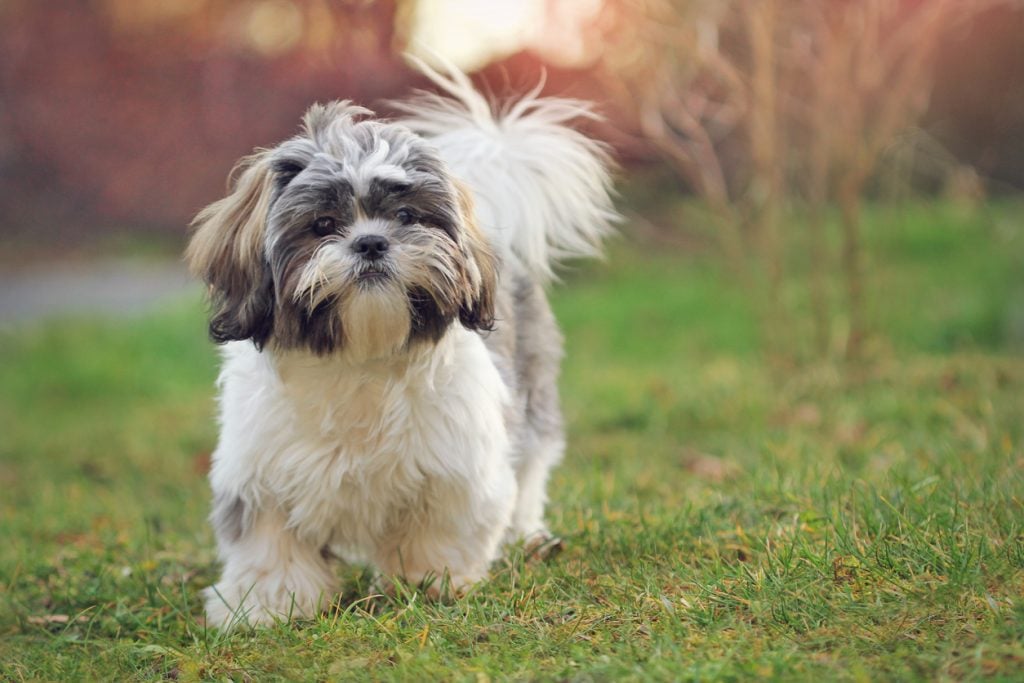
Image Source: Rover.com
Physical Characteristics of the Shih Tzu
Shih Tzus may be small, but their royal bearing tells a different story. These ancient companions have a distinctive look that has fascinated dog lovers for centuries. Their physical traits showcase their noble Chinese palace dog heritage and their breeding as perfect companions.
Size and weight range
Shih Tzus belong to the toy dog category with a surprisingly solid build. These compact dogs usually stand between 8 and 11 inches at the withers. They pack a sturdy frame into their small size, weighing between 9 and 16 pounds (4 to 7.3 kg).
You won’t see much difference between male and female sizes, which is unusual since many breeds show big gender-based size variations. These dogs reach their full adult size quickly, usually stopping growth at ten months. Here’s how they typically grow:
At 8 weeks: 2.2-4.5 pounds (1-2 kg)
At 4 months: 4.5-8 pounds (2-3.6 kg)
At 8 months: 8-14 pounds (3.6-6.4 kg)
Adult (10 months): 9-16 pounds (4.1-7.3 kg)
Their growth isn’t steady throughout—puppies grow faster in their early months before slowly reaching their adult weight.
Distinctive facial features
A Shih Tzu’s face makes them instantly recognizable. They have a round head with a short, squished muzzle that’s typical of brachycephalic breeds. Their large, expressive dark brown eyes give them a warm, alert look that melts hearts.
The breed standard requires a slight underbite, where the lower jaw extends past the upper jaw. This unique facial structure gives them an almost human-like expression that dog lovers adore.
Small, floppy ears covered in long hair blend smoothly into their coat. Combined with their heavily-furred tail curled over their back, these features create the classic Shih Tzu look we all know.
Common coat types and colors
A Shih Tzu’s most eye-catching feature is its luxurious double coat that needs regular care to stay beautiful. Without proper maintenance, this continuously growing coat can become tangled quickly.
Show dogs sport the famous long, flowing coat that reaches the ground. Many pet owners choose practical “puppy cuts” that are easier to manage. The coat needs daily brushing, with special attention to the beard and topknot areas.
The American Kennel Club welcomes all colors and patterns equally. These dogs come in many beautiful shades:
Solid colors: Black, white, gold, red, blue, liver, and silver
Two-color combinations: Black & white, gold & white, red & white, blue & white, silver & white, brindle & white, and liver & white
Three-color combinations: Black gold & silver, black white & silver, silver gold & white, and black gold & white
Special markings add character to many Shih Tzus, including black masks, black markings, tan markings, or white markings. Breeders prize a white blaze on the forehead and white-tipped tail.
A fascinating trait of Shih Tzus is how their coat colors can change as they age. Puppies might look completely different as adults. Black puppies might fade to silver while keeping their black noses, paws, and eye rims. Some registries now use skin color for classification since it stays the same throughout the dog’s life.
Understanding the Shih Tzu Temperament

Image Source: Figo Pet Insurance
Understanding the Shih Tzu Temperament
A captivating personality matches these dogs’ expressive eyes and luxurious coat. Shih Tzus carry themselves confidently, showing their royal heritage. Yet they’re warm companions that families worldwide have come to love.
Personality traits
Shih Tzus have earned their reputation as happy, friendly, and outgoing dogs. These true companion dogs love human attention and build strong bonds with their owners. You’ll often find these little pups following their humans everywhere, eager not to miss any family activities.
Typical Shih Tzus show:
Deep affection and loyalty to their family members
A bright, lively spirit that lights up homes
Strong need for companionship and human contact
Easy adjustment to different homes and lifestyles
Smart nature paired with eagerness to please
These traits make Shih Tzus great companions for anyone wanting an affectionate, easy-care pet that offers steadfast loyalty. Their background as palace companions shows in how well they adapt – they’re just as happy lounging on laps as they are joining family adventures.
These dogs might develop separation anxiety if left alone too long. This makes sense, given their history as devoted companions. A Shih Tzu sees itself as a family member, not just a pet.
Behavior with children and other pets
The American Kennel Club points out that Shih Tzus are “especially affectionate with children”. Their sturdy build helps them handle young kids’ unpredictable movements better than other toy breeds, despite their small size.
These social butterflies usually:
First, fit well into homes with multiple pets Second, show great patience with well-behaved children Third, grow even friendlier with early socialization
Early introductions to children help build positive relationships. Adults should always watch interactions between young kids and Shih Tzus. Kids need to learn proper handling since these small dogs can get hurt despite their sturdiness.
Unlike some small breeds that stick to one person, Shih Tzus bond with everyone in the family. They rarely get jealous but might guard their favorite toys or food. Teaching children to respect the dog’s space during meals or playtime prevents problems.
Alertness and watchdog tendencies
Don’t let their small size and friendly nature fool you – Shih Tzus stay surprisingly alert, making them good watchdogs. Their ancient role as “alert dogs” still influences their behavior today.
These attentive dogs will bark to announce visitors or unusual activities, serving as reliable household monitors. They can’t intimidate with size like larger guardian breeds, but they make up for it with their watchful nature.
Shih Tzus bark less than many small breeds. They only speak up for specific reasons – doorbells, strangers approaching, or wildlife sightings. This selective barking makes them ideal for apartment living where noise matters.
Owners often laugh about one particular trait: while Shih Tzus excel at alerting to “threats,” they fail miserably as guard dogs. They’d probably “welcome a burglar with open paws” instead of scaring them away. This friendly attitude toward strangers, once their owners okay it, reflects their heritage as social palace companions rather than protectors.
These smart but sometimes stubborn dogs respond best to positive reinforcement training. Their knack for “charming owners into getting their way” means they need consistent, gentle guidance that focuses on rewards instead of punishment.
Cultural and Mythological Significance
Cultural and Mythological Significance
Shih Tzu dogs mean much more than their sweet looks and gentle nature suggest. These dogs carry deep cultural and spiritual importance in Eastern traditions. Their name “Shih Tzu” translates to “lion” in Mandarin, highlighting their sacred role in Buddhist tradition.
Buddhist symbolism and lion dog legends
Lions represent royalty, strength, and fearlessness in Buddhist tradition. Real lions were rare in Buddhist regions, so faithful representations became necessary. Chinese artists had never seen actual lions, so they created artistic versions that borrowed features from Shih Tzu dogs.
This sacred connection explains why people valued and bred Shih Tzus with such care. Buddhist texts refer to Shakyamuni Buddha as the “Lion of the Shakyas” – a title that spoke to his royal lineage and powerful teachings. Shih Tzu’s lion-like appearance linked them directly to spiritual authority.
Stone guardians known as Fu (or Foo) dogs stand watch outside Buddhist temples, tombs, and palaces. Many believe these statues show idealized Shih Tzus. These protective figures come in male-female pairs with distinct meanings:
Male dogs rest their paw on a ball to show power over nature, wisdom, and precious stones
Female dogs watch over a puppy to represent nurturing, protection, and discipline
“Fu” roughly means “happiness” in Manchurian. Stories say these statues depict content Shih Tzus eternally guarding Buddha’s temples.
The story of Buddha’s companion
Tales throughout Eastern Asia tell of Buddha traveling with a small lion dog. This faithful friend stayed by Buddha’s side and could change from a tiny dog into a massive lion.
A popular legend describes Buddha and his Shih Tzu facing dangerous robbers. The small dog transformed into a fierce lion that scared away the attackers. After saving Buddha’s life, it returned to its original form.
Some versions place the dog with Manjushri, Buddhism’s wisdom figure. Other tales suggest these dogs carried fallen monks’ souls as gifts to ensure safe passage between Tibet and China.
The meaning of the ‘Star of Buddha’
Shih Tzus’ connection to Buddhist mythology appears on the dogs themselves. Many have a white patch on their forehead called the “Star of Buddha” or “Buddha’s Kiss”. This mark carries deep spiritual meaning.
The legend says Buddha blessed his loyal Shih Tzu after it saved him from attackers. He either kissed or touched the dog’s forehead, creating the white mark many Shih Tzus still have today.
The dogs’ back markings supposedly show where Buddha sat while riding the dog in its lion form. These physical traits strengthened Shih Tzus’ position as sacred animals that carried enlightenment’s touch.
Health Concerns in Shih Tzu Dogs
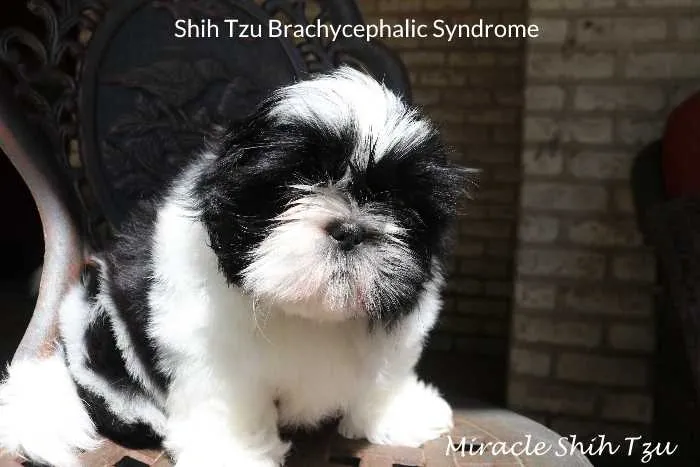
Image Source: Miracle Shih Tzu
Health Concerns in Shih Tzu Dogs
Shih Tzus charm us with their personalities and unique looks, but owners should know about several health problems common to this breed. Learning about these challenges helps provide better care and spot issues early.
Brachycephalic airway syndrome
A Shih Tzu’s cute flat face brings serious breathing challenges. These dogs have a brachycephalic breed structure (Greek words meaning “short” and “head”) that causes upper airway problems. Their structural issues include:
Small, narrowed nostrils (stenotic nares)
Elongated soft palate
Collapsing trachea
Extra tissue in the throat
These abnormalities make breathing difficult, especially during exercise or hot weather. Dogs show signs of respiratory distress through noisy breathing, heavy panting, snoring, gagging, and sometimes collapse. Their ineffective panting system limits their cooling ability, making them prone to overheating.
Treatment depends on how severe the condition is. Weight management and staying away from hot environments help mild cases. Severe cases might need surgery to widen nostrils, trim the soft palate, or remove everted laryngeal saccules.
Eye and ear issues
A Shih Tzu’s big eyes face many risks. The breed often develops serious conditions like glaucoma, chronic dry eye (keratoconjunctivitis sicca), and cataracts. Red eyes, discharge, cloudiness, rubbing, squinting, or blindness in advanced cases signal eye problems.
Their droopy ears create perfect conditions for infections. Two main factors cause ear problems:
Limited airflow into ear canals
Hair growth inside the ears
Moisture gets trapped easily, leading to painful, itchy ear infections. These need veterinary care with topical or oral medications.
Regular cleaning prevents ear problems. Keeping trimmed hair around the eyes reduces irritation and tear staining.
Heart and liver conditions
Heart disease hits Shih Tzus hard, especially mitral valve disease that can lead to congestive heart failure. A UK study shows these dogs have a 4.02 times higher risk of reduced blood flow to the liver compared to other breeds.
Liver shunt (portosystemic shunt) poses another serious concern. Blood skips the liver instead of flowing through it for filtering. This builds up toxins in the bloodstream and causes:
Chronic gastrointestinal issues
Stunted growth
Neurological signs including seizures or abnormal gait
Blood tests, abdominal imaging, and sometimes surgery help diagnose and fix the condition. Milder cases respond to dietary changes and medications.
Life expectancy insights
The good news? Shih Tzus live relatively long lives. Most live between 10-18 years, typically 12-15 years.
Different studies show varying lifespans:
UK research from 2022 found they live about 11 years, slightly less than average
A 2024 UK study reported 12.8 years, beating the purebred average of 12.7 years
Japanese studies showed 15 years, longer than the 14-year average for all dogs
The oldest Shih Tzu on record reached 23 years, showing how long these dogs can live with proper care. Dogs over seven years need more frequent vet checkups.
Good health management helps these lovable companions live full, comfortable lives despite their breed-specific challenges.
Grooming and Maintenance Needs

Image Source: Top Dog Tips
Grooming and Maintenance Needs
The luxurious double coat that makes Shih Tzus stand out needs dedicated care to maintain its beauty and prevent health problems. Their grooming isn’t just about looks—it’s vital to their comfort and well-being.
Daily brushing and coat care
Daily brushing is the life-blood of Shih Tzu grooming. Their continuously growing hair quickly forms mats without frequent attention. These mats cause skin irritation, sores, and can limit movement. Here’s how to brush properly:
Use both slicker and pin brushes to remove loose hair and dirt
Brush in layers from the skin outward
Focus on problem areas—belly, behind ears, legs, and tail base
A step-by-step approach stops tangles before they turn into stubborn mats. Dogs with longer coats need brushing twice a day. Weekly ear cleaning with vet-approved solutions helps prevent infections in their floppy, hair-filled ears.
Bathing and trimming routines
Shih Tzus need baths every 3-4 weeks, though this changes based on coat length and lifestyle. The coat needs a good brush before bathing since wet hair worsens mats. During bath time:
Use only dog-specific shampoo because human products remove natural oils Work shampoo down to the skin where oils collect Rinse until water runs clear to avoid skin irritation
Squeeze excess water from the coat before towel-drying. A blow dryer on low heat helps prevent tangles while drying.
Many owners choose shorter “puppy cuts” instead of the flowing show coat. These cuts need professional grooming or home trimming every 6-8 weeks. These practical styles make daily care easier and keep the Shih Tzu comfortable.
Managing tear stains and eye care
Shih Tzu’s eyes need special attention. Their flat faces and shallow eye sockets lead to tear staining—dark streaks form beneath their eyes. Here’s how to manage this:
Clean the eye area daily with hypoallergenic, fragrance-free wipesUse fresh wipes for each eye to stop bacteria spreadKeep facial hair trimmed to reduce tear trapping against the coat
Regular cleaning removes moisture and bacteria that create stains and odor. Vet-approved products with boric acid help with existing stains. Remember to use these products around—never in—the eyes.
Regular grooming keeps Shih Tzus looking their best. It also prevents painful mats, skin infections, and can get pricey health problems. This makes the time spent on grooming worth it for these beloved pets.
Breed Variations and Standards

Image Source: Facebook
Breed Variations and Standards
Kennel clubs around the world recognize the Shih Tzu breed. Each club has its own view of what makes a “perfect” Shih Tzu, with small differences in their official standards.
Differences in kennel club standards
The American Kennel Club (AKC) gave official recognition to the Shih Tzu in 1969. They have the most flexible standards when it comes to acceptable traits. The Fédération Cynologique Internationale (FCI) and United Kennel Club (UKC) take a similar relaxed approach to many physical features.
Some key differences exist between clubs. The FCI really likes to see white blazes on the forehead and white-tipped tails in parti-colored dogs. The UKC, however, won’t allow albino Shih Tzus to compete. The AKC standard calls for straight front legs and muscular back legs. They also want to see a round, prominent head sitting high on the body.
Imperial Shih Tzu vs standard Shih Tzu
The term “Imperial Shih Tzu” isn’t an official breed variation. Breeders use this name for dogs they’ve bred to be smaller than normal. Standard Shih Tzus usually weigh 9-16 pounds and stand 8-11 inches tall. Imperial Shih Tzus are much smaller, weighing under 7 pounds and sometimes as little as 5 pounds.
No legitimate kennel club recognizes Imperial Shih Tzus as separate from standard ones. These tiny dogs spark debate in breeding circles because breeders often use special techniques to create these undersized dogs that don’t meet the 50-year-old standards.
Color variations and their recognition
Shih Tzus come in an amazing range of colors and patterns. The AKC has registration codes for 7 double color combinations: black & white, red & white, blue & white, gold & white, silver & white, brindle & white, and liver & white. Pure black Shih Tzus without any white markings are among the hardest to find.
You’ll find 19 different colors and combinations recognized for registration purposes, plus 4 distinct marking patterns. These include:
Single colors: black, blue, gold, liver, red, silver, and white
Double colors: various combinations with white
Triple colors: including black gold & silver, black white & silver
Markings: black markings, tan markings, white markings, and black mask
The main difference between markings and secondary colors comes down to how much of the coat they cover. Markings show up as small patches, while secondary colors spread over much more of the dog’s coat.
Shih Tzu Price and Adoption Tips
Shih Tzu Price and Adoption Tips
Getting a Shih Tzu costs money and needs dedication to their care. You need to know both the buying price and ongoing expenses before welcoming one into your home.
Factors affecting Shih Tzu price
Shih Tzu puppies in India cost between ₹25,000 to ₹90,000. Here’s what affects their price:
Lineage and pedigree – Dogs with KCI (Kennel Club of India) papers or champion bloodlines cost more
Breeder reputation – Good breeders spend extra on health testing, which adds to the price
Coat color and quality – Rare colors like blue range from ₹35,000-₹55,000, while standard colors go for ₹25,000-₹40,000
Geographic location – Big cities have higher prices than smaller ones
Adoption vs buying from breeders
Adoption fees run from ₹3,500 to ₹21,000, which is much lower than breeder prices. Most rescue dogs come with microchips and are already fixed.
Puppies from breeders have more predictable traits and usually get good early training. When you pick a breeder, make sure to check their health certificates and be wary of suspiciously low prices.
What to look for in a healthy puppy
The puppy you choose should have proper vaccination records, whether it’s from a shelter or breeder. Good breeders show health certificates and let you meet the puppy’s parents. Puppies raised in home environments turn out to be better family pets.
Conclusion
Shih Tzus are living pieces of ancient history that made their way from Tibetan monasteries to Chinese imperial palaces before becoming beloved pets worldwide. These dogs have an amazing survival story. They bounced back from near extinction to become one of today’s most popular toy breeds, which shows how much people love them across cultures and generations. Though small in size, these “lion dogs” carry themselves with royal dignity while showing the kind of love and loyalty that makes them perfect family pets.
Anyone thinking about getting a Shih Tzu should consider what it takes to care for one properly. Their beautiful double coat needs regular grooming, and their flat-faced structure means owners must watch their health carefully. These dogs also have deep Buddhist roots and cultural meaning that sets them apart from other breeds.
Whether you rescue one or buy from a trusted breeder, Shih Tzus give back with 10-18 years of faithful companionship. They fit well in homes of all sizes, and their friendly nature explains why people love them worldwide. While they just need time and attention for proper care, these dogs give back so much more through their steadfast dedication and lovable personalities.
Without doubt, these ancient companions have made the leap from Buddhist temple guardians to beloved family pets. They’ve kept their unique looks and wonderful temperament through it all. A Shih Tzu is more than just a pet – it’s a living link to centuries of history, a small dog with a big legacy that keeps winning hearts around the world.
Key Takeaways
Understanding the Shih Tzu breed reveals essential insights for prospective owners considering these ancient companions with their unique care requirements and remarkable heritage.
• Ancient royal heritage shapes modern temperament – Shih Tzus descended from Tibetan monastery dogs and Chinese palace companions, creating their friendly, adaptable nature perfect for family life.
• Daily grooming is non-negotiable for health – Their luxurious double coat requires daily brushing to prevent painful mats, plus regular eye cleaning to manage tear stains.
• Breathing issues require careful monitoring – As brachycephalic dogs, Shih Tzus struggle with respiratory problems that worsen in heat and during exercise, demanding vigilant health awareness.
• Exceptional longevity rewards dedicated care – With proper maintenance, these companions live 10-18 years, making them long-term family investments worth the grooming commitment.
• All modern Shih Tzus share limited ancestry – Every living Shih Tzu descends from just 14 dogs saved during China’s Communist Revolution, highlighting their remarkable survival story.
The Shih Tzu’s journey from sacred temple guardians to beloved household pets demonstrates their remarkable adaptability, though their specialized care needs require committed owners willing to invest in daily grooming and health monitoring for these charming, long-lived companions.
FAQs
Q1. What are the grooming requirements for a Shih Tzu? Shih Tzus require daily brushing to prevent matting of their long, double coat. Regular bathing every 3-4 weeks, ear cleaning, and eye care are also essential. Many owners opt for shorter “puppy cuts” to make maintenance easier.
Q2. Are Shih Tzus good family dogs? Yes, Shih Tzus make excellent family pets. They are affectionate, gentle with children, and generally get along well with other pets. Their adaptable nature and moderate exercise needs make them suitable for various living situations.
Q3. What health issues are common in Shih Tzus? Shih Tzus are prone to respiratory problems due to their flat faces, as well as eye conditions and ear infections. They may also develop heart disease and liver issues. Regular veterinary check-ups are crucial for early detection and management of these concerns.
Q4. What is the typical lifespan of a Shih Tzu? Shih Tzus generally live between 10-18 years, with an average lifespan of 12-15 years. With proper care and regular health check-ups, these dogs can enjoy a long and healthy life.
Q5. What type of diet is best for a Shih Tzu? A high-quality dog food formulated for small breeds is ideal for Shih Tzus. Look for options with whole proteins, healthy grains, and added fruits and vegetables. The diet should be appropriate for the dog’s age, size, and activity level, and portion control is important to prevent obesity.