
Rottweiler
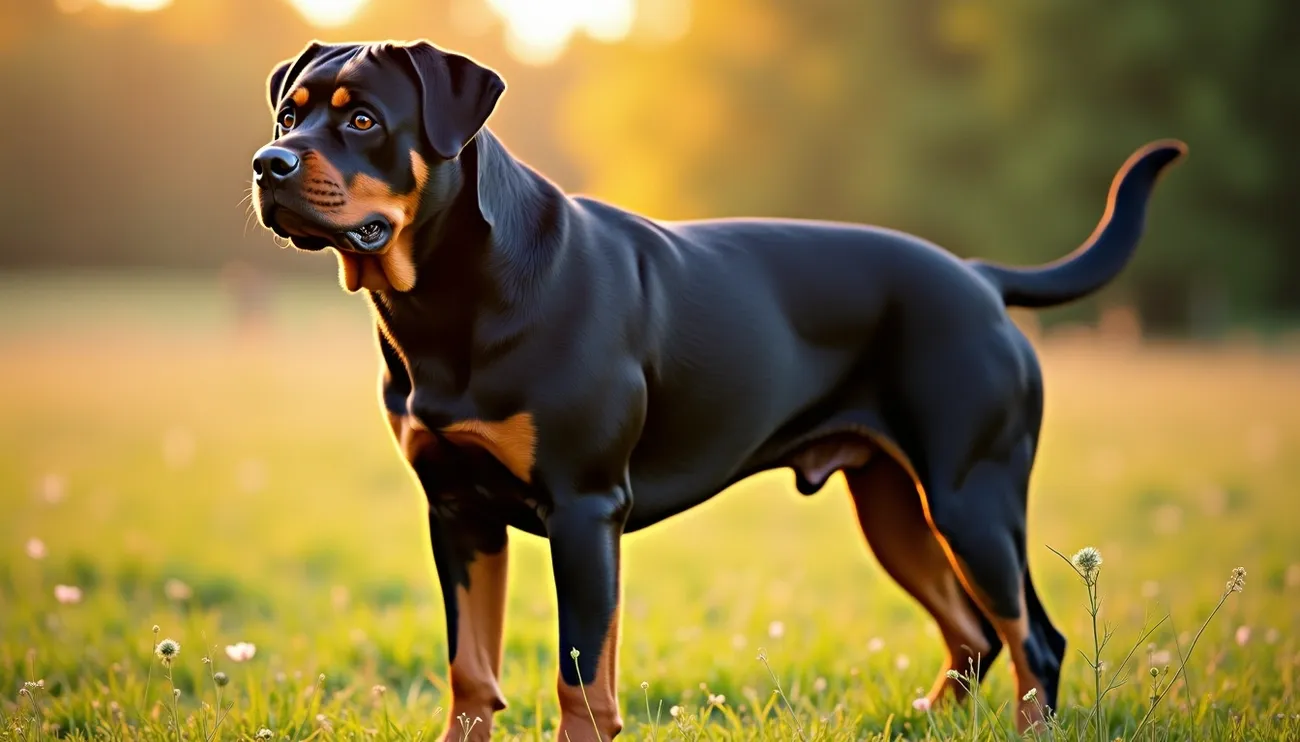 Rottweilers hold the eighth spot among America’s most popular purebred dogs in 2024. These powerful canines combine an impressive physical presence with a rich heritage. Male Rottweilers stand 24-27 inches tall while females measure 22-25 inches. Their weight ranges from 95-135 pounds for males and 80-100 pounds for females, which makes them an imposing yet beloved companion.
The breed’s roots trace back centuries, and Rottweilers have managed to keep their appeal despite demanding extensive care and training. Their temperament blends confidence with loyalty, but they need regular socialization to develop proper social skills. The breed’s lifespan runs shorter than other dogs of similar size at 9-10 years. Yet their popularity endures, with prices spanning from budget-friendly pet companions to premium show-quality dogs from champion bloodlines. The American Kennel Club’s recognition in 1931[-3] solidified the Rottweiler’s status as a breed with clear standards.
This piece covers the Rottweiler breed comprehensively, from their ancient origins and physical traits to their temperament, working abilities, health needs, and role in society.
The Origins of the Rottweiler
The Rottweiler’s heritage dates back more than 2,000 years to the Roman Empire. These powerful working dogs rank among the oldest surviving breeds in the world. Their rise from ancient roots has shaped them into loyal companions and capable working animals we know today.
Roman roots and early herding roles
Today’s Rottweiler descended from mastiff-type dogs that followed Roman legions across Europe. These tough canines played vital roles in the Roman military. They herded and protected cattle that traveled with soldiers to provide food. Roman legions pushed northward through the Alps toward modern-day Switzerland and Germany. Their dogs showed remarkable strength, endurance, and reliability during these campaigns.
Roman soldiers depended on these early Rottweiler ancestors. The dogs kept cattle herds together during long marches. On top of that, they protected livestock from predators and thieves. They also guarded soldiers’ camps and supply dumps at night. These duties needed dogs with specific traits—courage, alertness, physical strength, and stamina. These qualities became the foundations of modern Rottweilers.
Development in Rottweil, Germany
Many of these dogs stayed in southern Germany after Rome fell. They settled around a place that would become Rottweil. Romans called this settlement “Arae Flaviae,” and it grew into a major trading hub. Local herding breeds mixed with these Roman dogs here. This created a unique type of dog that excelled at various jobs.
Rottweil became a busy market town during the Middle Ages. The dogs found their place working with butchers and cattle traders. People called them “Rottweiler Metzgerhund” (Butcher’s Dog of Rottweil), which reflected their main job. These adaptable dogs had several important duties:
Herding cattle to market through the Alps
Pulling carts loaded with meat and goods
Guarding butchers’ money and properties
Protecting families and homes
Butchers would tie money pouches around their dogs’ necks after market days—few thieves dared to challenge this security system. This practice built the Rottweiler’s reputation for protection and reliability.
The industrial revolution almost ended the breed. Railways replaced cattle driving in the mid-19th century. Dogs lost their traditional herding work, and Rottweiler numbers dropped. German law banned using dogs to drive animals to market, which threatened the breed’s survival even more.
Recognition by kennel clubs
Breed enthusiasts saw the Rottweiler’s valuable traits and worked to save them. The International Club for Leonbergers and Rottweiler Dogs in Germany created the first standard Rottweiler in 1901.
Several important clubs formed to protect and promote the breed:
The Deutscher Rottweiler-Klub (DRK), founded in 1914
The Süddeutscher Rottweiler-Klub (SDRK), established in 1915
The Allgemeiner Deutscher Rottweiler Klub (ADRK), formed in 1921 when German Rottweiler clubs merged
The American Kennel Club officially recognized the Rottweiler in 1931. Otto Denny bred the first Rottweiler litter in the United States in 1930. The United Kennel Club acknowledged the breed in 1950. British Crufts dog show featured Rottweilers in 1936, which boosted their international status.
Breeders maintained the Rottweiler’s working abilities during this time. They also developed the distinctive looks and temperament that define modern Rottweilers.
Physical Characteristics of Rottweiler Dogs
A Rottweiler’s silhouette stands out among all dog breeds. Their muscular build and black-and-tan coat create a profile you can spot from anywhere. These powerful dogs look both beautiful and functional, which makes sense given their working dog background.
Size and weight standards
Rottweilers belong to the medium-to-large breed category, with males and females showing clear size differences. The American Kennel Club standards say male Rottweilers reach 24 to 27 inches at the shoulder. Female Rottweilers are a bit smaller at 22 to 25 inches. The Fédération Cynologique Internationale (FCI) matches these guidelines. Their standards list males at 61 to 68 cm (24 to 27 inches) and females at 56 to 63 cm (22 to 25 inches).
Weight plays just as big a role as height in breed standards. Male Rottweilers usually weigh between 95 to 135 pounds. Females are lighter at 80 to 100 pounds. The FCI lists typical weights around 50 kg (110 pounds) for males and 42 kg (92 pounds) for females.
The right proportions matter a lot in breed evaluation. The perfect Rottweiler should look slightly longer than tall, with an ideal height-to-length ratio of 9 to 10. The chest should measure about half the dog’s height. These balanced measurements give them their powerful look and practical abilities.
Coat type and color variations
A Rottweiler’s coat has two layers – a straight, coarse outer coat and a protective undercoat. The outer layer stays medium-length, dense, and flat against the body. The undercoat shows up mostly on the neck and thighs, and its thickness changes with the weather. The undercoat should stay hidden beneath the outer coat, unlike many other double-coated breeds.
Rottweilers stick to consistent color patterns. Every recognized Rottweiler has a black base coat with markings ranging from tan to rust to mahogany. The AKC officially accepts three color combinations:
Black and Rust (registration code 015)
Black and Mahogany (registration code 013)
Black and Tan (registration code 018)
Mahogany markings show the deepest and richest color, while tan markings look lighter with cool undertones. The markings must stand out clearly against the black base coat.
Distinctive markings
Rottweiler’s markings follow specific patterns that all major kennel clubs recognize. These rust-to-mahogany marks must show up in certain spots:
Above each eye, forming “eyebrows”
On cheeks and muzzle sides (not crossing the nose bridge)
On the throat
Two triangle shapes on the chest
From wrist to toes on forelegs
Inside rear legs, getting wider from hock to toes
Under the tail’s base
These markings bring out the dog’s facial expressions and muscle definition. Breed standards say markings should cover no more than 10% of the dog’s coat. Black lines on toes, called “pencil markings,” add a desirable touch.
Straw-colored, excessive, insufficient or sooty markings count as serious faults. White marks anywhere or any base color besides black will disqualify a dog from shows.
These strict appearance guidelines help keep the Rottweiler’s iconic look intact. They protect the practical features that have made this ancient breed special throughout history.
Understanding Rottweiler Temperament
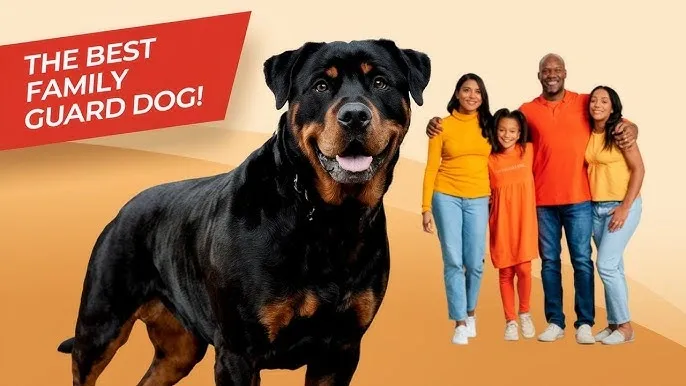
Image Source: YouTube
A Rottweiler’s powerful build often masks their complex and nuanced personality. These dogs excel both as guardians and family companions. You need to look past the stereotypes to truly understand their natural traits, socialization needs, and behavior patterns.
Confidence and loyalty
Rottweilers face life head-on with remarkable self-assurance. They know their physical strength and carry themselves with pride, staying calm in situations that might spook other breeds. Their natural confidence helps them stay composed in various settings. Research shows they’re less likely than many breeds to develop fears of common triggers like thunderstorms. They stay cool in situations that would stress out other dogs.
The most striking feature of a Rottweiler’s personality is their incredible loyalty. They build deep, intense bonds with their human families and usually become extra close to one specific person. People often say these dogs “stick to their owners like glue”. This deep devotion extends to everyone in the family, but it can lead to separation anxiety if you leave them alone too long.
Many first-time owners are surprised by how affectionate Rottweilers can be. Despite their tough looks, these dogs are natural “love bugs” who love cuddles and playtime with their families. Some even earn a reputation as “natural clowns” when they’re with their loved ones.
Guarding instincts
Rottweilers’ protective nature comes from their ancient roots. These dogs have managed to keep their strong guardian instincts since Roman times, naturally watching over their territory and loved ones. They don’t need much training to develop this trait – it comes naturally as part of who they are.
A typical Rottweiler shows:
Watchfulness and alertness to potential threats
Territorial behavior, especially around home
Natural caution with unfamiliar situations
Strong drive to protect family from perceived dangers
Their protective nature makes them excellent watchdogs. Most Rottweilers will bark and put on an impressive display to alert you about strangers near their property. This behavior shows up more at home than in public. Their confident stance and impressive size naturally deter potential threats.
These guarding tendencies need proper training to stay balanced. A Rottweiler’s protective nature can become an issue without clear guidance. Commands like “leave it” or “quiet” help redirect their focus from potential triggers, while positive reinforcement shapes good behavior.
Interaction with strangers and children
Well-bred Rottweilers typically stay reserved around strangers rather than showing aggression. The breed standard describes their attitude as “self-assured aloofness” with outsiders. This careful approach isn’t hostility – they just like to size up new people before deciding how to interact.
Early socialization shapes how Rottweilers respond to strangers. Dogs with proper socialization can be friendly and welcoming to new people, usually after a proper introduction. Their natural caution might intensify without enough socialization. That’s why exposing them to different people, places, and situations from puppyhood matters so much.
Rottweilers often surprise people with their gentleness and patience around children when raised properly. Many become protective and loving with their family’s kids. But their size and strength mean you should always supervise them, mainly because their playful energy might accidentally knock over small children. Teaching kids how to interact with these powerful dogs and watching all interactions remains crucial, no matter how gentle the dog seems.
The American Rottweiler Club emphasizes that these dogs thrive on human interaction and varied experiences. They respond well to positive guidance thanks to their intelligence and trainability, though they can be stubborn sometimes and need patient handling.
Working Roles and Abilities
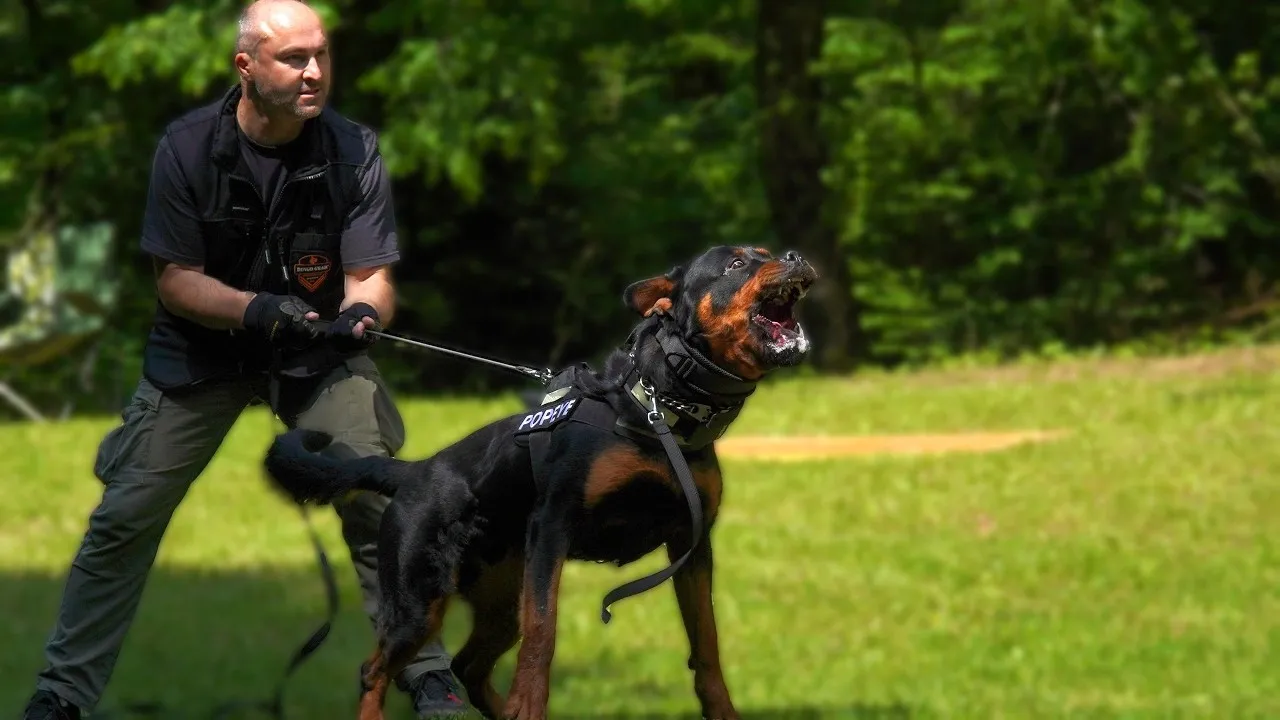
Image Source: YouTube
Rottweilers have proven themselves as versatile working dogs from ancient Rome to today’s workplaces. These dogs possess impressive capabilities that go way beyond the reach and influence of simple companionship. Their blend of intelligence, strength, and trainability makes them great partners in many working situations throughout history.
Herding and cart-pulling history
Rottweilers built their reputation as “Rottweiler Metzgerhund” (Butcher’s Dog of Rottweil) from the Middle Ages until about 1900. These powerful dogs played significant roles in medieval Germany. They moved herds from pasture to market and joined local butchers on buying trips. The dogs protected the butchers from thieves while carrying their money in neck pouches, which earned them their unique nickname.
These dogs excelled at herding because of their natural gathering style and strong desire to control. They would keep their heads either level with their back or slightly raised while lowering their neck and shoulders when working with livestock. Their smart approach to herding showed in how they would spot and challenge the dominant animal in a herd to establish control before settling into their work.
The breed’s strength made them valuable draft dogs. They pulled carts full of butchered meat and other goods to market. This task suited their sturdy build and eager temperament perfectly. Railroads replaced traditional transportation during the Industrial Revolution. This change almost led to the breed’s extinction until dog enthusiasts recognized their valuable traits.
Modern roles: police, rescue, service
Today’s Rottweilers work in many professional roles. Their exceptional intelligence helps them shine in police and military work, search and rescue operations, therapy assignments, and service dog duties. Law enforcement agencies worldwide employ Rottweilers to patrol, track, apprehend suspects, and detect narcotics or explosives.
Rottweilers show amazing endurance and scenting abilities as search and rescue dogs in urban disasters, wilderness tracking, and cadaver recovery operations. Their courage and focus make them reliable partners when split-second decisions matter in high-stress situations.
Many people might not know that Rottweilers make excellent service and therapy dogs. Their size helps them support people while walking, operate lights, open doors, and pick up dropped objects. These smart dogs can also work as medical alert service dogs. They warn their owners about upcoming medical issues like seizures, low blood sugar, or blood pressure drops.
Dog sports and competitions
Competitive environments that test both mind and body are perfect for Rottweilers. They excel in several canine sports:
Schutzhund/IGP: This challenging sport combines tracking, obedience, and protection work across three difficulty levels (Schutzhund I, II, and III).
Obedience: Rottweilers compete well in all levels from Novice through Utility, which shows how trainable they are.
Agility: Many Rottweilers move through obstacle courses with surprising athleticism despite their size.
Carting/Drafting: These dogs shine in competitions where they pull carts with or without passengers, just like their ancestors.
Herding trials: The breed still shows its natural herding abilities in modern competitions.
These activities showcase the breed’s versatility and give them needed mental and physical exercise. The American Kennel Club points out that “There is no limit to the canine activities that the Rottweiler can learn to do”. This statement highlights how well these dogs adapt to different working roles.
Health and Lifespan of Rottweilers
Rottweilers face several health challenges that set them apart from other working breeds. Future owners should know about these issues before welcoming these powerful dogs into their homes. Their reliable build and genetic makeup create a unique health profile that needs careful attention throughout their lives.
Common health issues
Several health conditions affect Rottweilers’ quality of life and how long they live. Joint and bone problems top the list of concerns. Hip dysplasia affects about 20.1% of these dogs. The numbers are even more striking for elbow dysplasia, which shows up in 38.1% of the breed – the second-highest rate among all studied dog breeds.
Dogs with joint problems show signs like trouble getting up, limping, or pain when they move. These dogs get cranial cruciate ligament injuries (similar to human ACL tears) more than three times as often as other breeds. The numbers tell the story: 8.29% of Rottweilers versus 2.55% of dogs overall.
Cancer poses another big threat, causing about 45% of Rottweiler deaths. The main types include:
Osteosarcoma (bone cancer): This aggressive and painful cancer often leads to limb amputation
Lymphoma: Rottweilers get this more often than other breeds, but it responds well to chemotherapy
Other cancers: These affect organs like the spleen and liver
Heart problems, especially subaortic stenosis (where the aorta narrows), can lead to sudden heart failure in severe cases. Vets can hear the telltale heart murmurs during checkups.
Rottweilers deal with several other health issues too:
Gastric dilatation-volvulus (bloat): The stomach can twist suddenly, creating a life-threatening emergency
Eye problems: Including entropion (eyelids rolling inward) and ectropion (eyelids rolling outward)
Skin issues: Hot spots affect about 11% of Rottweilers, with males getting them more often
Blood clotting problems: Von Willebrand’s disease makes surgery and injuries riskier
Average rottweiler lifespan
Rottweilers don’t live as long as other dogs their size. Most studies show they live 8-10 years, which falls short of the typical 12-15 years for most dogs.
Recent research shows some interesting patterns:
English Rottweilers lived about 8 years on average in a 2022 study
A 2024 UK study found they lived 10.6 years (while purebreds averaged 12.7 years)
Italian Rottweilers averaged 9 years in a 2024 study (compared to 10 years for dogs overall)
Female Rottweilers tend to live longer than males – about 9.5 years on average, beating males by roughly 10 months. This gender gap mirrors what we see in humans and other species.
Their shorter lives stem from their size and genetic makeup. Mixed breeds often outlive purebreds, partly because they have more genetic variety.
Preventive care and vet checkups
The best way to help your Rottweiler live longer and better involves staying ahead of health issues. Regular vet visits should happen once or twice yearly to catch problems early.
Good preventive care includes:
Regular health screenings become more important as dogs age. X-rays help spot hip and elbow problems, while heart ultrasounds can find cardiac issues before they become dangerous. Blood work and urine tests catch conditions like Addison’s disease or kidney problems early.
Keeping your dog at a healthy weight might be the most important thing you can do. Extra pounds make joint problems worse, especially in breeds that already tend to have these issues. A careful diet and the right amount of exercise help keep weight and joints healthy.
Puppy growth needs careful monitoring – experts say they shouldn’t gain more than four pounds per week. Special large-breed puppy food helps control growth rate and reduces joint problems later.
Some owners opt for preventive surgery. A procedure called gastropexy can stop stomach twisting in high-risk dogs. The timing of spaying and neutering matters too, as it might affect cancer risk.
When certain health problems run in family lines, genetic testing becomes vital for breeding healthier future generations.
Training and Socialization Needs
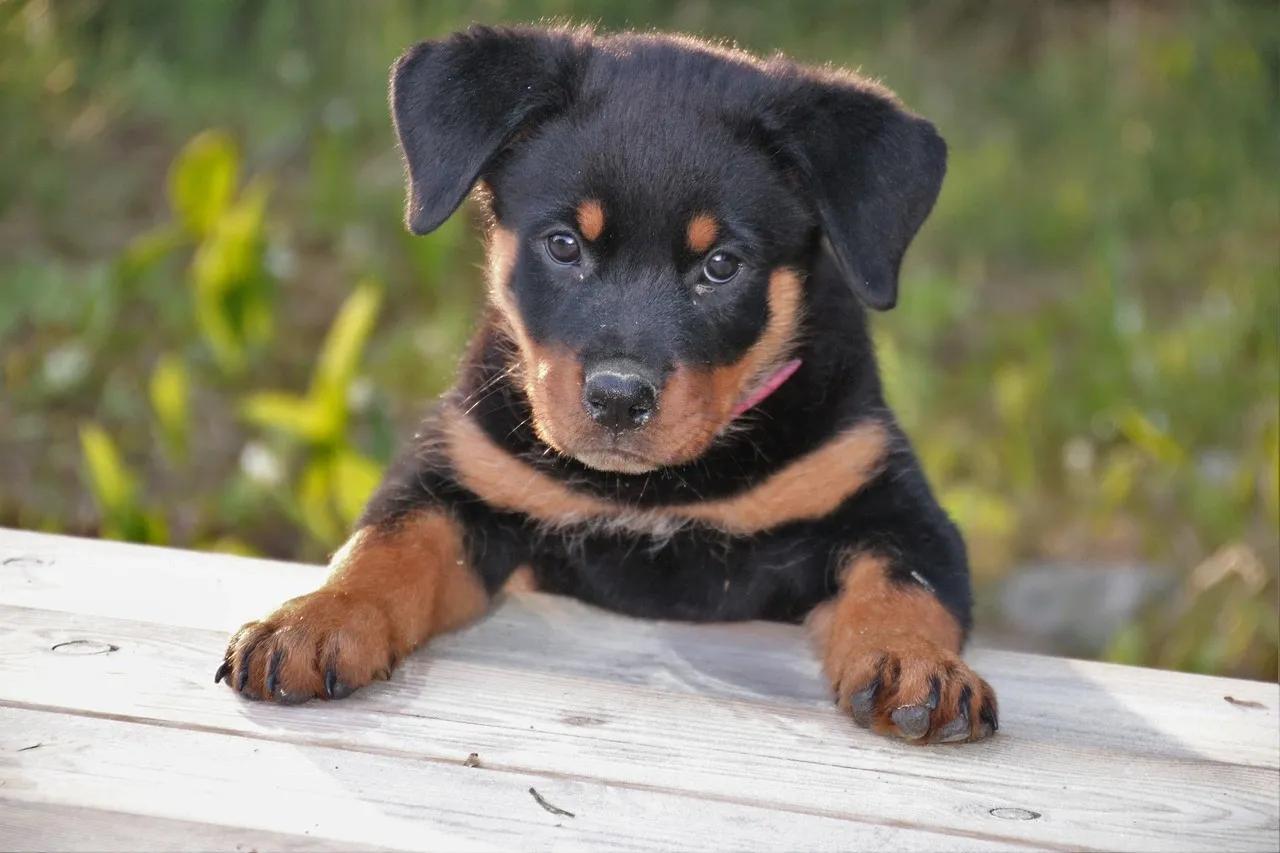
Image Source: iHeartDogs.com
A well-adjusted Rottweiler with balanced temperament needs proper training and socialization. These powerful dogs need structured guidance early in life. This helps their natural protective instincts develop the right way without turning into problem behaviors.
Importance of early training
Your Rottweiler’s training works best when started between 6 weeks and 6 months of age. These intelligent dogs soak up information like sponges during this critical developmental period. Clear rules and boundaries help Rottweilers understand what you expect, which makes them feel secure in their environment.
Your pup needs consistency during this key stage. Use the same commands each time while you retain control with a firm but gentle approach. To cite an instance, teaching simple commands like “sit,” “stay,” and “recall” builds their confidence and respect for their owners.
Adult Rottweilers learn well too, though they need extra patience and time. Their smarts and eagerness make them quick learners whatever their age, as long as training stays positive and consistent.
Positive reinforcement techniques
Positive reinforcement rewards good behavior instead of punishing unwanted actions. This method works great with Rottweilers because it builds trust and strengthens your bond with your dog.
Good rewards include:
Treats (small, tasty bits given right after good behavior)
Verbal praise (an enthusiastic “good dog”)
Physical affection (petting, belly rubs)
Play sessions with favorite toys
Training sessions that feel like games are a big deal as it means that they work better. Keep sessions short—about five minutes for puppies—to avoid mental fatigue and keep them excited. Unlike positive methods, harsh corrections or physical punishment can make your dog fearful or stubborn.
Socializing with people and pets
Your Rottweiler’s overall well-being depends more on socialization than obedience training. The window between 8-16 weeks gives you the best time for social development. Exposing your Rottweiler to a variety of experiences—different people, environments, animals, sounds, and situations—helps them tell normal events from real threats.
Pleasant, controlled experiences prevent fear-based aggression as your dog grows. Let puppies approach new situations at their own pace, keeping each introduction positive and natural. Puppy socialization classes are a great way to get safe interactions with other dogs while experts watch over them.
Adult dogs need ongoing socialization to keep their social skills sharp. Take them to parks, pet-friendly stores, and arrange playdates with dogs they get along with. Regular exposure helps create confident, friendly companions while keeping their protective nature intact.
Types of Rottweilers: German, American, and Roman
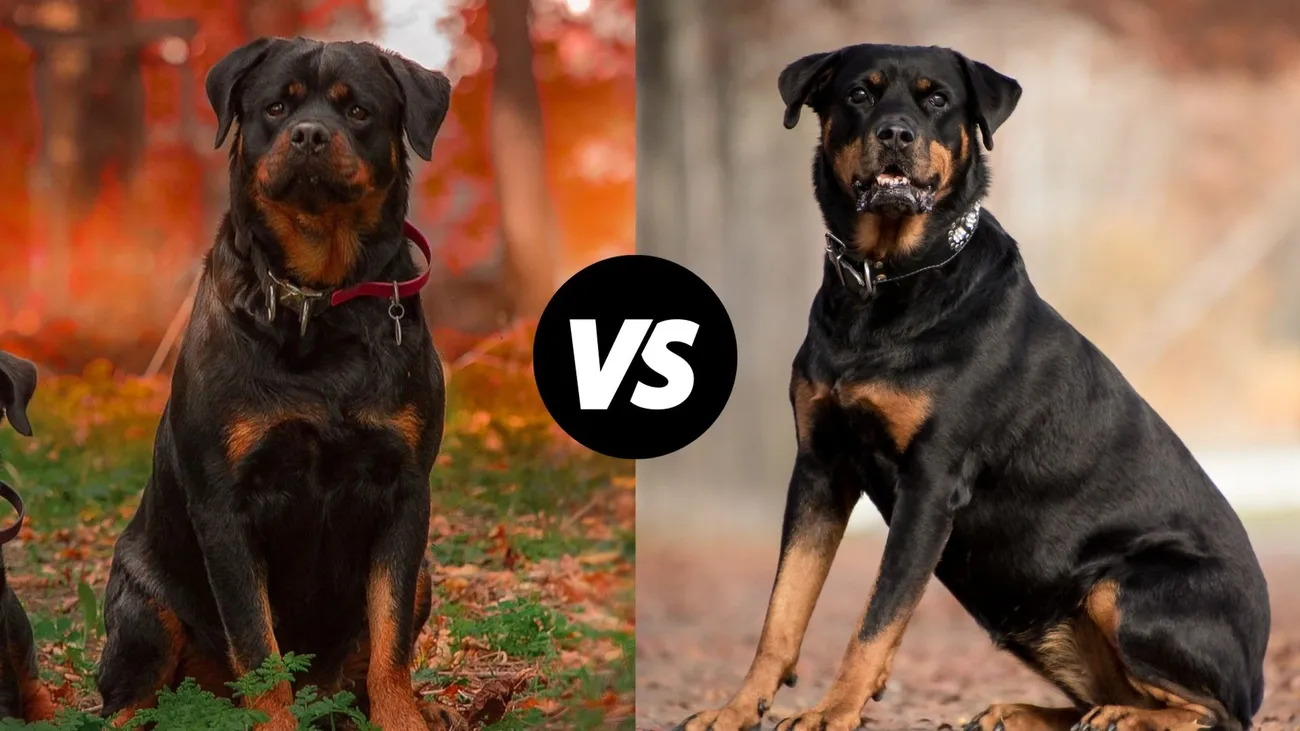
Image Source: World Animal Foundation
Major kennel clubs worldwide recognize only one official Rottweiler breed, despite many enthusiasts talking about different “types” of Rottweilers. Regional breeding practices and standards create the differences between German, American, and Roman Rottweilers rather than separate breed classifications.
Differences in appearance and temperament
German Rottweilers have stockier builds with broader bodies, blocky heads, and thicker bone structure. Male German Rottweilers grow up to 27 inches tall and weigh between 110-130 pounds, while females reach about 25 inches and weigh 77-110 pounds. German law bans tail docking, so these dogs keep their natural tails.
American Rottweilers have a slightly leaner frame with a more refined look. The American Kennel Club no longer requires tail docking, though many of these dogs still have docked tails. These dogs tend to be more reserved around strangers and show more aggression toward same-sex dogs than their German counterparts.
The largest variant, known as the “Roman Rottweiler,” can reach 30 inches tall in rare cases. These dogs have bulkier bodies, broader heads, and longer legs that give them a more Mastiff-like appearance.
Breed standards and misconceptions
The “Roman Rottweiler” label misleads potential owners. These oversized dogs are not a historical type but result from selective breeding for larger size—sometimes through Rottweiler-Mastiff crosses. Veterinarians warn that these larger dogs face higher risks of joint problems, bone conditions, and heart issues.
The ADRK (Allgemeiner Deutscher Rottweiler Klub) requires German Rottweilers to pass strict tests that include temperament assessment and physical conformation. The AKC standard has slight differences from the ADRK regarding belly tuck and tail docking policies.
These differences help potential owners make better choices based on real breed characteristics rather than marketing tactics.
Rottweilers in Popular Culture and Media
The way people think about Rottweilers comes from how media of all types shows them, often with mixed messages that change how society views these dogs.
Portrayals in movies and books
Entertainment media shows Rottweilers in different lights. The 2004 science fiction horror film “Rottweiler” showed the breed as a dangerous cyborg dog and got bad reviews for its negative portrayal. Movies often cast Rottweilers as “hell hounds” or angry junkyard dogs, which made people fear them more. Alexandra Day’s popular “Good Dog Carl” series tells a different story through 13 wordless books that show a caring Rottweiler who looks after children. The cartoon “Road Rovers” featured Scout, a Rottweiler who becomes the character Muzzle and helps the good guys despite looking scary.
Real-life hero stories
Real Rottweilers have done amazing things. Jake, a UK Rottweiler, got a police medallion because he chased away an attacker during a serious sexual assault and stayed with the victim until help came. Eve’s story amazes people too – this 104-pound Rottweiler pulled her paraplegic owner Kathie Vaughn from a burning van before it exploded and got burns on her paws. Orion’s story stands out the most. Known as the “Phantom Rottweiler,” he saved 37 lives during a disaster in Venezuela and earned medals from the government worldwide.
Impact on public perception
Media coverage has changed how people view Rottweilers by a lot. The original “Omen” movies in the 1970s made many people afraid of the breed. This follows a pattern – German Shepherds got bad press in the 1960s, Dobermans in the 1970s, Rottweilers in the 1980s, and then Pit Bulls. Bad news stories hurt the breed’s popularity, and Kennel Club registrations fell sharply from 10,500 to 2,500 after attack reports in the early 1990s. The breed’s image improved when celebrities like Leonardo DiCaprio, Bruno Mars, and Miley Cyrus got Rottweilers as pets.
Conclusion
Rottweilers rank among the most distinctive and capable dog breeds worldwide. Their evolution from Roman military companions to modern family protectors reflects their remarkable ability to adapt through centuries of changing human needs. These dogs, often misunderstood due to media portrayals, display an impressive mix of confidence, loyalty, and affection toward their families when properly trained and socialized.
The decision to own these powerful dogs demands serious commitment. Their relatively short 8-10 year lifespan and susceptibility to health issues like joint problems and cancer require dedicated veterinary care throughout their lives. A well-adjusted adult Rottweiler needs early training and complete socialization to channel protective instincts positively rather than problematically.
These dogs excel with clear boundaries, consistent guidance, and meaningful work, whether they come from German, American, or other bloodlines. Their versatility becomes evident in roles ranging from police and service work to competitive dog sports and family companionship. Notable Rottweilers like Jake, Eve, and Orion showcase the breed’s heroic potential when their loyalty and courage find the right outlets.
The public’s view of Rottweilers continues to shift as negative stereotypes fade into more balanced understanding. Celebrity owners and positive media coverage help challenge outdated perceptions, highlighting the breed’s true nature. Rottweilers provide an unmatched blend of protection, devotion, and companionship to dedicated owners who meet their substantial physical and emotional needs. This explains their lasting popularity despite the challenges of responsible ownership.
Key Takeaways
Understanding Rottweilers requires looking beyond stereotypes to appreciate their complex nature as loyal companions and capable working dogs with specific care requirements.
• Early socialization is critical: Rottweilers need extensive exposure to people, animals, and situations between 8-16 weeks to develop proper social skills and prevent fear-based aggression later.
• Health vigilance is essential: With a shorter 8-10 year lifespan and predisposition to hip dysplasia (20%), elbow dysplasia (38%), and cancer (45% of deaths), regular vet checkups are crucial.
• Training must start immediately: Begin structured training between 6 weeks and 6 months using positive reinforcement to channel their protective instincts appropriately and establish clear boundaries.
• Size and strength demand respect: Males weighing 95-135 pounds require experienced handling, proper exercise, and supervision around children despite their gentle nature with family.
• They’re working dogs at heart: Originally Roman herding dogs, Rottweilers excel in police work, service roles, and dog sports when given meaningful tasks that engage their intelligence and drive.
Rottweilers rank as the 8th most popular breed in the US for good reason—their unwavering loyalty and protective nature make them exceptional family guardians when properly raised, trained, and socialized from puppyhood.
FAQs
Q1. Are Rottweilers suitable as family dogs? Rottweilers can make excellent family dogs when properly trained and socialized from an early age. They are loyal, affectionate, and protective of their families. However, their size and strength require responsible ownership, especially around children.
Q2. What are the essential care requirements for a Rottweiler? Rottweilers need regular exercise, a balanced diet to maintain a healthy weight, consistent training, and early socialization. They also require routine veterinary check-ups due to their predisposition to certain health issues like hip dysplasia and cancer.
Q3. What skills and abilities do Rottweilers possess? Rottweilers are versatile working dogs with impressive abilities. They excel in tasks such as herding, tracking, obedience, and carting. Their intelligence and strength make them suitable for roles in law enforcement, search and rescue, and as service dogs.
Q4. How long do Rottweilers typically live? The average lifespan of a Rottweiler is between 8 to 10 years. This is somewhat shorter than the average for dogs of similar size, primarily due to their genetic predisposition to certain health conditions.
Q5. What type of training do Rottweilers require? Rottweilers need early, consistent training using positive reinforcement techniques. Training should begin between 6 weeks and 6 months of age and focus on basic obedience, socialization, and channeling their protective instincts appropriately. Ongoing training throughout their lives helps maintain their good behavior and mental stimulation.