
Rajapalayam
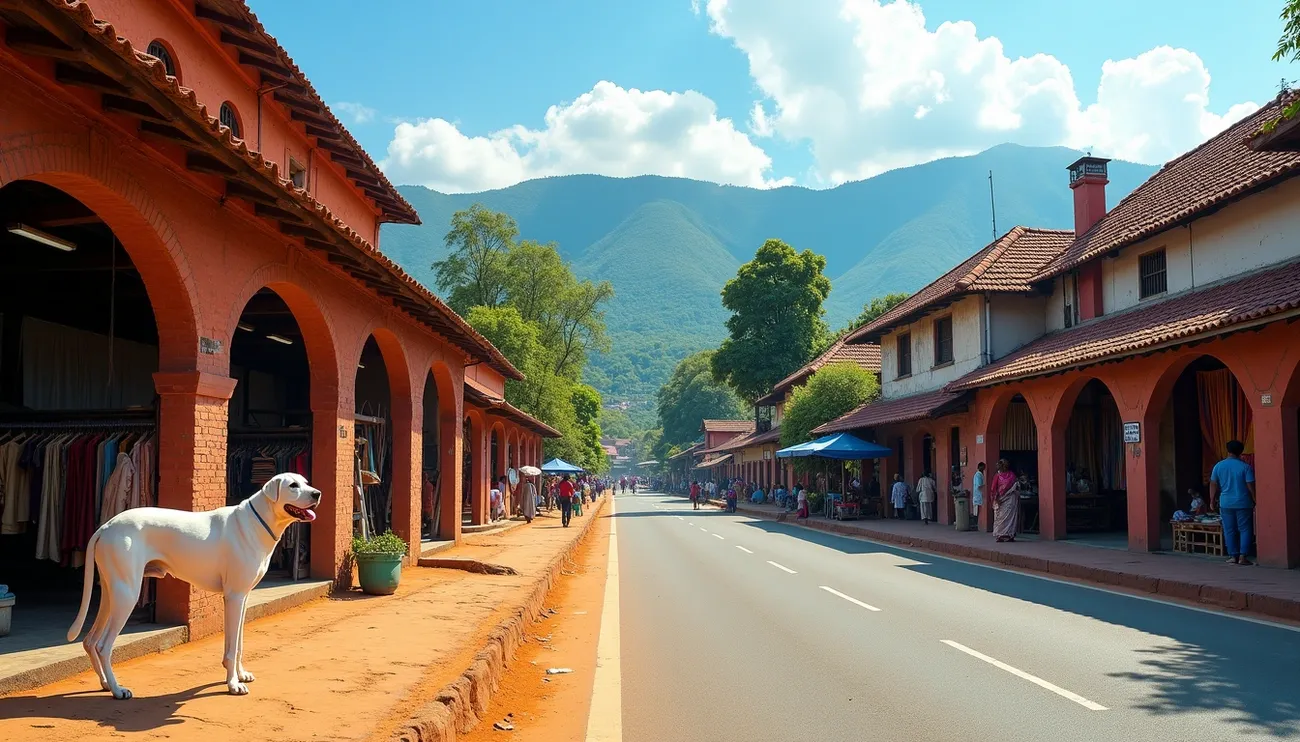 Rajapalayam’s literacy rate of 85.48 percent makes it a standout city. This is a big deal as it means that the rate surpasses the national average of 72.99%. The city sits 562 km south of Chennai along the Madurai to Kollam National Highway and had 130,442 residents in the 2011 census.
The city’s thriving textile industry powers the local economy. Local factories produce bandages, woven fabric, and nightwear products. The population shows an encouraging trend with 1,014 females for every 1,000 males, well above the national average. The region’s native Rajapalayam dog breed has become a source of local pride.
This piece covers everything worth knowing about Rajapalayam. You’ll learn about its geography, history, industrial strength, and cultural landmarks. Whether you want to visit or just want to know more about Tamil Nadu’s textile hub, you’ll discover what makes Rajapalayam unique.
Geographic and Climatic Overview

Image Source: Wikimedia Commons
Rajapalayam sits at coordinates 9.453° North latitude and 77.553° East longitude in southwestern Tamil Nadu. The city’s elevation ranges between 175-187 meters (574-614 feet) above sea level. This unique positioning shapes its climate and natural resources.
Location and elevation
The city nestles at the eastern foot of the Western Ghats, about 50 miles (80 km) southwest of Madurai. The surrounding topography shows remarkable elevation changes. Within just 2 miles of the town center, the landscape rises by 755 feet. The variations become even more dramatic in a 10-mile radius, where elevations reach up to 5,361 feet.
Cropland dominates the terrain around Rajapalayam, covering 81% of the area within 2 miles of the city. The landscape becomes more diverse in a 10-mile radius. Here, cropland takes up 71% while trees occupy 18% of the area. This mix reflects the city’s agricultural heritage and its natural forest preserves.
Rajapalayam weather patterns
The city experiences a semi-arid tropical monsoon climate. Temperatures usually range from 67°F to 97°F (20°C to 37°C). They rarely fall below 63°F or climb above 103°F. This creates a warm environment year-round with seasonal changes.
Summer heat grips the city from mid-March to mid-May, lasting about 2 months. Daily high temperatures during this time exceed 95°F. April ranks as the hottest month with highs of 97°F and lows of 76°F. Winter brings milder temperatures from late October to late January, lasting 3.1 months. Daily highs stay below 87°F during this period. January emerges as the coolest month with lows of 68°F and highs of 86°F.
Cloud cover in Rajapalayam follows distinct seasonal patterns:
Clear skies prevail from November 20 for nearly 5 months until April 12
February offers the clearest views with clear to partly cloudy conditions 51% of the time
Clouds dominate for 7.3 months from April to November
June sees the most cloud cover with overcast conditions 92% of the time
Rainfall varies dramatically throughout the year. October receives the heaviest rainfall at 8.2 inches while January sees the least with just 0.6 inches.
Nearby natural features like Sanjeevi Hills
The Western Ghats mountains stand 12 kilometers west of the city, while Sanjeevi Hills rise to the east. These natural formations moderate the local climate and serve as vital water catchment areas for the town.
Sanjeevi Hills holds deep cultural and medicinal significance. Many medicinal plants thrive here, connecting to an ancient tale from the Ramayana epic. Legend tells us that when Lord Hanuman carried the Sanjeevi Hills to heal Lord Lakshmana, fallen fragments grew into what we now know as Sirumalai and Sathuragiri Hills in nearby districts.
The hilltop Sanjeevi Malai Temple, dedicated to Lord Hanuman, rewards visitors with sweeping views of the surrounding plains. This sacred spot draws both religious pilgrims and nature lovers seeking peace in its historic setting. Rich forests and lush vegetation add to the natural beauty of these hills.
Historical Roots of Rajapalayam
Rajapalayam’s history spans several centuries and tells a compelling story of cultural migration, political ties, and economic growth. This legacy has created the town’s unique identity that shapes its character today.
Origin of the name
The name Rajapalayam comes from the Telugu-speaking Raju community that settled in this region. “Raja” (referring to the Raju inhabitants) combined with “palayam” (meaning military camp or settlement) shows its original role as a strategic outpost. Names during the Nayak period often included suffixes like Samudram, Nallur, Mangalam, Kudi, Ur, Puram, Kulam, Kurichchi, and Patty.
The sort of thing I love about this town is that the famous Rajapalayam dog breed originated here in Tamil Nadu’s Virudhunagar district. These dogs were bred during the Nayak dynasty and became prominent for their fierce loyalty and exceptional guarding skills.
Migration of Telugu-speaking Raju community
Telugu-speaking Raju community moved to this region when the Vijayanagar Empire expanded (1336-1565). They started as cotton handlers and transformed the town into a center for cotton hand-looming and weaving.
Kshatriya Rajus who made Rajapalayam their home have a remarkable story. They came from Bhimavaram areas of West Godavari and Amalapuram areas of East Godavari in the Telugu region during the last quarter of the 15th century. Sri Krishna Deva Raya, the Maharaja of the Vijayanagar kingdom, sent five military commandos to the Madurai Nayak kingdom to keep peace in the southern Sivagiri region.
Poosapadi China Raju and four other brothers led these Kshatriya Rajus who served the Nayak kingdom of Madurai with distinction. The Madurai Nayak rewarded them with land through an “innam sasanam” (free grant) to build a fort.
Role during Vijayanagar and Nayak periods
Kshatriya Rajus built the Palayapalayam fort in the mid-16th century as their first settlement. Kottimukala Duraithimma Raju bought more land through “kiraiya sasanam” (land purchase) by the end of the 17th century and established Singaraja Kotta. The community grew further with Sakkaraja Kottai’s establishment in the 18th century and finally Thiruvananthepuram Kotta in 1927.
The Nayak period (1529-1776) brought major administrative changes to the region. The Battle of Talikotta in 1565 created political uncertainty in the Vijayanagar Empire, which led to increased migration to Madurai. Nayak kings offered fertile land for settlement, places of worship, and created a relaxed government system that brought peace and prosperity.
Visvanatha Nayak, who founded and served as Vijayanagar’s viceroy to Madurai, cleared jungles, forests, and bushes to make the area livable. The Nayaks built their kingdom’s wealth by promoting agriculture and deforestation. Their donations of lands, gifts, and grants to temples, priests, artisans, and others helped grow the population and farming settlements.
The administration worked in layers—villages formed the basic unit, several villages made up a larger division called the Makana, which belonged to the Nadu. This structure, recorded in inscriptions from various places between 1550 and 1698, helped organize growing settlements effectively.
The Nayak rule brought significant development and civilization to Tamil country. Today’s Madurai and its street layout around the magnificent Meenakshi Temple stand as proof of the Nayaks’ urban planning vision.
Demographics and Population Trends
Understanding Rajapalayam’s population reveals some fascinating details about its structure, growth patterns, and how it’s run. This vibrant Tamil Nadu settlement blends both rural and urban characteristics in its demographic makeup.
Population growth from 2011 to 2025
The 2011 census showed Rajapalayam municipality had 130,442 residents. The town sits within Rajapalayam Taluka in Virudhunagar district, which counted 347,668 people during the same census. The municipality serves 37,797 households with simple amenities like water and sewerage.
Population numbers point to steady growth. Recent estimates suggest Rajapalayam will reach about 189,000 people by 2025. This is a big deal as it means that the numbers have grown significantly since 2011. Here’s how the population is expected to grow year by year:
2021: 169,000 residents
2022: 174,000 residents
2023: 179,000 residents
2024: 184,000 residents
2025: 189,000 residents
The city might reach around 222,000 residents by 2031 if current growth continues. This growth reflects the city’s expanding opportunities and development.
Sex ratio and literacy rate
Rajapalayam’s progressive sex ratio stands out among its demographic features. The municipality has 1,014 females for every 1,000 males, which is much higher than the national average of 929. The child sex ratio (ages 0-6) reaches 958 girls per 1,000 boys, surpassing Tamil Nadu’s state average of 943.
The municipality shines in education with an 85.48% literacy rate. These numbers exceed both Tamil Nadu’s state average of 80.09% and India’s national average of 72.99%. Men show 91.29% literacy while women achieve 79.78%.
Rajapalayam Taluka’s educational achievements mirror this trend with 81.19% overall literacy. Men in this larger area show 88.44% literacy and women reach 74.01%. Urban areas in the taluka lead with 83.8% literacy compared to rural areas at 77.9%.
Rajapalayam pincode and administrative details
The town uses pincode 626117. It operates as a Head Office within the Madurai postal region and Tamil Nadu circle. People can reach the city’s postal services at 04563-222240.
The municipality divides into 42 wards and holds elections every five years. It oversees 37,797 households, builds roads, and collects property taxes.
The 2011 census shows the religious makeup: Hindus (94.53%), Muslims (3.48%), Christians (1.75%), Sikhs (0.02%), and other religions (0.21%). Scheduled castes make up 13.51% while scheduled tribes account for 0.09% of the population.
The workforce includes 53,913 people: 380 cultivators, 3,676 agricultural laborers, 1,375 household industry workers, and 45,223 other workers. Another 3,259 marginal workers take part in various jobs. These numbers show the city’s economic activities extend well beyond its prominent textile industry.
Rajapalayam’s demographic story paints a picture of growth and progress. The city combines strong literacy rates with balanced gender ratios, all supported by a well-laid-out administrative system that adapts as the population grows.
Industries and Economic Backbone
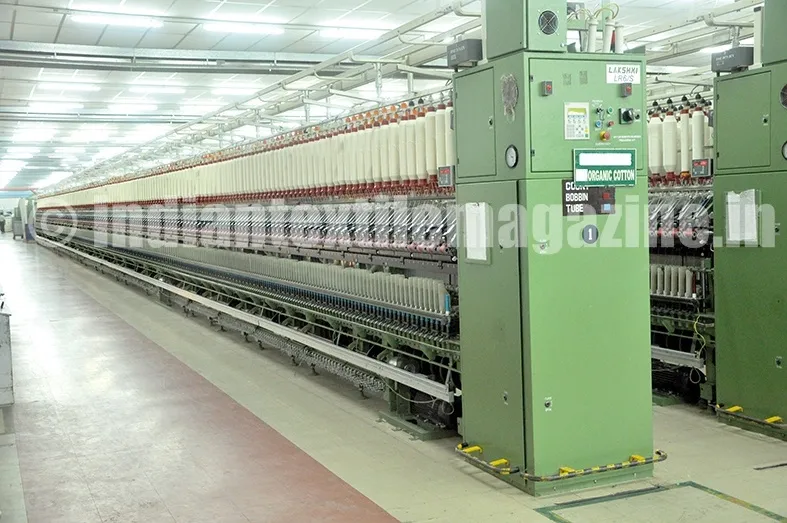
Image Source: The Textile Magazine
Rajapalayam’s economic map has changed dramatically from its agricultural beginnings to become a vital manufacturing center in Tamil Nadu. The city’s diverse sectors now support its growing population.
Textile and cotton mills
Rajapalayam’s industrial story began in 1936 when Thiru P. A. C. Ramasamy Raja built the first cotton spinning mill, Rajapalayam Mills Ltd. This trailblazing venture sparked a textile revolution that made the city a major textile manufacturing hub in southern India.
The Ramco Group’s flagship mill started modestly with 6,000 spindles. Through innovative technology and continuous improvements, it grew substantially. Today, Rajapalayam Mills Limited runs multiple units with impressive capacity:
Main unit: 77,264 ring spindles and 12,756 OE rotors
Rajapalaiyam Spintext: 33,552 ring spindles and 3,930 OE rotors
Rajapalayam Textiles: 21,936 ring spindles and 2,052 OE rotors
The Rajapalayam region now houses about 110 spinning mills that employ around 100,000 workers directly and indirectly. These mills produce cotton and specialized yarns for global export. The Ramco Group’s diverse operations alone generate annual revenue of USD 1.0 billion.
Economic challenges have affected the textile industry recently. At least 12 spinning mills have shut down. Fluctuating cotton prices, GST implications, imported garment competition, and high electricity costs have impacted the sector. Many facilities continue to operate by adapting to market changes.
Surgical cotton and nightwear production
Rajapalayam has carved out specialized niches in medical textiles and nightwear beyond traditional textiles. The Ramaraju Surgical Cotton Mills, established in 1939, leads Southern India’s production of absorbent cotton, gauze, bandages, and wound-care products. The company chose Rajapalayam to benefit from local cotton supplies.
The facility’s production numbers are impressive:
Monthly output exceeds 125 tons of medical-grade bleached cotton
Bandages and gauze products surpass 1.5 million square meters monthly
Ring-spun yarn production reaches nearly 400 tons monthly
Open-end yarn production hits approximately 400 tons monthly
Chatrapatti in Virudhunagar District plays a vital role as a major surgical cotton gauze producer. The villages of Dhalavaipuram and Muhavoor excel in women’s nightwear manufacturing, creating a textile ecosystem where communities specialize in specific products.
The nightwear sector produces cotton nightgowns, printed nighties, and maternity nightwear. These garments come in various designs, patterns, and price points to serve different market segments.
Agriculture and mango cultivation
Agriculture remains the region’s foundation despite industrialization. Rajapalayam’s location near farming zones supports agro-processing and food production industries that use local crops.
Mango cultivation stands out as the area’s agricultural specialty. The region grows several rare and native mango varieties. K.S. Jaganatha Raja’s 12-acre mango orchard near the Western Ghats’ foothills helps preserve endangered mango varieties.
The area boasts unique mango varieties:
Sappattai: Stays crunchy like raw guava even when ripe
Panjavarnam: Known for exceptional sweetness and can be honey-preserved for a year
Puliyadi: Rescued from extinction through grafting
Karupattikai (jaggery fruit): Tastes like palm jaggery while staying green when ripe
Jaganatha Raja documents rare varieties and provides mango saplings throughout southern India. His work preserves agricultural heritage and creates economic opportunities. Rajapalayam’s red soil enhances the local mangoes’ exceptional taste.
The city’s economic strength comes from its textile mills, medical textile production, nightwear manufacturing, and agricultural activities—particularly mango cultivation. This diverse economic structure supports Rajapalayam’s continued growth and development.
Transport and Connectivity
Rajapalayam’s transportation network connects this industrial town to Tamil Nadu and beyond. The town’s textile industries and agricultural products thrive through its well-connected road, rail, and air networks.
Road and highway access
NH-744 (formerly NH-208) from Madurai to Kollam runs through Rajapalayam and provides a vital connection. A major four-laning project of the Thirumangalam-Rajapalayam section spans 71.6 kilometers of NH-744. This expansion will improve freight movement and passenger travel by a lot between economic centers.
Two state highways strengthen the regional network:
SH-41 (Rajapalayam-Sankarankovil-Tirunelveli) links major southern parts of Tamil Nadu including Tirunelveli, Tuticorin, and Kanyakumari, with access to Tuticorin seaport
SH-186 (Rajapalayam-Vembakottai) connects the eastern part of Virudhunagar district through industrial towns like Chatrapatti and Alangulam
The town has two bus stations. A long-distance station on Sankarankovil Road run by Tamil Nadu State Transport Corporation (TNSTC) and private operators, and an older station that serves nearby villages. Direct busses connect Rajapalayam to major cities like Chennai, Bengaluru, Coimbatore, Hosur, Pondicherry, Salem, Tirupati, Tiruppur, Trichy, and Vellore. The Bangalore-Rajapalayam route covers 518 km with 11 daily services that take about 10 hours, and fares range from ₹694 to ₹2,242.
Rajapalayam railway station and train services
The 96-year-old Rajapalayam railway station (code: RJPM) operates under the Madurai division of Southern Railway zone. This NSG-5 category station earned ₹98.3 million annually with daily earnings of ₹269,317 in 2022-23. The station serves 605,484 passengers each year, averaging 1,659 passengers daily with a footfall of 3,114.
Three well-maintained platforms handle 18-22 trains every day. The station sits 168 meters above sea level and will soon get upgrades under the Amrit Bharat Station Scheme.
Popular train services include:
Daily passenger trains between Madurai and Sengottai
Express services like Pothigai Superfast Express (Chennai-Sengottai)
Chennai-Kollam Express that passes through at 2:08 AM
Silambu Super Fast Express running thrice weekly
Nearest airport and air connectivity
Madurai Airport lies 80-85 kilometers from Rajapalayam and serves as the nearest international airport. Travelers can reach it in about 1.5-2 hours by road. Other nearby airports include Trivandrum International Airport (79.9 miles), Kochi International Airport (93.4 miles), and Coimbatore International Airport (115.2 miles).
Travelers can take taxis, private vehicles, or busses from Rajapalayam to Madurai Airport. The town’s location near multiple airports makes it available to business travelers and tourists. This helps local industries grow and attracts visitors to places like Ayyanar Falls and Sanjeevi Hills.
Tourism and Local Attractions
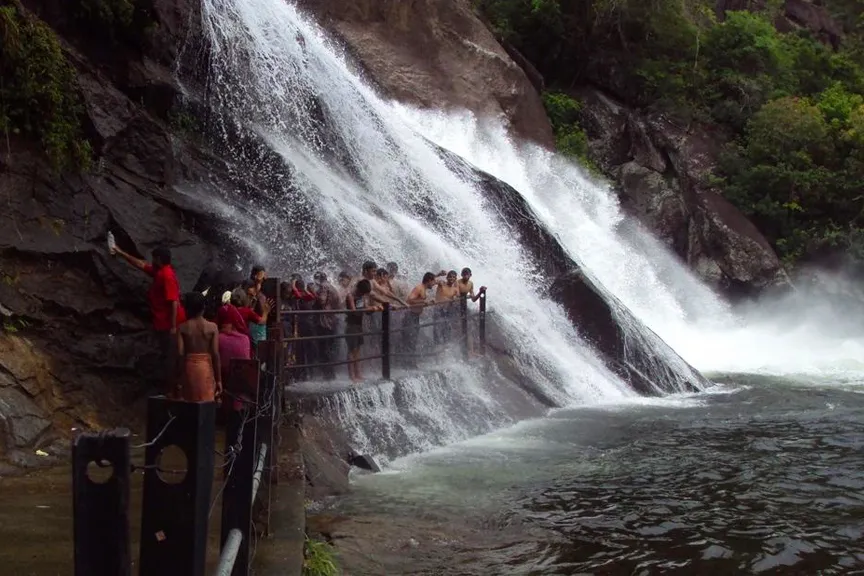
Image Source: Tamilnadu Tourism
Rajapalayam welcomes visitors with its natural wonders and cultural heritage beyond its industrial strength. The town blends natural beauty with spiritual heritage through its peaceful waterfalls and sacred hills.
Ayyanar Falls and temple
You’ll find Ayyanar Falls approximately 6-14 km west of Rajapalayam. The Western Ghats cradle these falls, which get their water from the northeast monsoon rains. This pure water source helps Rajapalayam residents and supports local wildlife. Monkeys, elephants, deer, and buffalo roam freely in the surrounding forests.
The 500-year-old Neer Katha Ayyanar temple at the base gives the falls their name. Two rivers, Palaru and Neeraru, meet at this sacred spot. People come here to seek blessings and solutions to family problems. They perform abishek to Ayyanar and feed the poor as part of their offerings.
The area is perfect to climb woodland mountains. But note that you’ll need special permission from the Forest Department to trek here. The best time to visit is between September and January, after the monsoons end.
Sanjeevi Hills and Murugan temple
Sanjeevi Hills stands about 5 km from Rajapalayam with deep roots in mythology. Hindu mythology tells us that Lord Hanuman brought the Sanjeevi herb from this mountain to heal Lord Lakshmana during the Ramayana. This story has made the hills a sacred place for Lord Hanuman’s devotees.
The Murugan Temple sits proudly at the hill’s peak. Sanjeevi Malai View Point lets you see beautiful views of the plains below. Nature lovers come here to enjoy the peace of dense forests and rich plant life.
These hills make a great spot for trekking with their rough terrain and thick forests. The trails wind through wild areas where you can see amazing views and meet different plants and animals. Wildlife photographers can capture rare and endangered species here.
Religious and cultural sites
Temples dot the landscape of Rajapalayam. The Arulmigu Draupathi Amman Temple is easy to reach by bus and train. Sri Vettai Venkatesa Perumal Kovil draws many visitors with its impressive 4.5/5 rating from 285 reviews.
Other popular temples include:
Guruswamy Temple in Thoppupatti (4.6/5 rating from 246 reviews)
Pachamadam Mariamman Kovil (4.5/5 rating from 207 reviews)
Sri Shirdi Saibaba Temple on Ayyanar Kovil Road (4.7/5 rating from 171 reviews)
The historic Srivilliputhur Andal Temple sits just a drive away. Nature lovers can visit Pilavakkal Dam, Meghamalai, Kalugumalai, and the beautiful Suruli Falls in Theni.
The City View near Hanuman Temple on Sanjeevi Hills has earned a 4.5/5 rating from visitors. This spot shows you the best of Rajapalayam’s spiritual and natural beauty in one place.
Rajapalayam Dog: Pride of the Town

Image Source: DogPack App
The majestic Rajapalayam dog breed, named after its hometown, represents Tamil Nadu’s rich cultural heritage. This native breed has earned nationwide recognition because of its loyalty, strength, and historical importance.
History and origin of Rajapalayam dog
The Rajapalayam dog’s story begins in southern India, in Tamil Nadu’s Virudhunagar district. The royal Nayakar dynasty and local Polygars (feudal lords) bred these dogs as hunters and guardians. These dogs became trusted companions to nobility and skilled hunters, known for their speed, agility, and stamina in chasing wild boar and hare.
These magnificent dogs left their mark on military history. They helped guard camps and track enemies during the Carnatic Wars and Polygar Wars. Their battlefield fame peaked during the Poligar wars against Tipu Sultan (1799-1805), where they attacked and killed enemy horses. The breed’s historical value led the Indian government to honor it with a postage stamp.
Black Rajapalayam dog and its rarity
Rajapalayams usually have a striking white coat with pink noses and light skin. You can find them in cream or black and tan colors too. The black variant stands as the rarest form, making it highly sought after by collectors and breed enthusiasts.
Rajapalayam dog price and demand
A Rajapalayam puppy’s price varies based on its lineage, breeder’s reputation, and location. Quality puppies in major Indian cities cost between ₹40,000 to ₹80,000. Mumbai’s prices range from ₹40,000 to ₹80,000, while Delhi, Chennai, Kolkata, Hyderabad, and Bangalore see prices between ₹45,000 to ₹85,000.
Conservation efforts have saved this native breed from possible extinction. Tamil Nadu’s Animal Husbandry Department promotes awareness through dog shows. The “Save the Rajapalayam Project,” launched with the Kennel Club of India’s support, has helped the breed bounce back successfully.
Education and Institutions
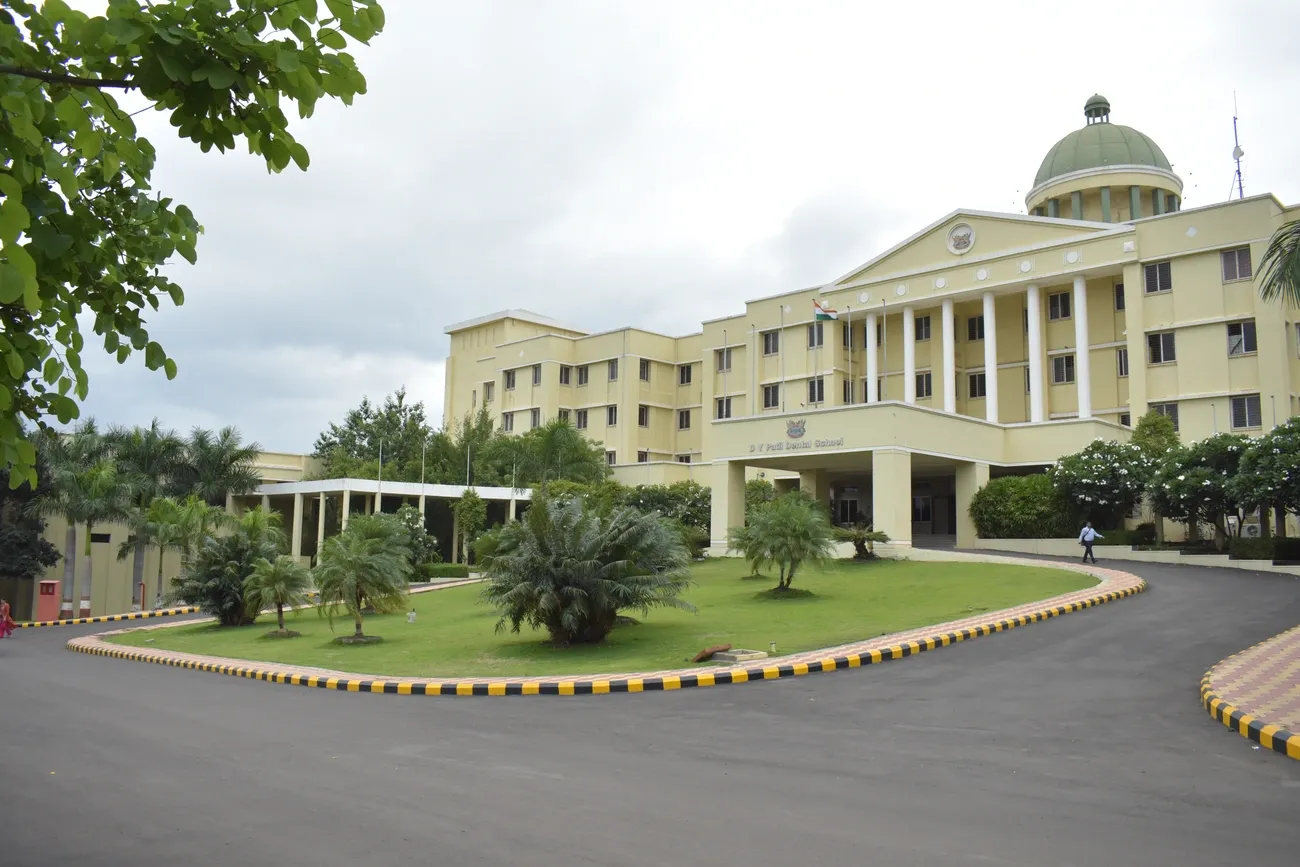
Image Source: YourDegree
Rajapalayam’s schools and colleges have shaped many generations of students since the mid-20th century. These institutions focus on all-round development and help maintain the town’s high literacy rate.
Top schools in Rajapalayam
Maharishi Vidya Mandir is a 32-year old prominent educational institution in Rajapalayam. The school belongs to a nationwide chain with 150 branches in 14 states and educates students from kindergarten through 12th standard. Students learn in modern facilities spread across 4.9 acres that include audio-visual teaching systems, computers, and dedicated spaces for Transcendental Meditation.
DMI Foundations Trust runs St. Joseph International School with the charism of “Loving God in Serving the Poor”. Students can join many activities like yoga, silambam, skating, music, taek-won-do, and bharatham. The school’s sports facilities feature a standard 400-meter track with eight lanes for athletics.
Colleges and polytechnic institutes
Philanthropist P.A.C. Ramasamy Raja founded P.A.C. Ramasamy Raja Polytechnic College in 1963-64 during the Third Five Year Plan. The RAMCO Group has guided this institution’s growth over 45 years, and it maintains affiliation with Tamil Nadu’s Directorate of Technical Education.
Other notable institutions include:
Ramco Institute of Technology, which emphasizes quality engineering education with professional and ethical standards
Rajapalayam Raju’s College, an arts college
A.K.D. Dharma Raja Women’s College, dedicated to women’s education
Literary and cultural organizations
India’s first comic library opened at Rajapalayam’s Women and Children Library. This unique facility houses about 800 old and new comic books, including classics like Ponniyian Selvan and Irumbu Kai Mayavi. Children from all economic backgrounds can now read comics here, which helps reduce their screen time.
The library’s impact on education has been remarkable. Students like Harichandru and Shiam Kumar say they learn better about historical figures through comics than textbooks. They understand the stories of Marudhu Sagodharargal, Velu Nachiyar, and VO Chidambaram Pillai more easily this way.
Conclusion
Rajapalayam stands as evidence of Tamil Nadu’s cultural heritage and industrial strength. This vibrant city strikes a perfect balance between traditional values and modern development. You can see this in its progressive sex ratio and literacy rate that surpasses both state and national averages. The Telugu-speaking Raju community’s rich heritage from the Vijayanagar Empire period shapes the city’s character even today.
The textile industry shows remarkable resilience despite recent economic challenges. Local factories have adapted to market changes while specializing in bandages, woven fabrics, and nightwear products. Nearby villages have carved out their own manufacturing niches. This regional textile ecosystem helps thousands of families thrive. The agricultural sector adds diversity to the local economy, especially through mango cultivation with its unique native varieties.
Ayyanar Falls and Sanjeevi Hills attract visitors throughout the year. These natural spots offer both spiritual significance and fun activities. The region’s numerous temples blend perfectly with its natural beauty to create the unique Rajapalayam experience.
The majestic Rajapalayam dog breed symbolizes the town’s legacy. Conservation efforts have refreshed this indigenous breed that once faced extinction. Future generations will now see these elegant canines that accompanied nobility and fought bravely in historical battles.
The town’s commitment to education shines through institutions like Maharishi Vidya Mandir. India’s first comic library adds an innovative touch to learning. These establishments have helped boost the town’s educational excellence while preserving cultural values.
Good transport links and a mix of industrial strength and natural beauty make Rajapalayam special. This textile hub shows how small-town India can progress while staying true to its roots. Anyone learning about authentic Tamil Nadu beyond the usual tourist spots will find this town worth their time.
Key Takeaways
Rajapalayam represents a fascinating blend of industrial heritage, cultural significance, and natural beauty that showcases Tamil Nadu’s diverse character.
• Textile Hub Legacy: Founded by Telugu-speaking Raju community in 15th century, now operates 110+ spinning mills employing 100,000+ workers in cotton and specialized textile production.
• Progressive Demographics: Boasts exceptional 85.48% literacy rate and progressive 1,014:1,000 female-to-male ratio, both significantly exceeding national averages.
• Indigenous Dog Breed: Home to the legendary Rajapalayam dog, once used by royalty for hunting and warfare, now a protected national heritage breed.
• Strategic Location: Positioned on NH-744 highway with railway connectivity, 80km from Madurai Airport, offering excellent transport links for business and tourism.
• Natural & Cultural Attractions: Features Ayyanar Falls, mythological Sanjeevi Hills with Hanuman temple, and numerous religious sites blending spiritual heritage with scenic beauty.
This textile town successfully balances industrial growth with cultural preservation, making it a unique destination that honors its historical roots while embracing modern development. The combination of economic opportunities, educational excellence, and tourist attractions positions Rajapalayam as a model for sustainable small-city growth in India.
FAQs
Q1. What makes Rajapalayam unique among Tamil Nadu towns? Rajapalayam stands out for its thriving textile industry, with over 110 spinning mills employing around 100,000 workers. The town also boasts an impressive 85.48% literacy rate and a progressive sex ratio of 1,014 females per 1,000 males, both exceeding national averages.
Q2. What is Rajapalayam most famous for? Rajapalayam is renowned for its textile production, particularly cotton spinning and weaving. It’s also famous for the Rajapalayam dog breed, a majestic indigenous canine once used by royalty for hunting and warfare. Additionally, the town is known for its mango cultivation, including several rare native varieties.
Q3. How did Rajapalayam develop historically? Rajapalayam’s history dates back to the 15th century when Telugu-speaking Raju community members settled in the area during the Vijayanagar Empire’s expansion. The town gained prominence during the Nayak period and later developed as a textile hub, with its first cotton spinning mill established in 1936.
Q4. What are the main attractions for visitors to Rajapalayam? Key attractions include the Ayyanar Falls, located 6-14 km west of the town, and the mythologically significant Sanjeevi Hills with its Hanuman temple. The town also features numerous religious sites, a unique comic library, and opportunities to see the rare Rajapalayam dog breed.
Q5. How accessible is Rajapalayam for travelers? Rajapalayam is well-connected by road via National Highway NH-744 and has its own railway station. The nearest airport is in Madurai, about 80-85 kilometers away. This strategic location makes it easily accessible for both business travelers and tourists interested in exploring this unique Tamil Nadu destination.