
Labrador Retriever
 Labrador Retrievers stand out as one of the most popular dog breeds in the United States and India. These medium-to-large dogs make amazing companions with their friendly, outgoing, and high-spirited nature. Their abundant affection makes them perfect family pets. You’ll spot these beautiful dogs in yellow, black, and chocolate coat colors that perfectly match their energetic personality.
The breed’s story goes back centuries to the United Kingdom, where they were developed from St. John’s water dogs brought over from Newfoundland. The Kennel Club gave them official recognition in 1903. The American Kennel Club picked up on this and registered the breed in 1917. These smart and trainable dogs live a healthy life of approximately 13.1 years[-4]. A full-grown Labrador typically weighs between 55-80 pounds and reaches a height of 21-25 inches.
This piece will help you understand everything about these amazing dogs. We’ll talk about their fascinating background, unique features, and friendly nature. You’ll learn why they excel in various working roles and why people worldwide fall in love with them. The cost of bringing a Labrador into your family varies – a purebred puppy in Delhi, India costs between ₹20,000 to ₹40,000.
The Origin and History of the Labrador Retriever
Despite its name, the Labrador Retriever did not originate from Labrador, Canada. These beloved dogs first developed on the island of Newfoundland, where people knew them as the “St. John’s dog” or the “Lesser Newfoundland” dog. The breed’s history dates back to the 1700s in Newfoundland, and people started importing them to England in the early 1800s.
From Newfoundland to the UK
These remarkable dogs made their way from Canadian shores to British soil through the bustling fishing trade between Newfoundland and England. Ships regularly docked at Poole Harbor on England’s southern coast, where fishermen brought their St. John’s dogs. These smaller water dogs weighed between 25 and 34 kg and showed exceptional retrieving abilities, especially in water.
Newfoundland’s fishermen employed these dogs for daily work tasks. The dogs retrieved fish that fell off hooks, hauled nets, and pulled fishing lines through water. Their natural water skills left English observers amazed, who noted how the dogs’ close coats “turned water off like oil”.
Several British aristocrats started importing these versatile working dogs from Newfoundland between 1825 and 1830. The dogs became popular in England because of their extraordinary water skills and retrieving abilities. The breed faced challenges in its homeland when Newfoundland’s government imposed heavy taxes on dog ownership, which reduced the local St. John’s dog population by a lot.
The role of the Earl of Malmesbury and Buccleuch family
The Earls of Malmesbury and the Dukes of Buccleuch played vital roles in establishing and preserving the Labrador breed. The 2nd Earl of Malmesbury (1778-1841) was among the first to bring these dogs to Heron Court in England, where he managed to keep a kennel until his death. His son, the 3rd Earl (1807-1889), continued importing and breeding the dogs.
The 5th Duke of Buccleuch set up his kennel in Scotland around 1835. Historical records tell us that the Duke took his Labrador named “Moss” in his yacht to Naples in 1839, along with Lord Home and his Labrador “Drake”.
A significant moment in Labrador history happened in the early 1880s. The 6th Duke of Buccleuch and 12th Duke of Home visited the elderly 3rd Earl of Malmesbury. They were astonished by Malmesbury’s dogs’ performance during a waterfowl shoot at Heron Court. This chance meeting ended up saving the breed from extinction.
The 75-year old Earl of Malmesbury gave some of his dogs to the visitors, including “Ned” (1882) and “Avon” (1885). These dogs became the foundation of the Duke of Buccleuch’s breeding program. Every Buccleuch Labrador after that could trace their ancestry back to these two dogs.
Recognition by Kennel Clubs
The Kennel Club in England officially recognized the Labrador Retriever as a distinct breed in 1903. The American Kennel Club followed suit with its first Labrador registration fourteen years later in 1917.
The name “Labrador Retriever” had stuck firmly by this time, though nobody knows why the geographical mix-up occurred. Some experts hypothesize that 19th century British people thought of Newfoundland and Labrador as one landmass, which might explain the naming confusion.
Color variations emerged beyond the original black during the breed’s development. A yellow Labrador first appeared in a litter born in 1899. Chocolate Labradors emerged around the same time but didn’t achieve the same popularity as blacks and yellows initially.
The breed’s defining characteristics were clear from the start – a water-resistant coat, otter-like tail, and exceptional retrieving abilities. Newfoundland fishermen and later British sportsmen valued these traits, which remain hallmarks of today’s Labrador Retriever.
Physical Characteristics of the Labrador Breed
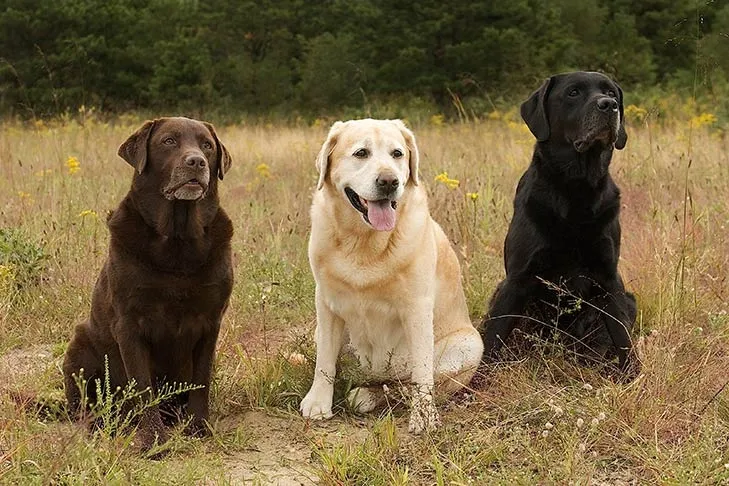
Image Source: American Kennel Club
Labrador Retrievers are sturdy, well-balanced dogs with physical traits that make them easy to spot. These medium-large sporting dogs have a powerful build and weather-resistant coat that serves both looks and function.
Size and weight standards
Official breed standards set specific size ranges for Labs. Male Labs should measure 22½ to 24½ inches at the withers (shoulder). Females are a bit smaller at 21½ to 23½ inches. Show rings won’t accept dogs that are more than half an inch outside these ranges.
A healthy male Lab weighs between 65 to 80 pounds. Females typically weigh 55 to 70 pounds. These measurements help maintain the right bone structure that matches the breed’s working background.
Labs should look strong and athletic. The breed standard doesn’t like “weedy” (too light) dogs or “cloddy lumbering specimens” (too heavy). The perfect Lab shows off muscular features without extra fat, which reflects their heritage as working retrievers.
Coat type and colors
A Lab’s most noticeable feature is its unique coat. They have short, straight, dense fur that feels hard to touch. This coat isn’t just about looks – it helps them work in tough conditions.
A soft, weather-resistant undercoat lies beneath the outer layer. It protects Labs from water, cold, and rough terrain. This double-coat explains why Labs shed so much, especially during spring and fall.
Labs come in three official colors: black, yellow, and chocolate. Two main genes control these colors:
Black: Shows up with at least one dominant B allele (BB or Bb) plus the E allele
Chocolate: Happens with two recessive b alleles (bb) plus the E allele
Yellow: Appears with two recessive e alleles (ee), no matter what B genes are present
Yellow Labs range from light cream to fox-red. Chocolate Labs vary from light to dark chocolate shades. Research shows chocolate Labs don’t live as long as black or yellow ones.
Distinctive features like the otter tail
The Lab’s tail makes them stand out. People call it the “otter tail” because it’s thick and round with dense fur. The tail starts thick at the base, gets thinner toward the tip, and shouldn’t reach below the hock.
This special tail does more than look good. Labs used it as a rudder while swimming in their early days as water retrievers. The tail should line up with their back when resting or moving. It can be carried happily but shouldn’t curl over their back.
Labs also have a broad head with slight eyebrow ridges. Their kind, expressive eyes are brown or hazel. The ears hang close to the head just above eye level. A deep chest and muscular build complete their powerful, athletic look.
Understanding Labrador Retriever Temperament
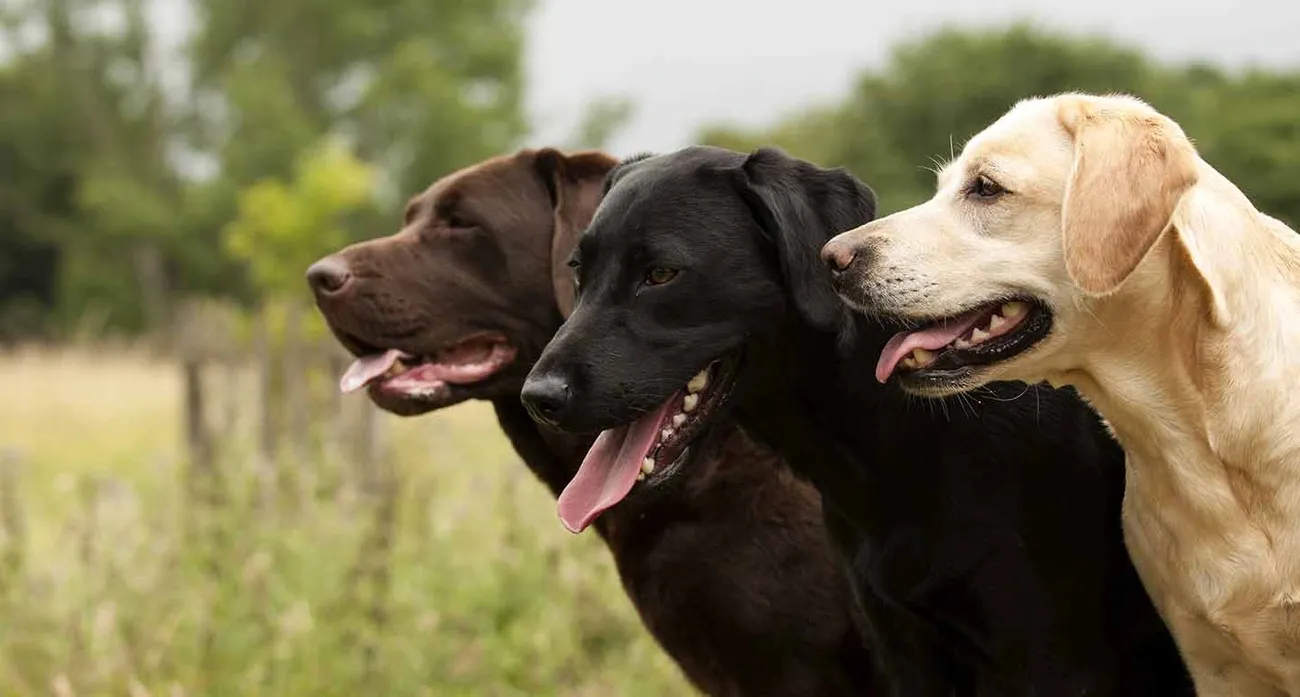
Image Source: Chewy
Labrador Retrievers are known worldwide for their exceptional character. Their unique mix of friendliness, intelligence, and energy makes them perfect companions that fit naturally into any lifestyle or family structure.
Friendly and social nature
People call Labradors “the perfect family dog” for good reason. These dogs are naturally friendly to everyone they meet and treat every person or animal as a potential friend. They’re just as welcoming to strangers, other dogs, and cats as they are to their own family.
Labs build strong emotional connections with their owners through loyalty and affection. Their gentle and patient nature makes them great companions for families with children. These dogs have an amazing ability to sense when others – both humans and animals – need comfort or support.
Social intelligence is a key part of the Labrador’s personality. They have an amazing emotional awareness and can tell when other dogs need a gentle invitation to play or some reassurance. This natural understanding of social behavior is why Labs make such great therapy dogs. They often become natural “bridge builders” between different groups in community settings.
Intelligence and trainability
According to Stanley Coren, a well-known canine researcher, Labrador Retrievers rank 7th among the most intelligent dog breeds. Their mental abilities are impressive – Labs can understand about 270 words, grasp simple counting concepts, and learn new commands in less than five repetitions.
Labs show remarkable adaptive intelligence along with their cognitive skills. So these dogs often learn by watching rather than through direct training. They’ll quickly figure out how to unlatch a gate or open a door after seeing you do it. Their problem-solving skills include:
Quick response to positive reinforcement
Learning commands in multiple languages
Fast understanding of basic instructions like “sit” and “down”
This mix of intelligence and eagerness to please explains why Labs excel as service dogs, guide dogs, and in other working roles. Their sharp minds need proper stimulation – a Lab without enough mental exercise can become quite mischievous.
Energy levels and playfulness
Labs are famous for their boundless energy. They need 1-2 hours of daily exercise to stay healthy in body and mind. A Lab without enough activity might develop hyperactive or destructive behaviors from stored-up energy.
Their playful spirit is one of the breed’s most charming features. Labs have earned their title as “the most fun dog breed” because they bring such enthusiasm to playtime. They love games like fetch, tug-of-war, and swimming – activities that use both their physical abilities and working instincts.
Most Labs keep their puppy-like excitement for about three years before reaching full maturity. Many stay playful throughout their adult lives. Their youthful energy and trainability make them great at canine sports like agility, obedience trials, and dock diving.
Future Lab owners should know these dogs mature later than other breeds. What looks like hyperactivity is usually just their natural enthusiasm for life. With proper guidance, these qualities make Labrador Retrievers amazing companions for active people and families.
Health and Lifespan of Labrador Retrievers
Labrador Retrievers make wonderful companions with their friendly nature and adaptability. But these beloved dogs face some health challenges that owners need to know about. Learning about these conditions and taking the right preventive steps can help your Lab live a long, healthy life.
Common genetic conditions
Labs tend to inherit several health conditions. Hip and elbow dysplasia stands out as one of the most common bone and joint problems these dogs face. These joints don’t develop the way they should, which leads to arthritis, pain, and trouble moving around. Dogs might start limping, struggle to get up, or avoid exercise altogether.
Labs often deal with eye problems too. Progressive Retinal Atrophy (PRA) damages the retina over time and causes blindness. Most Labs develop this condition between ages 3 and 9. On top of that, they might get cataracts and other eye issues that need regular checks.
Exercise-Induced Collapse (EIC) affects all but one of these Labs that have epilepsy – about 10-70%. This inherited condition usually shows up after the dog turns one. The dog might suddenly feel weak or collapse after getting too excited or exercising hard. Their body temperature can spike to a dangerous 107°F during these episodes.
Weight issues pose another big challenge. Scientists found that about 25% of Labs carry at least one version of the POMC gene that makes them gain weight. Each copy of this gene adds more than four extra pounds compared to dogs without it. The sort of thing I love is how this explains why 8.8% of UK Labs weigh too much – one of the highest rates among all dog breeds.
Average lifespan and color-related health differences
Labs usually live 10-12 years with good care. Scientists have found some interesting connections between coat color and how long these dogs live. A detailed UK study looked at more than 33,000 Labs and showed that chocolate Labs don’t live as long as black or yellow ones.
Black and yellow Labs live about 12.1 years, but chocolate Labs only make it to 10.7 years – that’s over 10% less. A Swedish study from 2005 showed that 25% of Labs died by age 10, compared to 35% of all dogs in general.
Chocolate Labs deal with more health issues too. They get hot spots (pyo-traumatic dermatitis) 4% of the time, while black Labs only get them 1.1% of the time and yellow Labs 1.6%. Ear infections hit 23.4% of chocolate Labs, but just 12.8% of black Labs and 17% of yellow Labs.
Preventive care and screening
The American Kennel Club’s National Breed Club suggests these tests to help Labs stay healthy longer:
Hip and elbow evaluations
Ophthalmologist examination
Exercise-Induced Collapse (EIC) DNA test
Progressive Retinal Atrophy DNA test
Centronuclear Myopathy (CNM) DNA test
Your Lab needs regular vet checkups throughout its life. The right diet and exercise help prevent weight problems and might help your dog live longer. One study showed that lean Labs on carefully planned diets lived much longer than others – some even reached 17.9 years.
Lab owners should watch out for warning signs like ear swelling, quick weight gain, or signs of bloat – a dangerous condition where the stomach fills with gas and twists. Quick trips to the vet when you notice these problems can save your dog’s life.
Labrador Retriever as a Working Dog

Image Source: Alamy
Labrador Retrievers are more than just beloved family pets. These amazing dogs work in many professional roles that show off their smarts and adaptability. Their working dog heritage lives on as they serve people in remarkable ways.
Guide and assistance roles
Labs are the top choice for assistance dogs worldwide because they’re smart, easy to train, and have gentle personalities. When it comes to guide dogs for the visually impaired, Labs and Lab/Golden Retriever mixes get the best results among all tested breeds. Their weight of 55-70 pounds hits the sweet spot – they’re strong enough to help with movement but can still navigate public spaces with ease.
These dogs are great service animals if you have different disabilities. They pick up dropped items, push open doors, help with movement, and can even learn complex tasks like using ATMs. People with autism or PTSD benefit from Labs’ natural loving nature. These dogs switch naturally between work mode and relaxation time, which makes them great partners in everyday life.
Labs also make wonderful therapy dogs. Their calm nature helps them work in places from children’s hospital wards to courthouses, where they comfort people who need emotional support.
Search and rescue capabilities
Labs have amazing noses that make them perfect for search and rescue work. They pack about 220 million scent receptors compared to our measly 5 million, so they can pick up tiny traces of scent and track them down. This talent, plus their natural hunting and retrieving instincts, makes them excellent at finding missing people in disasters.
Many Labs work as certified Federal Emergency Management Agency (FEMA) Urban Search and Rescue dogs, with special training to find survivors trapped in disasters. They keep searching through tough conditions because they have:
An amazing drive to hunt and find targets
The determination to work without stopping
The ability to work in harsh weather
Strong bonds with their handlers that improve teamwork
Military and police service
German Shepherds and Belgian Malinois used to rule police work, but Labs are now taking on special roles. Their keen noses help them find:
Explosives and improvised explosive devices (IEDs)
Narcotics and illegal drugs
Currency and contraband
Firearms and ammunition
The Marine Corps picked Labs for finding IEDs because research showed they have great hunting instincts, steady personalities, and respond well to hand signals and whistles. These IED Detection Dogs (IDDs) can smell 17 different types of homemade explosives.
The program worked so well that the Marine Corps more than doubled its IDD force from 315 to 647 dogs. Military Labs go through 14 weeks of special training and keep practicing to stay sharp.
Police departments use Labs at airports, transit hubs, and in K9 units. People find them less scary than traditional police dogs, but they still do great police work.
Show vs Field Labradors: What’s the Difference?
Labrador retrievers have evolved into two distinct types through decades of specialized breeding: Show Labradors and Field Labradors. Each type represents a different take on the breed standard, with breeders focusing on specific traits based on their purpose.
Physical and behavioral differences
Show Labradors (also known as English or Bench Labradors) have a stockier build with broader heads, thicker necks, and heavier bone structure. Their coats are usually denser and thicker, and they sport a more pronounced “block” head shape. Field Labradors (or American/Working Labradors) have a leaner, more athletic build. They feature narrower heads, longer muzzles, and lighter frames that help them move quickly and work longer.
These two types also show different personality traits. Show Labradors tend to be more laid-back, which makes them great family pets. Field Labradors pack more energy and drive. They need plenty of exercise and mental challenges to stay happy and balanced.
Purpose of breeding lines
Each breeding line developed from a focus on different Labrador traits. Show breeders want dogs that match breed standards perfectly to win competitions. These dogs shine in conformation rings where judges look at their structure, movement, and appearance.
Field breeders care more about working abilities like hunting skills, retrieving drive, and how easy the dogs are to train. They breed dogs based on what they can do rather than how they look, putting intelligence, stamina, and work ethic first.
Choosing the right type for your lifestyle
Anyone looking to get a Labrador should think carefully about their lifestyle before choosing between show and field lines. Show-line Labradors fit well with families who want a calmer dog with classic Labrador looks. While they still need regular exercise, they adapt better to quieter households.
Field-line Labradors make perfect companions for active people who can give them lots of physical and mental exercise. They excel at hunting, dog sports, and life with active families who have big yards. Show-line Labradors might work better for first-time dog owners since field lines can get restless and destructive without enough activity.
Both types share the wonderful temperament that has made Labradors one of the world’s most popular family dogs.
Famous Labradors and Their Stories

Image Source: Today Show
Some Labrador retrievers have left an incredible mark in history with their amazing service and abilities. These four-legged heroes saved lives, brought comfort to people, and captured millions of hearts through media.
Endal and Sully
Endal, a yellow Labrador born in 1995, became “the most decorated dog in the world” and earned the PDSA’s Gold Medal for Animal Gallantry and Devotion to Duty. This exceptional service dog helped Gulf War veteran Allen Parton who had severe brain trauma. Endal’s skills were remarkable – he could use ATM cards, ride the London Eye, and put a human in recovery position without any training. His most heroic moment came in 2001 when he pulled his unconscious owner into recovery position, got a mobile phone from under a car, covered him with a blanket, and ran to a nearby hotel for help.
Sully, born in 2016, caught worldwide attention as former U.S. President George H.W. Bush’s service dog during his final six months. A touching photo of Sully next to the president’s flag-draped casket went viral after Bush’s death in 2018, getting over 230,000 likes within two days. Sully later joined Walter Reed National Military Medical Center’s Facility Dog Program and received the rank of Hospital Corpsman Second Class.
Frida and Zanjeer
Frida, a Mexican rescue Labrador born in 2009, took part in 55 rescue operations in several countries. She found 12 survivors and 12 deceased persons during the 2010 Haiti earthquake. Her brave work during Mexico’s devastating 2017 earthquakes made her a national icon, and people honored her with multiple statues and a mural in Mexico City. She retired in 2019 with a special ceremony celebrating her life-saving work.
Mumbai Police’s Labrador, Zanjeer, became a hero during the 1993 Mumbai bombings. His keen nose found 3,329 kg of RDX explosives, 600 detonators, 249 hand grenades, and over 6,000 rounds of ammunition. His work stopped more attacks in Mumbai, Mumbra, and Thane. Zanjeer died of bone cancer in 2000 and received a full state funeral that honored his service.
Labradors in pop culture
Labradors have also won hearts in entertainment. Brian Griffin from “Family Guy” is a white Labrador who drives a Toyota Prius but keeps typical dog characteristics. Superman’s faithful companion Krypto appears as a white Labrador. The digital world features Labramon, a Labrador-based character in “Digimon”.
Popularity and Global Presence of the Labrador Retriever
Labrador Retrievers have captured hearts worldwide and earned their spot as one of our most cherished dog breeds. These versatile dogs topped popularity charts across continents for three decades, building a devoted following everywhere they went.
Most popular dog breed rankings
Labradors held an incredible record as America’s most popular dog breed for 31 straight years (1991-2022). The French Bulldog finally claimed the top spot in 2022, moving Labradors to second place. Both the UK and US show Labrador registrations that double the numbers of their closest competitors. The breed’s popularity stands out even more when compared to similar-sized dogs – Labradors are registered 3-5 times more often than German Shepherds and Golden Retrievers. These friendly dogs lead the popularity charts in Canada, New Zealand, and the United Kingdom too.
Why families love Labradors
Labradors’ exceptional people skills make them a natural choice for families. They create strong bonds with every family member and thrive on human interaction. Kids find perfect companions in these patient dogs, who often become their protective playmates. These adaptable pets feel right at home anywhere – from busy city apartments to spacious country houses. New dog owners love Labradors because they’re smart and eager to learn.
Labradors in different countries
Labradors have won hearts in every corner of the world. Australian records show their excellence – seven out of thirteen “outstanding gundogs” in the National Kennel Council’s hall of fame (2000-2005) were Labradors. These dogs have become the backbone of guide dog programs, making up 60-70% of all guide dogs in the United States. Beyond their traditional strongholds in the UK and US, you’ll find thriving Labrador communities in Canada and Australia. Their success comes from their versatility – they excel both as family pets and working dogs, which explains their worldwide appeal.
Conclusion
Labrador Retrievers have come a long way from Newfoundland’s shores to become one of the world’s most cherished dog breeds. Their 31-year run as America’s favorite breed is proof of their winning combination of friendliness, smarts, and adaptability.
Dog lovers see Labs as the complete package. Their unique features – a water-resistant double coat, strong build, and that distinctive otter tail – match their loving nature perfectly. These dogs come in three beautiful colors that might affect their health and lifespan differently. Yet every Lab shares that amazing zest for life that makes millions fall in love with them.
Labs do more than just make great family pets. Their amazing working abilities help in search and rescue, guide dog services, military operations, and therapy work. The difference between Show and Field Labs lets future owners pick what lines up best with their lifestyle.
Of course, owning a Lab means taking on responsibilities. These wonderful companions need proper exercise, preventive healthcare, and awareness of genetic conditions to live their longest, healthiest lives. Their tendency toward certain health issues needs extra attention, especially with weight control and joint health.
Well-known Labs like Endal, Frida, and Sully showed how these dogs can change and save lives. Their stories reveal the exceptional abilities behind those friendly faces. Labs prove why they’re the ultimate canine companions, whether they’re working heroes or beloved family pets.
Labs’ worldwide popularity stays strong, even after French Bulldogs took the top spot in recent American rankings. They adapt well to different countries, cultures, and living situations. In the end, when you’re looking for a canine companion, Labs remain the gold standard that other breeds are measured against – they truly are man’s best friend in every way.
Key Takeaways
Understanding the Labrador Retriever breed helps potential owners make informed decisions about welcoming these exceptional dogs into their lives.
• Labradors require 1-2 hours of daily exercise and mental stimulation to prevent destructive behaviors from their high energy levels.
• Choose between Show Labradors (calmer, stockier build) and Field Labradors (higher energy, athletic build) based on your lifestyle needs.
• Chocolate Labradors live 10.7 years on average compared to 12.1 years for black and yellow Labs due to genetic health differences.
• Hip/elbow dysplasia, eye problems, and obesity are common health concerns requiring preventive screening and weight management throughout their lives.
• Their exceptional intelligence (7th smartest breed) and eager-to-please nature make Labradors highly trainable for both family life and professional working roles.
These remarkable dogs excel as both beloved family companions and skilled working animals, from guide dogs to search and rescue heroes. Their 31-year reign as America’s most popular breed reflects their perfect balance of loyalty, intelligence, and adaptability that continues to capture hearts worldwide.
FAQs
Q1. How much exercise does a Labrador Retriever need daily? Labrador Retrievers typically require 1-2 hours of daily exercise to maintain their physical and mental well-being. Without sufficient activity, they may develop hyperactive or destructive behaviors due to pent-up energy.
Q2. What are the main differences between Show and Field Labradors? Show Labradors tend to have a stockier build with broader heads and a calmer demeanor, making them excellent family companions. Field Labradors are leaner and more athletic with higher energy levels, requiring more rigorous daily exercise and mental stimulation.
Q3. Are there health differences between Labrador coat colors? Yes, studies have shown that chocolate Labradors tend to have shorter lifespans (average 10.7 years) compared to black and yellow Labradors (average 12.1 years). Chocolate Labs also experience higher rates of certain health issues like ear infections and skin conditions.
Q4. What makes Labrador Retrievers such popular service dogs? Labradors excel as service dogs due to their intelligence, trainability, and gentle temperament. They can learn complex tasks, transition easily between work and relaxation, and provide both physical assistance and emotional support. Their medium size also makes them manageable in public spaces.
Q5. How smart are Labrador Retrievers compared to other dog breeds? Labrador Retrievers rank 7th among the most intelligent dog breeds. They can learn approximately 270 words, understand simple counting concepts, and typically master new commands in fewer than five repetitions. This intelligence, combined with their eagerness to please, makes them highly trainable.