
Why Great Dane Dog Breed Owners Never Tell You These Hidden Facts
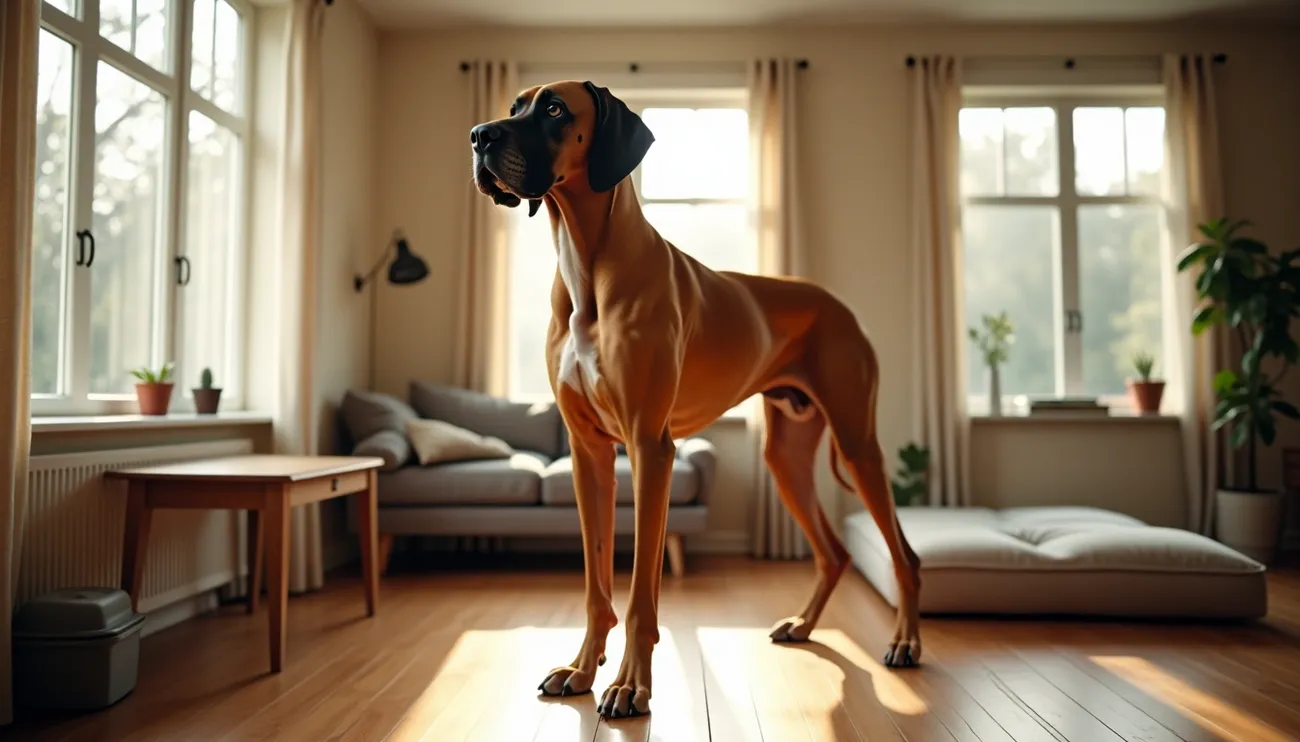 The great dane dog breed towers over most canines, standing up to 32 inches tall and weighing as much as 175 pounds. Despite their imposing presence, these gentle giants often surprise first-time owners with challenges rarely discussed in typical breed descriptions.
While Great Danes captivate admirers with their regal appearance and calm demeanor, experienced owners understand that living with these magnificent dogs involves more than managing their impressive size. From their unexpected historical origins to specific health concerns, these dogs come with unique care requirements that potential owners should know before bringing one home. Additionally, their rapid growth rate, special dietary needs, and training challenges remain underappreciated aspects of Great Dane ownership.
This article uncovers the hidden realities of living with Great Danes that enthusiastic breeders and devoted owners often gloss over in casual conversation. Although these dogs make loyal companions, understanding their complete story helps ensure a successful relationship with these extraordinary animals.
The surprising history behind the Great Dane
When looking at these majestic giants, many assume their name reveals their country of origin. This common misconception leads to one of the most fascinating aspects of the great dane dog breed history.
They’re not actually Danish
Contrary to what their name suggests, Great Danes have no connection to Denmark whatsoever [1]. These magnificent dogs originated in Germany at least 400 years ago [2], where they’re known as “Deutsche Dogge” which translates to “German Mastiff” [1]. In fact, Germans were so particular about this distinction that in 1880, they officially banned the name “Great Dane” in their country [3].
The breed descends from powerful hunting dogs of the Middle Ages used throughout German territories [1]. Initially, German nobles imported strong, long-legged dogs from England and Ireland, calling them “Englische Docke” or “Englischer Hund,” which simply meant “English dog” [1]. These became the foundation from which the modern Great Dane developed.
Originally bred for boar hunting
Behind their gentle demeanor lies a surprising history as fierce hunters. Great Danes were specifically developed to hunt dangerous wild boar [4], a purpose requiring tremendous courage and physical prowess. Their combination of size, strength, and speed made them perfect for pursuing and subduing these aggressive animals [4].
By the 17th century, German nobility regularly bred these dogs not just for boar hunting but also for pursuing other large game like:
Bears
Deer
Wolves
Elk [4]
Their hunting prowess was so valued that in the 18th century, Great Danes became prestigious guardians of estates and carriages. Furthermore, they were particularly popular with the upper class for sport, as few other dogs could successfully bring down a wild boar [3].
In 1876, the Great Dane was declared the national breed of Germany, praised for their protective nature, perseverance, and strength [5]. This official recognition marked their importance to German culture and heritage.
How the name ‘Great Dane’ stuck
The misleading name has a fascinating origin story rooted in European politics and linguistics. Initially, in the 19th century, the breed was known in English-speaking countries as the “German boarhound” [1], accurately reflecting both their origin and purpose.
During this period, some German breeders attempted to market the dogs as “German Dogge” or “German Mastiff,” positioning them as luxury companions rather than working dogs [1]. Nevertheless, their efforts were ultimately unsuccessful due to increasing geopolitical tensions between Germany, France, and Britain [1].
The name confusion began when a French naturalist named Georges-Louis Leclerc encountered these dogs while traveling in Denmark. Impressed by their size, he called them “Grand Danois” (Big Danish) [6]. This French designation was later literally translated to “Great Dane” in English [1].
Consequently, when Great Danes became an official American Kennel Club breed around 1887, they were recognized under the name “Great Dane” rather than their German title—a direct result of political tensions with Germany at the time [6].
This historical quirk of naming persists today, with English-speaking countries continuing to use “Great Dane” despite the breed’s undeniable German heritage [6]. Meanwhile, most European countries still honor the original name “Deutsche Dogge,” acknowledging the breed’s true origins [6].
What most people don’t know about their size
Few prospective dog owners truly grasp what “giant breed” means until they witness a Great Dane puppy transform before their eyes. Beyond the basic statistics, living with these gentle giants involves unique challenges that rarely make it into casual conversations.
They grow faster than you expect
Most dog breeds take 12-24 months to reach their full adult size. However, Great Danes follow an entirely different growth trajectory. These puppies gain approximately 100-120 pounds in their first year alone—a rate of growth that can be startling even for prepared owners.
The most dramatic growth occurs between 3-6 months, when a Great Dane puppy might gain 2-3 pounds per week. This rapid development means the adorable 20-pound puppy you brought home will outweigh most adult dogs within just a few months.
This accelerated growth creates unique challenges:
Clothing and accessories (collars, harnesses, coats) need frequent replacement
Crate sizes must be adjusted constantly
Food quantities increase dramatically month by month
Exercise must be carefully monitored to protect developing joints
First-time owners often express shock at how quickly their puppy transforms from lap-sized to towering. Your “small” puppy phase lasts weeks rather than months, giving you precious little time to adapt.
Space requirements are often underestimated
“Great Danes are apartment dogs” is perhaps the most misleading claim about this breed. Though typically calm indoors, their sheer physical presence demands considerable space.
Consider these spatial realities:
A full-grown Great Dane takes up significant floor space even when lying down. Their tail alone becomes a household hazard, easily clearing coffee tables with one sweep. Moreover, these dogs need space to stretch out comfortably—a standard dog bed won’t suffice.
Beyond basic living space, doorways, hallways, and stairs present unique challenges. A Great Dane standing on hind legs can reach countertops, tables, and high shelves with ease. Furthermore, many owners find themselves rearranging furniture to create clear pathways through rooms.
Vehicle considerations likewise become paramount. Standard sedans prove uncomfortable for adult Great Danes—most owners eventually upgrade to SUVs or minivans to accommodate their four-legged companions.
Why their size affects everything from food to furniture
The ripple effects of owning a dog this size extend into virtually every aspect of daily life. Food costs represent one of the most immediate impacts. Adult Great Danes typically consume 6-10 cups of high-quality food daily—roughly 4-6 pounds—resulting in monthly food bills often exceeding those for small dogs by 300-400%.
Furniture durability suddenly matters as never before. Couches, chairs, and beds must withstand tremendous weight, assuming you permit your Great Dane on furniture. Many owners find themselves investing in sturdier, more expensive home furnishings.
Even routine accessories require upsizing:
Standard leashes prove too thin and weak
Regular toys become choking hazards
Basic water bowls tip over easily
Standard crates rarely accommodate adult Great Danes
Medical costs likewise scale with size. Medications, preventatives, and procedures all increase proportionally with a dog’s weight. Subsequently, veterinary bills for Great Danes typically run 2-3 times higher than for average-sized dogs.
Perhaps most overlooked is the physical strength required to handle these dogs. Contrary to their “gentle giant” reputation, an excited or frightened Great Dane can easily pull an unprepared handler off their feet. Additionally, lifting or carrying an injured Great Dane might require multiple adults—a critical consideration for emergency planning.
Hidden health risks that owners rarely mention
Beyond their impressive stature, Great Danes harbor serious health vulnerabilities that potential owners should understand before bringing one home. These gentle giants face several potentially life-threatening conditions that significantly impact their quality of life and longevity.
Bloat and GDV: the silent killer
Gastric Dilatation-Volvulus (GDV), commonly called bloat, represents the number-one health threat to Great Danes. This life-threatening emergency occurs when the stomach fills with gas, then twists upon itself, cutting off blood circulation [7]. Great Danes top the list of breeds at risk, with each dog having approximately a 42% lifetime chance of developing this condition [8].
Without immediate veterinary intervention, GDV proves fatal within hours. Even with proper treatment, mortality rates range from 10-45% [9]. Warning signs include:
Distended abdomen
Unsuccessful retching
Excessive drooling
Restlessness or abnormal stillness
Rapid breathing and pale gums
Some owners opt for preventative surgery (gastropexy), which significantly reduces recurrence risk from 80% to just 3-5% [7].
Wobbler syndrome and spinal issues
Great Danes frequently develop cervical vertebral instability, known as Wobbler syndrome, which causes spinal cord compression in their neck. Approximately 4.2% of Great Danes suffer from this condition [10], typically showing signs around age three [10].
Wobbler syndrome manifests through an uncoordinated gait, difficulty rising, and neck pain. Unlike many other health issues, this condition directly relates to their rapid growth and massive frame. Surgical treatment offers about 80% success rate, yet medical management alone helps only half of affected dogs [10].
Short lifespan and emotional toll
Perhaps most heartbreaking, Great Danes typically live just 7-10 years—significantly shorter than many other large breeds [11]. They’re considered geriatric by age six [11], earning them the unfortunate nickname “heartbreak breed” [12].
This abbreviated lifespan creates profound emotional challenges for owners who form deep bonds with these affectionate giants, only to face loss much sooner than expected. Their relatively short lives, coupled with numerous health challenges, means many families experience the grief of losing their Great Dane while the dog is still relatively young.
Heart disease and genetic concerns
Dilated cardiomyopathy (DCM) affects Great Danes at alarming rates, with studies showing prevalence between 11.8% and 35.6% [13]. This heart muscle disease causes enlargement of the heart, progressively weakening its ability to pump blood effectively.
DCM often exists silently for years before symptoms appear, meaning affected dogs may already have been bred multiple times [3]. Early signs include exercise intolerance, coughing, and in advanced cases, collapse. Great Danes with DCM typically have shorter survival times than other breeds with the same condition [13].
Other genetic concerns include thyroid problems and complications from the merle gene, which can cause severe vision and hearing deficits if two carriers are bred together [11].
Feeding and care myths debunked
Proper nutrition forms the cornerstone of raising a healthy great dane dog breed, yet many owners fall victim to common feeding misconceptions that can significantly impact their dog’s health and longevity.
Why ‘large breed’ food is non-negotiable
Feeding standard dog food to Great Danes represents one of the most dangerous mistakes owners make. These giants require specific nutritional formulations that support their unique metabolism and massive body weight (up to 200 pounds) [14].
Giant breed puppies absolutely need specialized puppy food designed for their growth pattern. Despite persistent myths claiming Great Dane puppies should eat adult food, this outdated advice ignores advances in canine nutrition. Today’s quality manufacturers have developed formulations specifically suitable for giant breed puppies [14].
When selecting food, avoid any brand with fat listed in the first four ingredients, as this has been directly linked to increased bloat risk [14]. Instead, seek out products approved by the World Small Animal Veterinary Association (WSAVA) that provide:
Appropriate calcium-phosphorus balance
Controlled energy content
Quality protein sources
Joint-supporting nutrients
The truth about slow feeders and elevated bowls
Perhaps the most persistent myth involves elevated feeding stations. Contrary to decades of “breeder lore,” scientific research has thoroughly debunked this practice. Studies from both Purdue and UC Davis veterinary schools found that elevated bowls actually increase bloat risk—potentially doubling the chance of gastric dilatation-volvulus in giant breeds [15].
Nonetheless, feeding method remains important. Dividing daily food into smaller portions helps prevent bloat more effectively than bowl height. Great Dane owners who offer one large meal face higher bloat rates than those providing multiple smaller portions throughout the day [14]. For puppies, three measured meals works best, and maintaining this routine into adulthood benefits digestive health [6].
How overfeeding can lead to joint issues
Excess weight creates catastrophic consequences for Great Danes. Beyond the obvious risks of obesity (cancer, diabetes), overfeeding directly damages developing joints and skeletal structure [14].
Research confirms this relationship conclusively. In one study, Great Dane puppies with unlimited access to food developed osteochondrosis (abnormal bone development) at alarming rates compared to portion-controlled puppies [16]. Furthermore, these overfed puppies showed more frequent and severe hip dysplasia [16].
The first eight months prove particularly critical, as this period primarily involves bone development [6]. Puppies consuming excessive calories grow too rapidly, placing immense strain on developing joints [6].
Above all, remember that the healthiest Great Danes are slim Great Danes [14]. Contrary to common assumptions, these giants don’t require enormous food quantities—they need precisely measured, high-quality nutrition [14].
Behavioral quirks and training challenges
Living with the great dane dog breed means understanding their unique behavioral profile, which often surprises first-time owners expecting perfect obedience from these docile giants.
They’re gentle but not always obedient
Behind their affectionate demeanor, Great Danes possess an independent streak that can challenge even experienced dog owners. Though intelligent, these gentle giants can be stubborn learners who don’t always see the purpose in following commands. “Great Danes are considered working dogs and are intelligent,” explains certified trainer Russell Hartstein, “Still, all [dogs] are individuals.” Their sensitivity means harsh training methods backfire spectacularly—positive reinforcement with treats, praise and rewards works best for these dignified dogs.
Socialization is more important than you think
Properly socializing your Great Dane isn’t optional—it’s essential. Without careful exposure to various people, animals, and environments during their first 16 weeks, these dogs can develop significant behavioral issues. Poorly socialized Danes often become shy, fearful, or even reactive. As Hartstein notes, “The larger the dog, the more social training the owner should be ready to provide.”
Why early training is critical for safety
Consider this sobering reality: your puppy will soon outweigh many adults. Basic obedience training becomes a safety requirement, not just a nice-to-have. Great Danes must master fundamental commands immediately, especially since proper behavior requires repetition. According to experts, “It takes 10,000 iterations of any behavior… for a dog to truly know something.”
Conclusion
Owning a Great Dane brings unique joys and responsibilities that extend far beyond what most potential owners initially consider. These majestic German giants challenge many common assumptions about large dogs, from their surprising hunting heritage to their specific dietary needs. Contrary to popular belief, their “gentle giant” reputation tells only part of the story – these dogs require dedicated training, proper socialization, and specialized healthcare throughout their unfortunately brief lives.
Space considerations become a daily reality, affecting everything from vehicle choices to furniture purchases. Health concerns like bloat demand constant vigilance, especially during those rapid growth phases when puppies gain weight at astounding rates. Great Dane owners must accept certain unavoidable facts: specialized nutrition remains non-negotiable, preventative healthcare proves essential, and proper training cannot be delayed.
The decision to welcome a Great Dane into your home should never be made lightly. Their relatively short lifespan creates an emotional reality few discuss openly – you will likely say goodbye to your beloved companion while they’re still relatively young. Nevertheless, those who understand and accept these challenges often find themselves rewarded with a devoted, magnificent companion unlike any other.
Great Danes certainly deserve their reputation for loyalty and affection. Still, prospective owners benefit most from approaching this breed with clear eyes and realistic expectations. Armed with knowledge about their true origins, special care requirements, and behavioral tendencies, families can make informed decisions about whether these remarkable dogs truly fit their lifestyle. After all, the most successful Great Dane relationships begin not with size-based admiration but with thorough understanding of what living with these extraordinary animals truly entails.
References
[1] – https://en.wikipedia.org/wiki/Great_Dane
[2] – https://www.britannica.com/animal/Great-Dane
[3] – https://danecouncil.org.uk/great-dane-health-matters/dilated-cardiomyopathy-research/dilated-cardiomyopathy-in-great-danes/
[4] – https://www.petscare.com/news/post/why-great-danes-were-bred
[5] – https://dogacademy.org/breeds/great-dane
[6] – https://www.royalcanin.com/in/dogs/breeds/great-dane
[7] – https://www.vet.cornell.edu/departments-centers-and-institutes/riney-canine-health-center/canine-health-information/gastric-dilatation-volvulus-gdv-or-bloat
[8] – https://www.ufaw.org.uk/dogs/great-dane-gastric-dilatation-volvulus-syndrome
[9] – https://vcahospitals.com/know-your-pet/bloat-gastric-dilatation-and-volvulus-in-dogs
[10] – https://vet.osu.edu/research/wobbler-syndrome
[11] – https://www.codapet.com/senior-pet-care/understanding-the-lifespan-of-great-danes
[12] – https://www.petscare.com/news/faq/why-is-great-dane-called-the-heartbreak-breed
[13] – https://www.sciencedirect.com/science/article/abs/pii/S1760273423000139
[14] – https://www.hellodanes.com/great-dane-nutrition-8-must-knows-for-feeding-your-dog-the-best-diet-for-his-breed/
[15] – https://www.reddit.com/r/greatdanes/comments/11u5n5b/raised_food_bowl_or_slow_feeder/
[16] – https://www.researchgate.net/publication/262704462_Overfeeding_and_skeletal_development_in_Great_Dane_puppies_Clinical_and_radiographic_aspects