
German Shepherd
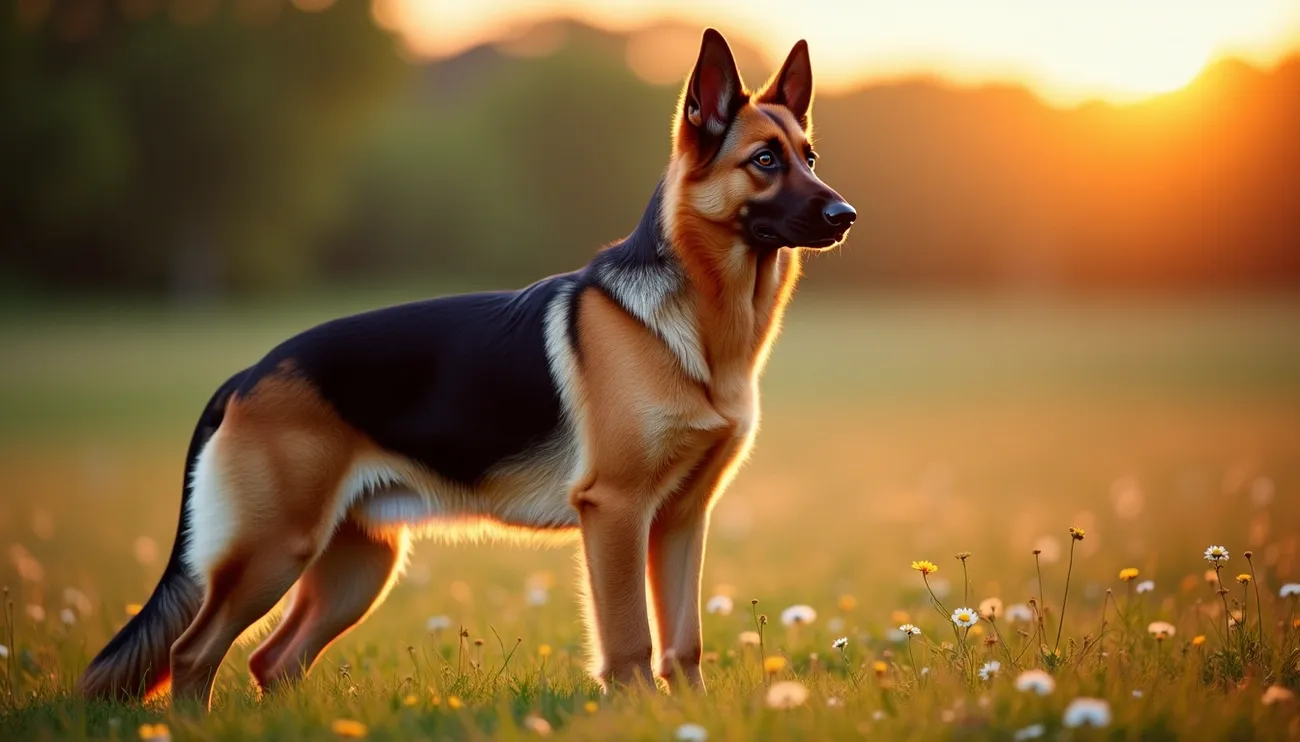 German Shepherds are the second most popular dog breed in America and lead the rankings in many countries around the world. These intelligent and loyal working dogs first came from Germany and gained widespread recognition after World War I. Male German Shepherds grow to 24-26 inches in height and weigh 65-90 pounds. The females are a bit smaller, reaching 22-24 inches and weighing 50-70 pounds.
These dogs are known for their sharp intelligence, alertness and steadfast loyalty. They need one to two hours of exercise daily to stay healthy both physically and mentally. German Shepherds come with coats of different types and colors. You’ll find black ones, white ones, and those with the classic double coat. While they typically live 10-13 years, these versatile dogs make excellent family pets and serve well in police and military roles. Indian buyers should expect to pay between ₹8,000 to ₹25,000 for a German Shepherd puppy.
The Origins of the German Shepherd
The German Shepherd’s story started in late 19th-century Germany. One man’s vision changed working dogs forever. The breed’s history stands apart from ancient breeds with unclear origins. We know exactly when and how German Shepherds came to be.
Max von Stephanitz and the first German Shepherd
Max Emil Friedrich von Stephanitz was born on December 30, 1864. This German cavalry officer loved breeding dogs. His family wanted him to stick to a military career, but he managed to keep his passion for agriculture and dogs alive. He studied at a Berlin veterinary school for a while. The 1890s saw him experimenting with dog breeding at his property near Grafrath. He used techniques that English breeders were using at the time.
The breed’s defining moment came on April 22, 1899. Von Stephanitz went to a dog show where he saw a wolf-like dog named Hektor Linksrhein. Frankfurt breeder Friedrich Sparwasser had raised this 4-year-old Thuringian shepherd dog. The dog’s intelligence, strength, and character impressed von Stephanitz so much that he bought him right away for 200 German gold marks. He gave the dog a new name – Horand von Grafrath and called him the perfect working dog – “a gentleman with a boundless zest for living”.
That very day changed everything. Von Stephanitz and his friend Artur Meyer, along with others, created the Verein für Deutsche Schäferhunde (Society for German Shepherd Dogs). Horand became the first official German Shepherd Dog with registration number SZ1. His gray-yellow sable coat and wolf-like looks made him the perfect foundation for the modern breed.
The role of herding dogs in 19th-century Germany
German herding dogs had evolved since medieval times. The country had many regional varieties before any standardization efforts. Breeders valued these working abilities:
Intelligence and responsiveness to quickly follow commands
Strength and endurance to herd all day long
Protective instincts to guard flocks from predators
Adaptability to various terrain and weather conditions
People called any sheep-herding dog in Germany a “German shepherd dog” before the 1890s. Breeders cared about working skills rather than looks, which led to dogs looking different across regions.
The Phylax Society emerged in 1891 to standardize German dog breeds. It lasted only three years because members couldn’t agree whether to focus on work ability, looks, or both. In spite of that, their work helped shape future developments.
Germany’s grazing lands shrank as industries grew. These smart working dogs weren’t needed as much for their traditional jobs. Then von Stephanitz stepped in to save and improve their qualities through careful breeding.
How the breed gained international recognition
World War I launched German Shepherds into global fame. The German military didn’t see war dogs’ full potential right away. Von Stephanitz pushed his breed for military use, and soon these dogs served as messengers, rescue workers, guards, and sentries. Soldiers from many countries admired their smarts, trainability, and loyalty.
American and British soldiers brought these amazing dogs home after the war. The American Kennel Club had actually recognized the breed in 1908, but its popularity exploded after the war. Benjamin Throop and Anne Tracy started the German Shepherd Dog Club of America in 1913 with 26 founding members.
Canine movie stars boosted the breed’s fame even more. Rin-Tin-Tin became a sensation. An American soldier rescued this German Shepherd from France during World War I. The dog starred in 26 Hollywood films, which made people fall in love with the breed.
The breed’s name changed temporarily in some countries due to anti-German feelings during and after World War I. British people called it the “Alsatian” from 1919 to 1977. The American Kennel Club also made the German Shepherd Dog Club of America drop “German” from the name for a while.
The breed’s success showed in numbers. By 1923, the German club had 50,000 paying members across more than 500 branches in Germany. German Shepherds had become one of the world’s most prominent and respected dog breeds.
Physical Characteristics and Coat Types
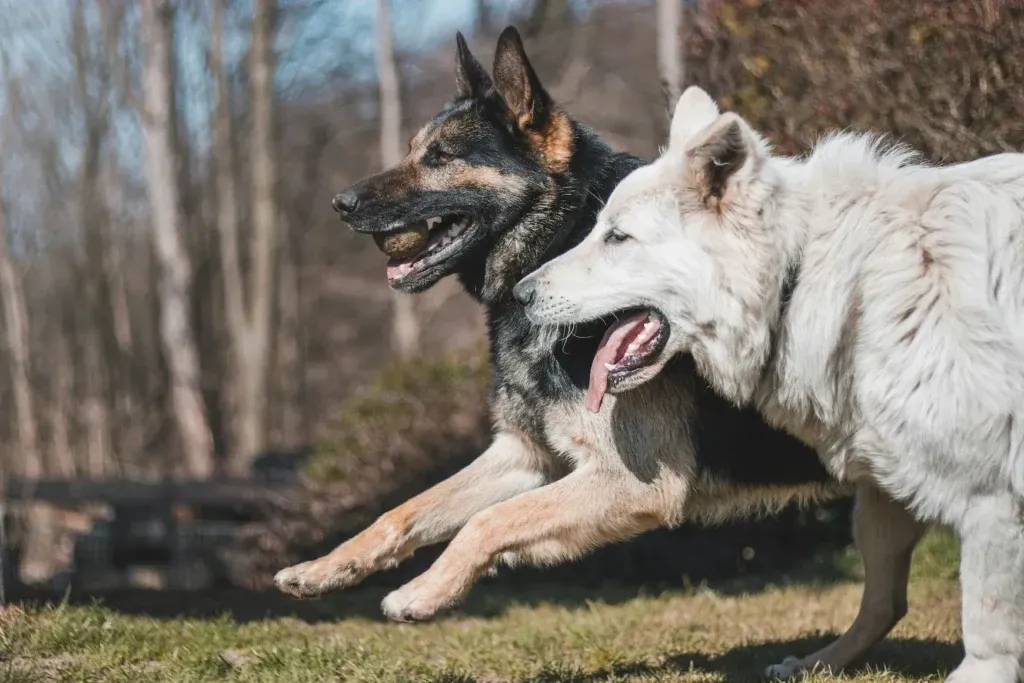
Image Source: GroomiTools
You’ll spot a German Shepherd from a mile away. Their balanced shape, watchful look, and powerful stance make them stand out anywhere in the world. These amazing dogs blend strength, agility, and grace that helps them excel at many jobs.
Size and build of the German Shepherd dog
German Shepherds fit right into the medium to large-sized dog group. The breed standards tell us males reach 24-26 inches tall at the withers (shoulder), while females stay a bit smaller at 22-24 inches. A full-grown male usually weighs 75-90 pounds, and females tip the scales at 55-70 pounds.
These athletic dogs can run up to 30 miles per hour. Their body length beats their height with an ideal ratio of 10 to 8½. This rectangular shape gives them the perfect stride and balance they need to keep going all day.
Look at a German Shepherd’s face and you’ll see a rounded forehead, long square-cut muzzle with strong jaws, and a black nose. Their brown eyes show just how smart and alert they are. The most eye-catching features are their big, upright ears that point forward and stay parallel, though they often pull them back while moving. Their neck stretches long when they’re excited but drops lower during fast movement or stalking. A bushy tail that reaches down to their hock joint completes their look.
Double coat vs. long coat vs. short coat
German Shepherds rock a double coat that pairs a thick outer layer with a soft undercoat. This combo works wonders – the outer guard hairs block rain and dirt, while the undercoat keeps their temperature just right.
You’ll find four main coat types in German Shepherds:
Short coat (stock coat) – Most German Shepherds wear this dense, straight coat that hugs their body with a thick undercoat. Working dogs love it because it shields them from weather, dirt, and scratches.
Medium coat (plush coat) – German show rings favor this slightly longer, fuller coat. It mixes a shorter undercoat with a stiffer top layer.
Long coat with undercoat – This type shows off longer tufts on the ears, legs, and tail. Many breed standards now welcome this style, though they used to frown upon it.
Long coat without undercoat – Similar to other long-coated dogs with its feathering, but lacks the weather-fighting undercoat.
Long-haired pups pop up less often because they need that recessive gene. The American Kennel Club marks down long coats, but these dogs still compete alongside their standard-coated buddies. The International Canine Federation changed its tune in 2010 and started accepting long-haired German Shepherds.
Common and rare coat colors: black, white, sable
German Shepherds come in stunning colors, though breed standards lean toward certain looks. The German Shepherd Dog Club of America likes bold, rich shades, with black, tan, and red leading the pack. These colors usually show up in specific patterns:
Black and tan/red – The classic look sports a black “saddle” on top with tan/red everywhere else
Sable – Gives that wolf-like vibe where each hair shows multiple color bands with black tips
Solid black – Both parents must chip in the right genes to create this striking look
Bi-color – Mostly black with tan touches on legs, chest, and sometimes eyebrows
Some rare beauties include blue (looks like gray), liver (chocolate-brown), and panda (patches of black, white, and tan). White German Shepherds exist too, but can’t strut their stuff in AKC shows. A masking gene creates this white coat – it’s not albinism.
Most colors feature black face masks and body patterns ranging from the classic “saddle” to a full “blanket” look. While sable and solid black get the green light from most standards, blue and liver raise red flags.
Temperament and Behavior Traits
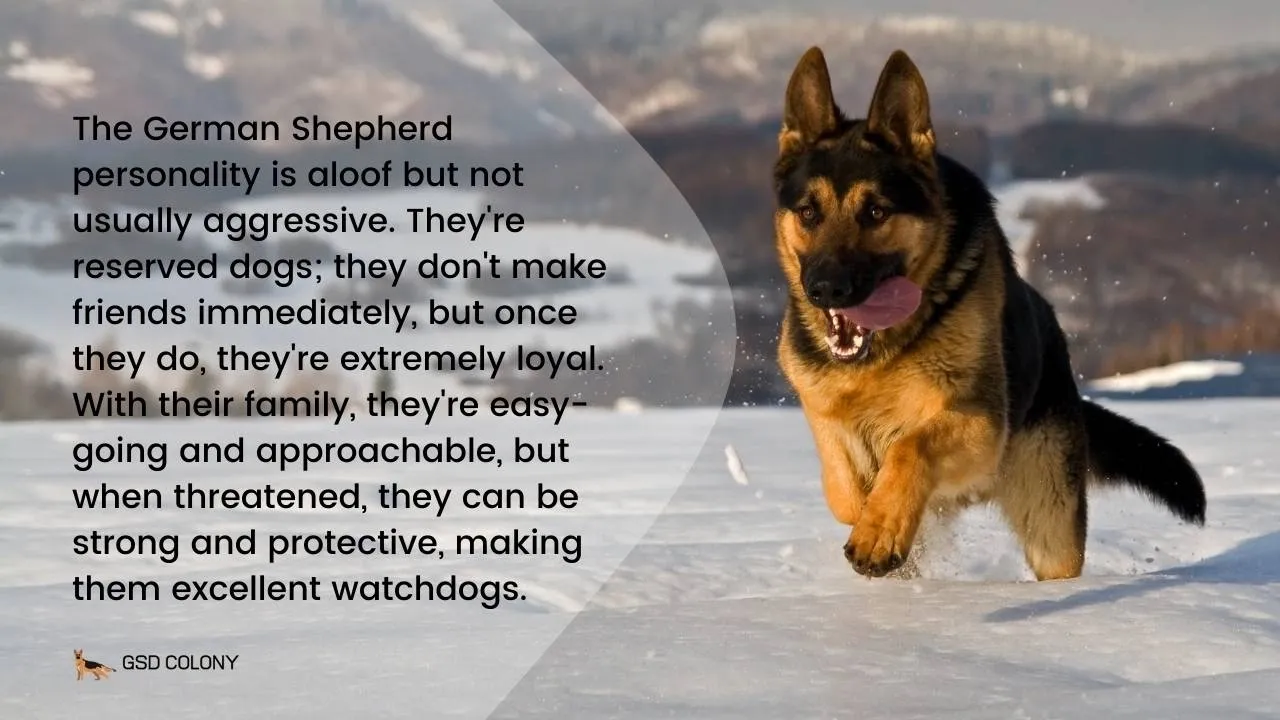
Image Source: GSD Colony
The German Shepherd’s personality shines even brighter than their stunning looks. These dogs blend character traits perfectly, making them exceptional companions for families and outstanding working dogs worldwide.
Loyalty and protectiveness
Every German Shepherd has an extraordinary devotion to their human family at heart. The breed builds deep emotional bonds that show up as affection and protective behavior. Research reveals that 88% of German Shepherd owners consider their dogs “very loyal”. This loyalty shapes their behavior, especially during potentially threatening situations.
German Shepherds’ protective nature comes from their herding heritage, where they guarded livestock from predators. About 75% of these dogs actively defend their territory if they sense danger. They naturally stay cautious around strangers, which makes early socialization vital for balanced behavior.
A well-trained German Shepherd knows the difference between real threats and everyday situations. These dogs don’t react aggressively to everything new. They evaluate situations carefully. Their protective instincts turn them into excellent guardians who stand between strangers and family members. Many owners find this sense of security priceless.
Intelligence and trainability
German Shepherds rank consistently among the world’s top three smartest dog breeds. Their exceptional brainpower helps them grasp complex commands and adapt to roles from family pet to specialized working dog. Scientists compare their mental abilities to those of a 2.5-year-old child. They process information, spot patterns, and tackle problems effectively.
German Shepherds stand out because they combine different types of intelligence:
Instinctive intelligence – They naturally excel at herding and protection tasks
Adaptive intelligence – They solve problems and learn from experiences
Working and obedience intelligence – They pick up commands quickly and remember them
These quick learners master new commands in just five tries. An impressive 95% respond correctly on their first attempt after training. This learning ability makes them perfect for complex jobs like police work, search and rescue operations, and service dog duties.
Interaction with children and strangers
German Shepherds build special bonds with children they grow up alongside. Their protective instincts and smarts help them stay naturally careful around kids. They often become guardians who offer friendship and protection. All the same, someone should always watch these dogs’ interactions with children, particularly young ones.
These dogs usually stay cautious but not aggressive toward strangers. The American Temperament Test Society reports German Shepherds have an 85.3% temperament pass rate, which proves their stable nature. They stay reserved around unfamiliar people because they assess potential threats, not from aggression.
Early socialization helps shape appropriate responses to strangers. Well-socialized German Shepherds learn to tell normal situations from real threats. Dogs without proper socialization might get anxious in new settings or react poorly to unfamiliar people and places. Puppies need exposure to various environments, people, and experiences. This builds their confidence and reduces anxiety-based behaviors.
Training and Socialization Needs
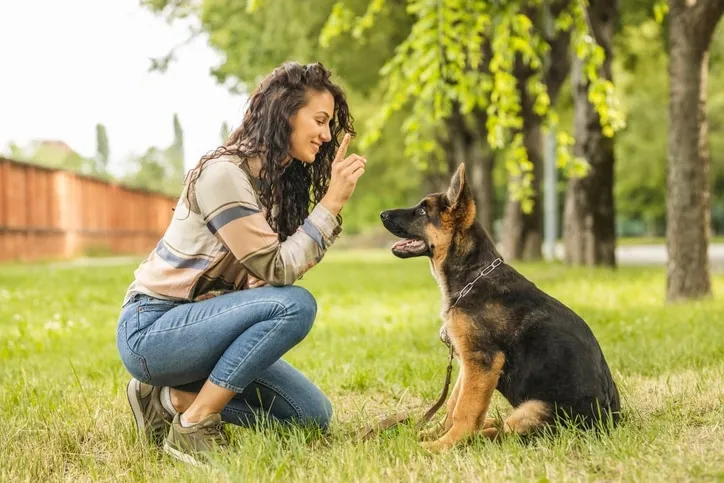
Image Source: Chewy
A German Shepherd’s impressive abilities don’t just happen on their own. These dogs need proper guidance to tap into their full potential. Their natural intelligence and protective instincts are great, but structured training and thoughtful socialization remain essential for their development.
Why early training is essential
German Shepherds show amazing learning abilities from a very young age. Puppies can start learning simple behaviors as young as 5-6 weeks old. By 8 weeks, most German Shepherd puppies can learn new behaviors almost as well as adult dogs. This gives you the perfect chance to build foundations that will shape their behavior for life.
Starting training right when you bring your puppy home takes advantage of their natural curiosity and eagerness to learn. The early weeks help build trust and respect between you and your dog. Your puppy should know basic cues like “come,” “sit,” and “lie down” by 8-12 weeks.
German Shepherds “can be a disaster” without proper structure. Their intelligence means they need mental engagement, and training provides the structure they crave. Your training sessions should be consistent in timing and length to help them learn while staying interested.
Start potty training around 8 weeks when puppies gain control of their bladders. You should also begin crate training then to give them their own secure space.
Socializing with people and other pets
The window for socializing German Shepherds closes between 12-16 weeks. This critical period shapes how they’ll respond to new situations throughout their lives. The American Veterinary Society of Animal Behavior suggests starting socialization before full vaccination, ideally at 7-8 weeks.
Socialization is vital for German Shepherds because of their protective nature. Dogs that aren’t properly exposed may develop wrong responses to unfamiliar people or environments. Well-socialized German Shepherds become curious and can learn complex tasks more easily.
Good socialization means introducing puppies to:
People of different ages, genders, sizes, and ethnicities
Individuals wearing uniforms, hats, or using mobility aids
Various environments and surfaces
Other vaccinated, well-behaved animals
Different sounds from household appliances to outdoor noises
Managing a German Shepherd in a multi-pet home requires care. Make sure your dog gets enough exercise, training, and mental stimulation to stay calm around other pets.
Fun activities to stimulate their mind
German Shepherds are happiest when they’re busy—they just “need a job to do”. Mental stimulation can tire them out even more than physical exercise. These mental workouts also help prevent destructive behaviors caused by boredom.
Your German Shepherd will thrive with advanced training beyond basic obedience. Dog sports like agility build stronger communication bonds through body language. Scent work channels their natural prey drive into focused tasks.
Here are other mentally stimulating activities that benefit German Shepherds:
Puzzle toys that challenge problem-solving abilities
Hide-and-seek games with toys or people
“Find it” games that use their scenting abilities
Obstacle courses that combine physical and mental challenges
Regular mental stimulation helps German Shepherds develop better problem-solving skills, increased intelligence, greater alertness, and more confidence in new situations. Combining training with play makes learning fun while keeping these smart dogs mentally engaged.
Health and Lifespan of German Shepherds
German Shepherds are resilient working dogs, but they face several breed-specific health challenges that owners need to know about. Early detection of these conditions can make their lives better and help them live longer.
Average German Shepherd lifespan
These dogs live anywhere from 9 to 13 years. Some research shows a shorter span of 7-10 years, while other studies point to over 10 years or 12-13 years. Their lifespan depends on many things – genes, diet, exercise, healthcare, and how well owners manage breed-specific conditions.
These dogs take their time to grow up. They don’t reach full maturity until they’re 2-3 years old. A 2017 study showed something interesting – musculoskeletal problems and the inability to stand were the main reasons German Shepherds died in the UK.
Common health issues: hip dysplasia, bloat, EPI
Hip Dysplasia shows up in about 20.6% of German Shepherds according to the Orthopedic Foundation for Animals. This inherited condition happens when hip joints don’t grow right, and it leads to arthritis and movement problems. You might notice:
A limp or favoring one leg
A “bunny hopping” walk, especially on stairs
Trouble getting up or jumping into cars
Stiffness after exercise
Bloat (Gastric Dilatation-Volvulus) can kill German Shepherds quickly because of their deep chests. The stomach fills with gas and twists, which cuts off blood flow. Dogs can die within 30-60 minutes without treatment. Watch for a swollen belly, dry heaving, restlessness, and belly pain.
Exocrine Pancreatic Insufficiency (EPI) hits German Shepherds hard. They make up two-thirds of all EPI cases in one study. The pancreas stops making enough digestive enzymes. Dogs lose weight even though they eat more, have constant diarrhea, lots of gas, poor coats, and greasy-looking poop. The good news? Dogs with EPI can live normal lives with enzyme supplements and the right diet.
These dogs can also get elbow dysplasia, degenerative myelopathy, eye problems, and heart issues.
Preventive care and regular vet checkups
Good healthcare makes a big difference in how long German Shepherds live. Here’s what vets suggest:
Adult dogs need yearly checkups, while senior dogs should see the vet twice a year. These visits include shots, blood tests, heartworm checks, and dental care.
Keeping your dog at a healthy weight protects their joints, which really matters since they often get hip problems. Young puppies need the right kind of exercise on safe surfaces to protect their growing joints.
Quick action makes a huge difference with breed-specific problems. Hip checks in young dogs can catch dysplasia before it gets bad.
Smart owners plan ahead for healthcare costs. Pet insurance or health care plans help spread out the expenses over the year.
Working Roles and Abilities
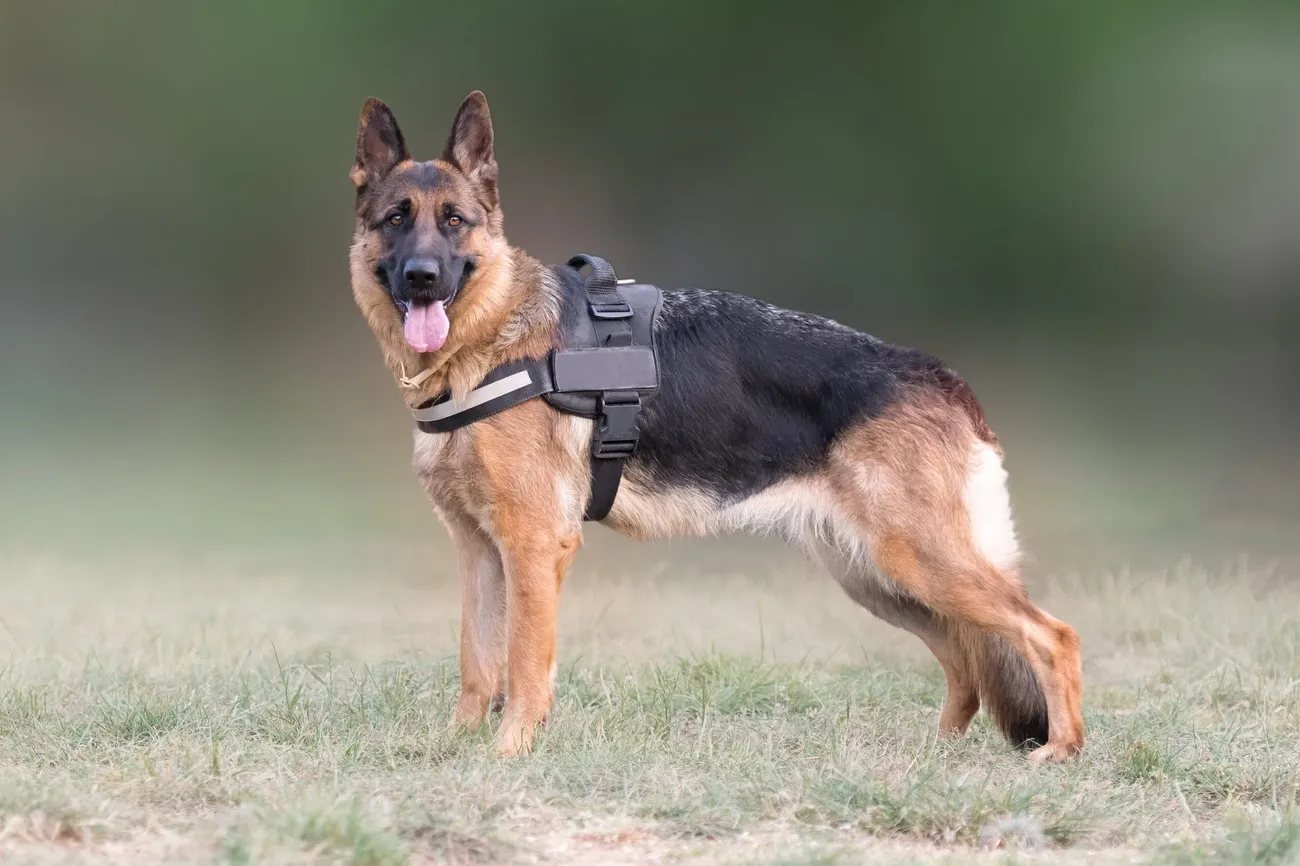
Image Source: Roche’s German Shepherds
German Shepherds stand out as premier working dogs because they excel in many professional fields. These incredible dogs combine intelligence, stamina, and trainability to become irreplaceable partners in some of society’s toughest jobs.
Police and military service
German Shepherds remain the top choice for law enforcement and military operations worldwide. They know how to track criminals, patrol troubled areas, and detect and hold suspects, which makes them excellent police partners. These dogs excel at performing tasks and following instructions under high-stress conditions, qualities that make them essential for security operations.
These loyal companions served as messengers, rescue dogs, and personal guard dogs during World War II. Their military role grew even more in later conflicts. Over 9,000 handlers and 4,000 dogs served in Vietnam alone, with German Shepherds making up a large portion. The breed’s success in military work stems from their intelligence, loyalty, commitment, and tenacity—traits Captain Max von Stephanitz carefully developed through selective breeding.
The U.S. Army now has about 600 dog teams, with German Shepherds playing key roles in operational theaters like Iraq and Afghanistan.
Search and rescue operations
German Shepherds’ keen sense of smell and focus make them perfect for a variety of scent-work roles. These dogs shine in search and rescue operations through several specialized methods:
Trailing dogs follow a specific person’s scent from an uncontaminated article, working in harnesses and on leash to locate missing individuals
Airscenting dogs clear entire sectors of all humans by working off-leash and detecting airborne scent
Disaster dogs find human scent in collapsed buildings and areas affected by tornadoes or earthquakes
Cadaver dogs alert on dead human scent, whether above ground or buried
Their physical stamina lets them search for hours on tough terrain, and their helicopter certification means they can reach remote locations quickly.
Guide dogs and therapy roles
German Shepherds pioneered the role of guide dogs. Dorothy Eustis started formal guide dog training in Switzerland during the 1920s, using only female German Shepherds. These amazing dogs were actually the first breed to serve as guide dogs.
Labradors and Golden Retrievers have become more common guide dogs today. German Shepherds now make up only about 15% of dogs trained by Guide Dogs of America as of 2013. This change happened after temperament tests showed Retrievers scored better in emotional stability and friendliness, while German Shepherds excelled at protective behaviors.
German Shepherds also make wonderful therapy dogs thanks to their gentle temperament, sociability, trainability, adaptability, and affectionate nature. They provide crucial emotional support in hospitals, nursing homes, schools, and disaster areas to help people cope with stress, anxiety, and trauma.
Breed Variants and Related Types
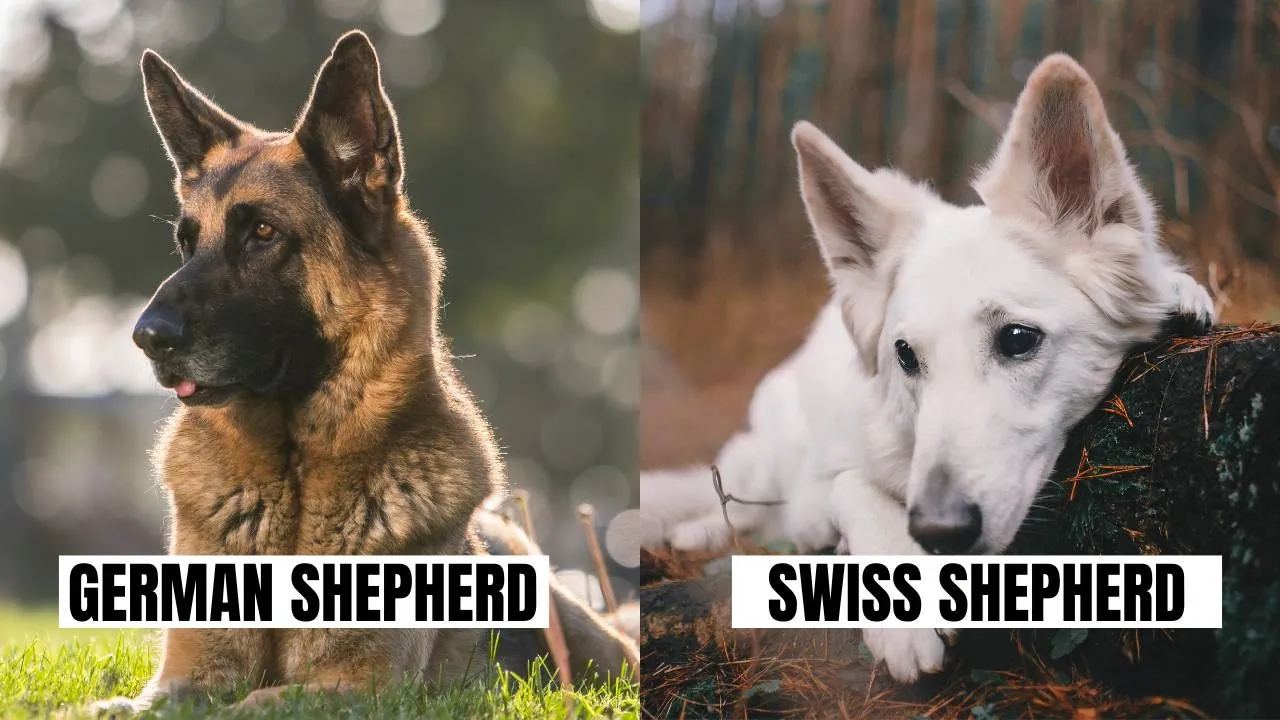
Image Source: GSD Colony
The classic German Shepherd breed has evolved into several unique variants over time. Each variant was bred with specific goals in mind, while keeping the core traits that make German Shepherds special.
White Swiss Shepherd and White Shepherd
The White Swiss Shepherd (Berger Blanc Suisse) and White Shepherd have common ancestors but they are different breeds now. Switzerland saw the birth of White Swiss Shepherd in the early 1970s. These dogs came from white-coated American dogs, with a male dog named “Lobo” (born March 5, 1966) starting the lineage. The White Shepherd, on the other hand, has its roots in the United States.
These breeds show clear differences in their looks and official status. The White Swiss Shepherd got official recognition from the Fédération Cynologique Internationale in 2003. The White Shepherd earned United Kennel Club’s approval. White Swiss Shepherds usually have a leaner body with thinner, wedge-shaped heads compared to white German Shepherds.
Shiloh Shepherd and King Shepherd
American breeders created both Shiloh and King Shepherds to fix health and temperament issues in modern German Shepherds. Tina Barber mixed German Shepherd genes with breeds like Malamute and Canadian White Shepherd to create the Shiloh Shepherd. The King Shepherd’s story began in the 1990s when Shelley Watts-Cross and David Turkheimer started with Shiloh Shepherds before branching out to create their own breed.
These breeds differ in size. Shiloh Shepherds grow 26-28 inches tall, while King Shepherds reach 25-27 inches. The American Rare Breed Association has recognized both breeds.
East-European Shepherd and their differences
Soviet breeding programs gave birth to the East-European Shepherd (Vostochno Evropeiskaya Ovcharka or VEO) in the early 1920s. Ukrainian breeders led this effort to create bigger, cold-resistant dogs that could handle harsh Soviet weather.
These dogs tower over standard German Shepherds. Males grow between 67-72 cm (26-28 inches), and some reach 74 cm (29 inches). They have unique features like large snowshoe-style paws with long toes and thick coats with dense undercoats.
The KGB loved these dogs and kept only pure black ones. East-European Shepherds still rank among the most loved breeds in Russia and former Soviet regions today.
Controversies and Breed Challenges
German Shepherds possess remarkable qualities, yet several controversies affect their breeding practices and how people view them. The tension between breed standards and dog welfare creates ongoing challenges.
Show dog vs. working dog debate
The German Shepherd breed today barely resembles Max von Stephanitz’s original vision of working dogs. A deep divide exists between show lines and working lines. Show breeders tend to focus on looks, especially the sloped back. Critics mock this feature and call these dogs “half dog, half frog”. The UK’s Kennel Club stepped in and now trains judges to mark down dogs with these extreme features. Dogs from working lines put skills first – their handlers care more about intelligence and ability than looks.
Health concerns from inbreeding
Early inbreeding practices led to many health problems German Shepherds face today. The Royal Veterinary College found 263 different health issues in the breed. Their study showed osteoarthritis affects 5.54%, ear problems trouble 7.89%, and aggression appears in 4.76% of cases. Hip dysplasia shows up in 19.1% of these dogs. Police German Shepherds suffer even more – 45% develop degenerative spinal stenosis. Breeding for looks, like lower hindquarters and sloped backs, caused these health issues.
Is the German Shepherd banned in India?
German Shepherds remain legal in India. The Indian government banned 23 dog breeds they deemed dangerous. Pitbull Terriers, Rottweilers, and American Bulldogs made this list. A committee of experts and animal welfare groups recommended these bans after dog attacks increased. People can’t import, sell, or breed these banned dogs anymore. Current owners must sterilize their pets. German Shepherds earned their reputation as one of India’s safest pet breeds through their friendly nature.
Conclusion
German Shepherds rank among the world’s most cherished dog breeds, and with good reason too. Their amazing smarts, steadfast loyalty, and exceptional trainability make them perfect companions both at home and work. These incredible dogs excel as family guardians and serve with distinction in police units, military operations, and search-rescue teams.
The breed’s striking looks add to their appeal. You’ll find them sporting classic black and tan saddles, solid black coats, or distinctive white variants – each giving them a majestic presence that matches their athletic prowess. Their double coat protects them in all kinds of weather, while their strong, balanced build lets them run fast and long.
The German Shepherd’s personality might be their most appealing trait. These dogs build deep connections with their families and show natural protective instincts without being aggressive when they learn proper social skills early on. They need consistent training and mental challenges to channel their intelligence the right way.
Future owners should think about the breed’s health challenges. Hip dysplasia, bloat, and exocrine pancreatic insufficiency need careful preventive care to help these dogs live their full 10-13 years. Regular vet visits, proper exercise, and good nutrition will improve their life by a lot.
Breed variants like the White Swiss Shepherd, Shiloh Shepherd, and East-European Shepherd show how breeders try to meet different priorities while keeping core German Shepherd traits. The ongoing discussion between show lines and working lines shows why breeding should focus on health and function, not just looks.
Over the last several years since Max von Stephanitz first set breed standards, German Shepherds have shown time and again why they’re such extraordinary companions. Their mix of intelligence, strength, and devotion will keep them among the world’s most admired dogs for generations.
Key Takeaways
German Shepherds are exceptional working dogs that combine intelligence, loyalty, and versatility, making them ideal for both family companionship and professional roles. Here are the essential insights every potential owner should know:
• Early training and socialization are critical – Start training at 8 weeks old during the crucial 12-16 week socialization window to prevent behavioral issues and maximize their exceptional learning abilities.
• Health monitoring prevents major issues – Watch for hip dysplasia (affects 20% of the breed), bloat, and EPI; regular vet checkups and proper weight management significantly extend their 10-13 year lifespan.
• Mental stimulation equals physical exercise – These intelligent dogs need “jobs to do” and mental challenges to prevent destructive behaviors; puzzle toys and scent work are as important as daily walks.
• Choose working lines over show lines – Working line German Shepherds prioritize health and temperament over appearance, avoiding the controversial sloped back that causes mobility issues in show dogs.
• They excel in specialized roles – From police work to therapy dogs, German Shepherds’ trainability and protective instincts make them invaluable in professional settings requiring intelligence and reliability.
When properly trained and cared for, German Shepherds become devoted family guardians and working partners whose loyalty and capabilities have made them the world’s second most popular dog breed.
FAQs
Q1. What are some key characteristics of German Shepherds? German Shepherds are intelligent, loyal, and versatile working dogs. They have a strong herding instinct, are the 4th most popular dog breed in the US, and require early training and socialization. These dogs are prone to certain inherited health issues like hip dysplasia, but with proper care can live 10-13 years.
Q2. How should I care for a German Shepherd? German Shepherds need regular exercise, mental stimulation, and grooming. Brush their coat thoroughly at least weekly, provide daily walks and play sessions, and engage them in training or puzzle toys. Regular vet check-ups are crucial to monitor for breed-specific health issues. A balanced diet and maintaining a healthy weight are also essential for their well-being.
Q3. What health issues are common in German Shepherds? Common health concerns in German Shepherds include hip and elbow dysplasia, degenerative myelopathy, bloat (gastric dilatation-volvulus), allergies, and exocrine pancreatic insufficiency. Regular veterinary check-ups and preventive care can help manage or prevent many of these conditions.
Q4. Are German Shepherds good family dogs? German Shepherds can make excellent family dogs when properly trained and socialized. They are loyal, protective, and good with children when raised together. However, their size and energy levels mean they’re best suited for active families who can provide plenty of exercise and mental stimulation.
Q5. What are the differences between show line and working line German Shepherds? Show line German Shepherds are bred more for appearance, often featuring a sloped back that can lead to mobility issues. Working line German Shepherds prioritize health, temperament, and working ability over appearance. Working lines tend to have higher energy levels and drive, making them better suited for professional roles or very active owners.