
Dalmatian
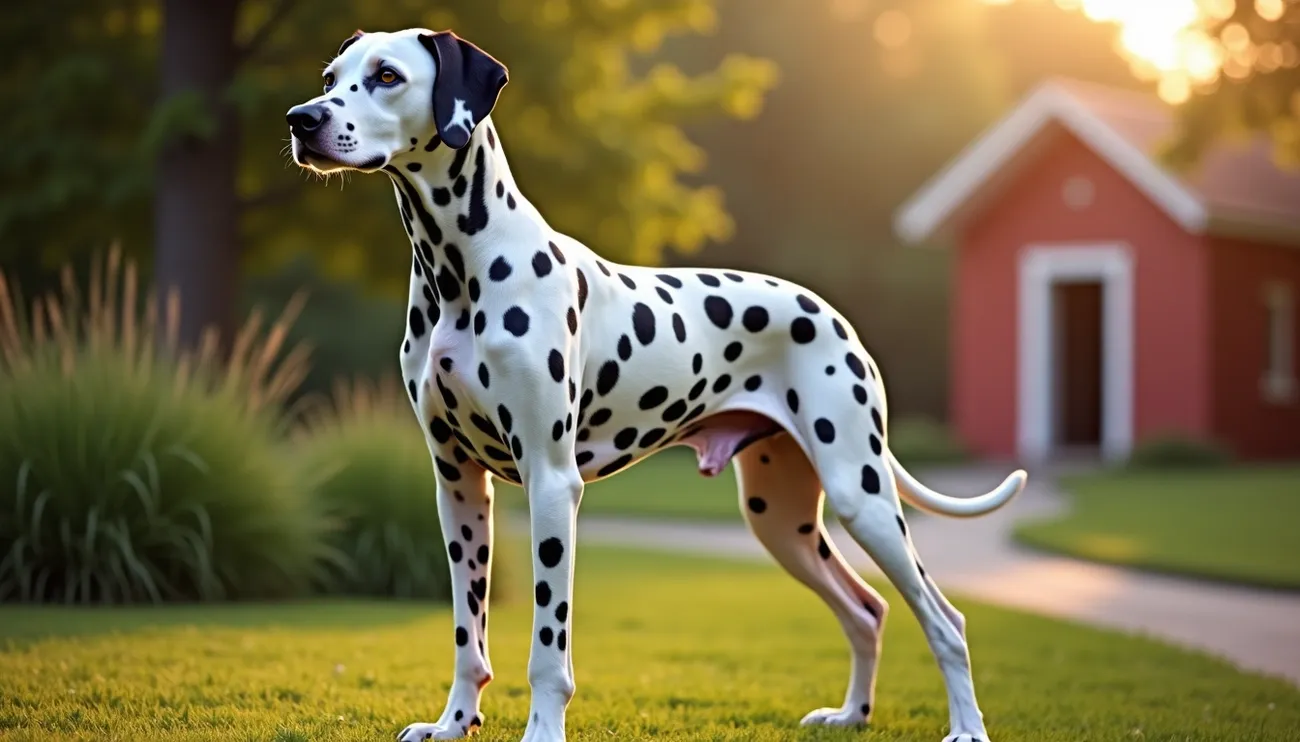 Dalmatian dogs fascinate people with their distinctive spotted coats that are as unique as human fingerprints. The American Kennel Club recognized these medium-sized canines in 1888. They stand 19-24 inches tall and typically weigh between 45-70 pounds.
These puppies start life completely white, and their characteristic spots appear around 7-10 days after birth. The breed’s impressive lifespan stands out in a 2024 UK study that found they live approximately 13.2 years compared to other purebreds’ average of 12.7 years. Research shows that about 5% of dalmatians are completely deaf, and 15-30% experience deafness in one ear.
The dalmatian’s rich history includes roles as sentinel, war dog, hunter, shepherd, and performer. Their special bond with firefighters spans more than a century. These versatile dogs blend their distinctive looks with adaptable personalities and maintain an even-tempered, friendly nature. Such unique characteristics make them a breed worth studying deeply.
Physical Traits of the Dalmatian
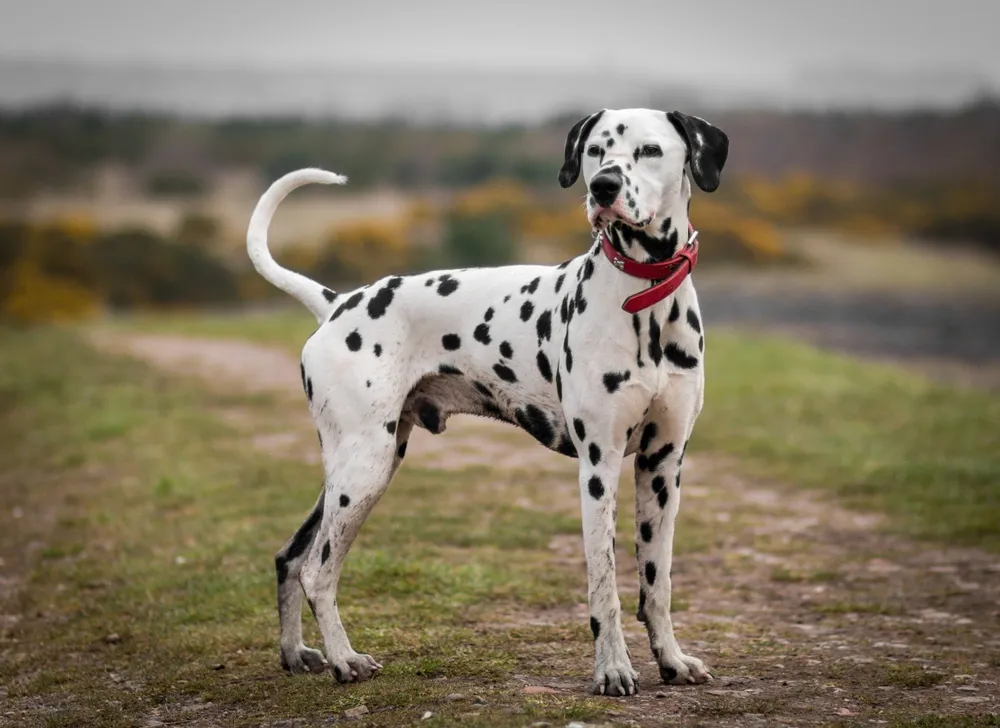
Image Source: Dogster
A Dalmatian’s elegant proportions and iconic spotted coat make it stand out from other breeds. These noble dogs blend strength with agility in a balanced frame that makes them versatile and long-lasting performers.
Size and build
Dalmatians have a muscular, athletic body built for endurance. Males typically stand taller at 22-24 inches, while females reach 19-22 inches at the shoulder. Their weight matches their height nicely, ranging from 45-70 pounds. Males tend to be heavier and more substantial than females.
That striking spotted exterior covers a body made for action. These dogs have a deep chest that lets them breathe deeply during long runs. Strong legs and compact feet give them amazing agility—qualities that made them perfect carriage dogs throughout history.
The breed’s body length from chest to rump slightly exceeds their height at withers. This balanced frame helps create their smooth, effortless movement. Powerful hindquarters give them the drive and momentum they need.
Coat types and colors
A standard Dalmatian’s coat feels smooth to touch and has a short, fine, dense texture. This sleek coat creates their clean-cut, polished look. Long-coated Dalmatians show up now and then, with longer hair around their neck, ears, legs, feet, and tail.
The breed’s most recognizable feature remains its spotted pattern. Pure white serves as the base coat, decorated with crisp, round spots. These spots range from dime-sized to half-dollar sized (about 1.25 to 2.5 inches). Each dog has its own unique pattern—like a canine fingerprint.
Black spots might be the most familiar sight, but liver (brown) spotted Dalmatians exist too. Pure-bred Dalmatians never mix black and liver spots. The nose color always matches the spots—black-spotted dogs have black noses, and liver-spotted dogs sport brown ones.
Some rare variations catch the eye. Dalmatians sometimes have solid patches instead of spots, usually on their head, ears, or tail. These patches look different from spots because they have smooth edges without white hairs mixed in. You might even spot a Dalmatian with lemon (pale yellow to bright orange), blue, fawn, or brindle patterns, though these are quite rare.
Spot development in puppies
The sort of thing I love about Dalmatian development is that these spotted dogs start life completely white. Many first-time owners get surprised when their puppies arrive without spots. Those famous spots start showing up around day 10.
Spots keep developing as the puppy grows. The pattern might change slightly during the first couple of years, but the basic contours take shape by three months. The coat pattern finishes developing at 18 months.
Specific genetic factors create this unique development pattern. T and S genes control the spotting by determining how pigmented cells spread. These genes don’t just control when spots appear—they also determine their size, density, and location on the coat.
Understanding Dalmatian Temperament

Image Source: Hill’s Pet Nutrition
A complex personality lies behind the Dalmatian’s iconic spotted coat. Future owners need to understand these dignified dogs. Their distinctive temperamental traits make them rewarding companions, though they can be challenging to raise without proper training and socialization.
Common personality traits
Dalmatians stand out for their high energy levels and playful nature. These athletic dogs need plenty of physical activity and mental stimulation. They can develop boredom and destructive behaviors without proper exercise. Their remarkable intelligence helps them learn commands and tricks quickly, though training sessions might find them easily distracted.
Their sensitivity makes them unique among other breeds. Dalmatians have long “memories” and can recall any mistreatment for years. You’ll need positive, reward-based training approaches instead of harsh corrections because of this sensitivity.
These dignified-looking dogs build strong bonds with their families. They often become “velcro dogs” that shadow their owners everywhere. Human companionship means everything to them. They might become destructive or show signs of depression if left alone too long. This attachment could lead to separation anxiety without proper management.
A stubborn streak runs through Dalmatians that needs consistent training. Their independence comes in part from their history as coach dogs, where they needed self-reliance. You’ll find an affectionate nature beneath this independence that makes them devoted family companions.
Behavior with children and other pets
Proper socialization and training determine how well Dalmatians get along with children. These dogs can become excellent companions for children with the right upbringing. Many Dalmatian experts warn that their boundless energy might overwhelm very small children.
Young Dalmatian puppies need early socialization to develop positive interactions with children. Many responsible breeders start this process early through activities like “pass the puppy” games. Dogs without such early exposure might avoid children or show defensive behavior around them.
Supervision remains essential for families with children, no matter how well-trained the Dalmatian seems. Children should learn gentle interaction with the dog and recognize its need for space. The bond between children and their spotted companions grows stronger when they help with feeding and grooming activities.
Dalmatians usually get along well with other animals. They share a natural affinity with horses from their coaching heritage. Their low prey drive makes them good companions for other household pets. Some Dalmatians might show aggression toward unfamiliar dogs, which highlights why proper socialization matters.
Guarding instincts and aloofness
The breed’s historical role as coach guardians shows in their guarding instincts today. They make reliable watchdogs and alert their owners to potential threats. A Dalmatian’s protective nature and loyalty drive them to notify their family at the first sign of danger.
These dogs show a notable reserved demeanor with strangers. Most Dalmatians display dignified aloofness rather than immediate friendliness around unfamiliar people. This reserved attitude should never turn into fearfulness or aggression. One breeder notes that many Dalmatians simply don’t care about strangers—they accept petting but won’t seek attention from everyone they meet.
This natural reservation can grow stronger without proper socialization, especially as Dalmatians grow up. “Once mature, Dalmatians as a breed are known to act distant, and ignore unfamiliar people and dogs,” explains Karishma Warr, head of training and behavior at Calm Canine Academy. Early and consistent socialization helps develop a well-balanced adult temperament.
Some Dalmatians show territorial tendencies that could lead to overprotectiveness without proper training. Early training and socialization help reduce these behaviors. The result is a protective yet appropriately responsive family companion.
Dalmatian Health Overview
Dalmatians are famous for their spots, but they come with several breed-specific health challenges that future owners need to know about. These conditions need careful monitoring throughout the dog’s life to keep them healthy.
Deafness and hearing tests
This otherwise healthy breed faces hereditary deafness as its most common health issue. Research shows 10-15% of Dalmatian puppies are born bilaterally deaf (unable to hear in both ears), and another 15-30% have unilateral deafness (affecting one ear only). The genes that give them their white coat and blue eyes directly cause this condition.
Dalmatian puppies start life with normal hearing, but some lose it within weeks. This 7-week old condition becomes permanent with no available treatment.
The Brainstem Auditory Evoked Response (BAER) test offers the only reliable way to detect hearing problems in Dalmatians. This specialized test uses electrodes connected to a computer to measure the brain’s response to sound stimuli. Puppies should take the BAER test between 5-7 weeks of age, with the 7-week mark giving the most accurate results.
It’s worth mentioning that simple tests like clapping hands or making sudden noises can’t reliably detect hearing loss. Anyone looking to buy a Dalmatian puppy should ask for BAER test documentation. The best breeders provide computer printouts of hearing test results.
Hyperuricemia and kidney stones
A unique metabolic issue affects almost every Dalmatian—their bodies can’t convert uric acid to allantoin. This SLC2A9 gene mutation stops their liver cells from absorbing uric acid, which forces them to pass it unchanged in urine. Their urine contains 20-30 times more uric acid than other dog breeds.
This metabolic difference makes Dalmatians prone to urate bladder stones. Though all Dalmatians have hyperuricosuria (elevated uric acid in urine), only about 10% develop stones. Male dogs get this condition more often than females because of their anatomy.
Watch for these signs of urinary stones:
Straining to urinate
Blood in urine
Frequent urination with little output
Abdominal pain and discomfort
Lethargy and vomiting in severe cases
Dogs typically develop their first stones around 4.5 years old, and the risk goes down as they age. Treatment usually involves surgery followed by lifelong dietary changes. Low-protein diets help reduce stone formation by limiting purine intake (the building blocks of urate crystals).
Skin and coat conditions
Dalmatian bronzing syndrome, or “Dal crud,” affects only this breed. This bacterial folliculitis creates bronze or pink stripes along the dog’s coat from head to tail.
Dogs with this condition show hair loss, crusty skin patches, inflamed hair follicles, scaling, and itchiness. Scientists debate the exact cause, but genetics (possibly tied to uric acid metabolism), allergies, stress, environmental changes, and high-purine diets all play a role.
Treatment targets both symptoms and causes. Vets prescribe systemic antibiotics that work against Staphylococcus intermedius, often continuing treatment for 3 weeks after visible improvement. They might recommend medicated shampoos with benzoyl peroxide twice weekly, plus moisturizing conditioner to prevent dry skin.
Beyond bronzing syndrome, Dalmatians often get other skin allergies including dry skin and hair loss. They need grooming products made specifically for sensitive skin. Take your dog to the vet if you notice excessive licking, scratching, hair loss, or irritated skin.
Grooming and Maintenance Needs
Dalmatians have a beautiful spotted coat that’s easier to maintain than many long-haired breeds. These naturally clean dogs have dirt-repellent coats. You still need to give them regular care to keep them looking their best and avoid common breed-related problems.
Brushing and bathing routine
Dalmatians need weekly brushing to keep their coat healthy, even with their short fur. A rubber curry brush or grooming mitt works great on their sleek coat. This helps remove loose hair and spreads natural oils for a glossy finish. Weekly brushing doesn’t take long but makes a huge difference in coat quality and reduces shedding around your home.
Starting the brushing routine early helps puppies get used to grooming. You should use long, slow strokes that reach from the top coat down to the skin. This removes the most dead hair possible. These grooming sessions are also perfect times to check for any skin problems, which is crucial since Dalmatians often have skin issues.
You won’t need to bathe your Dalmatian as often as other breeds. Most experts say three to four baths a year are enough unless your dog gets really dirty. Too much bathing strips away natural oils and can cause skin problems. Active dogs who love the outdoors might just need monthly baths.
Pick dog shampoos made for sensitive skin. This helps avoid allergic reactions since Dalmatians often develop skin sensitivities. After bath time, dry your dog well, especially in cold weather, to prevent skin issues.
Nail, ear, and dental care
Your Dalmatian’s nails need trimming every month. Use special dog nail clippers and only cut the tip to avoid the quick—the sensitive part with blood vessels. New owners should ask their vet to show them the right technique first.
The breed’s droopy ears are prone to trapping moisture, dirt, and wax, which can lead to infections. Check their ears weekly for signs like redness, odd smells, or too much wax. Clean them with a cotton ball dipped in vet-approved cleaner. Just wipe the inside of the ear flap and never push anything deep into the ear canal.
Good dental care is vital for your Dalmatian. Brush their teeth at least twice weekly with dog toothpaste to fight tartar and keep breath fresh. Dogs who hate toothbrushing can use dental powders or other vet-approved products instead.
Managing heavy shedding
Dalmatians shed a lot all year round, which surprises many people given their short coats. This gets even worse during spring and fall. You’ll need more than just regular brushing to handle all this hair.
Here are some practical ways to deal with Dalmatian shedding:
Use de-shedding shampoos during baths to catch loose hair before it falls
Get a pin rake or undercoat rake for heavy shedding seasons
Put air purifiers in main rooms to catch floating pet hair
Keep lint rollers handy for quick clothing clean-ups
Daily vacuuming works best to keep your home hair-free. Many owners love robot vacuums because they handle daily hair cleanup without extra work.
Of course, Dalmatians aren’t great pets for people with allergies. But with good grooming habits and the right house cleaning routine, you can keep their spotted coats healthy and beautiful without too much hassle.
Exercise and Activity Requirements
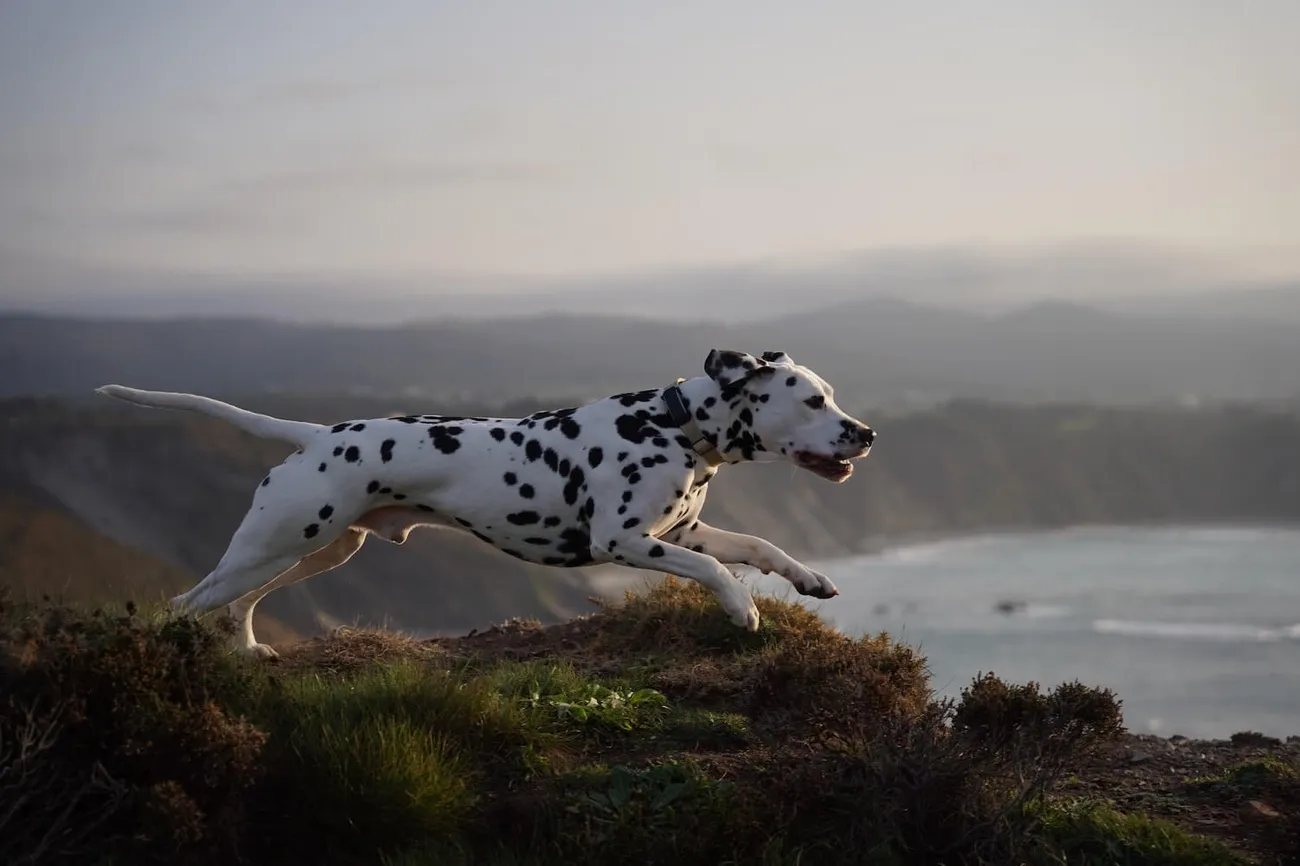
Image Source: Tractive
Dalmatians are born runners with endless energy. These dogs need lots of physical and mental stimulation to stay happy and healthy. Their history as carriage dogs shows in their athletic nature today, and they need structured activities to prevent bad behavior and stay well.
Daily physical needs
Adult Dalmatians need 1-2 hours of vigorous exercise daily. This high energy comes from their past as endurance-bred carriage dogs that used to run with horse-drawn vehicles for miles. These spotted dogs often start chewing, digging, or barking too much when they don’t get enough exercise to burn off their energy.
A good exercise plan should mix different activities. Dalmatians do best with:
Brisk walking: 30-60 minutes twice daily
Running or jogging: They make great running partners for active owners
Fetch sessions: Just 30 minutes helps burn extra energy
Swimming: A great way to exercise that’s easy on their joints
New Dalmatian owners often don’t realize how much exercise these dogs need. They do best in the countryside or with active families. City dwellers with Dalmatians find dog treadmills helpful when outdoor activities aren’t possible, especially in bad weather.
Mental stimulation and games
Physical exercise alone won’t keep a Dalmatian happy—their minds need work too. Even tired Dalmatians can misbehave if they’re mentally bored.
Interactive toys give their brains a good workout. Puzzle feeders, treat-dispensing balls, and snuffle mats test their problem-solving skills while keeping them entertained. Switching these toys regularly keeps things fresh and interesting.
Scent work gives their minds another great workout. Simple games like finding hidden treats around the house tap into their natural foraging instincts. More complex scent detection activities can challenge them as they improve and sharpen their minds. Nose work classes add social time and a controlled setting to develop these skills.
Games can work both body and mind at once. Some good options are:
Fetch variations: Mix up objects, add obstacles, or include commands for more challenge
Tug-of-war: Uses natural instincts and teaches self-control through “release” commands
Obstacle courses: Household items or agility equipment give complete workouts
Dalmatian puppies need different exercise rules than adults. The five-minute rule works best—five minutes of structured exercise for each month of age. Puppy puzzles help manage their energy without risking joint problems.
Dog sports and road trials
Road trials are special events made just for Dalmatians that celebrate their history as coach dogs. Dogs show off-leash obedience by following handlers on horseback or next to horse-drawn carriages. Higher levels test speed and stamina—traits the AKC Dalmatian standard values.
The Dalmatian Club of America gives several titles in these events: Road Dog (RD), Road Dog Excellent (RDX), Road Dog Champion (RDCH), Road Dog Excellent Champion (RDXCH), and Coaching Certificate (CC). The AKC can record these titles when owners apply.
Dalmatians shine in many other dog sports too. Their smarts, agility, and high energy make them perfect for:
Agility: They zip through obstacle courses with amazing speed
Flyball: Team relay racing fits their competitive nature
Dock diving: Their swimming skills make this water sport natural for them
These activities do more than just exercise—they build stronger bonds between Dalmatians and their owners while staying true to the breed’s working roots.
Training a Dalmatian Effectively
Owning a Dalmatian successfully depends on understanding how to train these unique dogs. Their intelligence and headstrong nature just need specific training approaches that work with their abilities and challenges.
Training challenges and tips
A Dalmatian’s intelligence can actually make training tricky. These dogs pick things up fast but often show a stubborn streak. Their strong-willed personality needs an owner who stays consistent without being harsh. Unlike easier-to-train breeds, Dalmatians might push boundaries or lose interest if training feels repetitive.
You’ll need variety to keep them interested. Different activities in training sessions help prevent boredom that can lead to bad behavior. Short, focused sessions work better than long drills. Breaking commands into smaller chunks helps your dog stay focused.
The best results come from establishing yourself as the leader early on. Dalmatians will take charge if you let them. They need owners who can show calm authority without being intimidating. This balance can be tough to find for first-time dog owners since Dalmatians don’t respond well to uncertainty.
Mental exercise matters as much as physical activity. Puzzle toys, scent work, and obedience games keep their minds sharp. Training that fits into daily routines creates natural chances to reinforce good behavior. Making your dog follow commands before meals helps build structure naturally.
Importance of early socialization
Dalmatian puppies should start socializing between 3-8 weeks of age. This early window shapes how they’ll behave around other animals and people throughout their lives. Good breeders usually start this process before puppies go to new homes.
Good socialization substantially reduces territorial behavior that might show up in adult Dalmatians. Early exposure to different places, sounds, and experiences builds confidence and prevents fear reactions later.
Taking puppies to dog parks encourages good interactions with other pets. Notwithstanding that, you must watch them closely. If a puppy seems scared, end the visit right away to avoid bad associations. This helps prevent aggression toward strangers and other animals.
Positive reinforcement methods
Research shows positive reinforcement works best to train Dalmatians. This approach rewards good behavior with treats, praise, or play. It gets results without creating fear or anxiety.
Dalmatians love food rewards. Finding treats they really like makes training more successful. You can slowly switch from constant treating to occasional rewards and verbal praise as behaviors become habits.
Skip punishment-based methods. These dogs remember harsh treatment for a long time. Scolding during training backfires and makes them hesitant instead of obedient. On top of that, harsh methods damage your bond with your dog through negative associations.
Clicker training works great with Dalmatians because it marks correct behaviors precisely. Patience is the key to success. These dogs want to make their owners happy but need you to understand their independent spirit.
History and Origin of the Dalmatian Breed
Dog enthusiasts have long been fascinated by the mysterious origins of the Dalmatian breed. Historical records give us glimpses into its ancient past, but many questions remain unanswered.
Roots in Dalmatia, Croatia
Croatia’s coastal region of Dalmatia is the foundation of the Dalmatian’s identity. The first detailed documented descriptions of the breed appear in the archives of the Archdiocese of Đakovo. Church chronicles from 1719 by Bishop Petar Bakić and 1739 by Andreas Keczkeméty mentioned the dog as “Canis Dalmaticus“. The earliest known written reference dates back to 1375, when Bishop Peter of Đakovo described a hunting dog with short white hair and black round spots. Croatia also has visual evidence through altar paintings in Veli Lošinj (1600-1630) and a fresco in Zaostrog.
Development of the breed
Thomas Pennant gave a formal description of the breed in his 1771 book “Synopsis of Quadrupeds,” and clearly stated the dog’s origin as Dalmatia. A white spotted dog known as the Talbot Hound became popular in England as a coach companion during the late 18th century. England played a crucial role in developing the breed, where it became a status symbol during the Regency period. People highly prized these decoratively spotted Dalmatians. The American Kennel Club ended up recognizing the Dalmatian in 1888.
Historical roles and duties
The versatile Dalmatian has served in more roles than most other breeds. These dogs were first hired as sentinels and dogs of war to guard the borders of Dalmatia and Croatia. They later found their calling as coaching dogs and ran among horse-drawn carriages to protect them from bandits and threats. Their natural connection with horses made them perfect companions for stable work. Dalmatians proved excellent at hunting, shepherding, retrieving, and working as pack dogs for boar or stag hunting. Their most lasting impact came from their service in firefighting. Dalmatians began running ahead of horse-drawn fire trucks in the 19th century. They cleared paths and kept horses calm during emergencies.
Dalmatians in Pop Culture and Media
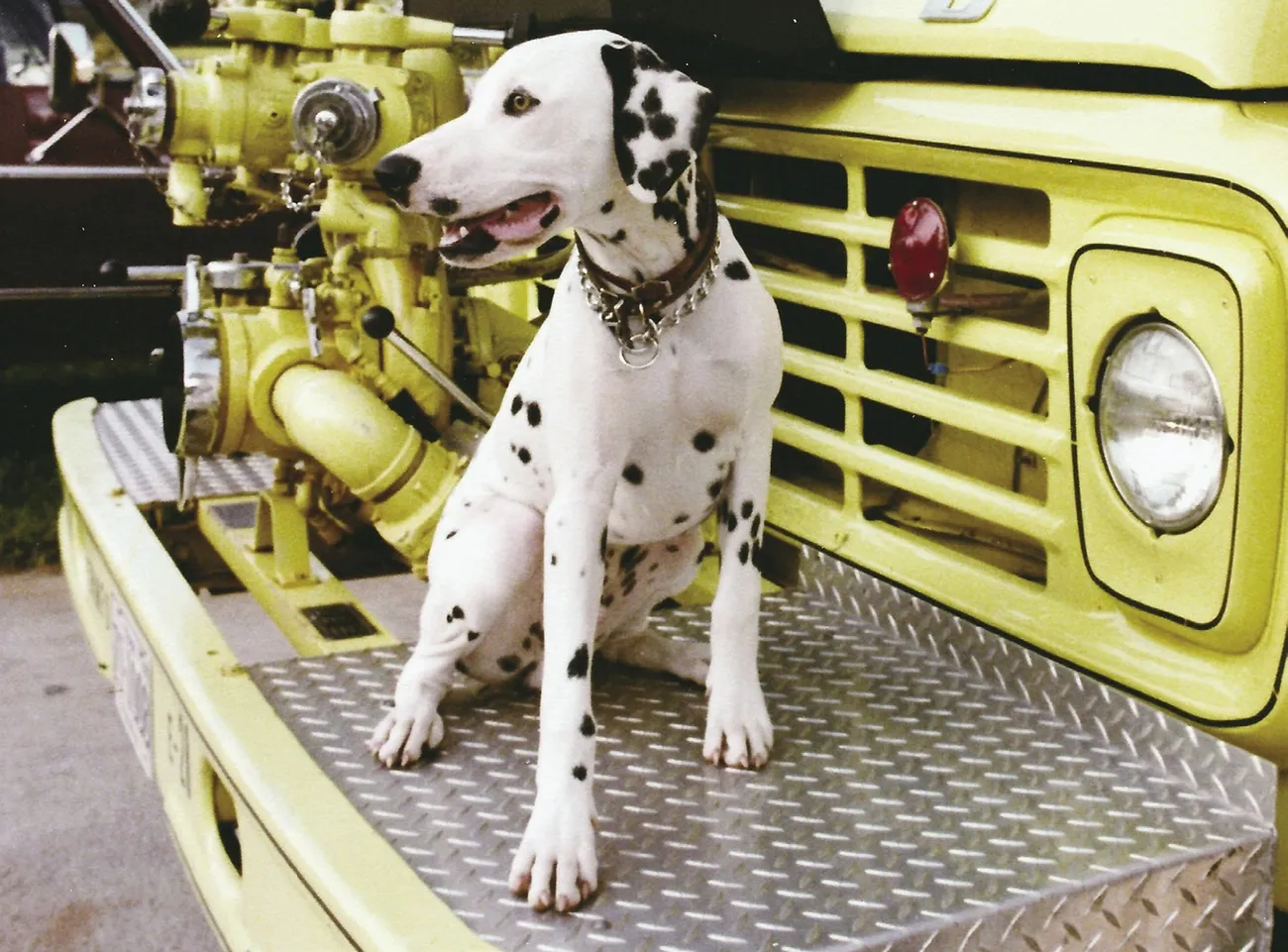
Image Source: Firefighters Association of Missouri
Dalmatians stand out in popular culture with their distinctive spots that people of all ages recognize instantly. Movies, books, and media have shaped how people see these dogs and influenced their popularity over many decades.
Firehouse dog legacy
The story of Dalmatians and firefighters goes back to the days of horse-drawn fire carriages. These spotted dogs ran next to horses and barked to clear the way for fire brigades. They helped keep horses calm during fires and watched over equipment while firefighters fought the flames. This partnership became a tradition that lived on even after fire trucks replaced horse-drawn carriages. These days, Dalmatians serve mostly as mascots in fire departments rather than working dogs. Many firefighters still choose them as pets to honor their brave history.
Impact of 101 Dalmatians
No other dog breed has seen such wild swings in popularity due to media exposure. Dodie Smith’s 1956 novel led to several adaptations – first came Disney’s 1961 animated film, then a 1996 live-action version, followed by sequels and TV shows. The movies sparked huge adoption waves, especially after the 1996 film pushed Dalmatians into AKC’s top 10 rankings. The numbers dropped 97% in just a few years. Thousands of families gave up their Dalmatians to shelters after they realized movie portrayals didn’t match reality.
Modern-day popularity and misconceptions
The “101 Dalmatians Effect” shows how media can create dangerous myths about a dog breed. Movies showed Dalmatians as easy-going family pets that needed little exercise – quite different from their true high-energy nature and need for intensive training. The Dalmatian Club of America tried to fix this by warning people that “Dalmatians aren’t for everyone”. Vets started seeing more behavioral problems in poorly bred dogs, which hurt the breed’s reputation even more. This popularity surge left lasting damage – good breeders cut back their programs, and some valuable bloodlines disappeared forever.
Conclusion
Dalmatians are among the world’s most striking and easily recognized dog breeds. Their spotted coats, athletic builds, and rich history make them amazing companions. These dignified dogs need careful thought before you welcome them home.
These energetic dogs just need lots of daily exercise. Their smart nature means they need regular mental challenges to stay out of trouble. You must also be ready to handle their grooming needs, especially when you have their constant shedding to manage.
Health issues need your attention, with breed-specific problems like deafness and hyperuricemia being systemic. BAER testing helps spot hearing problems in puppies early, and the right diet keeps urinary stone risks low throughout their lives.
A good match with a Dalmatian depends on understanding their complex personality. These dogs love and stay loyal to their family. They remain distant with strangers, so early socialization matters a lot. Their sensitive nature means positive training works better than harsh methods.
Dalmatians have shown amazing flexibility through history – serving as war dogs, carriage companions, and beloved firehouse mascots. Their adaptable nature is clear, but the “101 Dalmatians Effect” teaches us not to choose breeds based on movies without doing proper research.
Of course, Dalmatians reward committed owners with loyalty, smarts, and unique beauty. Active families ready to meet their needs will find these spotted friends bring happiness and energy to their homes for many years. The best Dalmatian owners mix regular exercise with patient training. This creates the perfect setting where these historic dogs can flourish.
Key Takeaways
Understanding Dalmatians goes beyond their iconic spots—these high-energy dogs require dedicated owners who can meet their substantial physical, mental, and training needs.
• Dalmatians need 1-2 hours of vigorous daily exercise and mental stimulation to prevent destructive behaviors from their boundless energy levels.
• About 10-15% of Dalmatian puppies are born completely deaf, requiring BAER hearing tests at 5-7 weeks for early detection.
• These dogs shed heavily year-round despite short coats and require weekly brushing plus specialized grooming for their sensitive skin.
• Early socialization and positive reinforcement training are crucial, as Dalmatians are intelligent but stubborn with long memories for harsh treatment.
• The “101 Dalmatians Effect” created unrealistic expectations—these aren’t low-maintenance family pets but athletic dogs needing experienced, active owners.
Dalmatians make rewarding companions for the right families, but their unique needs demand thorough research and commitment before adoption. Their 13.2-year lifespan means a long-term dedication to proper exercise, training, and health management.
FAQs
Q1. What are the key personality traits of a Dalmatian? Dalmatians are known for their high energy, playfulness, and intelligence. They form strong bonds with their families but can be aloof with strangers. These dogs have a stubborn streak and require consistent training, but they’re also sensitive and respond best to positive reinforcement methods.
Q2. Are Dalmatians suitable as family dogs? Dalmatians can make good family dogs when properly trained and socialized. They’re energetic and playful, which can be great for active families. However, their high exercise needs and exuberant nature might be too much for very young children. Early socialization and supervision are crucial for positive interactions between Dalmatians and kids.
Q3. How much maintenance do Dalmatians require? Dalmatians need considerable care and attention. They require 1-2 hours of vigorous daily exercise and mental stimulation. Despite their short coats, they shed heavily year-round and need weekly brushing. They also have specific health concerns, like a predisposition to deafness and urinary stones, which require monitoring.
Q4. What are common behavioral issues in Dalmatians? Without proper exercise and mental stimulation, Dalmatians may develop destructive behaviors like excessive barking, chewing, or digging. They can be stubborn during training and may exhibit separation anxiety if left alone too long. Some Dalmatians can also be aggressive towards unfamiliar dogs if not well-socialized.
Q5. How did the “101 Dalmatians” movies affect the breed’s popularity? The “101 Dalmatians” films, especially the 1996 live-action version, caused a surge in Dalmatian popularity. This led to overbreeding and many unprepared families adopting them. Unfortunately, this resulted in numerous Dalmatians being surrendered to shelters when owners realized the breed’s high-energy nature and specific care requirements didn’t match their on-screen portrayal.