
Collie Rough
The Rough Collie stands among America’s top 50 most popular dog breeds. This distinctive long-coated herding dog’s history dates back well before its rise to fame. The American Kennel Club recognized the breed in 1885, and it has engaged dog lovers for generations with its elegant looks and loyal nature.
These dogs trace their roots to the British Highlands as working animals. The breed changed by a lot through the years. Early drawings from around 1800 show a sturdier build compared to the refined version we see now. These remarkable herding dogs could travel up to 100 miles each day. Queen Victoria’s decision to keep Rough Collies at her Balmoral Castle in Scotland made the breed extremely popular among wealthy families.
Modern Rough Collies are medium to large-sized dogs. Males reach heights of 56-61 cm (22-24 inches) while females measure 51-56 cm (20-22 inches). The breed comes in two distinct coat types – the traditional long-haired Rough Collie and its shorter-haired cousin, the Smooth Collie. These loyal companions live 12 to 14 years on average. Their journey from hardworking farm dogs to cherished family pets showcases their enduring appeal through intelligence, devotion and striking appearance.
The origins of the Rough Collie
The Rough Collie’s true beginnings remain a bit of a mystery, hidden in time. Yet historical evidence tells us an amazing story that goes back thousands of years. Archeological discoveries point to these remarkable herding dogs’ ancestry dating to 4000 BC, when Celtic people first bred them as working companions.
From Scottish Highlands to modern homes
The Rough Collie’s ancestors were bred for the tough conditions of the Scottish Highlands. These dogs needed to handle harsh weather and rocky terrain. Their main job was to herd and protect sheep in wild, unfenced landscapes. These early collies grew into smart, sturdy dogs with natural herding skills that shepherds couldn’t do without.
The word “Collie” has interesting roots. Many people think it comes from the Scottish “colley” sheep—the black-faced sheep these dogs usually herded. Others point to Chaucer’s Canterbury Tales between 1387 and 1400, where we find “Ran Colle oure dogge”.
These working dogs developed special features that made them perfect for their job:
Semi-erect, shell-shaped ears that could catch every sound—from coming storms to a shepherd’s distant whistle
Waterproof double coats with rough outer hair and thick, wooly undercoats that kept them dry in rain, sleet, and snow
Athletic bodies built for speed, stamina and quick movements
The breed’s history saw many influences shape today’s Rough Collie. Anglo-Saxon invaders brought their herding dogs from northern Germany, Denmark, and the Netherlands. Viking settlers added Norwegian Spitz herding dogs to the mix starting in 793 AD. This blend of Celtic and European dogs created the foundation for both Rough and Smooth Collie varieties.
Queen Victoria’s influence on popularity
The breed’s story changed forever in the 1860s when Queen Victoria fell in love with the Collies she saw in the Scottish Highlands. Before the Queen’s interest, people knew Collies only as working sheepdogs in farming areas.
The Queen’s love for these dogs changed everything. She created a special “Collie Court” in her Royal Kennels at Balmoral. Her royal seal of approval turned these humble working dogs into high society pets. This royal connection lifted the Collie’s status worldwide and made breeders focus on looks as much as working ability.
Dog shows started gaining popularity, and “Scotch-Colleys” first competed just two years after Britain’s first dog show in 1859. Mr. S.E. Shirley, who started The Kennel Club, created separate classes for Rough and Smooth Collies in 1870, making their differences official.
From working dog to companion
The late 19th century saw Collies change from pure working dogs to refined pets. Around 1870, British breeders, especially those near Birmingham—known for their excellent Collies—started focusing on show qualities.
Breeding changed how Collies looked quite a bit. Breeders mixed the original working dogs with Borzoi (Russian Wolfhound) to create a more “noble” head with a longer muzzle—now a key feature of the breed. This careful breeding made Collies both elegant and smart, creating their distinctive look we know today.
Irish sportsman Sewallis E. Shirley registered the first sire, Trefoil, in 1873. This dog became the ancestor of all modern Collies. Rich industrialists and nobles across Europe and North America soon fell for these dogs, completing their journey from worker to aristocratic companion.
These days, especially in the UK, Rough Collies rarely herd sheep anymore—Border Collies handle most of that work now. But their smarts, loyalty, and adaptability make them popular family pets and stars in dog sports like obedience, agility, and herding trials.
Physical traits and breed standards
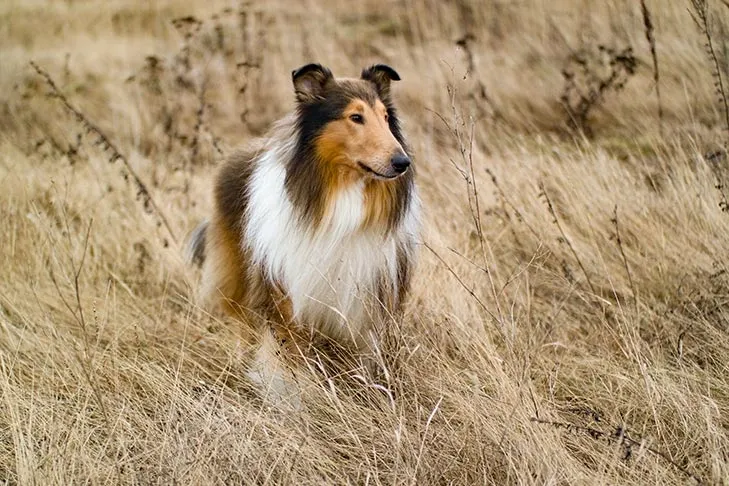
Image Source: American Kennel Club
A Rough Collie’s magnificent coat and regal bearing create a striking silhouette that shows both elegance and functional design. Kennel clubs worldwide have detailed guidelines in their breed standards. These standards will give a consistent appearance while keeping the Rough Collie’s recognizable traits.
Size and weight differences by gender
Male and female Rough Collies show clear differences in their physical size. Male Rough Collies stand between 56-61 cm (22-26 inches) at the shoulder with a graceful yet imposing presence. Female Rough Collies keep the breed’s elegant look but are slightly smaller. They measure 51-56 cm (20-24 inches) at the shoulder.
The weight gap between males and females follows this same pattern. Males usually weigh between 60-75 pounds (27-34 kg). This gives them substance without looking heavy. Females typically weigh 50-65 pounds (23-30 kg). Their lighter frame matches their smaller size perfectly.
Breed standards stress that Rough Collies should not be too thin or too heavy. Dogs that look substantially under or oversized face penalties at conformation shows. This focus on proper proportions helps the breed stay athletic while looking elegant.
Recognized coat colors and markings
Breed standards accept four official colors equally for the Rough Collie. No color gets special treatment over others:
Sable and White: This is the classic “Lassie” pattern. The coat ranges from light gold to rich mahogany with white marks on the chest, neck, legs, feet, and tail tip. Some dogs have a white blaze on their face or skull.
Tricolor: These dogs have a mostly black coat with rich tan marks around the head and legs. White patterns match those found in sable varieties.
Blue Merle: This unique pattern shows a mix of blue-gray and black coat. Standard white marks appear along with tan shading like tricolors.
White: These Rough Collies are mostly white with sable, tricolor, or blue merle marks. Breeders don’t prefer pure white or mostly white coats.
Every Rough Collie should have typical white marks whatever their main color. The most desired pattern has a white collar (full or partial), white chest front, white legs and feet, and a white-tipped tail. These marks complete the breed’s signature look.
Distinctive head shape and ear position
The head shape stands out as one of the Rough Collie’s defining features. It plays a big part in the breed’s expression and look. From front or side view, the head looks like a smooth, well-blunted wedge. This shape flows naturally from ears to black nose without a wide backskull or narrow muzzle.
Looking from the side, the top of the backskull and muzzle create two straight, parallel planes of equal length. A slight but noticeable stop separates these planes. This creates the refined profile that makes the breed special.
The Rough Collie’s ears are just as distinctive. They stay small and match the head size perfectly. Resting dogs fold their ears lengthwise and tuck them into their thick neck frill. Alert dogs carry their ears semi-erect. About two-thirds of the ear stands up while the top third naturally tips forward below horizontal. This ear position creates the alert, intelligent look that breed lovers value so much.
Understanding the Rough Collie temperament
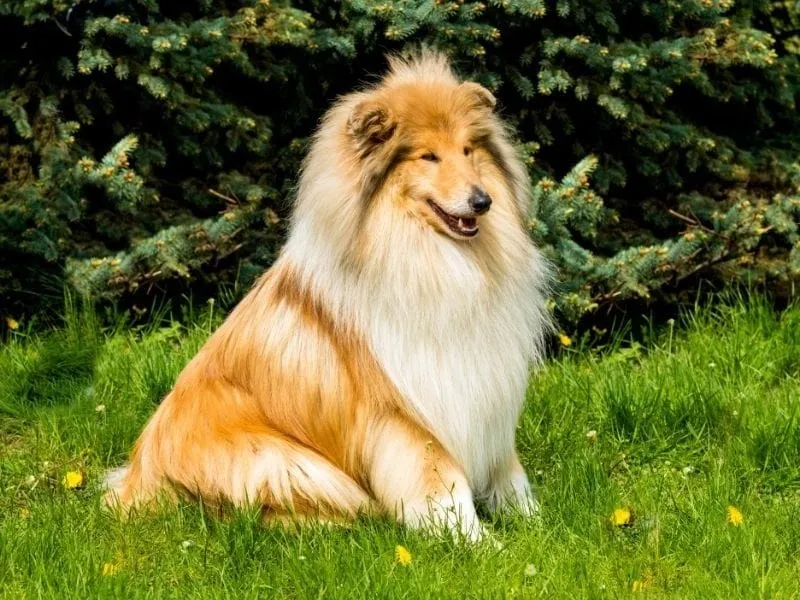
Image Source: Borrow My Doggy
Rough Collies captivate people worldwide with their personality and looks. Their temperament matches their elegant appearance perfectly. These beautiful dogs blend unique traits that make them more than just companions – they become devoted family members.
Loyal and affectionate nature
The exceptional loyalty and affection define a Rough Collie’s appeal. These dogs build strong bonds with their owners and become deeply devoted to their human families. Most breeds might favor one person, but Rough Collies share their love with everyone in the household.
These dogs live to be around people. You’ll find them following family members everywhere because they genuinely enjoy human company. Their need for closeness comes from pure affection rather than anxiety or dependency. These dogs rarely show fear-based behaviors and maintain stable, well-rounded personalities.
Rough Collies balance their protective instincts well. They might become watchful around unfamiliar people or animals but rarely turn aggressive. Rather than growling or biting, they alert their humans with intense barking. This makes them reliable watchdogs that stay friendly.
Intelligence and sensitivity
Rough Collies rank among the smartest dog breeds. Their intelligence shows in many ways – they excel at obedience training, solve problems easily, and adapt to new situations quickly. Their emotional intelligence stands out too. These dogs know how to read people and situations remarkably well.
This emotional awareness proves invaluable. Many owners tell stories about their Rough Collies detecting illness, injury, or emotional distress before humans notice it. One owner’s dog spotted an injury hidden under a blanket and protected its hurt owner by keeping an excited puppy away.
These dogs show natural empathy. They comfort people in distress without any training. You might see them approach a grieving family member in a crowd or stay close to an upset child. This emotional connection runs deep in their breed.
Their sharp minds help them learn fast, especially with positive reinforcement. Yet they think for themselves and sometimes decide what’s worth learning. This shows they’re independent thinkers, not just followers.
Behavior with children and other pets
Rough Collies shine brightest around children. Their patient, gentle nature suits families with kids of any age perfectly. These dogs show amazing tolerance and protective instincts toward children naturally.
Owners often watch their Rough Collies act like furry babysitters. Some dogs even herd toddlers while watching over them. This behavior comes from their herding background but shows up as gentle protection rather than control.
Well-socialized Rough Collies get along great with other pets. Their gentle nature helps create peaceful multi-pet homes. Sometimes their herding instincts kick in with other animals, but proper training can manage this behavior.
These wonderful qualities aside, future owners should note a few things. Rough Collies might bark a lot if left alone too long or get bored. Early socialization helps create well-adjusted adult dogs, even with their naturally gentle nature.
Training a Rough Collie: What to expect
Training a Rough Collie rewards you immensely but also challenges you because of the breed’s unique blend of intelligence and sensitivity. These dogs eagerly learn and have a thoughtful nature that needs specific training approaches. You’ll create a confident, well-behaved companion by understanding your Rough Collie’s training needs.
Why early socialization matters
Early socialization is the life-blood of raising a well-adjusted Rough Collie. Puppies between 8-12 weeks show the most receptiveness to new experiences and rarely develop fear-based behaviors. Your puppy’s arrival home at 8 weeks marks the perfect time to start socialization that builds lifelong benefits.
Rough Collies have sharp hearing that makes them prone to noise sensitivity. They need careful exposure to everyday household sounds like vacuum cleaners, hairdryers, and doorbells right from the start. This early introduction prevents anxiety and startled reactions in adult dogs.
A well-laid-out socialization plan should include:
Gradual introduction to various environments, surfaces, and stimuli
Controlled exposure to different people, animals, and situations
Positive reinforcement when the puppy shows confidence
Safe spaces where the puppy can retreat if overwhelmed
Supervised interactions with other pets and people
Your Rough Collie will build stronger relationships with other pets through proper socialization. They’ll better distinguish between normal situations and real threats. This early training prevents their herding instincts from becoming problematic and builds lasting confidence.
Positive reinforcement techniques
Rough Collies excel with positive reinforcement training methods because of their sensitive nature. Harsh corrections often backfire and make these smart dogs anxious or hesitant. Reward-based training builds trust and encourages learning.
Timing plays a vital role in rewarding your Rough Collie. Give the reward right after the desired behavior to create a clear connection. Teaching “sit” works best when you offer the treat the moment their bottom touches the ground. Late rewards confuse these dogs and slow their progress.
Effective rewards for Rough Collies include:
Small, tasty treats that your dog particularly enjoys Verbal praise in an enthusiastic, cheerful tone Physical affection like gentle pats or belly rubs Playtime with favorite toys or games like fetch
Your Collie stays engaged when you mix up these rewards. All family members should use the same commands and methods to speed up learning and avoid confusion.
Common training challenges
Rough Collies can be challenging to train despite their smarts and eagerness to please. Their sensitivity sometimes looks like stubbornness, especially when overwhelmed or bored. Keep training sessions short—10-15 minutes work best—and focus on one skill at a time.
Their herding heritage creates another challenge. Some Rough Collies try to herd family members, children, or other pets by nipping at heels or circling. Redirect this behavior gently instead of punishing it. Channel their instinct into appropriate activities or games.
Your dog stays motivated when you create variety in training sessions. Mix obedience commands with fun tricks to keep these mentally agile dogs stimulated. End each session with a successful task to build confidence and enthusiasm.
Patience matters most when training a Rough Collie. These thoughtful dogs process commands differently than other breeds—not from stubbornness but from careful consideration. This reflective quality makes them excellent problem-solvers once they grasp what you want.
Exercise needs and activity levels

Image Source: Shutterstock
Rough Collies need a good mix of physical and mental activities to stay healthy and happy. These elegant dogs have moderate energy levels and need proper outlets to stay physically fit and avoid behavior problems.
Daily walk and playtime requirements
Adult Rough Collies need between 1-2 hours of exercise daily to stay in good shape. You can mix up their routine with brisk walks, jogging, or games of fetch in a fenced area. These dogs usually settle down nicely indoors with family after they’ve burned off energy outside.
Puppy exercise needs are quite different from adult dogs. A good rule of thumb is to give them 5 minutes of exercise per month of age, once or twice daily. You should be careful not to over-exercise puppies because their bones and joints are still developing until they reach 12-18 months.
Rough Collies can adapt well to different living spaces. They do fine in apartments or small homes as long as they get enough daily exercise. Without proper physical activity, your Collie might start barking too much or nip at ankles.
Mental stimulation through games
Smart Rough Collies need brain work along with physical exercise. Dog trainers say letting these dogs sniff during walks helps keep their minds busy – it’s one of their favorite things to do. This simple change can help reduce anxiety and keep their minds active.
Fun games that work well for Rough Collies include:
Hide-and-seek with toys or treats
Tug-of-war (with proper rules)
Homemade puzzles
Interactive treat-dispensing toys
When outdoor time is limited, many Rough Collies love to shred cardboard boxes – it’s a quirky breed trait that keeps them entertained. These activities challenge their minds and help build a stronger bond with their humans.
Training sessions with positive reinforcement give these dogs great mental workouts. Learning new commands or tricks helps them solve problems and feeds their desire to learn. Rough Collies do better with varied training activities because they’re so smart.
Dog sports and agility participation
Rough Collies make natural athletes in dog sports thanks to their herding background. Their smarts, athletic ability, and eagerness to please help them shine in many competitive activities.
Agility training stands out as a perfect sport for Rough Collies. Dogs run through obstacle courses with tunnels, jumps, and weave poles. This sport builds confidence, exercises both body and mind, and strengthens the connection between dog and handler.
Other sports where Rough Collies often do well:
Herding trials (using their natural instincts)
Obedience competitions
Rally
Flyball
Dock diving
These sports do more than just provide exercise. Many owners say their dogs behave better, show more confidence, and bond more closely after starting organized sports. Some organizations even offer special herding titles just for Collies, letting them tap into their heritage.
Dog sports can help Rough Collies who struggle with anxiety or fear. Some owners have found that activities like Rally and Barn Hunt helped boost their dog’s confidence and reduced fearful behavior.
Health concerns in Rough Collies
Rough Collies, like many purebred dogs, face breed-specific health problems that owners need to understand. These elegant herding dogs usually live healthy lives. Knowledge about genetic conditions helps owners take better care of their pets.
Collie Eye Anomaly (CEA)
Collie Eye Anomaly is a congenital, inherited eye disease that affects the retina, choroid, and sclera of Rough Collies. A mutation in the gene that controls eye development causes this condition. The disease exists from birth and usually affects both eyes, though one eye might be worse than the other.
At the time of birth, CEA shows up as areas of thinning (choroidal hypoplasia) or actual holes (colobomas) in some eye structures. The symptoms can range from no visible effects to complete blindness. This is a big deal as it means that CEA can sometimes lead to retinal detachment and sudden vision loss.
The good news is that early detection works well. A veterinary ophthalmologist should examine puppies between 6-8 weeks of age. Some symptoms like retinal folds might disappear by 12 weeks, which makes diagnosis harder later on.
MDR1 gene sensitivity
Multi-Drug Resistance 1 (MDR1) is a genetic mutation common in herding breeds. This mutation makes the natural barriers in a dog’s body more permeable. The condition affects 55-70% of the Collie population. Research shows Rough Collies have much higher rates than other herding breeds—often more than 70% in tested populations.
MDR1 changes how Rough Collies handle certain medications. Dogs with this condition might have severe neurological reactions to common drugs. These include ivermectin (at doses higher than heartworm prevention), loperamide (Imodium), and several chemotherapy agents. Dogs might experience weakness, tremors, disorientation, seizures, and in some cases, death.
The mutation comes in three patterns:
Normal/Normal: Dogs without the mutation
Mutant/Normal: Dogs with one copy, still at risk
Mutant/Mutant: Dogs with two copies, highest risk
Hip dysplasia and other issues
Hip dysplasia affects many breeds. Rough Collies have a relatively low rate of 2.8% according to the Orthopedic Foundation for Animals. This condition creates an abnormal hip socket that can lead to arthritis and mobility problems.
Rough Collies can also develop:
Progressive Retinal Atrophy (PRA), which degenerates the retina
Dermatomyositis, an autoimmune skin condition
Hypothyroidism, which affects metabolism
Idiopathic epilepsy, causing seizures
Certain types of cancer, especially skin and stomach cancers
Recommended health screenings
Good breeding practices include several important health screenings:
MDR1 genetic testing before giving affected medications
Eye examinations by veterinary ophthalmologist at 6-8 weeks
Hip radiographs (OFA or PennHip) after 12 months
CEA genetic testing to help with breeding decisions
PRA genetic testing to find carriers and affected dogs
The breed’s relatively low coefficient of inbreeding goal (6.25% vs. current 14.3%) shows promise. Smart breeding practices and proper screening can help maintain the Rough Collie’s health and genetic diversity.
Grooming and coat maintenance tips
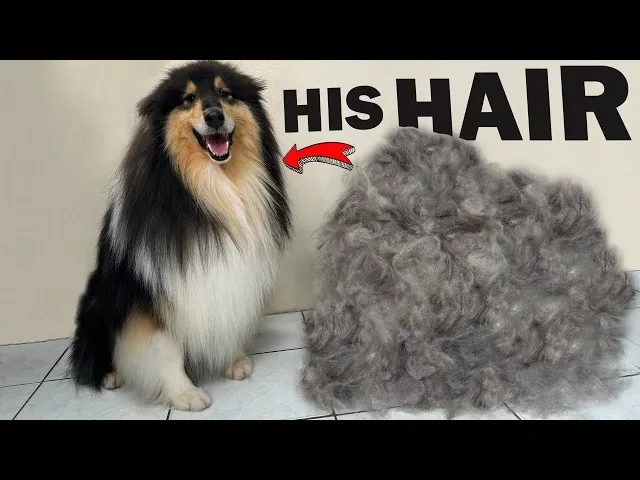
Image Source: YouTube
Your Rough Collie’s flowing coat is the life-blood of their care routine. These dogs have a magnificent double coat that needs regular attention to stay healthy and beautiful.
Brushing frequency and tools
The right equipment makes Rough Collie grooming easier. Essential tools include a long pin brush, slicker brush, wide-toothed comb, and matt splitter to tackle stubborn tangles. Puppies need gentle, short sessions with a soft bristle brush to create positive grooming experiences.
Adult Rough Collies need a really good brushing once every week. A light mist of water or grooming spray before brushing prevents hair breakage and makes the process smoother. Start at the skin and brush outward since mats form at the base. Focus on areas that tangle easily – behind the ears, elbows, between front legs, and the tail base.
These dogs manage to keep themselves naturally clean despite their luxuriant coat. Regular brushing prevents mats from forming, so you won’t need to deal with extensive tangles later.
Seasonal shedding patterns
Rough Collies have two distinct shedding types. They lose hair normally throughout the year and go through a heavy shedding phase called “blowing coat” during specific seasons.
Male Rough Collies blow their coat once yearly while females shed after their seasons. The undercoat starts coming out in large clumps from the shoulders. You’ll need to brush daily during these heavy shedding periods.
An undercoat rake or de-shedding tool helps remove loose fur before it spreads around your home. Young Collies shed less than older dogs since their coats are still developing.
Bathing and ear care
Rough Collies only need baths about four times a year. Too much bathing removes natural oils and leads to dry, irritated skin. Many owners give baths during heavy shedding times because warm water helps loosen the undercoat.
Dog-specific shampoos work best, and you should rinse the coat completely to prevent itching. Use a pin brush while shampooing to work the product through the coat. After the bath, start with towel drying and then either let the coat air dry or use a blow dryer on low heat.
Clean your dog’s ears monthly to prevent infections. Just wipe the visible parts with cotton wool dipped in proper cleaner, and never put anything inside the ear canal. Check for redness, discharge, or unusual smells during grooming sessions that might signal problems.
Famous Rough Collies in history and media
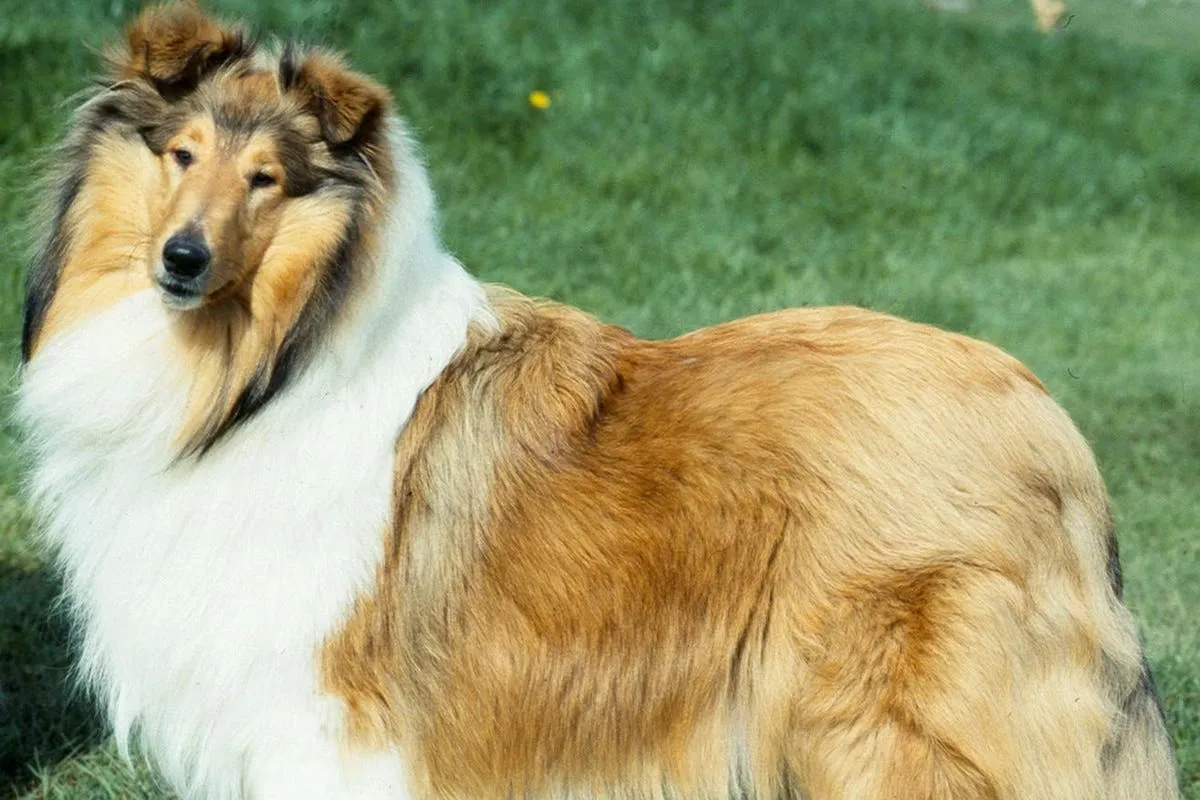
Image Source: TrustedHousesitters Community Forum
Rough Collies have surpassed their role as pets to become cultural icons that shaped how people view the breed.
Lassie and her legacy
The world’s most famous Rough Collie emerged from Eric Knight’s 1938 short story, which later became the novel “Lassie Come-Home” in 1940. MGM’s 1943 film adaptation starred a male Collie named Pal and launched an incredible legacy. The TV series “Lassie” ran for nearly two decades from 1954-1973 and earned two Emmy Awards. Lassie stands among just four animals with a star on the Hollywood Walk of Fame. Her status as a cultural icon led Variety to include her in their “100 Icons of the Century”.
Reveille at Texas A&M
Texas A&M University’s mascot tradition began in 1931 with Reveille, lovingly called the “First Lady of Aggieland”. The original Reveille was a mixed-breed dog, but Reveille III’s arrival in 1966 started the tradition of using only Rough Collies. Reveille X, born September 5, 2019, took up her duties in May 2021. She holds the highest rank in the Corps of Cadets, wears five silver diamonds, and enjoys special privileges. These include the right to claim any cadet’s bed for herself!
Other notable Rough Collies
Albert Payson Terhune’s stories about his Sunnybank Collies—particularly Lad, Wolf, and Gray Dawn—substantially boosted the breed’s popularity. Pal, who first brought Lassie to life on screen, started a dynasty of canine actors that continues to affect audiences today.
Conclusion
Rough Collies are evidence of centuries of careful breeding and progress. These magnificent dogs started as hardy workers in the Scottish Highlands and became beloved family companions without losing their smarts, loyalty, and unique charm. Queen Victoria’s love for the breed helped transform them from simple herding dogs to aristocratic companions.
The Rough Collie’s striking looks add by a lot to their appeal. Their flowing double coat, distinguished head profile, and elegant stance create a unique silhouette that people recognize worldwide. All the same, these dogs offer more than just good looks. Their exceptional intelligence, emotional sensitivity, and natural love for children make them perfect family dogs if you can handle their exercise and grooming needs.
Future owners should think about breed-specific health issues like Collie Eye Anomaly and MDR1 sensitivity. Good breeding practices, early health screenings, and proper vet care help manage these problems. This care lets these magnificent dogs live their full 12-14 years.
The Rough Collie has achieved rare cultural status among dog breeds. Characters like Lassie have made them symbols of loyalty, intelligence, and heroism. Movies, books, and TV shows have made them one of the world’s most recognized and loved breeds.
Rough Collies prove their versatility as working partners, family companions, therapy dogs, and sports competitors. Their mix of beauty, brains, and heart continues to fascinate dog lovers worldwide. This historic breed will stay cherished for generations.
Key Takeaways
The Rough Collie combines stunning beauty with exceptional intelligence and loyalty, making them ideal family companions for those prepared to meet their specific needs.
• Rough Collies require 1-2 hours of daily exercise and weekly brushing to maintain their magnificent double coat and prevent behavioral issues.
• Early socialization (8-12 weeks) is crucial due to their sensitive nature and acute hearing, preventing noise sensitivity and anxiety later in life.
• Health screening for Collie Eye Anomaly and MDR1 gene sensitivity is essential, as these genetic conditions affect 55-70% of the breed population.
• Their exceptional emotional intelligence and natural affinity for children make them outstanding family dogs, often displaying protective “nanny” behaviors.
• Originally Scottish Highland herding dogs, they evolved into aristocratic companions after Queen Victoria’s endorsement, transitioning from workers to beloved pets.
These remarkable dogs excel in various roles from therapy work to dog sports, proving their versatility while maintaining the loyal, gentle temperament that made Lassie a cultural icon. With proper care, training, and health management, Rough Collies typically enjoy 12-14 years as devoted family members.
FAQs
Q1. How much exercise does a Rough Collie need daily? Adult Rough Collies typically require 1-2 hours of exercise per day to stay physically and mentally fit. This can include brisk walks, jogging, or playing fetch in a secure area. Puppies need less exercise, following the guideline of 5 minutes per month of age, once or twice daily.
Q2. Are Rough Collies good with children? Yes, Rough Collies have a natural affinity for children. They are known for their gentle, patient disposition and often display protective “nanny-like” behaviors towards kids. Their tolerance and innate protective instincts make them excellent companions for families with children of all ages.
Q3. What health issues are common in Rough Collies? Some common health concerns in Rough Collies include Collie Eye Anomaly (CEA), MDR1 gene sensitivity, and hip dysplasia. Other potential issues include Progressive Retinal Atrophy (PRA), dermatomyositis, and hypothyroidism. Regular health screenings and genetic testing can help manage these conditions.
Q4. How often should I groom my Rough Collie? Adult Rough Collies typically require thorough brushing at least once weekly. During seasonal shedding periods, daily brushing may be necessary. Bathing is needed only occasionally, about four times a year. Regular ear cleaning and nail trimming should also be part of their grooming routine.
Q5. Are Rough Collies easy to train? Rough Collies are intelligent and eager to please, making them generally easy to train. They respond best to positive reinforcement techniques and can excel in various dog sports. However, their sensitivity may sometimes be mistaken for stubbornness, so patience and consistency are key in training sessions.