
Cocker Spaniel
 Cocker Spaniels managed to keep an impressive 25-year reign as America’s most beloved dog breed, which proves their lasting charm among dog enthusiasts nationwide. These enchanting dogs trace their roots to the United Kingdom, where breeders developed them specifically to hunt the Eurasian woodcock – a specialty that gave them their name.
The breed’s official recognition came in England in 1883, though the American Kennel Club had already registered them in 1878. Dog lovers now recognize two distinct varieties. The American Cocker Spaniel stands 14 to 15 inches tall and weighs 22 to 29 pounds. Their English cousins are slightly bigger, reaching 15 to 17 inches in height and weighing 26 to 34 pounds. The American variety ranks as the 23rd most popular breed in the United States based on 2009 AKC registration statistics. On top of that, the English Cocker Spaniel shines in UK show rings and has claimed Crufts Best in Show title seven times since 1928. A Cocker Spaniel puppy costs between ₹20,000 and ₹60,000 in India, and these lovable companions live 12-15 years on average.
The origin and history of the Cocker Spaniel
The Cocker Spaniel’s story goes back hundreds of years, with deep roots in European hunting traditions. These lovable dogs came from a larger spaniel family before becoming the distinct breeds we know today.
Early spaniel ancestors in Europe
Spaniels have been around since at least the 14th century, showing up in literature as “spaynels.” Their exact beginnings remain a bit mysterious, but most evidence points to Spain as their birthplace. The name “spaniel” comes from the Old French word “espaigneul,” meaning “Spanish dog,” or from the Latin “Hispaniolus” – simply “Spanish.”
Edward, 2nd Duke of York, wrote about these dogs in his 15th-century work The Master of Game. He noted they “cometh from Spain, notwithstanding that there are many in other countries.” This book, mostly translated from an earlier 14th-century French work by Gaston III of Foix-Béarn, stands as one of the earliest written mentions of these dogs.
Some experts believe these dogs reached the British Isles as far back as 900 BC. Celtic tribes brought them from Spain into Cornwall and across Britain. Other theories suggest Romans brought spaniels through Far East trade routes, or that these sporting dogs started in China from ancestors like the Pekingese.
Spaniels split into water and land breeds by the late 1600s. The English water spaniel, now extinct, retrieved waterfowl. Land spaniels divided further into setting spaniels that pointed at game and springing spaniels that flushed out prey.
Development of the ‘cocker’ type
These dogs earned the name “cocker” because they excelled at hunting woodcocks. Sydenham Edwards’s Cynographia Britannica (1801) split “Land Spaniels” into two types: hawking/springer spaniels and cocking/cocker spaniels.
Before the 1870s, any dog under 25 pounds could be called a Cocker Spaniel. Heavier dogs became Springer Spaniels. A single springer spaniel litter could produce three different types based on size alone until the late 19th century. The biggest pups became springers, the smallest turned into cockers, and medium-sized ones became Sussex spaniels.
Changes in hunting practices during the mid-19th century affected the cocker’s popularity temporarily. Nicholas Cox described them in 1667 as “strong, lusty and nimble rangers, of active feet, wanton tails, and busy nostrils.” Sportsmen preferred slower, quieter dogs at first when firearms came along. The merry, active cockers seemed too restless during the slow process of loading and aiming guns.
All the same, cockers bounced back as working bird dogs by the mid-19th century. British breeders set a minimum weight of 14 pounds to tell them apart from toy spaniels, which rich people kept as pets rather than hunting dogs.
Separation from other spaniels
Two key dogs shaped modern Cocker Spaniels: Obo (born 1879), who started the modern English Cocker Spaniel line, and his son Obo II, who began the American Cocker Spaniel line. Obo’s parents were a Sussex spaniel father and a field spaniel mother.
The Kennel Club’s formation in the UK in 1873 led breeders to start recording cocker and springer pedigrees. The English Kennel Club made English Cocker Spaniels and English Springer Spaniels separate breeds in 1892. The first breed standard came out in 1902 and hasn’t changed much since then.
America took a different path. The American Kennel Club recognized the Cocker Spaniel in the late 19th century, but American and English types grew more different over time. By 1936, Americans showed three types—Black, Parti, and English—later adding ASCOBs (Any Solid Color Other Than Black).
The English Cocker Spaniel Club of America started in 1935 to promote English Cockers separately. Club president Geraldine R. Dodge led extensive pedigree research, and the Canadian Kennel Club recognized English Cockers as a separate breed in 1940. The American Kennel Club did the same in 1946.
This split showed different breeding goals: American Cockers became show dogs – smaller and more decorative. English Cockers managed to keep their working traits and still look much like their English Springer Spaniel relatives.
English vs American Cocker Spaniel: Key differences

Image Source: Dogster
English and American Cocker Spaniels come from the same family tree, but they’ve grown into two different breeds over time. Their differences show up in how they look and behave, making each breed special in its own way.
Size and body structure
English Cocker Spaniels stand taller than their American cousins. They measure 15-17 inches at the shoulder and weigh between 26-34 pounds. American Cocker Spaniels are smaller, reaching 13.5-15.5 inches in height and weighing 20-30 pounds.
The breeds’ body shapes differ by a lot. English Cocker Spaniels have a more rectangular build and stand taller than their length, which gives them a squarer look. American Cockers are slightly longer than tall, creating a more compact shape.
English Cockers have stronger legs and a more reliable bone structure that shows their working dog background. This sturdiness helps them handle rough terrain better, since both breeds should have “muzzles/jaws along with the length of neck that allows them to carry a bird as large as a duck or pheasant through rough terrain”.
Head shape and muzzle
Head features help tell these breeds apart. English Cocker Spaniels have wider, flatter skulls with longer muzzles and a gentler slope from forehead to muzzle. Their eyes sit farther apart, creating what many call a “soft and melting” expression.
American Cocker Spaniels have rounder, dome-shaped skulls with shorter muzzles and a deeper, more defined stop. These features combine with their round, forward-facing eyes and distinct eyebrows to create that sweet look that made them so popular in America.
Carol Nawrocki points out that “the head is the definitive characteristic of the ECS”. The American’s head stands out too, with its “shorter muzzle, deep stop, rounded skull, and deep chiseling under the almond-shaped eyes”.
Coat texture and grooming needs
Both breeds have silky, medium-length coats with clear differences. English Cockers have flatter, less abundant coats that need less maintenance. They need brushing 2-3 times weekly and professional grooming every 6-8 weeks.
American Cockers have been bred to have thicker coats, with more fur on their legs and ears. Their luxurious coats need more care—brushing 3-4 times weekly plus regular professional styling.
Show dogs of the English variety might need hand-stripping with a special knife four times a year. Both breeds’ long, hanging ears need extra attention to avoid infections.
Temperament and energy levels
These breeds share many great personality traits. English Cocker Spaniels have more energy and stronger hunting instincts, so they might chase small animals more often. They need about two hours of daily exercise to stay happy and balanced.
American Cockers can do well with one hour of daily exercise and tend to be more relaxed than their English relatives. People often describe them as “people pleasers” who “want nothing more than to be the best pet possible”.
Carol Kepley calls Cocker Spaniels “the ultimate family dogs” that “fit into almost every household situation”. Nawrocki adds that English Cockers love people and “will follow you around all day if allowed”.
Both breeds keep that cheerful Cocker Spaniel spirit, but English Cockers, especially those bred for field work rather than shows, hold onto more of their working dog instincts.
Understanding the English Cocker Spaniel
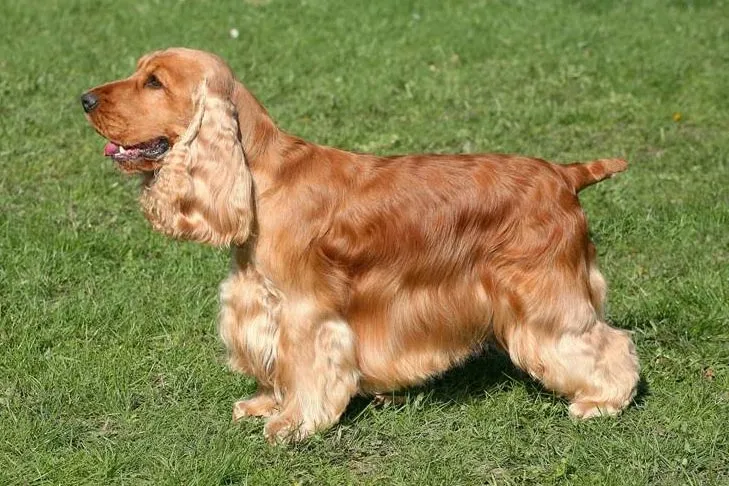
Image Source: American Kennel Club
The English Cocker Spaniel stands out as a versatile, good-natured sporting dog with unique traits that make it different from other spaniels. People call it the “merry cocker” because its tail never stops wagging. This breed perfectly combines working skills with friendly personality traits.
Breed standards and physical traits
The English Cocker Spaniel shows off a compact, well-balanced structure. Males reach 15.5-16 inches at the withers, while females stay slightly smaller at 15-15.5 inches. Show dogs typically weigh between 28-32 pounds.
The breed’s head is without doubt its most striking feature. You’ll notice a slightly arched skull, moderate stop, and a square muzzle matching the skull’s length. These dogs have a gentle, alert, and intelligent expression. Their medium-sized, slightly oval eyes sit wide apart, creating their signature look.
Their coat stands out as another defining trait—medium length, silky, and either flat or slightly wavy. Show-type English Cockers have fuller feathering on their ears, chest, legs, and undercarriage. The coat shouldn’t be too heavy since that would get in the way of their field work.
These dogs are built with balance in mind. The breed standard tells us they should be “compactly built and short-coupled, with height at withers slightly greater than the distance from withers to set-on of tail”. Such proportions help them move smoothly through thick brush while hunting.
Popularity in the UK and show success
English Cocker Spaniels are beloved in the United Kingdom. They rank as the sixth most popular dog breed in the UK and lead as the country’s favorite spaniel breed. The Kennel Club’s records show 22,211 English Cocker registrations in 2009 alone, with only Labrador Retrievers having higher numbers.
These dogs have taken the prestigious Crufts Dog Show by storm. They’ve won Best in Show seven times since the award’s start in 1928. H.S. Lloyd’s Ware Kennel dominated from 1930 to 1950, claiming six of these wins. Sh. Ch. Canigou Cambrai brought home the most recent title in 1996.
Lloyd’s kennel achieved something remarkable – three of his English Cockers each won Best in Show twice. Luckystar of Ware (1930-1931), Exquisite Model of Ware (1938-1939), and Tracey Witch of Ware (1948-1950) share this honor with just one other dog – a Labrador Retriever named Bramshaw Bob.
Working vs show strains
The United Kingdom has seen two distinct types of English Cocker Spaniel emerge: working (field) and show (conformation) strains. Though they share common ancestors, breeding for different purposes has created clear differences between them.
Show strain Cockers are bred to excel in dog shows. They sport more domed skulls, longer and fuller ears, and thicker, silkier coats with noticeable feathering. A blue roan show cocker displays a compact, balanced body with a square muzzle, low-set long ears, and a slightly rounded skull.
Working strain Cockers focus on hunting performance. These dogs have longer legs, less angulation, and longer, narrower muzzles. Their skulls appear flatter, ears sit higher, and their fur stays finer to handle field conditions better. On top of that, working Cockers need more exercise to stay happy and avoid behavior problems.
Both types keep the loving, clever personality that makes English Cocker Spaniels such wonderful companions. Their physical and temperamental differences simply reflect what they were bred to do.
All about the American Cocker Spaniel
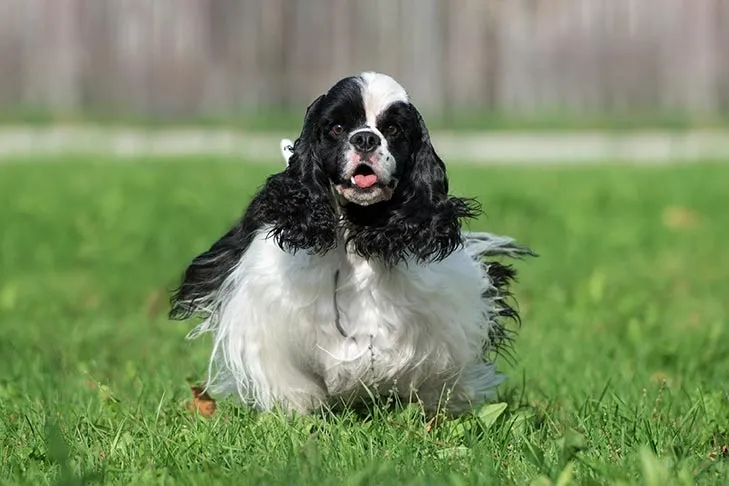
Image Source: American Kennel Club
The American Cocker Spaniel grew as a distinct breed throughout the 20th century. This beloved companion has come a long way from its English roots. Americans shaped the breed’s character through their love of show dogs and its adaptability as a family pet.
Breed development in the US
The American Cocker Spaniel’s story started when spaniels came to America with early settlers. These versatile hunting dogs reached American shores as early as 1620. Some even believe they arrived on the Mayflower. The American Kennel Club (AKC) registered its first Cocker Spaniel in 1878. The American Spaniel Club followed shortly after in 1881.
Ch. Obo II played a crucial role in shaping the breed. Many consider him the father of the modern American Cocker Spaniel. American breeders crafted their ideal Cocker during the late 19th and early 20th centuries. Their vision differed from the English type. By the 1930s, a new style emerged—the dogs stood higher, had shorter muzzles, and more compact bodies. The breed’s signature features became its round, dome-shaped skull, shorter muzzle, and fuller coat.
This progress showed how American priorities changed. The breed moved away from its working roots toward show rings and companion roles. People fell in love with the Cocker’s “gentle and loving” nature and stunning looks.
Recognition and popularity
The differences between English and American varieties became clear by the 1940s. This led to their formal separation. The Canadian Kennel Club recognized them as separate breeds in 1940. The American Kennel Club followed suit in 1946.
The American Cocker Spaniel’s popularity soared in the United States. The breed became America’s most popular dog twice—from 1936 to 1952 and again from 1983 to 1990. This added up to 25 remarkable years at the top spot. Famous American Cockers became part of the nation’s culture:
Spot (of Dick and Jane “See Spot Run” fame)
Cover Boy Butch (who appeared 25 times on Saturday Evening Post covers)
Lady (from Disney’s “Lady and the Tramp”)
The Coppertone Cocker
American Cockers won Best in Show at the Westminster Dog Show four times. Ch. My Own Brucie stands out among winners. He claimed the title twice in 1940-1941 and earned the nickname “the most photographed dog in the world”.
Color classes and show categories
Show judges group American Cocker Spaniels into three varieties based on color:
Black Variety – This has solid black dogs and black with tan points. The standard allows white markings only on chest and throat.
ASCOB (Any Solid Color Other than Black) – This includes buff, brown, silver, cream, red, and other solid colors. Like black varieties, white markings belong only on chest and throat.
Parti-color Variety – These dogs show spotted or roan patterns. You’ll see black and white, brown and white, red and white, and tri-color combinations.
These color groups matter beyond looks—they determine how judges evaluate dogs in competition. Each variety competes separately before the best ones compete for Best of Breed. The breed standard sets exact sizes: males should reach 15 inches at the withers, females 14 inches. Dogs over 15½ inches or females over 14½ inches face disqualification.
The American Cocker Spaniel has earned its place as a versatile companion. People love its “merry and frolicsome” nature, “big, dreamy eyes and impish personality”. These traits keep it among America’s favorite breeds.
Color variations and coat types
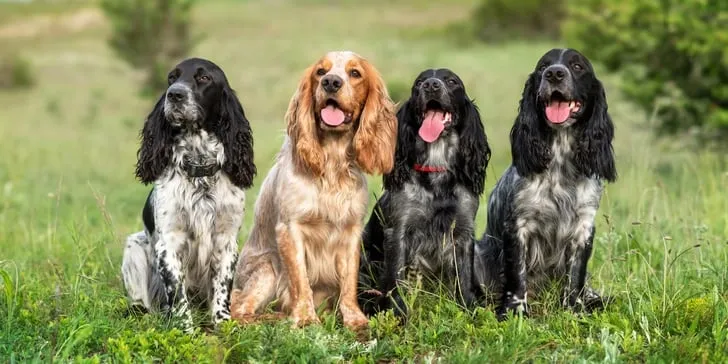
Image Source: Waggel
Cocker Spaniels stand out with their amazing variety of coat colors and patterns. These beloved dogs come in 24 officially recognized color combinations, which makes them unique among many other breeds.
Solid colors: black, red, golden
These dogs can have a single primary color throughout their coat. Small white markings on the chest don’t affect the ‘solid’ classification. Black coats appear most commonly, showing an intense, glossy look that needs just one copy of the dominant gene to express. This genetic trait makes black a frequent sight in Cocker Spaniels.
The golden coat has become one of the most sought-after colors, with its warm, sunny shades ranging from light to deep gold. The liver-colored (or chocolate) Spaniels show rich brown coats, while red-coated ones display vibrant auburn hues from two recessive red genes.
Parti-colors and roans
Parti-colored Cocker Spaniels show two or more distinct colors, and white must be one of them. The breed standard states these colors should be “two or more solid, well-broken colors, one of which must be white”. Black and white, liver and white, and orange and white make up the most common combinations.
Roan patterns create some stunning looks by mixing white hairs with a base color. Blue roan tops the popularity charts with its beautiful blue-gray appearance from mixed black and white hairs, plus solid black ears and facial patches. Orange roan, liver/chocolate roan, and the less frequent lemon roan add to these fascinating variations.
You can spot roan puppies early by looking at their foot pads. Blue roans and orange roans with black pigmentation have black pads, while liver/chocolate roans show brown ones.
Rare and controversial colors
Some color variations pop up unexpectedly in Cocker Spaniel bloodlines. A notable example occurred in 1943 when an all-white Cocker emerged from dark-colored parents – this puppy was the grandson of My Own Brucie, who won the Westminster Kennel Club Dog Show in 1940 and 1941.
The merle coat pattern remains the most unusual and debated color in Cocker Spaniels. This eye-catching pattern shows irregular blotches of color against a lighter background, appearing as blue merle (black on gray) or red merle (brown on tan).
The merle gene’s beauty comes with health concerns like deafness, blindness, and vision problems. A 2011 American Spaniel Club study confirmed merle as a legitimate Cocker Spaniel color and found that “the merle mutation predates all dogs and is behind all breeds”.
Temperament and behavior traits
A cocker spaniel’s silky coat and soulful eyes hide a cheerful personality that fascinates dog lovers worldwide. These canines have a temperament as rich and varied as their colorful coats. Their human companions need to understand these unique traits.
Affectionate and people-oriented
Cocker spaniels build strong bonds with their families. People often call them “velcro dogs” because they stay close to their owners. These joyful, playful, and steady companions thrive on human interaction. They become upset when separated from their loved ones. Both English and American varieties show this deep affection. Breed experts say they “want nothing more than to be the best pet possible.” Their emotional intelligence makes them respond to household moods—so they do best in homes with steady routines and calm settings.
Training and socialization needs
Cocker spaniels thrive with positive, reward-based training methods that build trust and confidence. These dogs learn quickly because of their intelligence and eagerness to please. They pick up both good habits and bad ones fast. The critical early socialization should start at four to five weeks of age. These sensitive dogs shut down if you correct them harshly or put too much pressure on them. Short, upbeat training sessions work best to teach engagement, recall, and boundaries. Their hunting heritage means they need mental stimulation that uses their natural scenting abilities and retrieval instincts.
Common behavioral challenges
Behavioral issues can develop in even well-bred cockers without proper guidance. Separation anxiety tops the list of problems and shows up as destructive behavior, excessive barking, or restlessness. On top of that, they might guard their resources, especially when you have food or favorite toys around. Their strong scenting drive leads to “selective hearing” outdoors when interesting smells grab their attention. Many cockers end up struggling with impulse control and overexcitement. They might jump on guests or get overstimulated by activity. Breed-specific “rage syndrome” exists in rare cases, but true instances are very uncommon.
Health and lifespan of Cocker Spaniels
Cocker Spaniels are resilient dogs that live long lives, which makes them perfect companions for dedicated owners. You can help your pet stay healthy throughout its life with proper care.
Average life expectancy
A well-cared-for Cocker Spaniel can live 12-15 years. This lifespan stands out when compared to other dogs of similar size. Your dog’s longevity depends on its genetics, diet quality, exercise habits, and preventative healthcare. These dogs need changes to their diet and exercise routines when they reach their senior years around age seven to maintain their quality of life.
Common health issues
Cocker Spaniels are healthy dogs overall, but they face some breed-specific health challenges. Eye problems top the list of concerns, including cataracts, glaucoma, and progressive retinal atrophy[312]. Without treatment, these conditions can damage vision or lead to blindness.
The breed’s signature long ears look charming but create perfect conditions for infections because of poor air flow and trapped moisture. Joint problems also affect many Cocker Spaniels:
Hip and elbow dysplasia cause pain and make movement difficult
Luxating patella happens when the kneecap slips out of place
Skin allergies (atopy) usually show up between ages 1-3. Dogs might scratch too much, rub their faces, or lick their paws. Senior dogs aged 7-9 years can develop adult-onset neuropathy, and some may experience kidney problems from renal dysplasia.
Preventive care and vet visits
Regular vet checkups are the life-blood of preventive care. Your healthy Cocker Spaniel needs at least one yearly visit, while senior dogs should see the vet more often. These checkups help catch potential health issues early.
You should check and clean your dog’s ears daily to prevent painful infections. Watch out for redness, discharge, head shaking, or strange smells—these warning signs mean it’s time to see the vet.
Getting your puppy from reputable breeders who share health screening results, especially hip scores, reduces the risk of inherited conditions. A proper diet and exercise routine helps maintain your dog’s weight and prevents obesity-related problems.
Cocker Spaniels as working dogs

Image Source: Janan Cocker Spaniels
Cocker Spaniels are not just popular pets – they still excel at their original role as working dogs. Both varieties showcase their hunting heritage, especially in field-bred lines that maintain their natural skills.
Field-bred vs show-bred differences
Field-bred Cockers look noticeably different from their show-bred cousins. These working dogs have flatter skulls, shorter ears set higher on their heads, and finer coats with less feathering. Their bodies are rangier and less compact, built more for function than looks. Show breeders have focused on appearance, which sometimes comes at the cost of working instincts. In spite of that, working Cockers retain their intense drive and need plenty of mental stimulation and exercise to stay happy.
Use in hunting and detection
A Cocker Spaniel’s compact size helps them work effectively in dense cover where bigger dogs can’t manage. These dogs shine when they flush woodcock and grouse from thick brush as they work with their nose close to the ground. Their small size lets them move through tight, low spaces, which makes them valuable for detection work. Working-bred Cockers often serve security agencies by finding narcotics, explosives, and helping in search-and-rescue missions.
Suitability for active lifestyles
Cockers have plenty of energy but don’t need endless exercise just to burn it off. These dogs love activities that tap into their hunting instincts – retrieving games, agility courses, scent work, or pet gundog training. Their eagerness to please makes training a breeze, and they fit perfectly with active families who love outdoor activities.
Conclusion
Cocker Spaniels are without doubt one of the world’s most beloved and versatile dog breeds. Their remarkable journey from UK hunting dogs to family companions shows how well they adapt to different roles. American and English varieties have developed their own unique traits, yet both share that special “merry” temperament the breed is known for.
These lovable dogs bring so much more than just good looks to the table. Their smart nature, loving personality, and desire to please make them perfect companions in many homes. They’re especially great with kids, and active people love their enthusiasm for outdoor adventures.
New owners should think over the dedication needed for coat care, exercise, and health maintenance. A lifespan of 12-15 years means investing time, money, and heart into your pet. It also helps to know about breed-specific health issues so you can take steps to boost your dog’s quality of life.
Cocker Spaniels have stayed popular through the decades, and that says a lot about their charm. These dogs prove their worth time and again – whether they’re winning shows, working in fields, or being faithful pets. Field-bred types still excel at hunting and detection, while show lines continue to win hearts with their beautiful appearance.
These wonderful dogs strike a perfect balance between working skills and companion qualities. Their rich heritage, special traits, and loving nature will keep them as favorites for years to come. They’ve earned their spot as one of the world’s most cherished canine companions.
Key Takeaways
Understanding Cocker Spaniels helps potential owners make informed decisions about these beloved companions that dominated America’s popularity charts for 25 years.
• Two distinct breeds exist: English Cockers are larger (15-17 inches, 26-34 lbs) with working instincts, while American Cockers are smaller (13.5-15.5 inches, 20-30 lbs) and bred for companionship.
• High grooming demands: Their silky coats require brushing 2-4 times weekly and professional grooming every 6-8 weeks, with Americans needing more intensive maintenance.
• Health-conscious ownership essential: Common issues include eye problems, ear infections, and joint dysplasia; regular vet visits and preventive care extend their 12-15 year lifespan.
• Perfect family companions: These “merry” dogs are people-oriented, gentle with children, and thrive on human interaction but may develop separation anxiety without proper training.
• Exercise needs vary by type: Working strains require 2 hours daily activity, while companion lines need about 1 hour of exercise plus mental stimulation to prevent behavioral issues.
FAQs
Q1. Are Cocker Spaniels good family dogs? Cocker Spaniels make excellent family dogs. They are known for their gentle, affectionate nature and love of human companionship. Their “merry” temperament and patience with children make them ideal for families. However, they require proper socialization and training to prevent potential behavioral issues like separation anxiety.
Q2. How much grooming do Cocker Spaniels need? Cocker Spaniels have high grooming demands. Their silky coats require brushing 2-4 times weekly to prevent matting, with American Cockers needing more intensive care. Professional grooming is recommended every 6-8 weeks. Regular ear cleaning is also essential to prevent infections due to their long, floppy ears.
Q3. What are the main differences between English and American Cocker Spaniels? English Cocker Spaniels are larger (15-17 inches tall, 26-34 lbs) with a more rectangular build and stronger working instincts. American Cocker Spaniels are smaller (13.5-15.5 inches, 20-30 lbs), more compact, and bred primarily for companionship. Americans typically have rounder heads, shorter muzzles, and more profuse coats compared to their English counterparts.
Q4. What health issues are common in Cocker Spaniels? Common health concerns for Cocker Spaniels include eye problems (cataracts, glaucoma), ear infections, hip and elbow dysplasia, and skin allergies. They may also be prone to certain heart conditions and adult-onset neuropathy. Regular veterinary check-ups and preventive care are crucial for maintaining their health throughout their 12-15 year lifespan.
Q5. How much exercise do Cocker Spaniels require? Exercise needs vary between working and show-bred lines. Field-bred Cockers generally require about two hours of daily activity, while companion lines need approximately one hour of exercise. Mental stimulation through interactive games and training is also important to prevent boredom and potential behavioral issues. Activities that engage their hunting instincts, such as retrieving games or scent work, are particularly beneficial.