
Chesapeake Bay Retriever
 The Chesapeake Bay Retriever emerged as a distinctly American breed from the Chesapeake Bay region in the 19th century. Local market hunters relied on these versatile dogs to retrieve waterfowl, pull fishing nets, and rescue fishermen. The American Kennel Club officially recognized the breed in 1878. Maryland proudly declared the Chesapeake Bay Retriever its official state dog in 1964.
Chesapeake Bay Retrievers’ bright personality, courage, and intelligence complement their unique physical characteristics. Their waterproof coat displays colors like brown, sedge, or deadgrass—natural shades that evolved to match their hunting environment. Male Chessies can reach weights up to 80 pounds, and the breed typically lives 10 to 13 years. These dogs show strong protective instincts toward their family while maintaining a polite but reserved attitude with strangers. The breed’s webbed feet enable exceptional swimming abilities, which makes them ideal partners for water activities.
Breed overview and origin
The Chesapeake Bay Retriever’s amazing story starts with a sea rescue that changed American sporting dogs forever. This tough breed didn’t come from careful planning – it emerged naturally from need and chance in the early 19th century.
Where the Chesapeake Bay Retriever comes from
The breed’s story begins in 1807 with a shipwrecked English vessel off Maryland’s coast. The American ship Canton rescued the sinking vessel’s passengers and crew. Among the survivors were two Newfoundland-type puppies – a “dingy red” male named Sailor and a black female named Canton after the rescue ship. These weren’t regular dogs but St. John’s Water Dogs (also called Lesser Newfoundland Dogs). Fishermen valued them for their exceptional swimming skills and strength to pull nets and lines.
George Law, the Canton owner’s nephew, bought both dogs for a guinea each. The dogs ended up with different owners around the Chesapeake Bay area instead of being bred together. John Mercer of West River got Sailor first but traded him to Governor Edward Lloyd for a valuable Merino ram. Doctor James Stewart of Sparrow’s Point bought Canton, who stayed with him until she died.
These two dogs became the foundation of today’s Chesapeake Bay Retriever over the next few decades. Their offspring mixed with local retrievers and other working breeds. Records show Irish Water Spaniels, Bloodhounds, and various local retrievers helped shape the breed. People called these dogs “Red Chester” and “Brown Winchester” before settling on “Chesapeake Bay Retriever”.
The American Kennel Club made it official in 1878, making the Chesapeake one of America’s oldest sporting breeds. Maryland recognized its importance by naming it the state’s official dog in 1964.
Purpose of the breed in early America
The Chesapeake Bay Retriever emerged from pure necessity. The Chesapeake Bay stretches 200 miles as an estuary bordered by Maryland, Virginia, and Delaware, with shallow, ice-cold waters. Thousands of ducks and geese use this area as a critical stopover during their winter migration south.
Hunters needed a special dog for this challenging environment. They wanted a retriever that could handle freezing water, swim through rough waves, and break through ice while carrying waterfowl. The bay’s harsh conditions shaped these dogs, with their working ability mattering more than looks.
These dogs quickly became the ultimate duck retrievers. Market hunters used them to bring back hundreds of birds each day. The dogs needed exceptional stamina, smarts, and strength. They also protected their owners’ catch and equipment from thieves.
Early Chessies did more than hunt waterfowl around the bay. They pulled fishing nets, saved fishermen, and became loyal family dogs. This versatility made them valuable to bay communities.
The breed’s physical traits evolved to match their work. Their oily, dense, wooly undercoat protected them from icy waters and helped them break through ice during retrieves. Their coat colors – brown, sedge, or deadgrass – helped them blend into hunting areas rather than look pretty.
Chesapeake Bay Retrievers earned their reputation for being smart, brave, hardworking, alert, and water-loving. These traits, which made them perfect working dogs back then, still define the breed today.
Physical characteristics and size

Image Source: DogPack App
The Chesapeake Bay Retriever’s sturdy frame shows a breed built to be both powerful and agile. This breed stands apart from show dogs that focus on looks, as its physical traits evolved to work in challenging water environments.
Height and weight range
The breed follows clear size standards between males and females. Adult males stand 23 to 26 inches at the shoulder, and females reach 21 to 24 inches tall. Male dogs typically weigh 65 to 80 pounds, while females stay lighter at 55 to 70 pounds. Any Chesapeakes outside these ranges have serious faults by breed standards.
Wikipedia lists different numbers (males 75-100 pounds, females 66-88 pounds), but breed authorities stick to the ranges mentioned above. New owners should know their puppies reach full size between 12 to 18 months. Puppies start at 20-26 pounds at three months and grow to 55-77 pounds by their first year.
Body structure and build
A Chesapeake Bay Retriever’s silhouette shows balance that puts function first. The dog’s height from shoulder blades to ground stays slightly less than its body length from breastbone to buttocks. The body depth must reach at least to the elbow, and the distance from shoulder to elbow matches the length from elbow to ground.
These dogs have strong, well-balanced, and powerful frames of moderate size. Their deep and wide chest gives them plenty of lung capacity for long swimming sessions. The hindquarters sit at least as high as—and often slightly higher than—the shoulders, which creates a unique look compared to other retrievers.
Power never gets in the way of agility or stamina. As working retrievers, these dogs should look athletic rather than heavy. They have round, broad skulls with medium stop and strong jaws made to carry large game birds. Their eyes stand out—medium-large, wide-set, and clear with a yellowish or amber color.
Chesapeake Bay Retriever tail and webbed feet
The tail works as both a swimming rudder and mood indicator. It stays medium in length and moderately heavy at the base, running straight or with a slight curve. Breeders watch tail carriage closely—it must not curl over the back or kink to the side. A relaxed dog lets its tail hang naturally, but during movement or alertness, the tail stays level with the back or slightly above, showing a “merry action”.
The breed’s swimming ability comes from its special feet. These dogs have well-webbed “hare feet” where the middle toes grow longer than the outer ones. Good-sized feet with rounded, close-set toes help them move efficiently. Webbing between the toes creates natural “paddles” that boost swimming power.
These specialized feet work with their water-resistant double coat to make them excellent waterfowl retrievers in icy waters. The feet grow large enough to swim well but stay compact enough for land movement. Most owners remove rear dewclaws, and some take off front ones too, though breed standards make this optional.
Coat and color variations
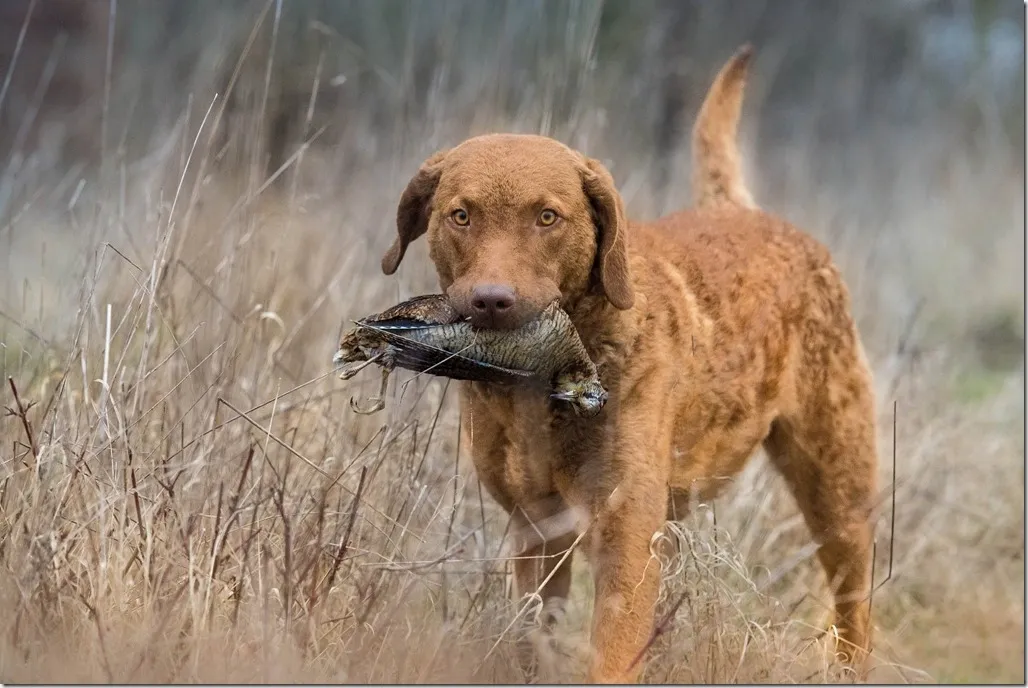
Image Source: Misty Shores Chesapeakes – WordPress.com
The Chesapeake Bay Retriever’s coat stands out as its most unique feature. Nature designed this masterpiece to work in tough water conditions.
Understanding the double coat
The Chesapeake Bay Retriever has a unique double coat. The dense, wooly undercoat is so thick you can barely find the skin when you part it. This layer keeps freezing water away from the skin and protects against the bay’s harsh weather. A short, harsh outer coat sits on top. Together, these layers create a natural barrier that holds oils just like duck feathers.
The coat’s texture plays a big role in breed judging. It’s worth 18 points out of 100, while color only gets 4 points. This shows how much the coat’s function matters compared to its looks. Yes, it is right there in the breed standard: “the question of coat and general type of balance takes precedence over any scoring table”.
Look for the “Chessie wave” – a pattern that runs down the neck, shoulders, back, and loin. The hair on the face and legs should stay short and straight. You might see some feathering on the tail and rear hindquarters. The coat patterns can be loose or have light waves, sometimes looking slightly kinky. A curly coat all over the body will disqualify the dog.
Deadgrass, sedge, and brown colors
These dogs come in three simple colors with different shades for different purposes. Brown ranges from light cocoa that looks silvery to deep bittersweet chocolate. Sedge goes from reddish-yellow through bright red to chestnut, and red tones make it special. Deadgrass can be anything from faded tan to dull straw, and lighter shades might look almost white.
Red tones make the difference between sedge and deadgrass. Deadgrass has no red in it, but sedge does. The breed standard likes self-colored dogs best – those with one color that might have lighter and darker shades. Dogs with masking, striping, or saddle markings show up often too.
Black and white markings
The breed standard leaves no room for confusion about markings. Black anywhere on the body means disqualification. White spots can only show up in certain places: breast, belly, toes, or back of feet. Smaller white spots are better, and solid-colored dogs get top marks.
White above the sternum point will keep a dog out of shows, whether it connects to white below or not. Some dogs get gray early, but that’s different from white and won’t disqualify them. When looking at the standard, remember that “foot” means the carpal/tarsus, metacarpal/metatarsal, and phalangeal areas.
How coat color blends with environment
The coat’s ability to camouflage might be its cleverest feature. Breeders developed these colors to match where these dogs hunt. Deep bittersweet chocolate matches mud banks, medium milk chocolate blends with bank grasses, and light-yellow “dead grass” disappears in dry wheat fields.
Sedge-colored retrievers blend right into the background when fall turns the bay’s grasses bright red. This natural hiding ability helps hunters – birds flying in won’t spot the dog waiting in blinds. The coat matches the bay’s plant life perfectly, looking like wild rice and reeds that turn gray, taupe, tan, and brown in fall and winter.
The Chesapeake Bay Retriever’s coat shows off its working heritage through both function and form. These dogs can shake almost dry after a swim. Every part of this breed, from coat texture to color, serves a real purpose.
Temperament and personality traits
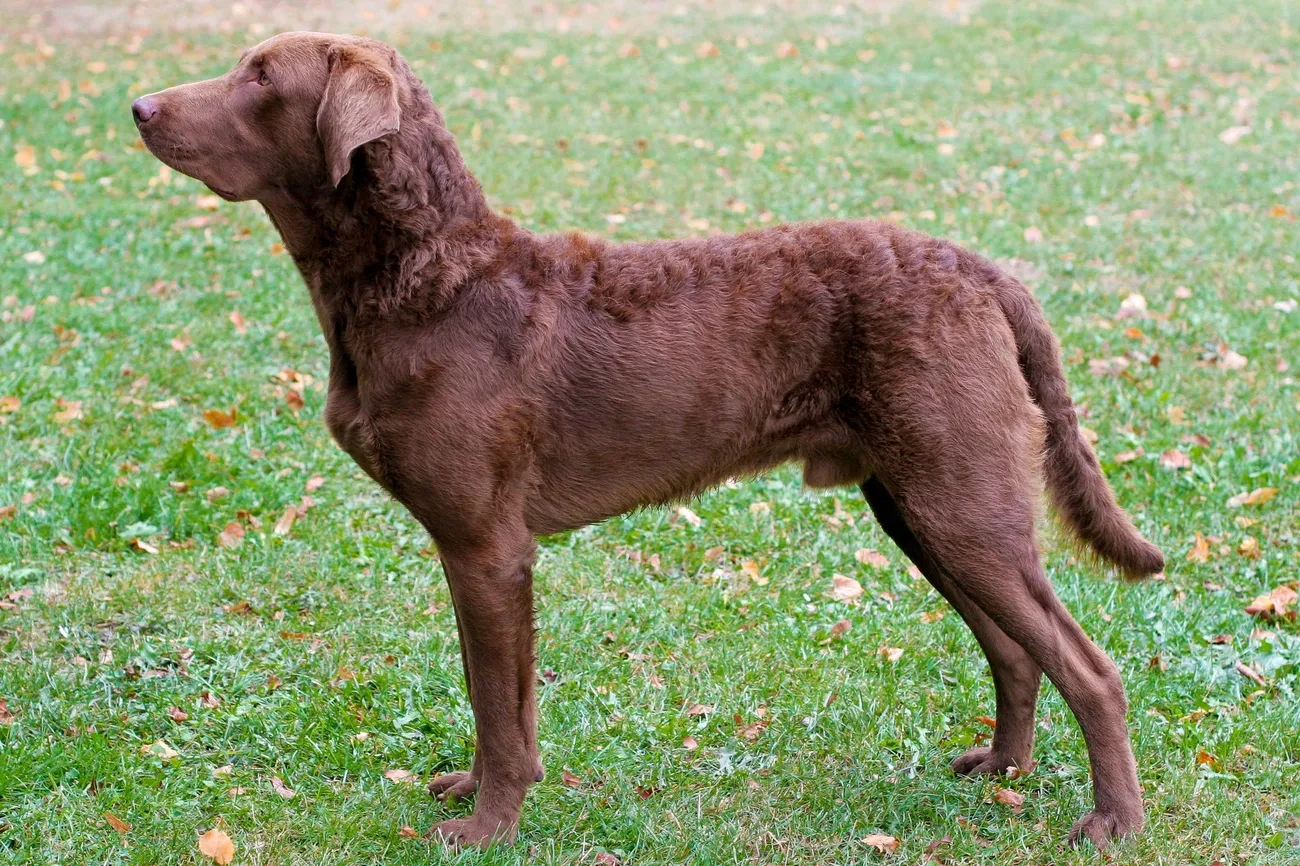
Image Source: The Spruce Pets
Chesapeake Bay Retrievers stand out from other sporting dogs with their impressive physical traits and unique personality. Their specialized breeding and working heritage have shaped a distinctive temperament that makes them special.
Protective yet affectionate nature
Chesapeake Bay Retrievers blend dedication, intelligence, and loyalty seamlessly. These dogs build strong bonds with their human companions and express affection through cuddling, play, and protective behavior. Their bright and happy disposition creates a balanced temperament that combines warmth with alertness.
Chessies are known for their toothy, ear-to-ear “Chessie smile” that sometimes reveals their front teeth. This unique expression isn’t threatening – it’s a sign of happiness that often comes with vocalizations. Their emotional intelligence shines through this trait. These dogs are emotionally sensitive and can read their owner’s feelings with empathy.
Chesapeake Bay Retrievers show steadfast dedication to their families but stay reserved around strangers. Their protective nature makes them excellent watchdogs. They alert their families to potential threats but aren’t aggressive – just cautious around unfamiliar people.
Behavior with children and other pets
These dogs naturally show gentleness around children. They share affection with both kids and elderly people, and these interactions help them thrive. Adult supervision remains crucial when small children interact with Chessies. Their protective instincts might lead to misunderstandings during energetic play.
Chesapeakes generally get along with other pets and dogs. Early socialization helps manage their territorial nature. A Chesapeake might become assertive without proper introductions during puppyhood, especially toward same-sex dogs. Many well-socialized Chessies live peacefully with other pets in homes with clear boundaries.
Smart and quick to learn, Chessies can show stubborn streaks. Give them an inch, and they’ll take a mile. Every family member needs to enforce the same rules to avoid confusion or behavioral issues.
Chesapeake Bay Retriever temperament vs other retrievers
Chesapeake Bay Retrievers differ from other retriever breeds in several ways:
Independence: They need less attention than other retrievers and handle solitude well, but not isolation.
Protective instinct: Their watchdog abilities surpass Labs or Goldens.
Stranger interaction: Unlike Labs’ friendliness, Chesapeakes stay reserved with new people.
Focus and drive: They excel at focused tasks, particularly during hunts.
Labrador Retrievers bring more outgoing and friendly personalities. Labs welcome everyone enthusiastically and play well at dog parks. Chesapeakes prefer their family’s company and take time warming up to new faces.
These dogs protect their home and property instinctively. Their loyalty sometimes appears as caution toward strangers. First-time dog owners might find their strong will challenging. Labs make easier first-time pets because of their eagerness to please.
Families interested in a Chesapeake Bay Retriever should understand their unique character. Proper training and socialization turn these intelligent, loyal dogs into devoted companions. Their special mix of protective instincts and deep affection continues winning hearts of those who value their distinctive qualities.
Training and intelligence
Chesapeake Bay Retrievers blend intelligence with independence, which creates a unique training dynamic that is different from other retriever breeds. These dogs quickly learn new things but show a strong-willed nature that needs careful training approaches.
How trainable is the breed?
Chesapeake Bay Retrievers are highly intelligent and pick up new skills at remarkable speed. Their independent nature sets them apart from more compliant retrievers like Labradors. People used to call Chessies stubborn and hard to train. This reputation doesn’t come from a lack of smarts but from their independent thinking—a trait specifically bred into them for retrieving in harsh conditions without constant direction from handlers.
New Chesapeake owners might mistake this independence for defiance. These dogs simply review commands based on their own judgment. Their smarts help them learn fast, and they shine in canine sports of all types including field trials, hunt tests, conformation, obedience, agility, and tracking.
Best training methods for Chessies
Training Chesapeake Bay Retrievers successfully needs methods that respect their sensitivity and intelligence:
Positive reinforcement – Treats, praise, and play work better than punishment. Harsh corrections can make Chessies stop learning altogether.
Consistency – Clear, steadfast expectations matter. A Chessie will push boundaries—trainers say “if given an inch, they’ll take a mile”.
Short, engaging sessions – Brief training periods mixed into daily activities work better than long, formal sessions.
Early socialization – Young puppies need exposure to people, other dogs, and new environments to balance their protective nature.
The relationship between trainer and dog plays a vital role with this breed. Chesapeakes build strong bonds with their owners and respond best to training that feels collaborative rather than controlling. Games and natural retrieving instincts make training more effective.
Common challenges and how to overcome them
The biggest problem in training a Chesapeake Bay Retriever comes from their independent thinking. These dogs might refuse tasks they see as pointless. To name just one example, a Chessie might love hunting ditches for scents but won’t enter a bramble patch just because you say so.
There’s another reason training can be tricky—their exceptional memory. One experienced trainer puts it this way: “They have memories that would shame an elephant”. This trait helps them remember training but becomes a problem if you’re unfair—Chesapeakes don’t forget and might “get even” later.
Solutions to these challenges include:
Make training rewarding – Show appreciation for good work through affection, treats, or enthusiastic praise.
Build trust – Fair treatment matters; this breed rarely forgives broken trust.
Adapt your approach – Each dog needs a unique training style that matches their personality.
Focus on direction – Teaching alternative behaviors works better than saying “no”.
Starting obedience training early with puppy classes builds a foundation for lifelong learning. These classes help establish leadership and create that vital bond that makes a Chessie want to work with—not against—their handler.
Exercise and activity needs
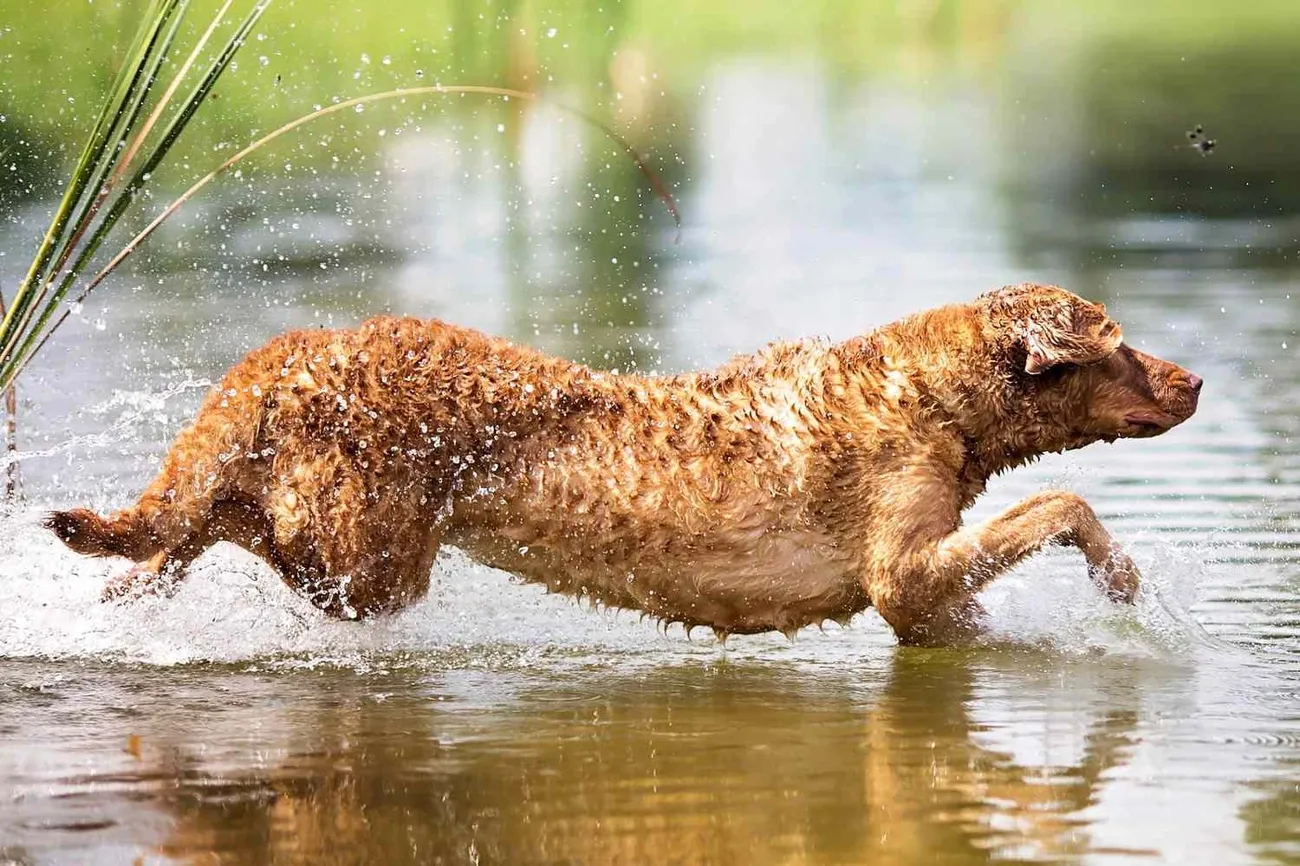
Image Source: Daily Paws
A Chesapeake Bay Retriever’s working breed heritage and demanding environment background create a strong need for daily exercise. These dogs need physical activity to maintain their powerful build and natural endurance, which helps balance their behavior and health.
Daily physical requirements
Chesapeake Bay Retrievers need by a lot more exercise than most breeds. They typically need 1-2 hours of vigorous activity daily. Some experts suggest these high-energy dogs might need more than 60 minutes of intense exercise plus extra playtime to stay in top shape. These dogs often develop behavior problems when they don’t get enough physical activity to burn their energy.
Urban Chesapeake owners must provide long daily walks, but walks alone won’t meet the breed’s exercise needs. A Chesapeake Bay Retriever runs on environments where they can do intense activities whatever the weather—they’re happy to go outdoors in rain, snow, or sunshine.
Mental stimulation and games
This intelligent breed needs more than just physical exercise. Mental challenges are just as important to prevent boredom and destructive behaviors. Puzzle toys, scent games, and regular training sessions keep the Chessie’s mind active.
Note that Chesapeakes need “jobs” that test their problem-solving skills. Activities like geocaching or learning new commands are a great way to get mental stimulation. Based on this, owners should include:
Training sessions that reinforce or teach commands
Puzzle feeders that make mealtime mentally engaging
Scent-based games that use their natural hunting abilities
Ideal activities: swimming, retrieving, hiking
Swimming is the perfect activity for Chesapeake Bay Retrievers, given their heritage. Their waterproof coat and strong swimming abilities help them handle currents that might be too much for other breeds. Just 20 minutes of water play gives excellent mental and physical benefits.
Retrieving games match their natural instincts perfectly. Tennis balls and floating toys provide exercise while honoring their retrieving heritage. Hiking on varied terrain challenges them physically and mentally with new scents and environments.
Active families can find a great outdoor companion in the Chesapeake Bay Retriever. These dogs excel at tracking, hunting, field trials, agility, and obedience competitions. These structured sports channel their energy effectively while deepening their commitment to their owners.
Health and lifespan
Health management plays a vital role in your Chesapeake Bay Retriever’s wellbeing throughout their life. Owners who understand breed-specific health concerns can provide better preventative care and act quickly if problems arise.
Common health issues in the breed
Chesapeakes are usually sturdy dogs, but they can inherit several conditions that owners need to watch carefully. Hip and elbow dysplasia affects many Chessies and causes joint malformation that leads to pain, lameness, and arthritis. Their deep, narrow chests make them vulnerable to Gastric Dilatation-Volvulus (GDV or bloat). This life-threatening emergency can kill a dog within 30 minutes without treatment.
These eye conditions need careful attention:
Progressive Retinal Atrophy (PRA), which causes gradual blindness and shows up around ages 8-9
Cataracts, which develop on their own or alongside other conditions
Exercise-Induced Collapse, which causes sudden weakness after physical activity
Degenerative myelopathy—as with ALS in humans—affects Chesapeakes more often than other breeds. This condition causes weakness and poor nerve function in their hind legs. Type 3 Von Willebrand disease and hypothyroidism also show up in the breed.
Preventive care and vet checkups
Regular veterinary examinations are the life-blood of preventative care. Semi-annual or annual exams help detect diseases early and keep vaccinations current. Responsible breeders run several tests before breeding. These include hip and elbow evaluations, ophthalmologist assessments, and DNA tests to PRA, EIC, and degenerative myelopathy.
A proper diet and exercise prevent obesity and reduce joint strain and other health complications. Deep-chested Chesapeakes need special care to avoid bloat. Feed them smaller meals throughout the day, avoid exercise around mealtimes, and skip raised food bowls.
Average lifespan and quality of life
A well-cared-for Chesapeake Bay Retriever lives between 10 to 13 years. Their lifespan matches up well with other large breeds but depends by a lot on genetics, nutrition, exercise, and preventative healthcare.
Early detection of health issues helps maintain a good quality of life. Regular checkups, proper weight management, and genetic screening help Chesapeakes enjoy their golden years comfortably. Most conditions don’t have cures but respond well to medication, controlled exercise, and proper veterinary care.
Grooming and maintenance

Image Source: Facebook
A Chesapeake Bay Retriever’s distinctive coat needs specific grooming practices that focus on function rather than looks. Their specialized water-resistant coat requires different care than most other dogs.
Brushing and bathing tips
Your Chesapeake’s coat will benefit from weekly brushing with a rubber curry brush or soft bristle brush. This removes loose hair and spreads natural oils around. A slicker brush works well to smooth any matted fur during regular grooming. These dogs don’t need many baths—usually once every two to three months, or when they get really dirty. Too much washing will strip away the protective oils that make their coat water-resistant.
You should use only mild dog shampoos made for water-resistant coats when you need to bathe them. After the bath, dry them really well with a towel and let their coat air dry naturally. Never use blow dryers because the heat can damage their coat and skin badly.
How to preserve the coat’s natural oils
The water-resistant properties of a Chesapeake Bay Retriever’s coat depend on its natural oils. You should avoid too many baths because the oily texture serves a purpose and isn’t something you need to get rid of. Don’t worry about the slight musky smell—it’s normal and should stay.
The right dietary supplements can boost coat health substantially. Foods with omega-3 and omega-6 fatty acids help strengthen the fur’s natural oils. Fish oil supplements or salmon work especially well. High-quality dog food plus the right supplements helps create an excellent coat condition and reduces shedding.
Seasonal shedding and care
Chesapeake Bay Retrievers “blow coat” twice a year—usually in spring and fall. These heavy shedding periods last one to two weeks, and you’ll need to brush your dog daily to handle all the loose fur. Outside these times, Chesapeakes don’t shed much compared to other breeds.
Swimming actually helps clean their coat of dander and loose fur naturally. Much of the loose fur washes away in the water instead of ending up on your furniture or floors. This makes these dogs a good fit if you have allergies and can keep up with their grooming needs.
Conclusion
The Chesapeake Bay Retriever is proof of American ingenuity and focused breeding. These remarkable dogs were bred to handle tough waterfowl hunting in the Chesapeake Bay, but they’ve shown their worth far beyond hunting. The dog’s waterproof coat, powerful build, and webbed feet show how their purpose shaped their features.
Chesapeakes differ from other retrievers with their fierce independence and steadfast dedication to family. Their unique personality needs owners who can provide consistent training and proper socialization. A well-trained Chesapeake gives back protection and affection that makes other breeds pale in comparison.
Without doubt, these dogs do best in active homes where they can burn energy through swimming, retrieving, and intense exercise. The breed’s special coat needs little maintenance. A weekly brush and occasional bath keep their natural water-resistant oils intact.
New owners should think over if they can handle the exercise demands and provide smart guidance these dogs need. A Chesapeake Bay Retriever might not be right for everyone. People who value their mix of independence, smarts, and loyalty will find an amazing partner ready for any weather adventure. These dogs represent the same qualities that made them vital to early American hunters – they’re tough, determined, and know how to work in harsh conditions.
Key Takeaways
The Chesapeake Bay Retriever is a uniquely American breed with distinctive traits that make them exceptional working dogs and loyal companions for the right families.
• Bred for harsh conditions: Developed from 1807 shipwreck survivors, Chessies feature waterproof coats, webbed feet, and powerful builds specifically designed for retrieving waterfowl in icy Chesapeake Bay waters.
• Independent yet loyal temperament: Unlike other retrievers, Chessies are more reserved with strangers and protective of their families, requiring consistent training and early socialization to manage their strong-willed nature.
• High exercise demands: These athletic dogs need 1-2 hours of vigorous daily activity, excelling at swimming, retrieving, and hiking—making them ideal for active outdoor enthusiasts.
• Minimal grooming needs: Their functional double coat requires only weekly brushing and occasional bathing to preserve natural oils that provide water resistance.
• Specialized care requirements: With a 10-13 year lifespan, Chessies need preventive health monitoring for hip dysplasia, bloat, and eye conditions, plus owners who understand their unique training needs.
The Chesapeake Bay Retriever rewards dedicated owners with unmatched loyalty and versatility, but requires commitment to proper exercise, training, and understanding of their independent working heritage.
FAQs
Q1. How much exercise does a Chesapeake Bay Retriever require daily? Chesapeake Bay Retrievers need 1-2 hours of vigorous exercise daily. This can include activities like swimming, retrieving, hiking, or playing. They thrive on physical activity and mental stimulation to stay healthy and well-behaved.
Q2. What are some common health issues in Chesapeake Bay Retrievers? Common health concerns for Chesapeake Bay Retrievers include hip dysplasia, gastric dilatation-volvulus (bloat), progressive retinal atrophy, cataracts, and exercise-induced collapse. Regular veterinary check-ups and genetic screening can help manage these potential issues.
Q3. How often should you bathe a Chesapeake Bay Retriever? Chesapeake Bay Retrievers should be bathed infrequently, typically once every two to three months or when genuinely dirty. Over-bathing can strip the natural oils that make their coat water-resistant. Regular brushing is more important for maintaining coat health.
Q4. Are Chesapeake Bay Retrievers good with children and other pets? When properly socialized, Chesapeake Bay Retrievers can be gentle with children and get along with other pets. However, their protective nature requires early socialization and consistent training. Supervision is recommended during interactions with small children.
Q5. What makes Chesapeake Bay Retrievers unique compared to other retriever breeds? Chesapeake Bay Retrievers stand out for their independent nature, strong protective instincts, and specialized coat designed for harsh water conditions. They are more reserved with strangers than other retrievers and require owners who can provide firm, consistent training and ample physical activity.