
Dog Brush for Shedding | Buy De-Shedding Brushes Online
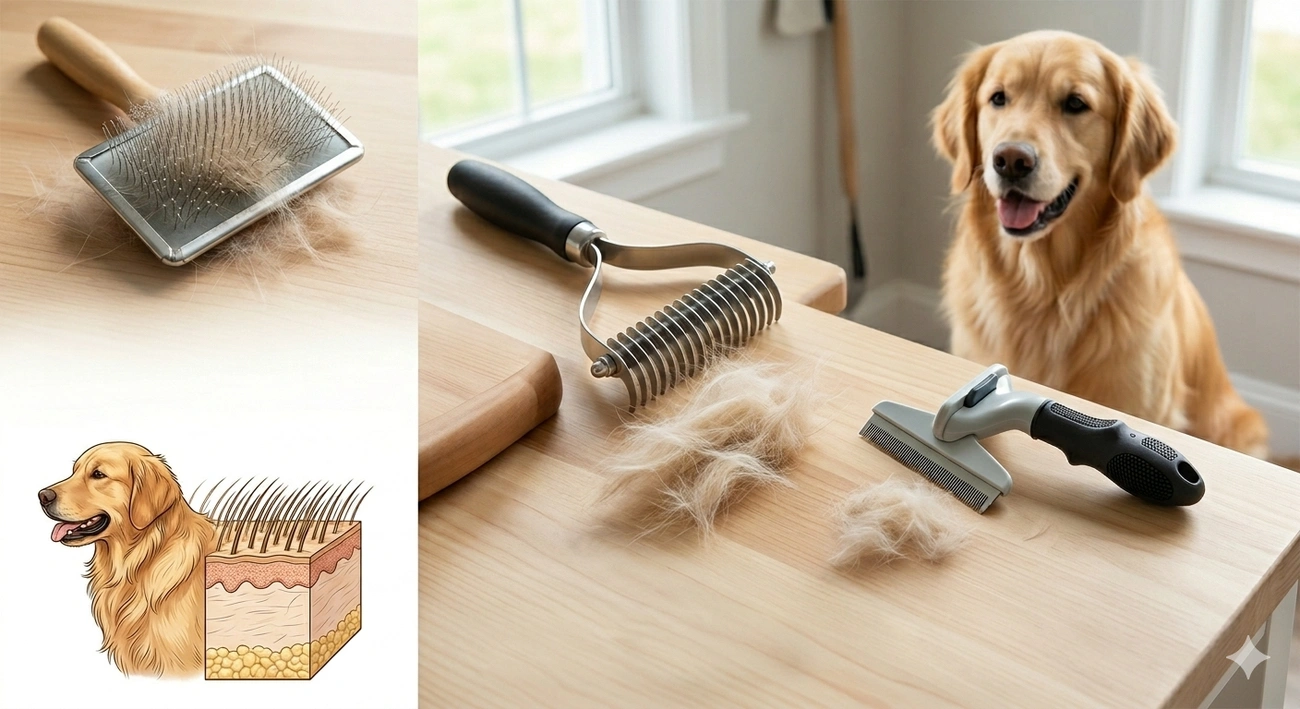 Your couch is covered in fur, your clothes look like they’re made of dog hair, and you’ve accepted that vacuuming is now a daily ritual. Sound familiar? The right dog brush for shedding can transform this hairy situation into a manageable grooming routine. Whether you’re dealing with seasonal coat blowouts or year-round fur storms, choosing the perfect de-shedding tool makes all the difference. This guide walks you through different brush types, top-rated products for various coat types, and expert techniques to keep shedding under control.
Types of Dog De-Shedding Brushes
Image Source: Instagram
Different dog brush for shedding types target specific coat structures and hair removal needs. Understanding how each tool functions helps you select the most effective option for your dog’s coat type and shedding pattern.
Slicker Brushes
Slicker brushes consist of brush heads covered with short, tightly-packed wire pins angled to go through the coat and avoid the skin [1]. The fine wires sit closely together on a flat brush surface, with pin length varying based on coat requirements. You’ll find shorter teeth designed for shorter coats and medium or long teeth for thicker, longer fur.
Use these brushes on medium-coated, long-coated, wire-coated, and curly-coated dogs to remove mats and prevent mats from forming by removing loose hair [1]. The angled pins catch tangles and light mats without tearing hair when you apply gentle pressure. Maintain a light touch when using slicker brushes, as pressing down hard could cause your dog discomfort [1].
Many slicker brushes feature self-cleaning functions. Press a button to retract the pins, releasing collected hair without manually pulling fur from between the bristles. This mechanism saves time during grooming sessions and maintains tool effectiveness by preventing hair buildup between strokes.
The curved design on some models contours to your dog’s body shape, distributing pressure evenly and reducing skin irritation in sensitive areas. The flexibility prevents scratching while allowing the pins to reach deep into dense coats where loose fur accumulates.
Undercoat Rakes
Undercoat rakes have one or two rows of metal pins designed to penetrate through to the undercoat to remove loose fur, and remove and prevent mats [1]. These tools reach deeper than standard brushes, targeting the dense underlayer where seasonal shedding originates.
You can use undercoat rakes on double-coated breeds of all fur lengths, but you must choose the correct pin length for your dog’s coat length [1]. Short pins work on medium-coated dogs, while longer pins penetrate the thick undercoats of breeds with heavy fur. Wide-toothed versions accommodate thick coats that would clog finer-toothed alternatives.
Two distinct rake styles serve different needs. Rakes with rounded blades work effectively on dogs with a distinct difference between their undercoat and guard coat, like Golden Retrievers and Great Pyrenees [2]. The curved blades grip floaty undercoat while allowing silky guard hairs to slip through. Pin-style rakes suit dogs with rougher, more crimped overall double coats like Pomeranians or Collies [2]. The pins also work well in tightly packed areas like the rear where rounded blades might pull too aggressively.
Long, widely spaced teeth reach dense undercoats without getting stuck in tangles [1]. Some models feature rotating pins that reduce resistance as they move through fur, minimizing discomfort by preventing teeth from catching on knotted sections. This rotation proves particularly helpful during heavy shedding seasons when dead undercoat releases in large volumes.
De-Shedding Tools
De-shedding tools feature specialized teeth or blades that reach beneath the topcoat to extract loose undercoat fur. The most effective options contain stainless steel components rather than plastic or rubber, which bend and remove minimal hair [3]. Metal construction maintains consistent performance across years of regular use.
The FURminator stands out with serrated edges that grip the undercoat without cutting. This tool has a toothed metal comb plus a button to release collected fur [4], simplifying the cleanup process between strokes. The blade’s teeth spacing corresponds to coat density, with different widths available for short versus long-haired breeds ensuring proper penetration depth.
These tools work on flat, short, combination, heavy and double coats, and can help reduce shedding up to 90% [4]. The closely spaced metal edge grabs loose undercoat during seasonal sheds, removing dead hair before it spreads throughout your home. Quality blade-style tools use fine stainless steel teeth positioned at specific angles to catch loose undercoat without cutting guard hairs that remain anchored in follicles.
Comparatively, blade-style de-shedding tools require lighter pressure than traditional brushes. The design works through tooth placement rather than force. Pressing firmly drives teeth into skin rather than catching loose fur, causing scratches and creating negative grooming associations.
Grooming Gloves
A soft, rubber grooming mitt that fits on your hand removes dead hair and dirt from your dog’s coat [1]. These gloves are made of cushy rubber or plastic that loosens hair and dirt, featuring bendy little nubs that are gentle enough to get right down to the dog’s skin without poking [5].
Grooming gloves provide a similar sensation to petting, making them an outstanding option for dogs who dislike being groomed [5]. The nodules on the palms create a massage effect that many dogs enjoy, transforming grooming from a stressful task into a bonding experience. You gain more pressure control compared to using a brush, adjusting firmness based on your dog’s sensitivity.
These mitts work really well in the bathtub [5]. Lather shampoo into your dog’s coat using the gloved hand, simultaneously cleaning and removing loose fur during bath time. The rubber construction withstands wet conditions without degrading, unlike brushes with wooden handles or metal components that rust.
On the other hand, grooming gloves won’t remove tangles on medium- to long-coated dogs [5]. The short nubs lack the penetration depth needed to work through knotted fur or reach deep undercoat layers. They work best for smooth- or medium-coated dogs like Dachshunds or German Shepherds [5], removing surface-level shedding and distributing natural oils across the coat.
Bristle Brushes
Bristle brushes have a large number of natural or synthetic bristles [1]. The tightly packed groupings of natural or nylon bristles sweep away loose fur and distribute hair oils [5] across the coat surface. Natural boar hair bristles tend to work more effectively than synthetic alternatives, though both serve the same basic function.
These brushes are best used on short-coated dogs, including dogs with short, silky coats, to remove loose hair and dander and stimulate the skin [1]. The bristles don’t penetrate deeply enough for thick or long coats, making them unsuitable for heavy-coated breeds. Instead, they excel at smoothing surface fur and adding shine to sleek coats.
You can use them on double-coated breeds as a finishing brush to smooth the coat and add shine [1] after working through the undercoat with rakes or de-shedding tools. The bristles distribute the natural oils your dog’s skin produces, creating a healthy sheen while removing any remaining loose surface hair missed by deeper-penetrating tools.
Dual-sided brushes combine bristle surfaces with pin brushes, offering versatility within a single tool. Use the pin side for fluff drying and initial smoothing, then switch to the bristle side for final polishing and softening your dog’s coat.
Best De-Shedding Brushes for Different Coat Types
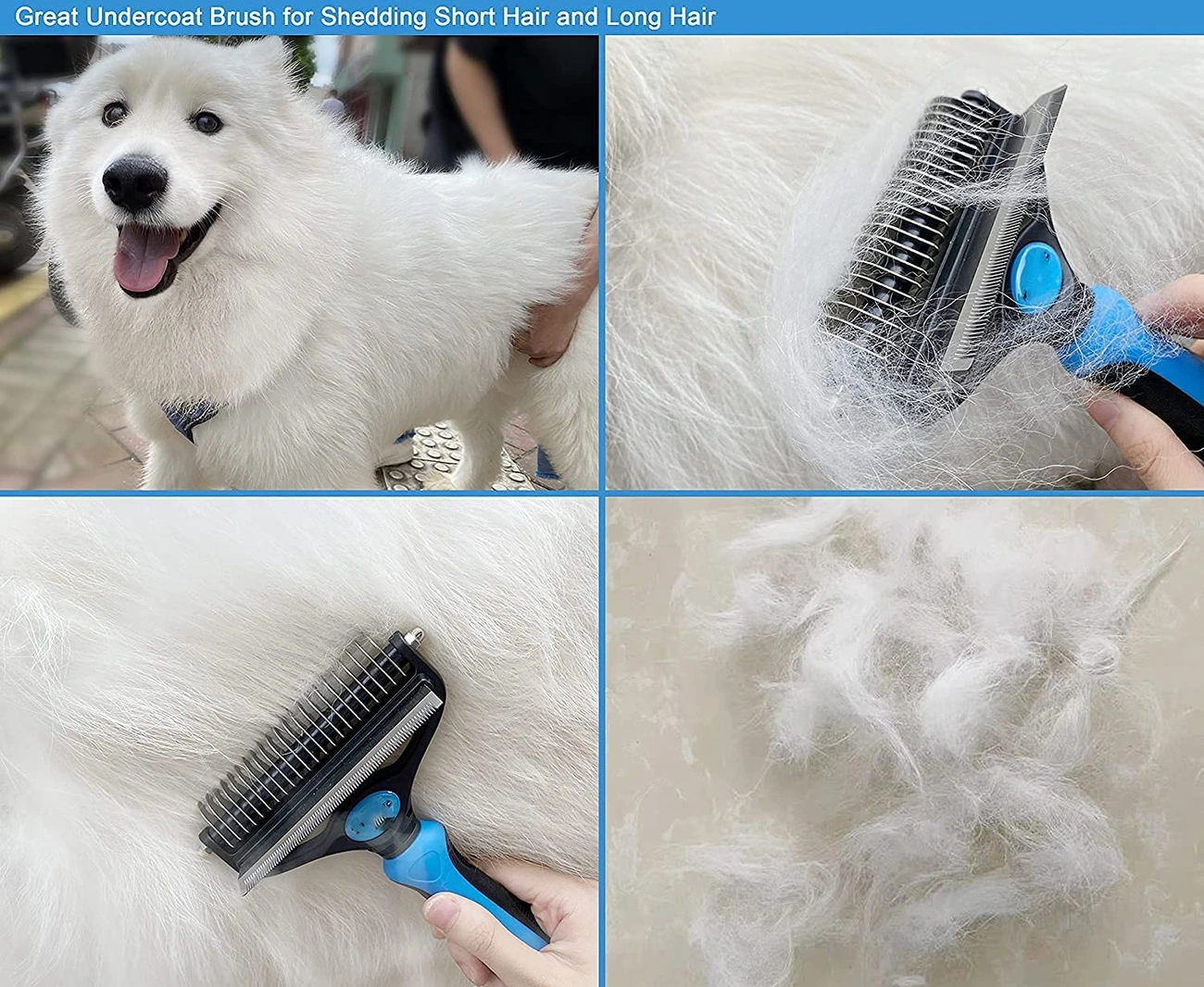
Image Source: Amazon.in
Matching the right dog brush for shedding to your pet’s coat type produces better results than buying expensive tools that don’t suit their fur structure. The length, texture, and density of your dog’s coat determine which brushes penetrate effectively and which ones merely glide across the surface without removing loose hair.
Short-Haired Dogs
Breeds like Beagles, Boxers, French Bulldogs, Greyhounds, Dalmatians, and Pit Bulls feature short, sleek fur that lies close to the body [1]. Their coats don’t require extensive grooming, yet these dogs often shed heavily, leaving hair stuck to furniture and clothing.
Rubber curry combs work exceptionally well for short-haired breeds. The flexible rubber nubs attract loose hair while massaging the skin, making grooming an enjoyable experience for your dog [6]. Use gentle circular motions to lift dirt and dead hair from the coat. These brushes perform particularly well during bath time, helping distribute shampoo while removing even more loose hair [6].
Bristle brushes serve as excellent finishing tools for short-coated dogs. A soft or medium bristle brush removes surface dirt and adds shine by distributing natural oils across the coat [1]. The bristles sweep away loose fur and dander while stimulating the skin. Use short strokes of the bristle brush to smooth and shine the coat after working with a curry comb.
During seasonal shedding periods, add a de-shedding tool to your routine. These tools work well on short hair when used with light pressure, pulling out dead hair and undercoat before it spreads throughout your home [1]. Apply the tool 1-2 times per week during heavy shedding seasons, but avoid pressing firmly as this can irritate sensitive skin rather than catch loose fur.
Grooming gloves provide another option for short-haired dogs who dislike traditional brushes. The rubber construction withstands wet conditions, allowing you to groom during bath time while your dog perceives the activity as petting rather than brushing.
Medium-Haired Dogs
Retrievers, Shepherds, and Terriers typically have medium-length coats that benefit from multiple brush types [2]. These breeds shed moderately throughout the year, with increased hair loss during seasonal transitions.
Start with a bristle brush to work through the coat. Medium-coated breeds require bristle brushes with longer, more widely spaced bristles compared to short-haired dogs [2]. The extended bristle length penetrates deeper into the coat, reaching the underlayer where loose hair accumulates.
Metal combs become necessary for medium-coated dogs to work through tangles and check for mats. Use a medium-toothed metal comb after brushing to ensure you’ve removed all loose hair and addressed any knots forming in the coat [1]. Start with wider spaced teeth, then move to narrower teeth, paying attention to areas with friction like behind the ears and under the collar.
Wire-pin brushes handle the longer hair on legs and tails that medium-coated dogs often develop [2]. These brushes resemble human hairbrushes, with medium-spaced wire pins across the brush head. The pins separate and smooth longer fur sections without pulling or causing discomfort.
Establish a brushing routine of 1-2 times per week for maintenance, increasing to 2-3 times weekly during shedding seasons [1]. The consistent schedule prevents minor tangles from developing into painful mats while keeping loose hair under control.
Long-Haired Dogs
Poodles, Bichon Frises, Yorkies, Maltese, Shih Tzus, and Afghan Hounds require dedicated grooming commitments due to their long, flowing coats [1][7]. These breeds are prone to tangles and mats, demanding regular brushing to maintain coat health.
Slicker brushes serve as the primary tool for long-haired breeds. The fine, angled pins catch tangles and remove mats without tearing hair when used gently [1]. Work through the coat section by section, addressing knots before they tighten into stubborn mats. For breeds with fine hair like Yorkies and Maltese, select a softer rubber-pin brush paired with a soft slicker to protect their delicate coats and skin [2].
Pin brushes complement slicker brushes on long coats, helping maintain smoothness and reduce static [1]. The rounded pins glide through silky hair, separating strands and creating a polished appearance. Use pin brushes for finishing touches after working through tangles with the slicker.
Wide-tooth combs or medium-toothed metal combs prove essential for long-haired dogs [1][7]. After brushing, run the comb through the entire coat to identify any missed tangles. The comb reveals problem areas that need additional attention from the slicker brush.
Grooming rakes assist with longer coats, particularly during heavy shedding periods [1]. The long, widely spaced teeth reach through the length of the coat to pull out loose undercoat without damaging the topcoat.
Choose a high-quality detangling or conditioning spray to simplify weekly grooming sessions [1]. The spray helps keep long, silky hair manageable, reducing the effort needed to work through the coat. Brush every other day at minimum, tackling tangles before they transform into mats that require professional removal.
Double-Coated Breeds
Huskies, Border Collies, Golden Retrievers, Australian Cattle Dogs, Greater Swiss Mountain Dogs, and Samoyeds feature dense undercoats beneath protective topcoats [1]. These breeds shed heavily, especially during seasonal coat changes when the undercoat releases in large volumes.
Undercoat rakes or grooming rakes rank as the most effective tools for double-coated dogs [1][7]. The long, widely spaced teeth penetrate the dense undercoat, pulling out dead hair that standard brushes miss. Select rake tooth length based on your dog’s coat length—longer teeth for thick, fluffy coats and shorter teeth for moderate double coats. For heavy shedding, undercoat rakes outperform harsh de-shedding tools that may damage or break the topcoat [1].
Medium or wide-toothed metal combs work through both coat layers effectively [1]. Use the comb after raking to check for remaining tangles and ensure complete coverage. Long-toothed combs suit arctic double coats, while medium-toothed versions handle standard double-coated breeds.
Slicker brushes remove surface debris and work through any tangles in the topcoat [1][7]. Apply the slicker after using the undercoat rake to smooth the outer layer and catch any remaining loose fur. The combination approach addresses both undercoat shedding and topcoat maintenance.
Brush double-coated dogs 1-2 times weekly during regular periods, increasing to 2-3 times weekly during shedding seasons [1]. Seasonal coat blowouts demand daily attention to manage the volume of loose undercoat releasing from the follicles. Avoid harsh de-shedding blades that struggle to reach the soft inner coat and may damage the guard hairs that protect your dog’s skin [1].
Top-Rated Dog Brushes for Shedding Control
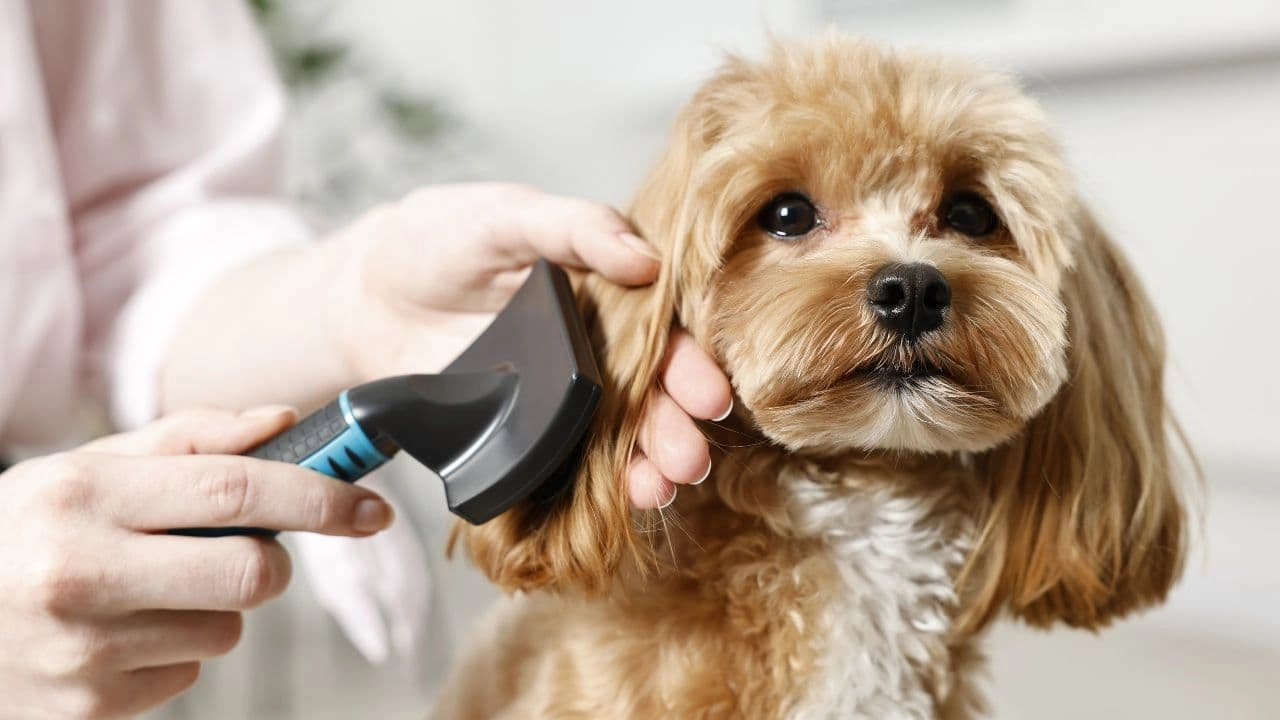
Image Source: Paw Parent Academy
The market offers hundreds of de-shedding products, but only a handful deliver results worth the investment. These six tools consistently earn praise from professional groomers and pet owners managing heavy shedders.
Furminator De-Shedding Tool
The Furminator stands as one of the most recognizable names in dog grooming. This tool features serrated stainless steel edges designed to reach beneath the topcoat and remove loose undercoat without cutting healthy hair. The blade design grabs dead fur efficiently, and many users report dramatic reductions in household shedding after regular use.
Professional groomers particularly value the Furminator for double-coated breeds experiencing seasonal blowouts. The tool handles both short and long-haired dogs when you select the appropriate model. A release button ejects collected fur from the blade, streamlining cleanup between strokes. The ergonomic handle provides comfortable grip during extended grooming sessions.
Apply light pressure when using this tool. The blade works through tooth placement rather than force, so pressing firmly drives teeth into skin instead of catching loose fur.
SleekEZ Original Deshedding Grooming Tool
The SleekEZ tool takes a different approach with its patented wave-pattern blade that captures loose hair without cutting or damaging healthy coats. This 10-inch model features stainless steel construction with a wooden handle, priced at ₹3,700 [8]. The wave pattern distinguishes it from traditional straight-blade designs, allowing the tool to grab undercoat while guard hairs slip through.
Originally designed for horses, the SleekEZ adapts remarkably well to large dogs and heavy shedders. The tool removes large amounts of loose hair with minimal effort, making it particularly effective during seasonal coat changes when excess hair makes grooming slow and messy. Use it on coats, and the versatility extends beyond dogs to work on saddle pads, blankets, carpets, and upholstery where embedded pet hair resists vacuum cleaners.
The Made in USA construction emphasizes durability. The poplar wood handle provides an ergonomic grip, while the stainless steel blade maintains its effectiveness across years of regular use.
Hertzko Self-Cleaning Slicker Brush
Cleanup frustration disappears with the Hertzko Self-Cleaning Slicker Brush. Fine, retractable bristles remove tangles, knots, and dirt, then retract at the press of a button to release collected hair. This self-cleaning mechanism prevents the tedious task of manually pulling fur from between bristles.
The angled bristles detangle efficiently while massaging your pet’s skin, promoting healthier coats with regular use. Testers report noticeably softer, shinier fur after just one session, with improvements in coat condition becoming more apparent over time. The retractable design also protects bristles during storage, preventing them from bending or breaking.
An ergonomic comfort-grip handle reduces hand fatigue during extended grooming sessions. The brush measures approximately 10 inches long and 6 inches wide, making it suitable for medium to large dogs, though some cat owners find it slightly oversized for feline use. The fine bristles work effectively on both long and short-haired pets, though they may snag temporarily in thick or heavily matted fur before working through tangles.
Pat Your Pet Deshedding Brush
Budget-conscious pet owners find excellent value in the Pat Your Pet Deshedding Brush, priced at EUR 8.70 [9]. This dual-sided tool features 9 teeth on one side for tough mats and tangles, with 17 teeth on the opposite side for thinning and de-shedding. The versatility eliminates the need to purchase separate tools for different grooming tasks.
With 42,887 customer reviews and a 4.5-star rating [9], this brush demonstrates consistent performance across diverse coat types. The rounded teeth protect your pet’s skin from scratches while the slightly sharpened blades cut smoothly through stubborn mats. Users report removing significant amounts of undercoat, particularly from double-coated breeds like Border Collies, Golden Retrievers, and Huskies.
The stainless steel construction with a non-slip rubber handle ensures durability and comfortable control. Regular brushing with this tool reduces shedding substantially, and the skin-friendly design makes grooming sessions painless for pets. As a bonus, the purchase includes a paw tag for your keychain or pet collar.
Safari Wire Pin Brush
The Safari Wire Pin Brush offers gentle grooming for daily maintenance, priced at ₹3,321.28 [10]. Stainless steel pins lift out loose hair and debris while distributing natural oils throughout the coat for healthy shine. This distribution creates a lustrous appearance that improves with consistent use.
The brush excels at detangling and keeping coats clean and fresh on dogs of all sizes. Stainless steel pins prove more durable than plastic alternatives, maintaining their shape and effectiveness through repeated use. For heavily matted coats, pair this pin brush with other Safari grooming tools like combs, rakes, or slickers to break up stubborn knots effectively.
You can also use this brush to fluff up your dog’s coat by brushing against the direction of hair growth, enhancing overall appearance before shows or special occasions. The plastic handle provides adequate grip, though it lacks the premium feel of wooden or rubber-coated alternatives.
Pet Grooming Gloves
Grooming gloves transform brushing into a petting experience your dog actually enjoys. Options like the Messy Mutts Reversible Silicone Pet Grooming Glove at ₹1,350.09 [11] feature rubber nodules that remove hair while massaging skin. The glove design gives you direct control over pressure, adjusting firmness based on your dog’s sensitivity.
These gloves shine during bath time, helping distribute shampoo while simultaneously removing loose fur. The silicone construction withstands wet conditions without degrading. Some models offer reversible designs with a washcloth side for cleaning faces and delicate areas.
On the other hand, grooming gloves won’t tackle tangles on medium to long-coated dogs. The short nubs lack penetration depth for knotted fur or deep undercoat layers. They work best on smooth or medium-coated dogs, removing surface-level shedding and providing a bonding experience that anxious dogs tolerate better than traditional brushes.
Key Features to Look for in a De-Shedding Brush
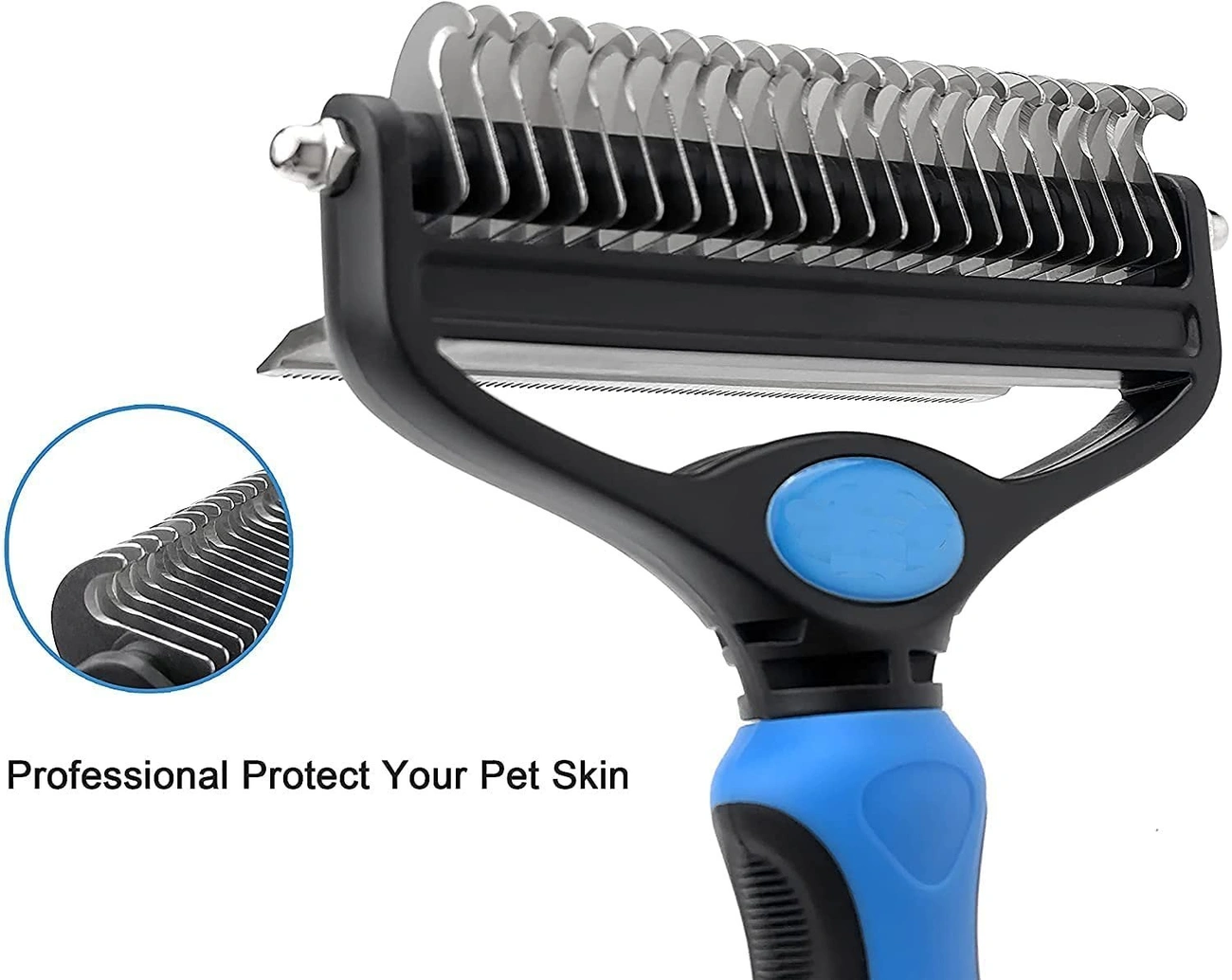
Image Source: IndiaMART
Selecting an effective dog brush for shedding requires more than picking the most expensive option on the shelf. Four specific features separate tools that actually reduce shedding from those that merely redistribute loose hair across your home.
Blade Quality and Design
Stainless steel bristles prove more durable and effective than plastic or rubber alternatives for penetrating dense coats [3]. Metal construction maintains consistent performance across years of regular use, whereas plastic bristles bend and remove minimal hair [3]. The material directly impacts how deeply the tool reaches into your dog’s undercoat to extract loose fur.
Rounded tips on bristle ends protect your pet’s skin from scratches and irritation [12]. Protective caps on stainless steel pins prevent the sharp edges from scraping sensitive skin during grooming sessions. A brush with fine wire pins featuring 90-degree angles away from the skin minimizes raking and makes brushing more comfortable for dogs [13].
The angle at which bristles are set matters significantly. Bristles bent at 150 degrees penetrate deep into the coat to remove loose hair and undercoat effectively [12]. This angled design allows the teeth to catch dead fur while healthy, anchored hairs slip through untouched. Conversely, straight bristles with no angle may glide across the surface without grabbing the underlayer where shedding originates.
Some de-shedding tools feature blades rather than traditional bristles. These teeth are sharp, and overuse on the body or use on face or legs will scrape the dog’s skin [14]. Use blade-style tools in moderation only on well-muscled areas of the neck and body where the coat is dense [14]. The sharpness makes them effective at pulling dead fur but also increases the risk of skin damage when applied incorrectly.
Handle Comfort and Grip
Ergonomic handles reduce wrist fatigue during extended grooming sessions, particularly when working with multiple dogs or long-coated breeds that take time to groom [15]. A comfortable grip allows you to maintain consistent, gentle pressure rather than compensating for hand strain by pressing harder than necessary.
Non-slip rubber grips keep the brush steady in your hand, preventing sudden pulls that could startle your dog [13]. This stable control becomes especially valuable during bath-time grooming when wet hands make smooth plastic handles slippery. Look for handles with rubberized coatings or textured surfaces that maintain grip even when damp.
The handle length and weight distribution affect ease of use. Lightweight brushes with balanced designs enable smooth, continuous strokes without hand fatigue [16]. Extended-reach handles prove helpful for large or long-haired dogs, allowing you to groom without bending awkwardly and protecting your wrist from strain [16].
Self-Cleaning Mechanism
Retractable pins that release collected hair at the press of a button eliminate the tedious task of manually pulling fur from between bristles [12]. This one-click system pushes bristles forward, stripping away collected hair and keeping the brush hygienic between strokes. The mechanism cuts cleanup time by roughly 30% compared with traditional brushes that require manual hair removal [17].
Self-cleaning functions work by retracting pins into the brush head, allowing you to simply wipe away the fur ball that forms on the surface [18]. Hence, you can clear the brush quickly during grooming sessions and continue working without interruption. The collected hair peels off easily once the glove or brush is full, simplifying disposal [13].
Some models incorporate spray functions that help release trapped hair from the bristles [12]. These advanced cleaning technologies maintain brush effectiveness by preventing hair buildup that reduces the tool’s ability to catch loose fur.
Size and Teeth Spacing
Match the brush size to your dog’s body size for effective coverage [15]. Oversized brushes prove awkward for small dogs, while tools that are too small make grooming large dogs tedious and time-consuming. A 5.5-inch-wide bristle area fits small to large-size dogs appropriately [13].
Teeth spacing determines which coat types the brush can handle effectively. Wide-toothed combs help remove mats and tangles in thick coats [15], while closely spaced teeth target finer fur. Long teeth reach deep into your pet’s coat to lift loose hair, whereas short teeth collect loose hair from outer fur layers [3].
Choose pin length based on your dog’s coat length for optimal results [15]. Short pins suit medium-coated dogs, while longer pins penetrate the thick undercoats of heavily furred breeds. Different sizes ensure the teeth reach the underlayer where shedding originates without scratching the skin beneath.
How to Properly Use a Dog De-Shedding Brush
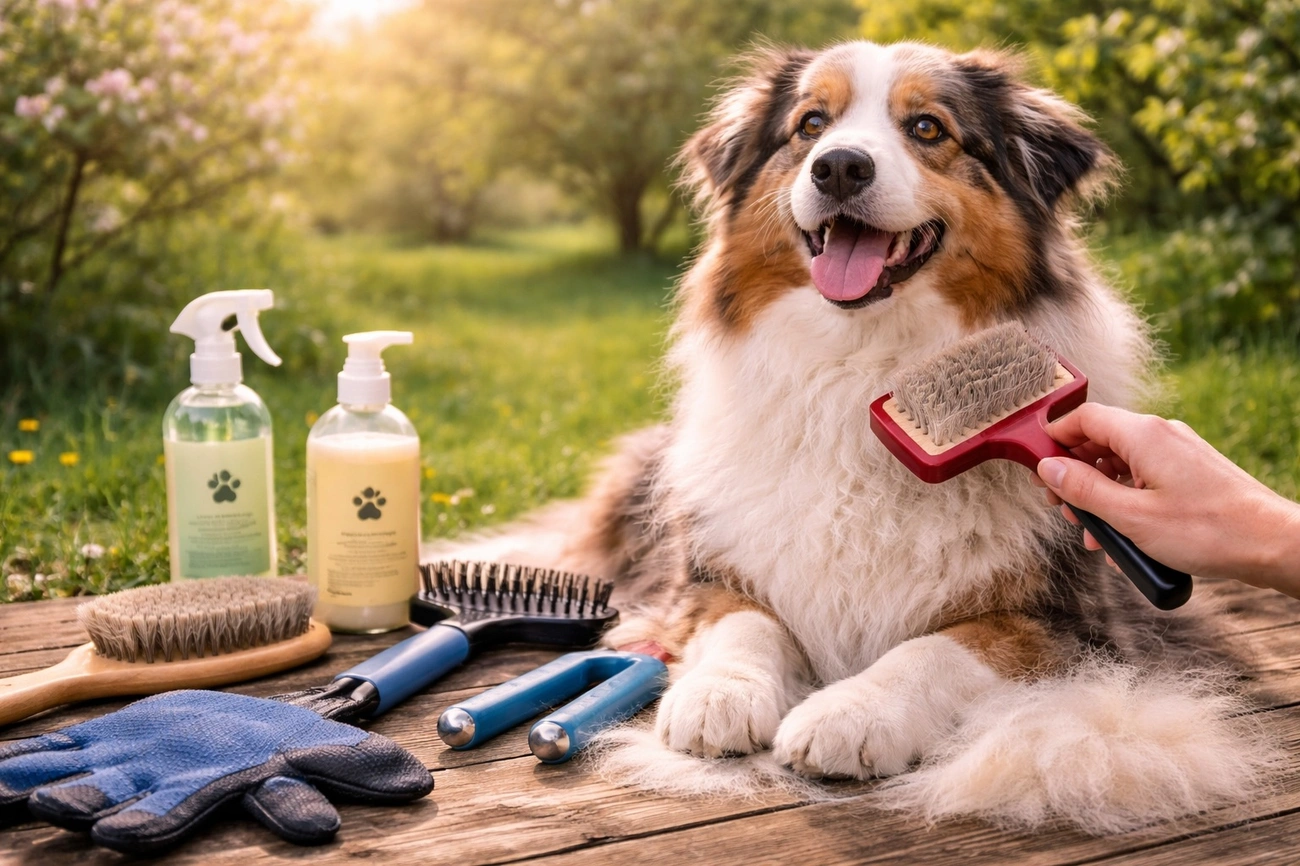
Image Source: Gina’s Grooming
Technique matters more than tool quality when using a dog brush for shedding. Even premium brushes fail to control shedding when applied incorrectly, while proper methods maximize results from basic tools.
Brushing Technique and Direction
Work in the direction of hair growth using gentle pressure [19]. The brush teeth should glide through the coat rather than dig into skin. For short-coated dogs, brush against the direction of hair growth first to loosen dead hair, then follow by brushing with hair growth to remove it [19]. Repeat this back-and-forth motion several times to distribute natural oils across the coat.
Long-coated and double-coated breeds require a different approach. Brush in multiple directions until less hair collects on the brush [19]. During heavy shedding periods, switch to a coat rake or de-shedding tool to remove large amounts of loose undercoat hair. Take your time to prevent discomfort and protect the coat [19].
Frequency of Brushing
Dogs that shed heavily need brushing several times per week or even daily during peak shedding periods [19]. Lighter shedders still benefit from consistent grooming to remove loose hair and distribute natural skin oils. Brush daily during shedding season with appropriate tools [20]. Use de-shedding tools 1-2 times per week for 10 to 20 minutes each session [4], though actual time varies depending on breed, coat condition, and thickness.
Pre-Brushing Preparation
Remove tangles with a steel comb or mat-splitting tool before brushing further [19]. Water makes mats worse, so always brush your dog and remove mats before bathing [20]. Check the coat thoroughly for existing tangles that need addressing first.
Post-Brushing Care
Once your dog is dry after bathing, brush again to remove any knots, prevent mats, and help them look their best [20]. This final brushing session catches any loose hair released during the bath and ensures the coat lies smoothly.
Conclusion
Although managing your dog’s shedding may initially seem overwhelming, it becomes remarkably simple once you match the right brush to their coat type. For instance, double-coated breeds thrive with undercoat rakes, while short-haired dogs need only rubber curry combs and bristle brushes.
The key lies in combining quality tools with proper technique. Brush in the direction of hair growth, maintain gentle pressure, and establish a consistent routine based on your dog’s shedding patterns. With the right approach, you’ll significantly reduce the fur covering your furniture and clothes.
Start with one quality brush suited to your dog’s coat, then expand your grooming toolkit as needed.
FAQs
Q1. What type of brush works best for dogs with short hair? Rubber curry combs and bristle brushes are ideal for short-haired breeds like Beagles, Boxers, and Dalmatians. The flexible rubber nubs attract loose hair while massaging the skin, and bristle brushes add shine by distributing natural oils. During heavy shedding seasons, you can also use a de-shedding tool with light pressure 1-2 times per week.
Q2. How often should I brush my dog to control shedding? The frequency depends on your dog’s coat type and shedding pattern. Heavy shedders need brushing several times per week or even daily during peak shedding seasons. For maintenance, brush double-coated dogs 1-2 times weekly, increasing to 2-3 times during seasonal coat changes. Use de-shedding tools for 10-20 minutes per session, 1-2 times weekly.
Q3. Can I use a de-shedding brush on wet fur? No, you should always brush your dog before bathing. Water makes mats and tangles worse, so remove all knots with a steel comb or appropriate brush while the coat is dry. After bathing and drying, you can brush again to remove any remaining loose hair and ensure the coat lies smoothly.
Q4. What’s the difference between an undercoat rake and a slicker brush? Undercoat rakes have one or two rows of long metal pins designed to penetrate deep into double coats to remove loose undercoat fur. Slicker brushes feature short, tightly-packed wire pins angled to remove mats and tangles from the outer coat. Rakes target the dense underlayer where seasonal shedding originates, while slickers work on surface tangles and smoothing.
Q5. Why should I choose stainless steel bristles over plastic ones? Stainless steel bristles are more durable and effective at penetrating dense coats compared to plastic or rubber alternatives. Metal construction maintains consistent performance for years, while plastic bristles tend to bend and remove minimal hair. Steel bristles with rounded tips also protect your pet’s skin from scratches while effectively removing loose undercoat.
References
[1] – https://blog.vetriscience.com/the-best-dog-brushes-by-coat-type-a-vet-recommended-guide
[2] – https://www.animalbehaviorcollege.com/blog/animal-career-advice/grooming/dog-grooming-brushes-for-every-coat-type/
[3] – https://www.coastalpet.com/blog/don-t-dread-the-shed-our-grooming-tool-recommendations/?srsltid=AfmBOoowVSSQzdZ9Z9fre2GeUV2bJ90kwdPEDp9MV2xzxR-IggwDVwus
[4] – https://www.furminator.com/tips-and-info/faqs
[5] – https://www.chewy.com/education/dog/grooming/less-shedding-yes-please-your-guide-to-the-best-dog-brushes-to-groom-your-pet
[6] – https://www.riverviewgrooming.com/post/the-best-brushes-for-short-haired-dogs-keep-shedding-under-control
[7] – https://jimsdogwash.net.au/blog/the-best-brushes-for-different-dog-coat-types/
[8] – https://www.amazon.in/SleekEZ-Deshedding-Grooming-Tool-inch/dp/B00VC87KYI
[9] – https://www.amazon.com/Pat-Your-Pet-Deshedding-Shedding/dp/B0FK71C59Y
[10] – https://www.amazon.in/Safari-Pin-Brush-for-Dogs/dp/B0002ARQYG
[11] – https://www.whole-dog-journal.com/lifestyle/dog-gear/the-best-dog-grooming-gloves/
[12] – https://www.joybuy.de/blog/self-cleaning-pet-brush-guide/JlyDXvLl
[13] – https://www.businessinsider.com/guides/pets/best-dog-brush
[14] – https://www.quora.com/What-are-the-benefits-of-using-a-dog-furminator-brush-How-does-it-work-compared-to-other-brushes-on-the-market
[15] – https://www.akc.org/expert-advice/health/types-dog-brushes-shedding/
[16] – https://www.thepetbench.com/articles/pet-grooming-brush-sensitive-skin-dogs/
[17] – https://christiesdirect.ie/blog/the-essential-guide-to-dog-grooming-brushes.html?srsltid=AfmBOoqMOwPuVr-dFQ9cymaPdBGoo1Llap7mdSePywnE60iq-JeTh_Cx
[18] – https://www.bigbasket.com/pd/40338950/nootie-self-cleaning-slicker-brush-for-dogs-cats-1-pc/
[19] – https://www.akc.org/expert-advice/health/managing-dog-shedding/
[20] – https://www.chewy.com/education/dog/grooming/brushing-a-dog