
Toyger Cat
Toyger cats combine the striking appearance of a wild tiger with the heart of a domestic house cat. Despite their exotic tiger-like stripes and markings, these felines are completely domestic companions that have been capturing the attention of cat lovers worldwide.
The toyger cat breed offers a unique combination of visual appeal and pleasant temperament that many find irresistible. While relatively new in the cat fancy world, toyger cat personality traits like sociability, intelligence, and playfulness make them surprisingly excellent family pets. Furthermore, their moderate size and adaptability to different living situations add to their appeal. Toyger cat characteristics include not just their distinctive coat pattern but also their muscular build and friendly demeanor.
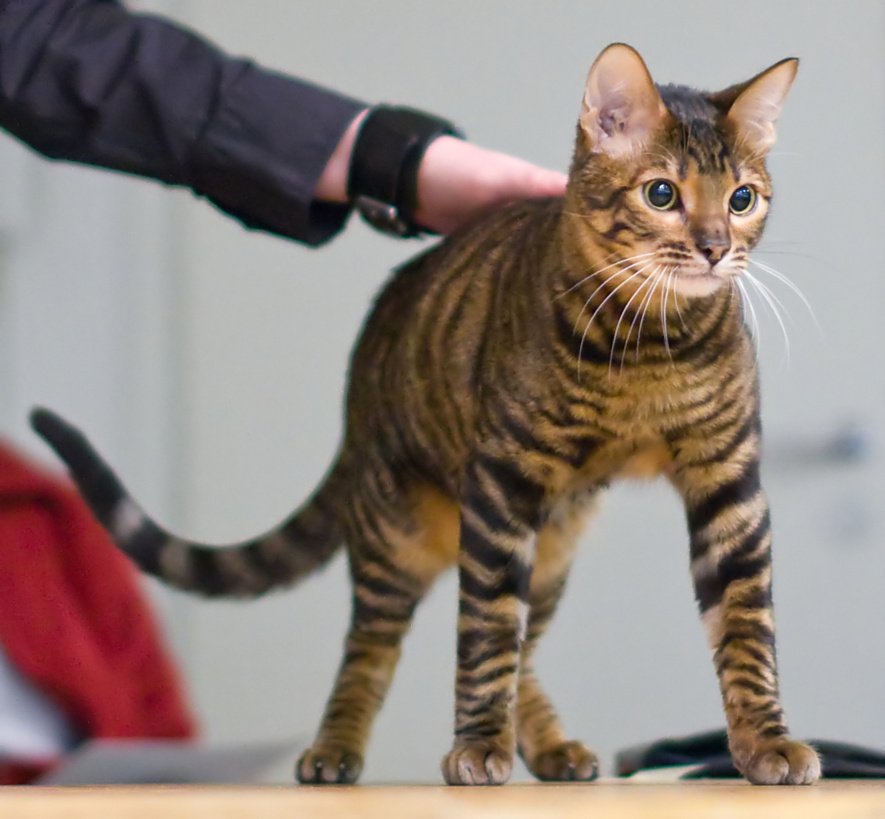
This guide explores everything you need to know about these mini tigers—from their fascinating development history and distinctive appearance to their care requirements and compatibility with family life. Whether you’re considering adding one to your home or simply curious about this designer breed, you’ll discover why toygers are becoming increasingly popular companions for cat enthusiasts.
The origin story of the Toyger cat
The creation of the toyger cat began as a visionary breeding project in the 1980s, when American cat breeder Judy Sugden noticed something special about her domestic tabby’s markings. Sugden, notably the daughter of Jean Mill (the original developer of the Bengal cat), spotted unusual temple markings on her cat that sparked an ambitious idea .
How the breed was developed
The toyger’s development started when Sugden was working to improve the clarity of mackerel tabby markings. She observed that her cat, Millwood Sharp Shooter, had two distinctive spots on the temples—an area typically devoid of pattern in domestic cats . This genetic quirk suggested the possibility of creating circular face patterns similar to wild tigers in a domestic breed.
Initially, Sugden selected two cornerstone cats to begin her breeding program: a striped domestic shorthair named Scrapmetal and a big-boned Bengal called Millwood Rumpled Spotskin . These foundation cats provided specific desired traits for the emerging breed. Subsequently, in 1993, Judy imported a street cat from Kashmir, India, named Jammu Blu (sometimes spelled Jammie Blu) . This cat possessed an extraordinary feature—spots between his ears rather than the typical tabby lines—which became crucial for developing the tiger-like facial patterns.
Over several years, Sugden carefully selected approximately forty domestic cats from various countries as foundation stock . These included Bengals, unpedigreed domestic shorthairs with distinctive stripes, and other cats that each contributed specific traits to enhance the breed’s tiger-like appearance.
Key breeders and milestones
Although Judy Sugden pioneered the toyger breeding program, she didn’t work alone. In the early years of development, two other breeders joined this groundbreaking project: Anthony Hutcherson (JungleTrax) and Alice McKee (Windridge) . Their combined expertise helped advance the breed significantly.
The toyger reached its first major milestone in 1993 when The International Cat Association (TICA) accepted the breed for registration . Following this recognition, TICA advanced toygers to new breed exhibition classes in 2000 . Eventually, in February 2007, toygers received full championship status, cementing their eligibility for cat shows . More recently, in 2020, TICA recognized the Toyger Club as an officially chartered club .
Throughout this development period, breeders focused equally on appearance and temperament. This dual focus has resulted in a breed that not only looks exotic yet remains perfectly suited for domestic life . As a relatively new and still somewhat rare breed, there are reportedly only around 400 toyger cats worldwide according to some estimates .
Why it was designed to look like a tiger
The toyger’s tiger-like appearance wasn’t merely esthetic—it served a deeper purpose. Judy Sugden has explicitly stated that she developed the breed to inspire people to care about tiger conservation in the wild . By creating miniature, domestic versions of these endangered big cats, she hoped to raise awareness about the decline of tigers in their natural habitats .
The name “Toyger” itself—a blend of “toy” and “tiger”—perfectly encapsulates the breed’s purpose: to be a small, domesticated version of the majestic wild tiger . Unlike some exotic-looking cats, toygers contain no actual tiger or wild cat DNA . Instead, they achieved their distinctive look through careful selective breeding for specific visual traits.
Currently, dedicated breeders continue working to enhance the toyger’s pattern. Their goals include developing a more vivid orange ground color with deep black stripes, improving circular head markings, and eventually creating horizontal forehead stripes that more closely resemble wild tigers . This ongoing development makes the toyger a breed that continues to evolve even as it gains popularity among cat enthusiasts.
What Toygers look like
With their dramatic coat patterns and muscular build, toyger cats truly embody the vision of a “miniature tiger.” These domesticated felines possess a striking resemblance to their wild counterparts, primarily through careful selective breeding rather than any actual tiger DNA. Let’s examine the distinctive features that make toyger cats so visually captivating.
Coat patterns and colors
The hallmark of a toyger cat is undoubtedly its distinctive coat pattern. Unlike traditional tabby cats with their predictable markings, toygers display random, broken vertical stripes that run dramatically across their bodies . These bold, branched stripes create a wild appearance that sets them apart from other domestic breeds .
The most common and recognized color for toygers is the brown mackerel tabby . Specifically, the ideal toyger showcases dark markings (virtually black to brown) against a vivid orange or pumpkin background . This contrast is crucial to achieving the breed’s tiger-like appearance. The International Cat Association describes this striking combination as “dark markings on a vividly bright orange background on the outer to top portions of the cat with a whited ground color on the undersides and insides enhanced by the scatter of gold glitter over the top” .
Additionally, the toyger’s coat comes in several variations:
- Orange base with black or dark brown stripes
- Brown base with darker brown stripes
- Reddish-brown with contrasting markings
- Silver with crisp black patterns (less common)
What makes their coat truly special is its luxurious texture—short, dense, and exceptionally silky . This plush fur has a distinctive metallic luster that shimmers in sunlight, further enhancing the exotic appearance .
Body shape and size
Toygers are medium-sized cats with a substantial yet athletic build. Males typically weigh between 10 and 15 pounds, while females are slightly smaller at 7 to 10 pounds . They stand approximately 9-13 inches tall at the shoulder , with a body length of about 20-24 inches .
In terms of physique, toygers are long, lean, and muscular—but not bulky . Their skeletal structure features big bones and a long back, giving them a powerful appearance . One distinctive aspect of their body structure is their shoulders, which bunch slightly between the shoulder blades, reminiscent of a wild tiger’s powerful stance .
The toyger’s tail is another notable feature—long and thin with a rounded tip . When walking, toygers typically hold their tail low, adding to their wild appearance . Their overall posture and movement reflect confidence and athleticism .
Unique facial features
Perhaps the most distinguishing aspect of the toyger cat is its distinctive facial pattern. Toygers display circular facial markings that cannot be found on any other domestic cat breed . These markings are arranged circularly around the face , creating a dramatic mask-like effect.
The head shape itself is quite distinctive, described in breed standards as a “half-hexagon” in profile . This unique structure includes:
- A well-defined, long, broad, and deep muzzle with rounded muscular contours
- Medium-sized head with a dominant deep, skewed, cylindrical muzzle on an oval head
- Small, round ears that are set wide apart toward the back of the head
- Medium, circular eyes with gentle hooding of the upper inside
Toyger cats feature what’s sometimes called a “makeup” look—black mascara-like markings around the eyes and whited spectacles, often complemented by black “lipstick” markings around the mouth . Their eye color is typically bright green or blue , which stands in stunning contrast to their dramatic facial markings.
Many toygers also display the traditional tabby “M” marking on their forehead , though breed development aims to eventually replace this with more tiger-like horizontal stripes . They may have lighter “thumb marks” on the backs of their ears, further enhancing their exotic appearance.
Personality traits that surprise new owners
Behind their exotic tiger-like appearance, toyger cats possess personality traits that often catch new owners by surprise. The contrast between their wild looks and domestic temperament is one of the breed’s most endearing qualities. Let’s explore the distinctive behavioral characteristics that make toygers such beloved companions.
Affectionate and social nature
Toygers are exceptionally affectionate cats who form strong emotional bonds with their human families. Contrary to what their fierce appearance might suggest, these cats actively seek out human interaction and physical closeness . They’re often described as “lap cats” who enjoy cuddles, grooming sessions, and plenty of stroking .
What particularly stands out about toyger cats is their desire for constant companionship. These felines genuinely want to be with people “all the time” and will actively seek out their owners for attention and affection . Consequently, they communicate their needs effectively through vocalizations, body language, and eye contact .
Toygers are not merely pets—they consider themselves full-fledged family members . Their social nature means they thrive in homes where they receive plenty of attention and interaction. Interestingly, they’re known to follow their humans around the house like loyal shadows , preferring to stay close rather than prowl independently .
One important consideration: toygers do not cope well with being left alone for extended periods . While they can handle owners being at work or school, they become distressed if left overnight or for prolonged daytime absences .
Playfulness and curiosity
Toyger cats maintain a playful spirit well into adulthood. They possess abundant energy and require regular play sessions to stay happy and healthy . Essentially, toygers need to expend their energy before settling down , with experts recommending at least 30 minutes of interactive play daily .
Their intelligence makes these cats particularly susceptible to boredom , making mental stimulation crucial for their wellbeing . Toygers enjoy:
- Puzzle toys and interactive games
- Climbing structures and high perches
- Toys that stimulate hunting instincts
- Learning tricks and commands (including fetch!)
Perhaps most impressive is the toyger’s trainability. These clever felines can learn tricks and commands , with some mastering fetch as young as six months old . Their high intelligence combined with an eager-to-please nature makes them responsive to positive reinforcement training methods.
Primarily, toygers prefer interactive play with their humans rather than entertaining themselves . This social aspect of their play makes them particularly engaging pets who will actively involve you in their daily activities.
Compatibility with children and pets
The toyger cat makes an excellent family pet, generally interacting well with children and other animals. Breeders have intentionally selected for excellent temperaments, creating a family-friendly breed by design .
With children, toygers display remarkable patience and tolerance . Their gentle demeanor makes them wonderful companions for kids, often becoming playmates and protective friends . Nevertheless, they do best with children old enough to understand boundaries and respect a cat’s personal space . The toyger isn’t a cat that will tolerate rough handling from children or adults .
Regarding other pets, toygers typically excel in multi-pet households . They get along well with dogs and other cats when properly introduced . Their friendly and easygoing nature allows them to form bonds with fellow four-legged family members .
In multi-pet environments, toygers often initiate play, encouraging a lively interactive atmosphere . They engage in activities like chasing and play-fighting, which support their physical and mental wellbeing . Their adaptability and sociable temperament make them a harmonious addition to most household dynamics.
For families seeking a cat with both exotic looks and a friendly disposition, the toyger offers a rare combination of visual appeal and engaging personality traits that truly make them stand out among domestic cat breeds.
Daily care and grooming needs
Taking care of a Toyger cat’s stunning coat and overall health requires a consistent routine that’s surprisingly straightforward. The good news? Despite their exotic appearance, Toygers don’t demand complex grooming regimens. Let’s explore the essential care practices that keep these miniature tigers looking and feeling their best.
Brushing and coat maintenance
Toygers possess a short, silky coat that feels luxuriously plush to the touch. Their fur requires minimal maintenance compared to long-haired breeds, yet regular care maximizes their signature tiger-like appearance. A weekly brushing session is typically sufficient to keep their coat in optimal condition . This routine helps remove loose fur, prevents matting, and distributes natural oils for that characteristic lustrous finish .
During seasonal shedding periods, you might need to increase brushing frequency to manage the extra loose hair . For optimal results, a rubber grooming glove works effectively on the Toyger’s dense, short coat . After brushing, passing a slightly damp cloth over your cat’s fur can enhance its natural shine .
Regular grooming sessions serve a dual purpose beyond maintenance—they provide excellent opportunities to bond with your people-loving Toyger . Indeed, many Toygers enjoy these interactions so much that they’ll request more frequent grooming than strictly necessary . These moments allow you to simultaneously check their skin for any signs of irritation or parasites .
Nail trimming and dental care
Maintaining your Toyger’s nails is an essential aspect of their care routine. Monthly nail trimming prevents overgrowth, which can lead to discomfort or even painful conditions if nails grow into paw pads . Besides preventing potential issues, regular nail maintenance stops your Toyger from accidentally snagging their claws on furniture or carpets.
Regarding dental hygiene, Toygers need consistent attention to prevent periodontal disease . Ideally, their dental care should include daily at-home teeth brushing alongside periodic professional cleanings . For those who find daily brushing challenging, aim for at least weekly sessions using cat-specific toothpaste . Dental treats can serve as helpful supplements to brushing but shouldn’t completely replace it .
Besides nail and dental care, regular ear maintenance is crucial for Toygers. Check their ears routinely for wax buildup or debris, cleaning gently as needed with appropriate products . This practice helps prevent potential ear infections while allowing you to spot any early signs of ear-related issues.
Bathing and hygiene tips
Fortunately, Toygers excel at self-grooming, making bathing rarely necessary . Their fastidious nature means they typically keep themselves quite clean without human intervention. However, in cases where your Toyger gets particularly dirty, use a gentle cat-specific shampoo for occasional baths .
Interestingly, many Toyger cats enjoy playing or even bathing in water—a unique characteristic compared to many other domestic breeds . This water-friendly tendency can make bath time less stressful when necessary. Some owners choose to bathe their Toyger once every one to two months to maintain coat cleanliness, though this varies based on individual needs .
For complete hygiene care, pay attention to your Toyger’s eyes as well. Regularly clean around their eyes with moistened sterile gauze to remove any discharge . This practice is particularly important given the breed’s distinctive facial markings and eye contours.
Establishing a consistent grooming routine from kittenhood offers significant benefits. Early introduction to these practices helps your Toyger grow accustomed to handling, making future care sessions more enjoyable for both of you . Moreover, these regular interactions strengthen the bond between you and your cat—something particularly valuable given the breed’s social nature .
The relatively low-maintenance care requirements of Toygers make them excellent companions for those who want an exotic-looking cat without demanding grooming needs. Their short coats, cooperative temperaments, and generally good health contribute to a care routine that’s manageable for most cat owners.
Exercise and enrichment for active Toygers
Toyger cats thrive on activity and engagement, requiring much more mental and physical stimulation than their regal appearance might suggest. These intelligent felines need proper enrichment to maintain their physical health and mental well-being. Let’s dive into how you can keep your miniature tiger happy, healthy, and mentally sharp.
Why Toygers need stimulation
Toygers possess high energy levels and exceptional intelligence that demand regular stimulation . As descendants of Bengal cats, they retain a wild heart beneath their domestic appearance, with natural instincts for hunting, scratching, climbing, and exploring . Without appropriate outlets for these behaviors, Toygers can quickly develop problematic habits.
First, mental stimulation prevents boredom-related issues such as aggression, destructive behavior, and excessive weight gain . Indoor Toygers particularly need enrichment activities as they lack access to the natural stimulation found outdoors .
Second, proper stimulation addresses their natural hunting instincts. Behind their cute appearance beats a wild heart that craves activity . Their intelligence makes them especially susceptible to boredom , which can manifest as:
- Unwanted scratching of furniture
- Over-grooming behaviors
- Restlessness and excessive vocalization
Most importantly, Toygers require at least 20-30 minutes of daily exercise to maintain optimal health . For this highly trainable breed, playtime serves as both physical exercise and crucial mental engagement .
Best toys and games
The right toys not only entertain Toygers but also stimulate their natural instincts while keeping them physically fit . Given their preference for playing with someone rather than entertaining themselves , interactive toys prove especially valuable.
Running wheels rank among the most innovative and effective toys for energetic Toygers. Much like a feline treadmill, these wheels provide excellent physical workouts while combating boredom . Other highly effective toys include:
- Hunting simulators: Mouse toys and feather teasers that tap into their primal hunting instincts
- Interactive puzzles: Food puzzles and treat dispensers that provide mental challenges
- Electric spinning toys: Devices with unpredictable movements that captivate their attention
- Simple strings: Basic yet effective toys that inspire chasing and pouncing
In addition to commercial products, homemade enrichment can be equally effective. Cardboard boxes, paper bags, and toilet paper rolls transformed into puzzle feeders offer affordable yet engaging options . Furthermore, cat trees and climbing structures satisfy their natural climbing instincts while providing exercise .
For maximum benefit, rotate toys regularly to prevent boredom . Hiding treats throughout your home creates engaging “treasure hunts” that simulate natural hunting behaviors .
Leash training and outdoor time
Contrary to popular belief, cats—including Toygers—can enjoy supervised outdoor adventures. Leash training provides mental and physical enrichment while allowing them to safely experience the outside world .
Fortunately, Toygers are particularly well-suited for leash training due to their high trainability . In fact, they can be taught to walk on a leash just like dogs . This skill opens up opportunities for walks, hikes, and outdoor exploration under safe conditions .
To successfully leash train your Toyger:
- Choose a proper harness designed for cats, as collars allow easy escape
- Introduce the harness gradually inside your home before venturing outdoors
- Let your Toyger get comfortable wearing it through positive reinforcement
- Begin with short sessions in quiet, familiar outdoor areas like your backyard
- Always allow your cat to explore at their own pace, never forcing movement
As a safety precaution, always bring a carrier or towel during outdoor excursions in case your Toyger becomes frightened . Additionally, ensure proper vaccination and parasite prevention before outdoor adventures .
For those with limited outdoor options, consider building a “catio”—an enclosed outdoor space that provides enrichment while maintaining safety . This balance of stimulation and security perfectly suits the Toyger’s adventurous yet companion-seeking nature .
Health concerns to watch for
Monitoring the health of your Toyger cat requires awareness of certain breed-specific concerns. As a relatively new breed, the full spectrum of Toyger health issues is still emerging, yet several important conditions warrant attention from responsible owners.
Heart murmurs and HCM
Heart murmurs occur frequently in Toyger cats, manifesting as abnormal sounds caused by turbulent blood flow through the heart . These murmurs often signal hypertrophic cardiomyopathy (HCM), the most common feline heart disease affecting as many as 1 in 7 cats .
HCM causes thickening of the heart muscle, which restricts the heart’s ability to pump effectively. The concerning aspect of this condition is that cats can have heart disease without displaying obvious signs . Therefore, regular cardiac screenings become vital, even for apparently healthy Toygers.
Signs that might indicate heart problems include:
- Poor appetite and weight loss
- Breathing difficulties or abnormal respiratory patterns
- Lethargy and general weakness
- Pale gums
Since the Toyger breed shares ancestry with Bengals, they may inherit similar cardiovascular tendencies . Importantly, the detection of a murmur requires further diagnostic testing, as the sound itself merely indicates another underlying heart condition .
Kidney and eye issues
Chronic kidney disease (CKD) represents another health concern for Toyger owners to monitor. Primarily affecting older cats, CKD damages the kidneys’ ability to filter waste from the bloodstream . Symptoms appear gradually and typically include weight loss, brittle coat, lethargy, increased thirst, frequent urination, and distinctive bad breath .
Moreover, approximately 20% of pets with CKD develop hypertension, which can seriously damage the eyes . High blood pressure causes fluids to leak inside or underneath the retina, potentially resulting in partial or complete retinal detachment and sudden blindness .
Progressive Retinal Atrophy (PRA) represents another potential eye condition for Toygers. This inherited degenerative condition causes gradual deterioration of vision, ultimately leading to blindness . The first noticeable sign typically manifests as night blindness – watch for your cat bumping into objects in dimly lit areas .
Preventive care and vet visits
Routine preventive care forms the cornerstone of maintaining your Toyger’s health. Veterinarians recommend biannual checkups for senior cats and annual visits for younger adults . These regular examinations allow for early detection of conditions before they progress to advanced stages.
Comprehensive preventive care should include:
- Regular vaccinations against common feline illnesses
- Consistent parasite prevention protocols
- Dental hygiene maintenance to prevent periodontal disease
When acquiring a Toyger kitten, choose breeders who conduct DNA testing for potential genetic conditions . Reputable breeders screen for HCM and PRA, willingly providing health documentation for their cats .
Finally, consider investing in pet insurance for your Toyger cat. Given the potential for inherited conditions and unexpected illnesses, insurance coverage offers financial protection and peace of mind . With proper preventive care and vigilant health monitoring, your Toyger can enjoy a healthy life spanning 12-15 years .
Training your Toyger: smarter than you think
Intelligence and trainability rank among the Toyger cat’s most impressive yet often overlooked qualities. These miniature tigers possess remarkable learning capabilities that make them exceptionally responsive to training efforts.
Litter training basics
Naturally, most Toyger kittens instinctively understand litter box usage thanks to their biological drive to bury waste. For optimal results, provide a low-sided litter box that’s easily accessible for kittens . Non-clumping litter works best for kittens under 8-10 weeks since they occasionally eat small amounts during the learning process .
First, observe your Toyger for signs they need to eliminate—typically after eating, drinking, waking, or playing . Second, gently place them in the litter box at these times, then move away to give them privacy. Afterwards, offer praise and perhaps a treat when they successfully use the box . Maintain cleanliness by scooping regularly, as Toygers appreciate pristine bathroom conditions .
Teaching tricks and commands
Highly intelligent, Toygers learn tricks with surprising ease . Given their Bengal-like personality with slightly less wildness, they respond exceptionally well to training challenges . These clever felines can master:
- Leash walking and outdoor exploration
- Fetch games (sometimes as young as six months)
- Target stick training for directional movement
- Sit, high-five, and more advanced commands
Because Toygers genuinely enjoy mental challenges, training sessions strengthen your bond while providing necessary mental stimulation . For best results, keep sessions short (5-15 minutes) and hold them twice daily . Impressively, some Toygers have learned over 50 tricks through consistent training .
Using positive reinforcement
Positive reinforcement forms the cornerstone of effective Toyger training. Prior to beginning, identify what truly motivates your cat—treats, affection, or playtime . Clicker training works particularly well with Toygers, creating a clear connection between desired behavior and reward .
Punishment has no place in training these sensitive felines. Yelling, squirt bottles, or harsh corrections damage trust without improving behavior . Conversely, rewarding good behavior on a variable schedule keeps your Toyger engaged and responsive .
For maximum effectiveness, timing matters tremendously—reward immediately after desired behavior occurs . This precise timing helps your Toyger understand exactly which action earned the reward, accelerating the learning process and strengthening your connection with these remarkably trainable companions.
What to know before bringing one home
Bringing a miniature tiger into your life requires careful preparation and understanding of the commitment involved. Before welcoming a toyger cat home, consider these crucial factors that impact your decision.
Cost and breeder availability
Prepare for a substantial investment when purchasing a toyger cat. These rare felines typically cost between ₹126,570.68 and ₹421,902.25 from reputable breeders . Pet-quality kittens start around ₹126,570.68, whereas show-quality specimens range from ₹210,951.13 to ₹295,331.58 . In exceptional cases, premier show toygers may cost up to ₹4,219,022.54 . Firstly, locate TICA-approved breeders—no small task considering only about 30 toyger breeders exist worldwide . Most require deposits starting at ₹16,876.09 .
Living space and environment
Toygers adapt well to indoor living provided they have adequate space for activity. In reality, they thrive in environments with mental stimulation and climbing opportunities. Regarding outdoor access, secure enclosed spaces like catios protect both the toyger and local wildlife . Their distinctive markings make them potential targets for theft, necessitating supervision during outdoor time .
Time and attention requirements
Toygers demand significant time commitment. These social creatures become distressed when left alone overnight or for extended daytime periods . Coupled with their need for companionship, toygers often prefer homes with another pet if family members work full-time . Their people-oriented nature makes them unsuitable for owners frequently away from home.
Conclusion
Toygers undoubtedly offer a remarkable combination of exotic appearance and domestic temperament that makes them stand out among feline companions. Their striking tiger-like markings paired with their affectionate personality create a unique pet experience unlike any other breed. Though still rare in the cat world, toygers continue gaining popularity for good reason.
First and foremost, these miniature tigers bond deeply with their human families while demonstrating surprising intelligence and trainability. Their playful nature and social disposition make them excellent companions for households with children and other pets. Additionally, their moderate grooming needs paired with straightforward care requirements create a relatively low-maintenance experience despite their exotic appearance.
Nevertheless, potential owners should carefully consider the commitment before bringing a toyger home. These social creatures require significant attention, mental stimulation, and interactive playtime to thrive. Their dislike of solitude means they need either human companionship or another pet friend when you’re away. Furthermore, their rarity translates to higher purchase prices and potentially limited breeder availability.
Health monitoring also plays a crucial role in toyger ownership. Regular veterinary checkups help detect potential issues like heart murmurs and kidney problems early. With proper care and attention to their exercise needs, these distinctive felines can enjoy healthy lives spanning 12-15 years.
Ultimately, toygers reward dedicated owners with their striking beauty, playful antics, and deep affection. These intelligent, trainable companions truly represent the best of both worlds – wild beauty with a domestic heart. Their adaptability to various living situations coupled with their engaging personalities makes them surprisingly wonderful family pets for those prepared to meet their needs. Should you welcome one of these magnificent creatures into your home, expect a distinctive feline friend who combines the majesty of a tiger with the heart of a housecat.