
Ocicat Cat
Ocicat cats captivate with their wild spotted coats and muscular builds, yet these exotic-looking felines are surprisingly 100% domestic. Despite their resemblance to ocelots or leopards, these spotted beauties have no wild DNA in their bloodlines.
Unlike many other domestic breeds, Ocicats combine striking physical characteristics with an engaging temperament. They typically weigh between 6-15 pounds and enjoy a healthy lifespan of 12-15 years when properly cared for. Their behavior is often described as dog-like—they’re trainable, sociable, and deeply bonded to their humans. Additionally, the Ocicat temperament balances playfulness with affection, making them wonderful companions for active households.
In this comprehensive guide, we’ll explore everything you need to know about the Ocicat breed—from their accidental creation in 1964 to their specific care requirements. Whether you’re considering adding this spotted feline to your family or simply curious about this distinctive breed, you’ll discover if the athletic and intelligent Ocicat might be your perfect match.
What Makes the Ocicat So Unique?
The Ocicat stands out in the feline world as a fascinating contradiction. These cats offer the perfect blend of exotic esthetics and domestic companionship for those who admire wild cats but desire a house-friendly pet.
Wild look, domestic heart
At first glance, many mistake the Ocicat for a miniature wild feline. This is no coincidence—the breed was specifically developed to emulate exotic wildcats while maintaining a purely domestic temperament . These captivating cats represent the only spotted domestic breed deliberately bred to mirror their wild counterparts .
What makes this breed truly remarkable is that, contrary to their appearance, Ocicats possess absolutely no wild DNA . They are completely domestic cats with the striking appearance of jungle predators. Their resemblance to the ocelot is so pronounced that Virginia Daly’s daughter named the first kitten “Tonga” after noticing its similarity to the wild cat—hence the name “Ocicat” .
Their personality further emphasizes this fascinating contrast. Ocicats exhibit remarkable dog-like behaviors, including following commands, walking on leashes, and even playing fetch . They’re exceptionally social creatures who form strong bonds with their families and actively participate in household activities rather than observing from a distance .
Spotted coat and athletic build
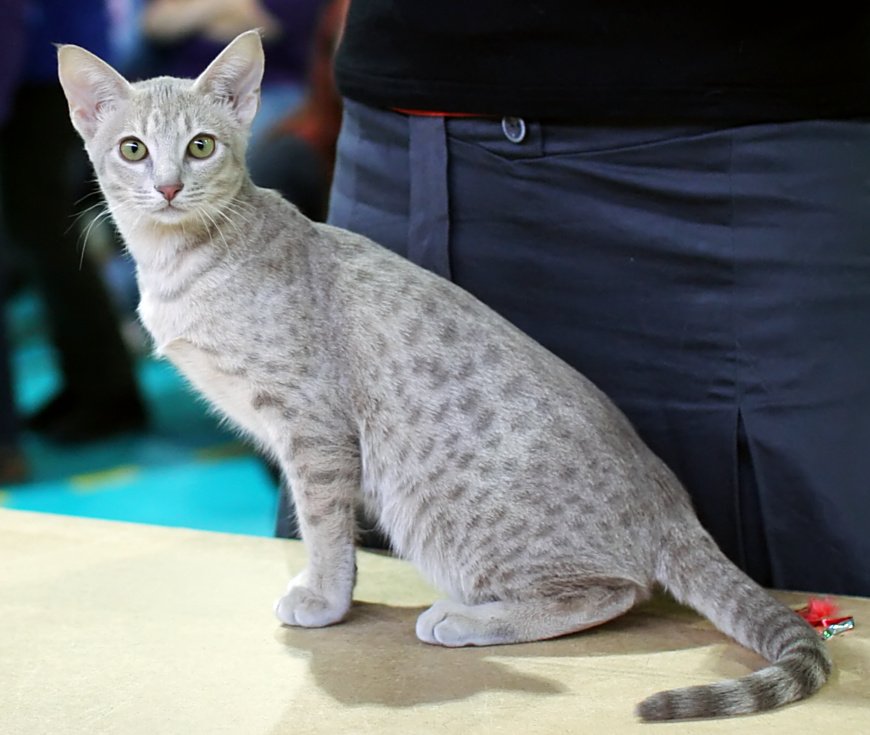
The Ocicat’s most distinguishing feature is undoubtedly its spectacular spotted coat. Each Ocicat displays distinctive thumbprint-sized spots arranged in a specific pattern . These cats showcase an intricate tabby “M” on their foreheads, with markings extending between the ears and breaking into small spots on the lower neck and shoulders .
Their coat comes in an impressive array of 12 recognized colors:
- Tawny, chocolate, and cinnamon
- Blue, lilac (lavender), and fawn
- Silver variations of all these colors
Beyond their striking appearance, Ocicats boast a muscular, athletic physique that complements their wild esthetic. Males typically weigh between 9-14 pounds, while females are slightly smaller at 6-9 pounds . Their medium to large frames carry surprising weight for their size due to substantial bone and muscle development .
Notably, these cats possess almond-shaped eyes rimmed with their darkest coat color and surrounded by the lightest shade . Their ears are set at approximately a 45-degree angle, and their tails feature horizontal brush strokes alternating with spots and dark tips .
Comparison with other breeds
While several domestic cats sport spotted coats, the Ocicat remains distinct in several ways. First, consider their origins—created by crossing Siamese, Abyssinian, and American Shorthair breeds . This unique genetic combination produces cats with exceptional intelligence and trainability not commonly found in other breeds.
Furthermore, their sociability sets them apart. Many Ocicats enjoy water, making bath time much more manageable than with typical felines . Their unusual social nature means they don’t enjoy solitude, preferring busy households with plenty of activity .
In contrast to breeds like the Bengal (which contains actual wild ancestry), the Ocicat achieves its exotic appearance through entirely domestic bloodlines . This distinction means they maintain consistent, predictable temperaments while still offering that coveted wild esthetic.
Regarding longevity, Ocicats typically enjoy healthy lifespans of 15-18 years . Their short, tight coat requires minimal maintenance compared to many other breeds—weekly brushing is generally sufficient, with bathing rarely needed .
Consequently, the Ocicat offers an unmatched combination of exotic beauty, athletic prowess, and affectionate temperament that makes them stand out among domestic cats.
Understanding the Ocicat’s Personality
Behind the exotic leopard-like spots of an Ocicat beats the heart of an extraordinary companion. These felines possess a multifaceted temperament that combines the best qualities from their ancestral breeds—intelligence from Siamese, activity from Abyssinian, and affability from American Shorthair.
Affectionate and loyal
Ocicats form remarkably strong bonds with their human families. These cats aren’t merely present in your home—they actively participate in your daily life. They’ll often shadow their favorite people from room to room, preferring to stay involved rather than observe from a distance.
Their affection manifests in multiple ways:
- They frequently seek physical closeness, enjoying cuddling and lap time
- They communicate through gentle headbutts and purring
- They show genuine interest in your activities, often “helping” with tasks
- They greet family members enthusiastically after absences
This breed demonstrates exceptional emotional intelligence, often sensing when their humans need comfort. Many Ocicat owners report their cats becoming particularly attentive during times of illness or sadness. This sensitivity creates an almost therapeutic bond between cat and owner.
Certainly an important consideration: Ocicats don’t tolerate long periods of solitude well. Their social nature means they can develop separation anxiety if left alone too frequently. They thrive in households where someone is typically home or in multi-pet environments where they have companionship.
Playful and energetic
The Ocicat’s athletic physique reflects their boundless energy and playful spirit. These cats maintain kitten-like enthusiasm well into adulthood, often initiating play sessions with their humans or other pets. Their intelligence combines with this playfulness to create a cat that requires substantial mental and physical stimulation.
Interactive toys that challenge both mind and body work best for this breed. Puzzle feeders, wand toys, and fetch games all appeal to their problem-solving abilities and predatory instincts. Many Ocicats display an unusual fascination with water—batting at faucet streams or even joining their owners near the shower.
Nevertheless, they balance this energetic side with surprising adaptability. While they need regular play sessions, they also understand appropriate times for calm behavior. An Ocicat who receives adequate exercise typically settles down contentedly in the evening for quality cuddle time.
Their play style reflects their heritage—they exhibit the Abyssinian’s love of heights and the American Shorthair’s hunting prowess. Most Ocicats appreciate vertical spaces like cat trees and shelves, using them as observation posts before launching into acrobatic play sessions.
Dog-like behavior traits
Perhaps most fascinating about Ocicats is their distinctly canine behavioral tendencies. These cats routinely display characteristics more commonly associated with dogs than felines. Many can learn to walk on a leash, respond reliably to their names, and even perform tricks with proper training.
Their trainability stems from high intelligence combined with an eager-to-please attitude. Unlike many independent cats, Ocicats actively seek approval from their humans. They quickly learn commands and behaviors that earn positive attention, making them highly receptive to clicker training and other positive reinforcement methods.
Moreover, their sociability extends beyond family to visitors. Rather than hiding when guests arrive, most Ocicats eagerly greet newcomers, sometimes even bringing toys as offerings. This extroverted nature makes them excellent companions for households that entertain frequently.
Their versatility makes them adaptable to various living situations as long as their social and activity needs are met. They typically integrate well with children, other cats, and even cat-friendly dogs, making them suitable for diverse household compositions.
Essentially, understanding the Ocicat means recognizing they’re not just beautiful show pieces—they’re engaged, affectionate, and intelligent companions requiring genuine interaction. For those seeking a striking cat with a personality as memorable as their appearance, the Ocicat delivers an unparalleled blend of beauty and character.
The Ocicat’s Origins and History
The fascinating story of the Ocicat cat begins not with a deliberate attempt to create a wild-looking domestic breed, but with a happy accident that changed feline history. This spotted wonder emerged through a unique combination of circumstances, careful breeding, and a touch of serendipity.
Accidental beginnings in 1964
The Ocicat’s journey started in 1964 in Berkeley, Michigan, where cat breeder Virginia Daly was conducting an experiment. Initially, Daly had no intention of creating a spotted breed at all. Her original goal was simply to produce an Abyssinian-pointed Siamese cat by crossing a ruddy Abyssinian male with a seal point Siamese female.
From this first breeding, Daly kept a female kitten named Dalai, who carried the Abyssinian ticking gene. In the next step of her experiment, she bred Dalai back to a chocolate point Siamese. The resulting litter contained exactly what she had been seeking—Abyssinian-pointed Siamese kittens. Yet among these expected offspring appeared something completely unexpected: a golden-spotted male kitten.
This distinctive kitten immediately caught the attention of Daly’s daughter, who exclaimed that he resembled an ocelot. She promptly named him “Tonga,” but the resemblance to wild cats ultimately inspired the breed name “Ocicat”—a clever blend of “ocelot” and “cat.”
Though Tonga was neutered and placed as a pet, his unexpected appearance intrigued geneticist Dr. Clyde Keeler. Upon seeing photographs of Tonga, Dr. Keeler encouraged Daly to develop more cats with this striking spotted pattern, as he was interested in creating domestic cats that resembled extinct wild species.
Breeding with Siamese, Abyssinian, and American Shorthair
Heeding Dr. Keeler’s suggestion, Virginia Daly set out to reproduce the spotted pattern. She carefully repeated her original breeding program, once again crossing Abyssinians with Siamese. The genetic recipe produced more spotted kittens, confirming that the pattern could be reliably reproduced.
To strengthen the genetic diversity and enhance certain desired traits, American Shorthairs were introduced to the breeding program in 1966. This addition proved crucial, as each of the three foundation breeds contributed essential elements to the Ocicat’s makeup:
- Siamese: Intelligence, vocality, and devotion to humans
- Abyssinian: Athleticism, energy, and the distinctive ticking in the coat
- American Shorthair: Muscular build, calm temperament, and silver coat color
The careful blending of these breeds created a domestic cat with an exotic appearance yet completely household-friendly personality. Throughout the developmental period, breeders focused on maintaining the spotted pattern while ensuring healthy genetic diversity.
Importantly, despite their wild appearance, Ocicats contain absolutely no wild cat DNA. They are entirely domestic in their genetic makeup, with their exotic look coming solely from the selective breeding of domestic cat breeds. This distinction separates them from breeds like the Bengal, which originally incorporated Asian leopard cat genetics.
Recognition by major cat associations
Although the first Ocicat appeared in 1964, the road to official recognition took time and dedication. The breed first gained championship status in 1966 through The International Cat Association (TICA), which recognized the Ocicat’s unique characteristics and established breed standards.
Several other major cat organizations subsequently granted the breed formal recognition:
- The Cat Fanciers’ Association (CFA) accepted Ocicats for registration in 1966 but didn’t grant full championship status until 1987
- The American Cat Fanciers Association (ACFA) recognized the breed in the early 1970s
- The Canadian Cat Association (CCA) followed suit in the mid-1970s
Initially, only the original tawny spotted pattern received recognition. Gradually, other color variations gained acceptance as the breed developed. Today, most associations recognize twelve Ocicat colors: tawny, chocolate, cinnamon, blue, lilac, and fawn, each available in both standard and silver varieties.
Throughout their relatively short history, Ocicats have maintained consistent popularity among cat enthusiasts seeking the exotic appearance of a wild cat combined with the loving temperament of a domestic companion. Their unique origin story—beginning with an unexpected kitten in a planned breeding experiment—stands as a testament to the sometimes surprising nature of feline genetics and the vision of dedicated breeders.
Living with an Ocicat: What to Expect
Living with an Ocicat means welcoming a dynamic, social creature that brings both joy and responsibility. These striking spotted felines require specific considerations to thrive in a home environment, making preparation key to a harmonious relationship.
Ideal home environments
Ocicats showcase remarkable adaptability to various living situations, from spacious houses to compact apartments . What truly matters isn’t the size of your home, but rather the quality of stimulation and interaction you provide. These cats excel in households where someone is frequently present or where they have animal companions to keep them engaged .
For safety and longevity reasons, Ocicats fare best as indoor cats . Their friendly, fearless nature can make them vulnerable outdoors . Accordingly, if you wish to offer outdoor experiences, consider secure options such as:
- Enclosed gardens or balconies
- Screened “catios”
- Supervised harness and leash walks (many Ocicats train well for this)
The vertical dimension proves especially important for these athletic cats. Creating a three-dimensional environment with cat trees, wall-mounted shelves, and perches satisfies their natural climbing instincts . Furthermore, puzzle feeders, interactive toys, and scratching posts provide crucial mental and physical engagement .
Above all, these cats thrive in environments with regular activity and interaction. They particularly suit work-from-home professionals, active families, or retirees who can provide consistent companionship .
Compatibility with kids and pets
Ocicats truly shine in multi-member households, making them excellent family cats. Their patience and gentle nature with children stands out as a remarkable trait . These cats typically demonstrate:
- Enjoyment of interactive games with children
- Tolerance for handling when done respectfully
- Resilience to loud noises and sudden movements
- Non-aggressive temperament even when provoked
This breed’s sociability extends beyond human companions to other animals as well. In fact, many Ocicats form strong bonds with cat-friendly dogs . Their confidence makes them less fearful around canines, often leading to genuine companionship . Similarly, they typically welcome feline housemates, especially when introduced at a young age .
Small pets like hamsters or birds require more caution, however. In such cases, proper supervision or separation is advisable given the Ocicat’s natural hunting instincts .
For prospective owners with existing pets, proper introductions remain crucial. Given their sociable nature, Ocicats often adapt more quickly than many other breeds to new animal companions .
Managing separation anxiety
Given their intensely social nature, Ocicats can struggle with loneliness. They become unhappy when left alone for extended periods, sometimes developing separation anxiety . Signs of this condition may include:
- Excessive vocalization/meowing
- Inappropriate elimination outside litter boxes
- Destructive behavior
- Changes in appetite
- Excessive self-grooming
To mitigate these challenges, consider adopting a bonded pair of Ocicats if your schedule keeps you away regularly . Additionally, implementing these strategies can help significantly:
- Environmental enrichment: Provide puzzle feeders, interactive toys, and climbing structures to keep them occupied
- Pre-departure play sessions: Engage in energetic play before leaving to help burn excess energy
- Gradual desensitization: Practice short departures, gradually increasing time away
- Anxiety reduction: Consider pheromone diffusers designed to create calming environments
- Professional support: For severe cases, consult a veterinarian or animal behaviorist
Remember that many separation anxiety symptoms resemble those of medical conditions. Consequently, a veterinary check is essential before assuming behavioral causes .
For households where everyone works outside the home, arranging mid-day visits from pet sitters can make a substantial difference in your Ocicat’s emotional well-being . Interactive electronic toys that activate while you’re away can likewise provide valuable stimulation during alone time.
Grooming and Daily Care Tips
Maintaining your Ocicat’s striking appearance requires minimal effort yet consistent attention. These sleek felines come equipped with self-grooming capabilities, yet regular maintenance ensures their spotted coats remain in optimal condition.
Brushing and coat maintenance
The Ocicat’s short, velvety coat requires remarkably little upkeep. Their fur sheds minimally throughout the year with slight seasonal increases. A quick weekly brushing session serves multiple purposes—it removes loose hair, distributes natural oils, and creates valuable bonding time with your cat.
For optimal results, use a rubber curry brush or natural bristle brush to maintain their coat’s natural sheen. Many Ocicat owners swear by an unusual but effective tool: a chamois cloth. Gently wiping your Ocicat with a chamois once weekly effectively lifts away dead hairs and enhances their coat’s natural gleam. This technique works particularly well because of the Ocicat’s close-lying, satiny fur.
Their agouti coat—featuring strands with dark bands, light bands, and dark tips—creates that distinctive ticked or shimmering effect that makes Ocicats so visually striking. This natural pattern stays vibrant with minimal intervention, making them ideal for busy owners.
Bathing and shampoo types
Regarding baths, Ocicats stand apart from typical felines. Many actually tolerate water well—a trait potentially inherited from their Abyssinian ancestry. Although regular baths aren’t necessary for these fastidious self-groomers, occasional bathing might be needed for show preparation or when they encounter something particularly messy.
Once you decide a bath is needed, choose appropriate products:
- Oatmeal-based shampoos work wonderfully for general cleaning without drying out skin
- Hypoallergenic formulas benefit sensitive-skinned Ocicats
- Tearless formulations prevent eye irritation
Avoid human shampoos or products designed exclusively for dogs, as these don’t match the pH balance of feline skin and may cause irritation. Even with water-tolerant Ocicats, keep bath time brief—wet, lather, rinse, and towel dry efficiently.
For those rare occasions when your Ocicat needs cleaning yet resists water, alternatives exist. Waterless bath foams, coat wipes, or specialized cat-safe dry shampoos can effectively freshen their coat between full baths.
Nail trimming and dental care
Regular nail maintenance prevents painful issues like broken claws or ingrown nails. Most Ocicats benefit from claw trims every 2-4 weeks. Use cat-specific scissors-type or pliers-type clippers rather than guillotine styles, which may crush rather than cleanly cut the nail.
When trimming, gently press the toe pad to extend the claw, then clip only the sharp, curved tip—staying well away from the pink “quick” containing blood vessels and nerves. Keep styptic powder nearby in case of accidental nicks.
For reluctant felines, consider:
- Introducing nail handling gradually from kittenhood
- Wrapping nervous cats in a towel “purrito” style during trimming
- Using treats as positive reinforcement
- Trimming just a few nails per session
Dental care warrants serious attention since Ocicats show predisposition to gingivitis and periodontal disease. Ideally, brush your Ocicat’s teeth at least twice weekly with cat-specific toothpaste (never human formulations). Introduce dental care gradually, starting with allowing them to taste the toothpaste, then progress to finger brushing, and finally a small cat toothbrush.
Maintaining these simple grooming routines ensures your Ocicat remains not just visually stunning but physically comfortable—allowing their playful personality to shine through without discomfort from matted fur, overgrown nails, or dental pain.
Common Health Concerns in Ocicats
While Ocicats are generally robust felines with impressive 12-18 year lifespans, responsible owners should be aware of several inherited health conditions that can affect this breed. Despite their athletic appearance, these spotted beauties may face specific genetic health challenges throughout their lives.
Hypertrophic cardiomyopathy (HCM)
Hypertrophic cardiomyopathy stands as the most common heart disease affecting cats, including Ocicats . This condition involves abnormal thickening of the heart muscle walls—particularly the left ventricle—which decreases the heart’s efficiency . The thickened muscle reduces chamber volume and causes abnormal relaxation, potentially leading to serious complications.
Many cats with HCM show no obvious symptoms initially, making regular veterinary checkups crucial. When signs do appear, they may include:
- Labored or rapid breathing
- Open-mouthed breathing
- Lethargy and diminished appetite
- Weakness
- Possible hind limb paralysis (if blood clots form)
Veterinarians diagnose HCM through echocardiography, which creates sound wave images revealing the thickened heart walls . Blood tests, chest X-rays, and electrocardiography may complement the diagnosis process.
Even though HCM has no known cure, proper management can help affected Ocicats lead comfortable lives . Treatment aims to control heart rate, alleviate lung congestion, and prevent blood clot formation. Medications administered orally or by injection can help manage symptoms .
Renal amyloidosis
This rare kidney disorder occurs when abnormal protein deposits called amyloid accumulate in kidney tissue . These deposits gradually displace healthy kidney cells, triggering inflammation and impairing the organ’s filtering abilities . This condition has been linked to the Abyssinian bloodline, which contributed to the Ocicat’s development .
Renal amyloidosis typically manifests through symptoms resembling other kidney diseases:
- Increased thirst and excessive urination
- Diminished appetite and weight loss
- Swollen limbs
- Vomiting
- Potential blood clotting issues
Diagnostic procedures include blood chemistry panels, urinalysis, X-rays, ultrasound imaging, and a kidney biopsy with special staining to reveal amyloid deposits . Unfortunately, there’s no way to reverse amyloid development once it begins, making the prognosis guarded. However, early detection allows for medications and dietary therapies that may slow progression .
Pyruvate kinase deficiency
Pyruvate kinase (PK) deficiency affects red blood cells’ metabolism, potentially causing anemia and related complications . This genetic condition impairs the red blood cells’ ability to complete the glycolytic pathway, resulting in insufficient ATP production—the energy currency cells need to function .
Without adequate energy, red blood cells die prematurely, leading to hemolytic anemia where cells are destroyed faster than they’re created . The condition stems from the Abyssinian genetic influence in the breed’s development .
Signs of PK deficiency include:
- Lethargy and weakness
- Poor exercise tolerance
- Heart murmurs
- Enlarged spleen
Diagnosis involves blood testing that may show abnormally large, pale red blood cells, increased white blood cell count, and excess iron in the blood . Bone marrow transplantation represents the only available treatment, though it’s expensive and carries risks . Without treatment, affected cats typically don’t live beyond four years due to bone marrow or liver failure .
Fortunately, reputable Ocicat breeders test breeding stock for these conditions, minimizing the risk of affected kittens . Regular veterinary checkups twice yearly are recommended, especially for Ocicats from lines with known health issues .
Training and Mental Stimulation
Intellectual stimulation ranks among the most crucial needs for the remarkably smart Ocicat cat. Unlike many felines that merely tolerate human interaction, Ocicats actively seek mental challenges that engage their sharp minds and athletic bodies.
Teaching tricks and commands
The Ocicat possesses what trainers call the perfect trifecta for training: intelligence, adaptability, and a strong desire to bond with humans . These qualities make them exceptionally receptive to learning commands and tricks. Remarkably, many Ocicats can master skills typically associated with canines rather than felines:
- Basic commands like “sit,” “come when called,” and even “lie down”
- Interactive responses such as “high five” or “shake paw”
- More complex behaviors including fetching toys and walking on a leash
For best results when training your Ocicat, employ positive reinforcement methods. When your cat performs the desired action, immediately reward with treats, praise, or playtime. Clicker training works particularly well with this breed , creating a clear association between the clicking sound and the reward.
Beyond simple tricks, many Ocicats surprise their owners by learning to open cupboards, respond to voice commands, and even recognize the names of family members and toys . What’s more, their consistent engagement makes training sessions genuinely enjoyable for both cat and owner.
Interactive toys and games
Ocicats require substantial physical and mental exercise to prevent frustration. Their intelligence means they quickly master simple toys, necessitating a rotation of challenges to maintain interest .
Interactive puzzle feeders prove especially effective with this breed. These devices dispense kibble or treats only after your Ocicat solves a particular challenge, simultaneously engaging their problem-solving abilities and hunting instincts. Wand toys that mimic prey movement likewise provide excellent stimulation, allowing your cat to practice natural hunting behaviors in a controlled setting .
For the times you’re away, consider automated or electronic toys that activate randomly or respond to your cat’s movement . These can help bridge the gap between interactive play sessions.
Preventing boredom
Without adequate stimulation, these brilliant felines may develop problematic behaviors. Signs your Ocicat needs more mental engagement include excessive meowing, destructive activities, escape attempts, or uncharacteristic aggression .
To prevent such issues, incorporate these strategies:
- Schedule at least two 15-minute interactive play sessions daily
- Rotate toys weekly to maintain novelty
- Create vertical spaces with cat trees or wall shelves
- Place bird feeders near windows for “cat TV”
- Grow cat grass for safe chewing opportunities
Remember that for Ocicats, mental stimulation isn’t optional—it’s essential to their wellbeing. Their intelligence requires regular challenges, interaction, and novelty . Ultimately, investing time in training and play yields significant rewards: a well-adjusted, contented companion who channels their remarkable abilities into positive behaviors.
Is the Ocicat Right for You?
Deciding whether to bring an Ocicat Cat into your family requires honest evaluation of your lifestyle and expectations. These distinctive spotted felines offer unique joys alongside specific care requirements that merit careful consideration.
Pros and cons of ownership
The Ocicat offers several compelling advantages:
- Exceptional sociability – forms strong bonds with entire families, not just one person
- Remarkable adaptability – thrives in various living situations including apartments
- Child-friendly temperament – tolerant of children and genuinely enjoys interactive play
- Multi-pet compatibility – gets along well with cats and cat-friendly dogs
- Low-maintenance grooming – short coat requires minimal care
Yet ownership also presents challenges:
- Social dependency – dislikes being alone; may develop separation anxiety
- High energy requirements – needs regular play and stimulation
- Potential destructiveness – can become hyperactive without adequate exercise
- Vocal communication – more talkative than many breeds
- Limited availability – finding one at shelters is uncommon; breeders may have waitlists
First-time cat owner suitability
Ocicats can work well for novice cat parents willing to invest time in interaction. Their intelligence makes them relatively straightforward to train, yet their energy levels typically exceed those of more independent breeds. First-timers must recognize the Ocicat’s need for companionship—either human or feline. These social cats truly hate being the only pet when humans are away .
Given proper attention, Ocicats reward owners with dog-like loyalty and playfulness. They adapt beautifully to various living arrangements provided they receive ample mental and physical engagement .
Questions to ask before adopting
Prior to welcoming an Ocicat, consider asking potential breeders:
- Have the parent cats undergone health testing for hereditary conditions?
- How are kittens socialized before adoption?
- What guarantees do you provide regarding health?
- Can I meet the kitten’s parents or previous buyers?
- What ongoing support do you offer post-adoption?
- Are kittens vaccinated, microchipped, and health-checked?
Afterward, honestly assess: Can I provide companionship throughout most days? Am I prepared for an active, engaging cat requiring regular interaction? Do I have the resources for proper care including veterinary attention?
With thoughtful preparation, the Ocicat can become an extraordinarily rewarding companion.
Conclusion
The Ocicat truly stands as a remarkable feline companion that offers the best of both worlds—exotic wildcat esthetics with a completely domestic temperament. Their striking spotted coat attracts attention, while their affectionate, dog-like personality wins hearts. These intelligent, trainable cats form deep bonds with their families and actively participate in household activities rather than observing from a distance.
Prospective owners should consider several factors before welcoming an Ocicat into their home. First, these social creatures require consistent companionship, either from humans or other pets. They thrive in active households where someone is frequently present. Second, their athletic build demands regular physical exercise and mental stimulation through interactive toys, puzzle feeders, and training sessions. Without adequate engagement, these brilliant cats may develop unwanted behaviors born from boredom or anxiety.
Health-wise, Ocicats generally enjoy robust health with lifespans of 12-15 years, though awareness of potential genetic conditions like hypertrophic cardiomyopathy remains important. Regular veterinary check-ups help ensure early detection of any health issues.
Most importantly, the Ocicat offers a unique combination of traits rarely found in other breeds. Their minimal grooming needs suit busy lifestyles, yet their social nature demands emotional investment. They adapt well to various living situations, from spacious homes to apartments, provided their need for interaction and stimulation receives proper attention.
For those seeking a striking, intelligent companion that combines the appearance of a wildcat with the loving heart of a domestic pet, the Ocicat presents an unmatched option. Though finding one might require patience due to limited availability, families willing to meet their specific needs will discover a loyal, affectionate, and endlessly fascinating feline friend who brings both beauty and joy to everyday life.