
Manx Cat
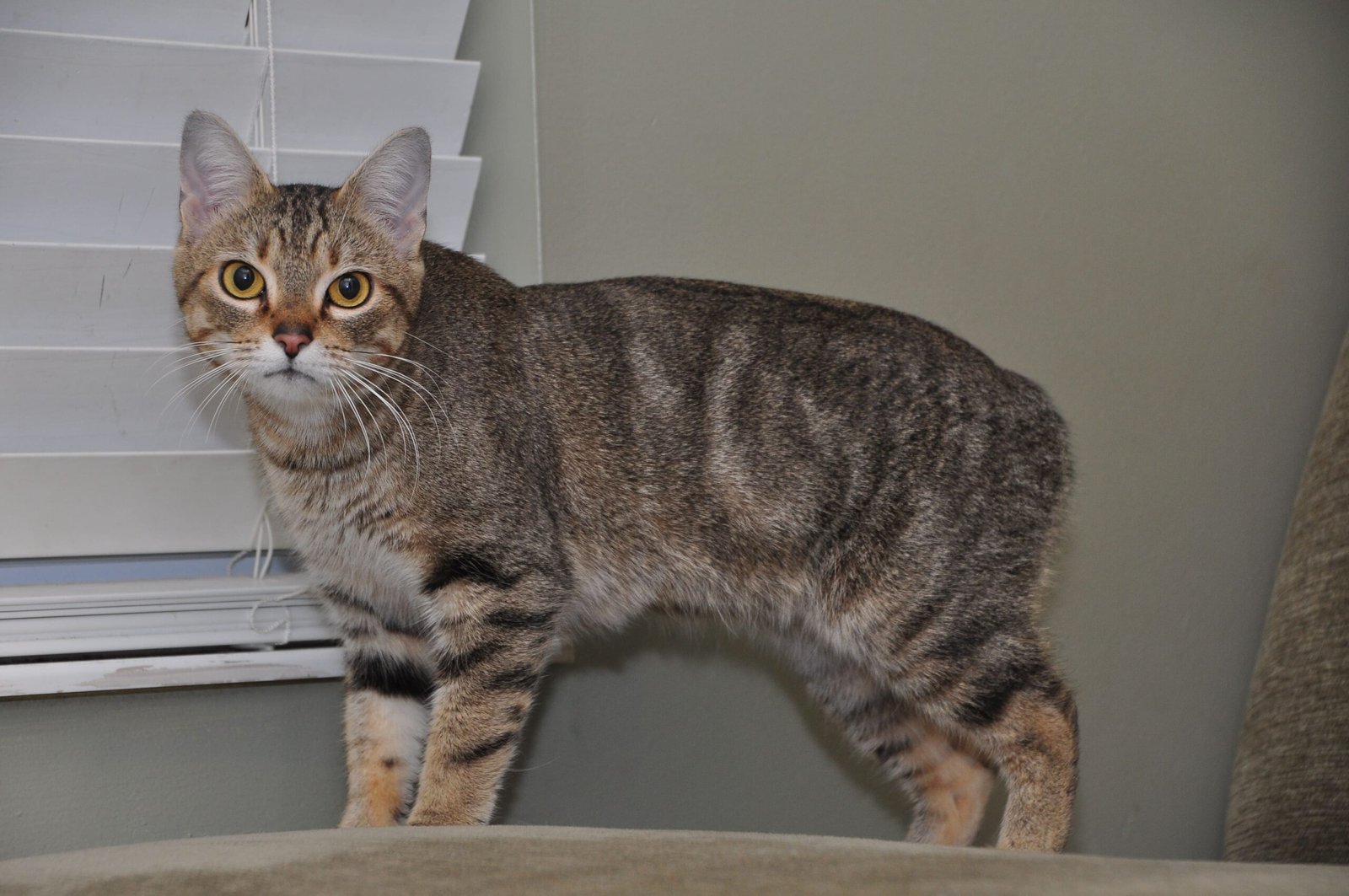
Manx cats stand out in the feline world with their most distinctive feature – they’re born without tails. This tailless cat breed originated from the Isle of Man, a small island between Great Britain and Ireland, where genetic mutation and geographical isolation created one of the world’s most recognizable cat breeds.
Despite their tailless appearance, Manx cats are known for much more than just this physical characteristic. These robust felines typically weigh between 8-12 pounds and can live 12-14 years when properly cared for. Additionally, Manx cat temperament is often described as dog-like, with these intelligent companions showing remarkable loyalty, playfulness, and even the ability to learn tricks. In fact, many Manx cat owners are surprised by their pets’ strong hunting instincts and problem-solving abilities.
Beyond their unique physical traits and engaging behavior, Manx cats have a rich history filled with folklore and scientific interest. From their genetic makeup to their cultural significance on the Isle of Man, these cats have captivated fanciers and researchers alike for centuries.
The Origins of the Manx Cat
The mysterious origin of the Manx cat has fascinated cat enthusiasts for centuries. These distinctive felines originated on the Isle of Man, a small island situated in the Irish Sea between England and Ireland, with a history of human habitation dating back 11,000 years .
Folklore and myths from the Isle of Man
The Isle of Man abounds with legends explaining the Manx cat’s missing tail. Perhaps the most enduring tale involves Noah’s Ark – as the biblical flood began, a languid Manx cat supposedly dawdled until the last moment before leaping onto the ark. Noah, closing the heavy door, accidentally trapped and severed the cat’s tail . Another variation suggests the cat was simply late, with Noah declaring “Who’s out is out, and who’s in is in!” as he slammed the door on its tail .
More imaginative stories connect the breed to maritime history. One popular legend claims tailless cats swam ashore after a Spanish Armada shipwreck near the island . However, tailless cats weren’t historically common in Spain, making this tale questionable .
Furthermore, some folklore takes a darker turn, suggesting Irish or Viking soldiers slaughtered cats for their tails as lucky charms. According to this tale, mother cats began biting off their kittens’ tails to protect them, eventually producing generations of naturally tailless cats . This story reflects the discredited Lamarckian theory of inherited acquired characteristics rather than genetic science.
Curiously, another persistent myth claims the Manx resulted from crossbreeding between cats and rabbits – supposedly explaining their lack of tail, long hind legs, and occasional hopping gait . Early observers even noted rabbit-like behaviors, with one 19th-century account describing how they “can be carried by the ears apparently without pain” and “discharge urine in a standing posture, like a rabbit” .
Genetic mutation and founder effect
Beyond folklore, science provides clearer answers about these tailless felines. The Manx’s distinctive appearance stems from a naturally occurring dominant gene mutation . While no one knows exactly when cats first arrived on the Isle of Man, the first documented references to tailless “stubbin” cats appeared in the early 18th century .
The taillessness gene became widespread through what geneticists call the “founder effect” – where distinctive traits arise and become fixed within a small, isolated population with limited genetic diversity . Essentially, the geographic isolation of the Isle of Man created perfect conditions for this unusual mutation to flourish.
Modern genetic research has identified specific mutations responsible. Scientists have discovered three 1-bp deletions (c.998delT, c.1169delC, and c.1199delC) and possibly a fourth mutation (c.998_1014dup17delGCC) in the T gene causing the tailless trait . This dominant gene is highly penetrant, meaning kittens from two Manx parents are generally born without tails .
Importantly, being homozygous (having two copies of the tailless gene) is typically lethal in embryonic development . Consequently, responsible breeders avoid mating two entirely tailless Manx cats together .
Early breed recognition and exhibitions
The Manx cat ranks among the world’s oldest recognized cat breeds. These unique felines were among the first show cats, with the earliest recorded exhibition appearing at Olympia in London in 1885 . By 1903, the first breed standard had been published .
Initially, few cat shows provided a specific Manx division. Early specimens were typically entered under the “Any Other Variety” class, where they struggled to compete unless “exceptionally good in size and markings” . Nevertheless, the breed’s distinctive characteristics made them stand out to knowledgeable judges.
The Manx gained official recognition as one of the founding breeds of the Cat Fanciers Association (CFA) when it was established in 1906 . However, not all early cat experts appreciated the breed – in 1908, Frank Townend Barton wrote dismissively: “There is nothing whatever to recommend the breed, whilst the loss of the tail in no way enhances its beauty” .
Throughout their history, Manx cats served practical purposes beyond exhibitions. Prized for their exceptional hunting abilities, they were frequently kept as working animals on farms for rodent control . This utilitarian value, combined with their unique appearance, helped ensure the breed’s continued popularity and preservation.
Understanding the Manx Tail Types
One of the most fascinating aspects of the Manx cat is the variable length of its tail—or often, the lack thereof. The taillessness that defines this breed isn’t an all-or-nothing trait but exists on a spectrum, with cats classified into several distinct categories based on tail length.
Rumpy and rumpy riser
The Rumpy represents what most people envision when thinking of a Manx cat—a completely tailless feline. These cats have absolutely no tail, though they often display a small tuft of hair where the tail would typically grow . The Rumpy is considered the ideal exhibition animal in cat shows .
Closely related is the Rumpy Riser, sometimes simply called a “riser.” This variant appears tailless at first glance, but features a small bump of cartilage under the fur where the tail would normally develop . This cartilage bump becomes most noticeable when the cat is happy, as they effectively “raise” this vestigial tail-end . Rumpy risers typically have 1-3 tail vertebrae .
Both rumpies and rumpy risers are highly prized in cat shows. In fact, depending on the cat organization and country, these two types, along with stumpies, are primarily the only Manx variants that meet breed standards for exhibition .
Stumpy and stubby
The Stumpy Manx (sometimes written “stumpie”) possesses a partial tail composed of fused vertebrae, measuring up to about 3 cm (1 inch) in length . This short tail stump is noticeable but much shorter than a typical cat’s tail.
A Stubby Manx (or “stubbie”), also called a “shorty” or “short-tailed” Manx, has a more developed tail composed of non-fused bones. These tails typically measure about half the length of an average cat’s tail . The difference between stumpies and stubbies lies in both length and vertebrae formation—stumpies have fused vertebrae while stubbies have normal vertebrae structure, just fewer of them.
Interestingly, some breeders and references use more specific classifications, such as “Long Riser” or “Short Stumpy” to describe cats with tails that fall between the typical riser and stumpy categories .
Longy and tailed Manx
The Longy Manx (or “longie”), also referred to as “tailed” or “taily,” possesses a tail that ranges from half to full normal length . Although these cats may have longer tails, they’re still genetically Manx cats and can produce tailless kittens when bred .
Notably, even Manx cats with full-length tails often have shorter tails than other cat breeds . These fully-tailed Manx typically don’t qualify for cat shows except in “Any Other Variety” or household pet classes .
All of these tail variations stem from the same genetic mutation. Four different DNA variants in the gene called TBX1 have been identified in different lineages of Manx cats . The tail length distribution is completely random throughout a litter of kittens , meaning a single litter can produce kittens with various tail lengths.
First and foremost, it’s worth noting that the Manx’s tail variability has been a defining feature since the breed’s formal recognition. Above all, this spectrum of tail lengths—from completely absent to fully present—makes the Manx one of the most distinctive and immediately recognizable cat breeds worldwide.
In some cases, owners of Manx cats with partial tails may have them docked at birth as a preventative health measure. This practice stems from concerns that some partial tails can develop a form of arthritis that causes severe pain later in life .
Physical Traits That Set the Manx Apart
Beyond their famous taillessness, Manx cats possess a remarkable set of physical characteristics that make them instantly recognizable. These medium-sized felines combine distinctive proportions with unique structural features that set them apart from all other cat breeds.
Rounded body and head
The Manx cat’s body showcases an impressive degree of roundness throughout. These cats feature a sturdy, compact frame with broad chests and flat sides, creating a substantial appearance without seeming bulky or overweight. When properly conditioned, they display firm musculature and a lean physique . Their bodies should feel surprisingly heavy when lifted, reflecting their dense muscle structure .
The round theme continues with their distinctive head shape. Manx cats display a rounded skull complemented by prominent cheeks that give older males a slightly jowly appearance . Their facial structure includes a gentle profile dip from forehead to nose, well-developed muzzle, and strong chin . Most striking are their large, rounded eyes that slant slightly upward at the outer corners .
Their ears further enhance this rounded appearance—wide at the base, tapering gradually to rounded tips, and set slightly outward . When viewed from behind, the ear placement creates what enthusiasts describe as a “rocker” shape, resembling the curved bottom of a rocking chair .
Long hind legs and arched back
Perhaps the most distinctive feature of the Manx cat’s body structure—aside from their lack of tail—is the unusual proportion of their legs. Their hind legs are noticeably longer than their front legs, creating a unique posture where the rump sits higher than the shoulders . This creates a continuous arch from shoulders to rump, giving the cat an overall rounded or humped appearance .
This skeletal structure dramatically affects their movement and abilities. Thanks to their powerful hind legs, Manx cats can jump extraordinarily high—some reports indicate they can achieve a 4-foot vertical jump from a standing position . The powerful hind limbs also make them exceptionally fast runners .
The arched back serves a practical purpose beyond esthetics. This structural adaptation helps compensate for their lack of tail, enabling better balance . This distinctive gait, often described as “rabbit-like,” comes from the combination of longer back legs and an arched spine . The longer hind legs give the cat a distinctive silhouette, especially evident when stretched out .
Coat types and color variations
Manx cats exhibit two distinct coat lengths, each with unique characteristics. The more common short-haired Manx—the original breed type—features a double-layered coat with a dense, soft under layer and a coarser outer layer with guard hairs . This combination creates a plush, dense texture that lies close to the skin rather than appearing fluffy or voluminous . The outer guard hairs have a somewhat hard texture with a glossy appearance .
The long-haired variant, known in some registries as the Cymric, displays a silky-textured double coat of medium length . This variety features distinctive “breeches” (longer fur at the hocks resembling baggy pants), a belly ruff, neck ruff, tufts between the toes, and full “ear furnishings” (hair in the ears) .
In terms of coloration, Manx cats come in an extraordinary range of colors and patterns, including:
- Tabby (classic, mackerel, spotted)
- Tortoiseshell and calico
- Solid colors (black, white, blue, red, cream)
- Bi-color combinations
- Silver and smoke variations
- Shaded patterns
This remarkable color diversity results from extensive crossbreeding throughout the breed’s history . Critically, colors showing evidence of hybridization (chocolate, lavender, pointed patterns, or these combinations with white) are not allowed in show standards . The most common colors include solid black, solid white, tortoiseshell, and various tabby patterns .
Variants and Related Breeds
The Manx cat family extends beyond the traditional tailless breed to include several fascinating variants developed throughout its history. These related breeds maintain the core Manx genetic profile while exhibiting distinct characteristics that set them apart.
Cymric (long-haired Manx)
The Cymric (pronounced “KIM-rik” or “KUM-rik”) represents the most widely recognized Manx variant. Essentially a long-haired version of the Manx, these cats possess identical genetic makeup except for the gene controlling coat length. Interestingly, both short-haired and long-haired kittens can appear in the same litter of either breed .
The Cymric’s history traces back to Canada, where breeders in the 1960s began intentionally developing these cats . The breed gained significant popularity during the 1970s, subsequently receiving recognition from various cat registries . In 1999, Canada even honored the Cymric with a commemorative 50-cent coin .
Different registries classify the Cymric in notably different ways:
- The Cat Fanciers’ Association (CFA) considers them a long-haired variety of Manx rather than a distinct breed, calling them “Longhair Manx”
- The International Cat Association (TICA) and Canadian Cat Association (CCA) recognize Cymrics as a separate breed with unique standards
- The Governing Council of the Cat Fancy (GCCF) uses the term “Semi-longhair Manx Variant”
The name “Cymric” comes from Cymru, the Welsh word for Wales, primarily because many long-haired tailless cats were discovered there . This naming choice provides a Celtic connection complementing the breed’s Isle of Man origins, even though Wales isn’t directly linked to the breed’s development .
Isle of Man Shorthair and Longhair
The Isle of Man Shorthair represents an intriguing counterpart to the traditional Manx—essentially a fully-tailed cat of Manx stock with all other Manx characteristics intact . Likewise, the Isle of Man Longhair stands as a fully-tailed version of the Cymric .
These cats maintain the distinctive Manx features like rounded bodies, long hind legs, and characteristic temperament, but possess complete tails. Currently, the New Zealand Cat Fancy (NZCF) remains the primary registry recognizing these as separate breeds with their own standards . In other international registries, these cats are typically designated “Tailed Manx” or “Tailed Manx Longhair” .
These tailed variants serve a vital purpose in breeding programs. Since breeding two completely tailless Manx together can result in severe birth defects, these fully-tailed cats provide valuable breeding stock to maintain genetic health . Their coat colors typically match the restrictions of British Shorthair cats, requiring the characteristic double coat of their tailless counterparts .
Tasman Manx and other rare types
Among the rarest Manx variants is the Tasman Manx, originating in New Zealand. This extraordinarily uncommon breed counts fewer than 20 cats worldwide . Named after the Tasman Sea between Australia and New Zealand, these cats feature the Manx body type combined with a distinctively curly coat reminiscent of the Selkirk Rex .
The Tasman Manx resulted from a recessive mutation appearing in Manx litters in both Australia and New Zealand . This curly-coated variant can display either short or semi-long hair . Currently, only the New Zealand Cat Fancy and Catz Inc. registry recognize this extremely rare breed .
Occasionally, cats displaying this curly-haired gene that lack the characteristic Manx face and body shape may be called “Tasman Rex,” though their relation to established Rex mutation breeds remains unclear .
Together, these four primary variants—the original Manx, Cymric, Isle of Man breeds, and Tasman Manx—form a fascinating family of related breeds, each preserving the genetic heritage of the original tailless cats from the Isle of Man.
Manx Cat Behavior and Temperament
Behind their distinctive tailless appearance, Manx cats reveal personalities as unique as their physical traits. These felines stand out not merely for how they look, but equally for their remarkable behavioral characteristics that endear them to cat enthusiasts worldwide.
Dog-like loyalty and intelligence
Manx cats are renowned for their extraordinary loyalty, often forming deep attachments to their human families. Unlike many independent feline breeds, these devoted companions typically follow their favorite people from room to room, shadowing their movements throughout the house. This “dog-like” quality makes them particularly endearing to those seeking a more interactive pet experience.
Their intelligence shines through in their remarkable trainability. Many Manx cats readily learn tricks that are typically associated with canines rather than felines. For instance, they can be taught to fetch toys and even walk on a leash. Some Manx owners report their cats responding to verbal commands – a testament to their cognitive abilities.
Perhaps most impressively, these clever cats often use their intelligence for problem-solving:
- Opening doors and cabinets
- Turning on water faucets
- Figuring out puzzle toys
- Playing practical jokes on their owners
Certainly, this problem-solving aptitude sometimes serves their own purposes, as they’ll persistently work to access anything they deem worthwhile on the other side of a door or cabinet.
Playfulness and hunting instincts
The Manx’s playful nature persists throughout their lives. Even placid adult Manx cats maintain a kitten-like enthusiasm for games and toys. Their peculiar gait – sometimes described as resembling a “bowling ball running around the room” – adds to their endearing, sometimes comical appearance during playtime.
Historically valued as working cats, Manx retain powerful hunting instincts. Indeed, they were prized shipboard companions specifically for controlling rodent populations, and farmers similarly valued their ability to hunt larger prey like rats and voles. This natural hunting ability translates into a love for interactive play that simulates stalking and capturing prey.
Their physical capabilities complement these instincts perfectly. Manx cats enjoy climbing, jumping, and demonstrating impressive high-speed racing moves. Interactive toys that challenge both mind and body are particularly appealing to these energetic felines.
Interaction with children and other pets
The Manx’s sweet-tempered, easygoing nature makes them excellent family companions. These affable felines typically adapt well to households with children, showing remarkable patience and gentleness. Nonetheless, proper introductions remain important – experts recommend letting the cat approach children rather than the reverse, allowing the cat to establish comfort on its terms.
Similarly, Manx cats generally coexist peacefully with other household pets, provided gradual, thoughtful introductions. Their social nature extends beyond humans to include other animals, making them suitable additions to multi-pet households. In truth, given their social tendencies, many Manx cats actually benefit from having feline companions when their human family members are away.
As a practical matter, when introducing a Manx to children or other pets, providing a private retreat space helps ensure successful integration. This safe zone, equipped with essentials like food, water and a litter box, allows the cat to retreat when feeling overwhelmed, gradually expanding their comfort zone at their own pace.
Health Concerns Unique to the Breed
While beloved for their unique appearance and charming personalities, Manx cats face several breed-specific health challenges that prospective owners should understand. Their average lifespan typically ranges from 10-14 years, somewhat shorter than the average cat lifespan due to these genetic health concerns .
Manx Syndrome explained
Manx Syndrome represents a collection of developmental problems directly linked to the same gene mutation that causes the breed’s characteristic taillessness . This condition affects the development of the spine and spinal cord, primarily impacting the lower portion of the spine .
The severity of Manx Syndrome varies considerably among affected cats. Symptoms typically include:
- Constipation or fecal incontinence
- Urinary incontinence and frequent infections
- Partial paralysis of hind legs
- Abnormal gait, sometimes described as “bunny hopping”
- Lack of sensation around the anal area
- Rectal prolapse in severe cases
Most responsible breeders monitor kittens carefully, as symptoms typically appear within the first few weeks of life . Kittens with severe manifestations often die before birth or require humane euthanization shortly afterward . Moreover, breeders typically keep kittens until at least four months of age to monitor for signs before placing them in new homes .
Spinal and nerve-related issues
The spinal abnormalities in Manx cats frequently manifest as spina bifida, where the neural tube fails to close properly during development . This condition is most common in completely tailless “rumpy” Manx cats .
Arthritis presents another significant concern, especially for Manx cats with stubby tails. These cats frequently develop early-onset arthritis in the joints between their deformed tail bones . Maintaining ideal weight proves crucial for these cats, as excess weight increases stress on already compromised joints .
Megacolon, a serious digestive complication, often results from chronic constipation caused by nerve defects in the colon . With this condition, the colon becomes stretched and weakened, losing its ability to pass stool effectively. Warning signs include weight loss, decreased appetite, reduced energy, and persistent constipation .
Other genetic predispositions
Beyond spine-related issues, Manx cats may develop corneal dystrophy, a group of eye conditions affecting the cornea . Symptoms typically appear when kittens reach approximately four months of age, beginning as swelling in the front corneal layer and potentially progressing to fluid-filled blisters . Early detection is vital, as treatment before permanent damage occurs remains possible.
Obesity represents another risk for Manx cats, potentially leading to diabetes if left unchecked . A nutritious diet with appropriate portion control helps mitigate this risk.
White Manx cats specifically may experience congenital deafness due to genetic factors . This disability often goes unnoticed initially, as cats adapt remarkably well, particularly if born with the condition.
Unfortunately, there is no cure for Manx Syndrome, though supportive care can help manage symptoms . Treatments may include bladder massage techniques, special diets, stool softeners, and regular grooming to prevent infections from incontinence .
When selecting pet insurance for a Manx kitten, owners should choose companies providing coverage for breed-specific and congenital conditions . Furthermore, prospective owners considering a Manx cat should thoroughly research breeders who screen for these conditions to reduce health risks.
The Manx Cat Genome Project
In August 2015, scientists launched the world’s first dedicated research initiative to unravel the genetic mysteries of tailless felines. The Manx Cat Genome Project (MCGP) represents a groundbreaking scientific endeavor spearheaded by computational biologist Rachel Glover from Douglas, Isle of Man .
Goals of the project
First and foremost, the MCGP aims to identify mutations unique to the Manx breed beyond the obvious tailless trait . By sequencing multiple Manx cat genomes, researchers hope to discover which genes contribute to health issues these cats sometimes experience .
The project serves both scientific and practical purposes. Researchers seek to understand the genetic basis for varied tail lengths—why some Manx cats have rumpy, stumpy, or long tails despite sharing the tailless gene . Additionally, the initiative strives to develop diagnostic DNA tests that breeders can use to select cats more appropriately, ultimately reducing kittens born with health problems .
This crowdfunded volunteer project connects with broader scientific efforts, contributing data to genome databases at the 99 Lives Cat Genome Sequencing Project at the University of Missouri and the US National Center for Biotechnology Information . As the Isle of Man’s first gene sequencing program, it involves samples collected locally with input from scientists worldwide .
Key findings on tail genetics
The project has made significant discoveries about the genes responsible for the Manx’s distinctive appearance:
- Four different T alleles (three 1-bp deletions and a small duplication/deletion) are associated with shortened tails in Manx cats
- These mutations occur in the brachyury gene (T), which affects tail development
- Approximately 78 of 82 Manx cats with shortened tails were heterozygous for a mutant T allele
- Almost all full-tailed Manx cats (47 of 48) had wild-type T alleles
The project has already pinpointed the precise location of the mutation responsible for tail suppression—the deletion of a single bit of genetic data among 2.8 billion making up the genome .
Implications for future breeding
The research holds promise for improving breeding practices. Correspondingly, understanding these genetic mechanisms could help reduce the incidence of Manx Syndrome and related health issues . Some cat registries have considered “retiring” the breed due to health concerns, but before such drastic steps, this research aims to correlate DNA variants with specific health issues and tail lengths .
Currently, the Lyons laboratory at the University of Missouri is working with the University of California, Davis Veterinary Genetics Laboratory to test Manx cats for the four tail variants . This collaboration might lead to diagnostic tests that identify which cats should not be bred, helping keep the breed healthier .
After completion, all results will undergo peer review and publication in scientific journals . The project also submits genome copies to scientific databases, ensuring researchers worldwide benefit from the Isle of Man’s first genome project .
Cultural Impact and Popularity
The Manx cat transcends its status as merely a breed to serve as a powerful cultural icon for the Isle of Man. Throughout its history, this tailless feline has become intrinsically linked with the island’s identity and heritage.
Manx cats in coins and stamps
The Isle of Man government has prominently featured these distinctive cats on their currency, including four special commemorative crown coins issued in 1970, 1975, 1988, and 2012 . Beginning in 1988, an ongoing series of annual cat coins was inaugurated, with Manx cats appearing in the background of subsequent releases . Significantly, these tailless felines also adorned the island’s 1980-83 penny in stylized Celtic knotwork art .
Isle of Man postal services have celebrated the breed through numerous stamp collections, including a 2011 series reproducing Victorian-era Manx cat postcards, a 1996 five-stamp series showing Manx cats worldwide, and a 1989 set displaying various coat patterns . Recently, the “Ivory Manx Cats” stamp collection showcased artwork by Lesley Anne Ivory with distinctive Celtic chain designs and patchwork quilt backgrounds .
Famous Manx cats in media
Notably, three Manx cats—All Ball, Lipstick, and Smokey—gained fame as companions to Koko, the gorilla known for communicating in sign language . Meanwhile, a Manx named Bob became the subject of a published biography . In 2016, a female Manx called Bonnag made history as the first of her breed to have her entire genome sequenced .
Symbolism in Isle of Man culture
Primarily, the Manx cat serves as one of three key emblems representing the island, alongside the triskelion and the four-horned Manx Loaghtan sheep . This cultural significance extends to tourist merchandise, where the tailless cat features prominently on countless souvenirs and Manx pride items available both on the island and online .
Conclusion
Manx cats certainly stand out as one of the most distinctive breeds in the feline world. Their tailless appearance, coupled with rounded bodies, long hind legs, and dog-like personalities, makes them instantly recognizable worldwide. Although folklore from the Isle of Man offers colorful explanations for their missing tails, science has revealed the truth behind this trait—a naturally occurring genetic mutation preserved through geographical isolation.
Throughout their centuries-long history, these remarkable cats have evolved from practical mousers to beloved companions and cultural icons. The breed’s genetic variability creates fascinating diversity in tail length, from completely tailless “rumpies” to full-tailed variants. Additionally, related breeds like the Cymric and rare Tasman Manx showcase how this genetic foundation has expanded into new varieties while maintaining core Manx characteristics.
Potential owners should understand both the rewards and challenges of Manx cat companionship. Their exceptional intelligence, playfulness, and loyalty provide tremendous joy, yet their genetic makeup comes with health considerations requiring careful attention. Manx Syndrome and related spinal issues demand vigilant monitoring, especially during a cat’s early development.
Thankfully, scientific advancements through initiatives like the Manx Cat Genome Project offer promising developments for the breed’s future. This research not only deepens our understanding of feline genetics but also provides practical applications for healthier breeding practices.
Beyond their homes, Manx cats have secured their place in cultural heritage, particularly for the Isle of Man, where they appear on everything from currency to stamps. Their distinctive silhouette serves as an immediately recognizable symbol connecting this small island to the wider world.
Whether you’re drawn to their unique appearance, charming personality, or fascinating history, Manx cats undoubtedly deserve their reputation as one of the most intriguing breeds in the cat fancy. Their story demonstrates how a single genetic mutation, combined with geographic isolation and human appreciation, can create something truly extraordinary in the animal kingdom.