
Birman Cat
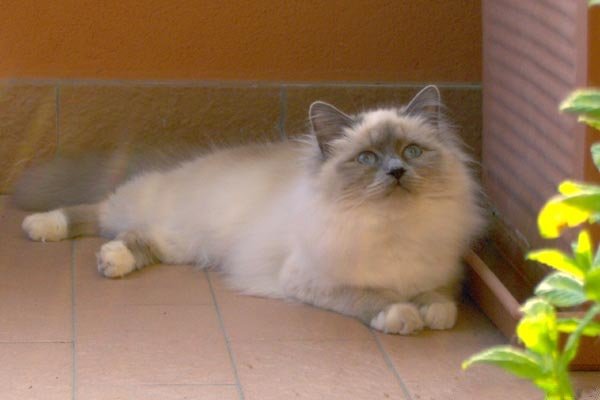
Birman cats captivate families worldwide with their striking blue eyes, silky color-point coats, and those distinctive white “gloves” on each paw. Searching for the perfect family companion? This sacred breed balances playfulness with tranquility, making them particularly suitable for households with children and other pets. Indeed, their gentle temperament combined with moderate maintenance needs creates an ideal pet for busy families.
Furthermore, Birmans bring a rich history dating back to ancient Burma (now Myanmar), where they were revered as temple companions. Their fascinating origin story only adds to their appeal as household pets today. Unlike some high-maintenance breeds, Birmans possess a medium-length coat that doesn’t mat easily, consequently requiring less intensive grooming than their Persian or Himalayan cousins.
This comprehensive guide explores everything prospective Birman owners should know—from their mystical origins and unique physical traits to their healthcare needs and ideal living environments. Whether you’re considering your first family pet or adding to your feline family, understanding the Birman’s specific needs will help ensure a harmonious relationship for years to come.
The Origins of the Birman Cat
The mysterious beginnings of the Birman cat breed are shrouded in legend and fragmentary historical records. While no clear documentation exists about their exact origins, most accounts trace these elegant felines back to the temples of Burma (modern-day Myanmar), where they lived alongside Buddhist priests as sacred companions.
The legend of the Sacred Cat of Burma
According to ancient Burmese lore, the Birman’s distinctive appearance resulted from a divine miracle. The most widely told version describes how in the Temple of Lao-Tsun, a priest named Mun-Ha kept a pure white cat called Sinh as his faithful companion . One fateful night, raiders attacked the temple and mortally wounded Mun-Ha as he prayed before a statue of the blue-eyed goddess Tsun-Kyan-Kse .
As the priest lay dying, Sinh placed his paws upon his master’s body. In that sacred moment, a remarkable transformation occurred—the goddess’s spirit entered the cat, changing its appearance dramatically. The white cat’s fur took on a golden hue, its eyes transformed from yellow to sapphire blue (matching the goddess’s eyes), and its face, legs, and tail darkened to earth tones . Only the paws that touched the priest remained pristinely white—symbolizing purity and the priest’s holiness .
Most versions of the legend conclude with Sinh dying seven days later, carrying his master’s soul to paradise. Afterward, all temple cats underwent the same transformation, creating the first Birmans .
How Birmans came to Europe
The journey of Birman cats from Burmese temples to European homes remains almost as mysterious as their legendary origins. Several competing accounts exist about their arrival in the Western world:
One widely accepted version states that around 1919, two Englishmen living in France—Major Gordon Russell and Auguste Pavie—received a pair of Birmans from the Kittah priests as thanks for helping defend their temple from invaders . During the long voyage to France, the male cat sadly perished, but the female—reportedly named Sita—survived. Fortunately, Sita was pregnant, and her kittens established the first Birman line in Europe .
An alternative account attributes the cats’ arrival to American millionaire Cornelius Vanderbilt, who allegedly purchased two Birmans from a temple servant . Additionally, some sources mention a Mme Thadde Hadisch or Mme Leotardi as early Birman owners in France .
Despite these conflicting narratives, what’s certain is that the breed appeared in France around 1920 . The first documented Birmans exhibited publicly were Poupée de Madalpour (one of Sita’s daughters), along with Poupée’s offspring Manou de Madalpour and Hiram-Roi, who were showcased at a Paris cat show in 1926 .
Breed recognition timeline
The “Sacre de Birmanie” received official recognition from the Cat Club of France in 1925, marking their first formal acknowledgment as a distinct breed . Sadly, World War II nearly wiped out these beautiful cats. By war’s end, only two Birmans survived in Europe—a pair named Orloff and Xenia de Kaabaa, both belonging to breeder Baudoin-Crevoisier .
These two cats became the foundation for rebuilding the breed. To restore the Birman population, breeders carefully outcrossed them with long-haired breeds, primarily Persians and some Siamese lines . Through meticulous breeding programs, pure Birman litters were once again being produced by the early 1950s .
The restored breed gradually gained international recognition. The Fédération Internationale Féline (FIFé) officially recognized Birmans in 1949 . Subsequently, the Governing Council of the Cat Fancy (GCCF) in Britain acknowledged the breed in 1965 . The Cat Fanciers’ Association (CFA) in the United States followed suit in 1967 . Later recognitions came from The International Cat Association (TICA) and the Canadian Cat Association (CCA), both in 1979 .
Today’s Birman cats, with their mesmerizing blue eyes and distinctive white “gloves,” represent the successful preservation of a breed that almost vanished—a living testament to their legendary resilience and enduring appeal.
What Makes Birmans Visually Unique
The distinctive appearance of Birman cats sets them apart from all other feline breeds. From their plush, color-pointed coats to their mesmerizing blue eyes and trademark white paws, Birmans possess a combination of visual characteristics that make them instantly recognizable to cat enthusiasts.
Silky coat and colorpoint pattern
Birmans boast a medium-long coat with a remarkably silky texture that feels luxurious to the touch. Unlike Persian or Himalayan cats, Birmans lack an undercoat , which makes their fur much less prone to matting. This practical feature ensures that despite their long hair, they require less intensive grooming than many other long-haired breeds.
As color-pointed cats, Birmans display a fascinating color distribution pattern. Their body fur ranges from white to cream, with darker colors concentrated on the “points”—the face, ears, legs, and tail . This creates a striking contrast between the body and extremities.
Notably, all Birman kittens are born completely white , developing their distinctive color points only around two weeks of age. As they mature, their points become more defined and intense, while the body color remains significantly lighter with just a subtle wash of color that corresponds to their point variety .
The breed comes in numerous color variations. The original and perhaps most recognizable is seal point, which features very dark brown, almost black points that dramatically contrast with their cream body color . Other primary colors include:
- Blue point – A diluted version of seal, appearing as a bluish-gray
- Chocolate point – A warm milk chocolate color
- Lilac point – A diluted version of chocolate, showing as a pale pinkish-gray
- Red point – A fiery orange color grading to apricot
- Cream point – A diluted version of red
In addition to these solid colors, Birmans can also display tabby and tortoiseshell variations . Primarily due to genetics, only female Birmans can have tortoiseshell points .
Signature white gloves and laces
The most distinctive feature of Birman cats is undoubtedly their pure white “gloves” on all four paws . This unique characteristic serves as the breed’s trademark and distinguishes them from other color-pointed breeds.
For these white markings to meet breed standards, they must follow specific patterns. On the front paws, the white “gloves” must cover all toes and stop precisely at the articulation or transition of toes to metacarpals . On the back paws, the white extends further, creating what fanciers call “laces” or “gauntlets” . These laces should form an inverted V shape that extends half to three-fourths up the hock .
The symmetry of these white gloves is highly valued in show cats. In fact, any other spot of white appearing on the points beyond the prescribed glove pattern is considered a serious fault in breed standards .
Eye color and body structure
Every Birman cat possesses captivating blue eyes—not just any blue, but a deep sapphire shade . The eyes have a slightly rounded shape with the outer corner tilted very slightly upward . This eye shape, combined with their intense blue color, gives Birmans their characteristic sweet expression.
Physically, Birmans have a medium to large-sized body that feels surprisingly substantial when picked up . Their build is rectangular and elongated rather than compact . With broad, strong shoulders and a well-muscled form, these cats present a balanced, proportionate appearance despite their substantial bone structure.
The head structure further defines the Birman’s unique look. They possess a broad, rounded head featuring a medium-length Roman nose with a slight dip in the profile . This subtle nose dip distinguishes them from Persian cats, which have a more pronounced “stop.” Their well-developed chin, full cheeks, and somewhat rounded muzzle complete their distinctive facial appearance .
Overall, the Birman’s visual appeal comes from this perfect combination of striking color contrast, plush but practical coat, mystical blue eyes, and those signature white gloves that connect them to their legendary temple cat heritage.
Temperament: Why Families Love Birmans
Temperament: Why Families Love Birmans
Beyond their striking appearance, it’s the remarkable temperament of Birman cats that truly makes them ideal family pets. Often described as “dog-like” in their loyalty and companionship, these gentle felines possess a unique blend of characteristics that endear them to households of all types.
Affectionate and loyal nature
Birmans excel as companion animals, having been specifically bred for this purpose over many generations. Their deeply affectionate disposition manifests in how they form strong bonds with their human family members. These devoted felines often follow their favorite people from room to room, earning them the nickname “velcro cats” . Unlike some independent breeds, they genuinely enjoy being involved in your daily activities and routines.
Interestingly, although Birmans love companionship, they balance affection with respect for personal space. They may not always demand to be on your lap, yet they consistently stay close by—a trait many families appreciate . This loving yet undemanding nature makes them especially suitable for households where constant attention isn’t always possible.
Their loyalty extends to becoming truly integrated family members. Birmans thrive on social interactions and flourish in homes full of activity . This balanced temperament—neither too aloof nor excessively clingy—creates the perfect middle ground that many families seek in a pet.
Great with children and other pets
Among the most valuable qualities of the Birman breed is their exceptional compatibility with children. They display remarkable patience and tolerance, even permitting gentle handling like carrying or dress-up play that many cats would resist . This calm acceptance makes them particularly valuable in households with young children who are still learning appropriate pet interaction.
The Cat Fanciers’ Association describes Birmans as excellent with kids, though emphasizing that each cat develops its unique personality based on training and life experiences . Their even-tempered nature contributes to this child-friendly reputation, as they rarely react negatively to the sometimes unpredictable movements of children.
Moreover, Birmans typically demonstrate outstanding compatibility with other household pets. Their natural easygoing and patient temperament helps them bond quickly with cats, dogs, and other animal companions . They lack the strong territorial drive seen in some breeds and rarely display aggression toward other pets . When introducing a Birman to a dog, their gentle confidence works favorably—they tend to respond with curiosity rather than fear .
This exceptional sociability makes Birmans an ideal choice for multi-pet households or families considering expanding their pet family in the future.
Quiet but social behavior
Birmans communicate their needs without being disruptive. Most are soft-spoken with refined, chirp-like vocalizations instead of loud meowing . This quieter communication style contributes to their reputation as peaceful housemates, though some can become quite talkative if consistently rewarded with responses to their vocalizations .
Despite their quiet nature, Birmans are decidedly social creatures who dislike solitude. They become genuinely unhappy when left alone for extended periods . For households where family members work outside the home, experts often recommend adopting Birmans in pairs to provide companionship during human absences .
Their intelligence and curiosity make them naturally “helpful” cats. They frequently attempt to assist with household tasks and work activities, showing genuine interest in whatever their humans are doing . This engaging behavior, coupled with their playfulness, creates delightful daily interactions that families cherish.
Primarily people-focused, Birmans develop strong attachments to their chosen humans while maintaining an amicable demeanor toward visitors. Their friendliness extends to welcoming guests, unlike some more reserved breeds . This social adaptability makes them particularly suitable for homes that frequently entertain visitors or have changing household dynamics.
Health Considerations for Birman Cats
Health Considerations for Birman Cats
While Birman cats are generally robust companions, prospective owners should understand several health conditions that appear more frequently in this breed. Knowledge of these potential issues helps ensure early detection and appropriate management, allowing your Birman to live a comfortable, fulfilling life.
Hypertrophic cardiomyopathy (HCM)
Hypertrophic cardiomyopathy stands as the most common heart disease affecting cats, including Birmans. This condition causes thickening of the heart wall, making it harder to pump blood effectively . In a study of Birman cats, researchers found a concerning 10% prevalence of cardiomyopathy, with HCM being the most common type, affecting nearly 7% of screened Birmans .
HCM frequently remains undetected until later stages because cats expertly hide symptoms. As the disease progresses, however, some Birmans may develop audible heart murmurs, coughing, shortness of breath, lethargy, and eventually heart failure . Remarkably, males appear more vulnerable, accounting for 82% of HCM cases in Birmans .
Veterinary cardiologists recommend regular echocardiography for early detection, particularly for breeding cats. Nevertheless, even cats with normal heart scans at young ages may develop HCM later, as it typically manifests in adult cats around 8.4 years of age .
Polycystic kidney disease (PKD)
PKD involves the development of fluid-filled cysts in kidney tissues. These cysts multiply and grow over time, gradually overwhelming normal kidney tissue and potentially leading to kidney failure . Initially minuscule and present at birth, these cysts can be diagnosed in kittens as young as six months .
Clinical signs typically mirror those of general kidney disease: increased drinking and urination, diminished appetite, weight loss, vomiting, and lethargy . Fortunately, Birmans can undergo genetic testing for PKD . If contemplating a kitten purchase, ask breeders whether both parents have been genetically screened for this condition.
Most affected cats begin showing signs of kidney dysfunction around 7 years of age . However, a genetic test cannot determine disease severity – only ultrasound imaging provides definitive diagnosis . Management approaches include diet control, fluid therapy, and veterinarian-prescribed medications .
Feline audiogenic reflex seizures (FARS)
FARS represents a unique neurological condition where certain high-frequency sounds trigger seizures in cats. This disorder is believed to be particularly common in the Birman breed . Primarily affecting senior cats (typically age 15 and older), FARS has a genetic component in Birmans .
The seizures manifest in different forms: brief muscle jerks (myoclonic seizures), more severe generalized tonic-clonic seizures, or short periods of awareness loss (absence seizures) . Common triggering sounds include crinkling foil, metal spoons in ceramic bowls, crinkling paper bags, keyboard tapping, and various high-pitched noises .
Surprisingly, at least half of cats with FARS experience some form of hearing difficulty . The anti-seizure medication levetiracetam (Keppra) has shown effectiveness in controlling FARS seizures . Managing a Birman with FARS also involves minimizing exposure to triggering sounds whenever possible.
Life expectancy and preventive care
Birman cats typically enjoy lengthy lives compared to many breeds. A UK veterinary study found Birmans had an impressive life expectancy of 14.39 years , with some sources suggesting 12-16 years as the typical range . This exceeds the overall feline average of 11.74 years .
Preventive healthcare plays a crucial role in maintaining this longevity. Regular veterinary check-ups help detect potential issues early, particularly since Birmans have naturally high levels of creatinine and symmetric dimethylarginine (SDMA) in their blood, which can complicate kidney disease diagnosis .
For optimal Birman health, maintain appropriate weight through proper nutrition and exercise, schedule bi-annual veterinary examinations, keep vaccinations current, and pursue prompt investigation of any unusual symptoms. This preventive approach helps ensure your beautiful Birman companion remains healthy throughout their extended lifespan.
Grooming and Maintenance Needs
Grooming and Maintenance Needs
Despite their luscious medium-to-long coats, Birman cats require surprisingly minimal maintenance compared to many other long-haired breeds. This practical advantage stems primarily from their single-layered coat, which lacks the dense undercoat that causes excessive matting in similar breeds.
Brushing frequency and tools
Most Birman owners find that brushing once or twice weekly is sufficient to maintain their cat’s silky coat in optimal condition. The absence of an undercoat means these cats are naturally less prone to tangling and matting. Regular brushing not only keeps their fur looking its best but essentially serves two additional purposes: it removes loose hair that would otherwise be shed around your home and prevents hairballs that can form when cats groom themselves.
For effective Birman grooming, consider these specialized tools:
- A soft slicker brush as your primary grooming tool
- A fine-toothed metal comb for checking and removing small tangles
- A pin brush for general coat maintenance
First thing to remember when brushing your Birman is to always follow the direction of hair growth, starting from the head and working your way down. Pay extra attention to areas prone to tangling such as behind the ears, under the legs, and around the collar region. Fortunately, even during shedding seasons, only a slight increase in brushing frequency is typically needed.
Bathing and coat care tips
Contrary to what their luxurious appearance might suggest, Birman cats rarely need baths. Their naturally clean coat stays in good condition through self-grooming and regular brushing. Actually, most Birmans only require bathing if they get into something messy or sticky.
If a bath becomes necessary, use lukewarm water and a gentle cat-specific shampoo. Many Birmans enjoy playing with water but may not appreciate full immersion. A hand-held shower nozzle works well for controlled bathing. After washing, thoroughly dry your cat with a soft towel, as wet fur can lead to matting and your Birman feeling uncomfortably cold.
For those with show Birmans or cats with particularly full coats, a detangling spray can be helpful for stubborn knots that occasionally form under the legs or behind the ears.
Eye, ear, and nail hygiene
Beyond coat care, certainly other hygiene practices remain important for Birman health. Check your cat’s ears weekly for signs of redness, discharge, or unusual odor that might indicate infection. Clean only the visible parts of the ear using a cat-safe ear cleaning solution and cotton balls—never cotton swabs, which can damage the ear canal.
Birmans’ beautiful blue eyes sometimes develop slight tearing that can cause staining on lighter-colored fur. Gently wipe around the eyes with a damp, soft cloth as needed. For persistent eye discharge, consult your veterinarian, as this may indicate an underlying issue.
Nail maintenance proves crucial, particularly for indoor Birmans who don’t naturally wear down their claws through outdoor activities. Trim your cat’s nails every 4-6 weeks to prevent overgrowth and potential injuries. Only cut the white tip—never the pink “quick” which contains blood vessels and nerves. Introducing nail trimming during kittenhood makes the process much easier throughout your cat’s life.
As a final component of comprehensive care, brushing your Birman’s teeth weekly helps prevent periodontal disease and maintains fresh breath. Use cat-specific toothpaste and a small, soft toothbrush designed for felines.
Feeding and Nutrition Tips
Feeding and Nutrition Tips
Proper nutrition forms the cornerstone of Birman cat health, with specific dietary considerations that differ slightly from other breeds. Paying close attention to their nutritional needs helps prevent health issues and maintains their beautiful coat.
Choosing the right food
Birmans, like all domestic cats, are strict carnivores requiring diets rich in animal proteins. Their bodies need essential amino acids such as taurine, arginine, and lysine found primarily in meat. Without these nutrients, Birmans risk developing serious health problems including retinal degeneration and neurological disorders .
Given their predisposition to hereditary renal dysfunction, kidney-friendly nutrition deserves priority consideration . Opt for foods with AAFCO (Association of American Feed Control Officials) statements on the label, confirming they meet minimum nutritional requirements for your cat’s life stage .
For optimal kidney health, prioritize wet food options. Pâté and other moisture-rich formulations help prevent concentrated urine and reduce kidney stress . Beyond kidney benefits, wet food simultaneously decreases obesity risk, as it contains approximately four times fewer calories than equivalent volumes of dry food .
Regarding dry food, it shouldn’t constitute the majority of a Birman’s diet but can supplement their nutrition when necessary . Focus on options with appropriate calcium-phosphorus ratios to support kidney function . Foods with excessive digestible phosphorus may negatively impact kidney health according to several studies .
Feeding schedule and portion control
Most Birmans thrive with at least two meals daily . For proper portion sizing, veterinarians recommend a simple calculation: multiply your cat’s weight in pounds by 30 calories. Therefore, a 10-pound Birman typically requires around 300 calories daily .
Naturally, adjustments based on activity level, age, and whether your cat spends time outdoors affect these calculations. Indoor cats typically need fewer calories than their outdoor counterparts . Appropriate portion control prevents the weight gain Birmans become prone to as they age .
Wide, shallow food bowls work best for Birmans, providing ample room for their sensitive whiskers and reducing “whisker fatigue” . Puzzle feeders, while not preferred by all Birmans, can provide mental stimulation and help slow rapid eaters .
Supplements and special diets
A complete, balanced diet meeting AAFCO standards typically provides all essential nutrients Birmans need without supplementation . Nonetheless, certain circumstances may warrant dietary additions.
Long-haired Birmans often benefit from specialized hairball prevention formulations that facilitate safer passage of ingested fur . Their luxurious coat requires omega-3 and omega-6 fatty acids to maintain its silky texture and luster. These nutrients occur naturally in fish, shellfish, flaxseeds, and certain vegetable oils like rapeseed .
Senior Birmans may require diets enriched with joint-supporting compounds or additional omega fatty acids . For younger cats, kitten-specific formulations support proper growth and should be continued through their first year .
Prior to introducing any supplement or specialized diet, consult your veterinarian. This becomes particularly important if your Birman shows signs of kidney issues, as dietary modifications can significantly impact kidney function management .
Living Environment and Enrichment
Living Environment and Enrichment
Creating an enriched living space for your Birman cat directly impacts their physical health and emotional wellbeing. These intelligent, social creatures thrive in thoughtfully designed environments that cater to their natural instincts and playful nature.
Indoor vs. outdoor considerations
For Birman cats, indoor living offers significant safety advantages. Indoor cats typically live twice as long as indoor/outdoor cats and three times longer than outdoor-only cats . This striking difference stems from reduced exposure to vehicle accidents, animal attacks, infectious diseases, and toxic substances.
Fortunately, Birmans adapt exceptionally well to apartment living. Their moderate activity level and naturally calm temperament make them ideal for smaller spaces . While houses provide more exploration opportunities, apartments can be equally enriching when properly outfitted with vertical spaces and play areas.
If you wish to provide outdoor experiences, consider safer alternatives like secure “catios,” fully enclosed garden runs, or supervised harness walks . Above all, these controlled outdoor options protect your Birman while still allowing fresh air and environmental stimulation.
Cat trees, shelves, and toys
Birmans possess a natural talent for climbing, making vertical spaces essential in their environment . Cat trees, wall shelves, or window perches fulfill their innate desire to survey their domain from elevated positions while simultaneously providing exercise.
Look for cat trees featuring:
- Comfortable perches or beds for lounging
- Sturdy construction to support their substantial weight
- Integrated scratching surfaces to satisfy natural urges
Toy selection similarly matters for mental stimulation. Wand toys like “Da Bird” mimic hunting experiences, whereas interactive toys such as the “Cat-It Senses Track” encourage independent play . Likewise, tunnels provide excellent entertainment, particularly for younger Birmans . Just remember to store wand toys safely away after play sessions to prevent accidental ingestion .
Preventing boredom and stress
Regular play sessions—ideally twice daily for 10-15 minutes each—help prevent behavior problems stemming from boredom . Birmans particularly enjoy interactive toys that stimulate their hunting instincts .
To maintain interest, rotate toys every few days rather than leaving all available simultaneously . This simple strategy keeps your Birman’s environment novel and exciting. Similarly, creating window perches near bird feeders provides hours of mental stimulation .
Correspondingly, providing multiple types of enrichment addresses different feline needs. Safe hiding spots offer security, while climbing opportunities satisfy exploration instincts . Puzzle feeders and treat-dispensing toys furthermore challenge their intelligence while slowing eating—beneficial for cats prone to rapid consumption .
Remember that Birmans dislike extended solitude . If family members work outside the home, consider adopting Birmans in pairs or providing interactive toys that function without human involvement .
Training and Behavior Management
Training and Behavior Management
Remarkably intelligent and eager to please, Birman cats respond exceptionally well to training methods that many might associate only with dogs. Their receptive nature makes training both rewarding and practical for everyday management.
Clicker training and positive reinforcement
Clicker training offers an effective approach for Birmans, using a distinct clicking sound paired immediately with treats to reward desired behaviors. Short 5-10 minute sessions work best, focusing on one behavior at a time . Begin by establishing the association between clicks and treats, then gradually introduce simple commands. Many Birmans quickly understand this method, allowing you to shape behaviors from basic commands like “sit” to more complex tricks.
Fun activities like fetch and climbing
Interestingly, Birmans often excel at fetch games, demonstrating dog-like retrieval skills . When teaching fetch, first establish value in their favorite toy by storing it separately from everyday playthings . Start with short tosses, rewarding returns with treats and praise. Beyond fetch, provide cat trees and shelving to satisfy their natural climbing talents . These slow-to-mature cats retain playful kitten personalities into their third or fourth year .
Managing clinginess and separation anxiety
Birmans form strong attachments and may develop separation anxiety if regularly left alone for extended periods . For prevention, gradually introduce alone time, starting with brief absences . Keep departures and arrivals low-key to avoid reinforcing anxiety . Environmental enrichment—including perches, hiding spots, and puzzle toys—helps maintain mental stimulation during your absence .
Conclusion
Birman cats undoubtedly deserve consideration as one of the most family-friendly feline companions available today. Their striking appearance—characterized by those mesmerizing blue eyes, silky color-point coats, and distinctive white gloves—creates an immediately recognizable and esthetically pleasing pet. Nevertheless, their beauty represents only one aspect of what makes these cats exceptional family members.
Their temperament truly sets Birmans apart from many other breeds. These gentle, affectionate cats strike a perfect balance between independence and attachment, making them suitable for diverse household dynamics. Additionally, their patience with children and compatibility with other pets further strengthens their position as ideal family companions.
Historically significant as temple companions in ancient Burma, Birmans carry a rich heritage that adds depth to their appeal. Despite nearly disappearing during World War II, careful breeding efforts preserved this magnificent breed for future generations to enjoy.
Though generally healthy, Birman owners should remain vigilant about specific health considerations like hypertrophic cardiomyopathy, polycystic kidney disease, and feline audiogenic reflex seizures. Regular veterinary check-ups consequently become essential for maintaining their impressive 12-16 year lifespan.
Caring for a Birman proves surprisingly manageable despite their luxurious coat. Weekly brushing sessions typically suffice, while their intelligent nature makes training both possible and enjoyable. Proper nutrition, especially focused on kidney health, helps maintain their overall wellbeing throughout their lives.
The decision to welcome a Birman into your home certainly deserves careful consideration of your family’s lifestyle and capabilities. However, families willing to provide appropriate care, companionship, and enrichment will find these cats reward them with years of devoted affection and gentle companionship. Ultimately, Birmans embody an exceptional combination of beauty, temperament, and practicality that makes them truly perfect family pets.