
Australian Shepherd Dog : Characteristics, Behavior, Temperament, Lifespan, Weight kg
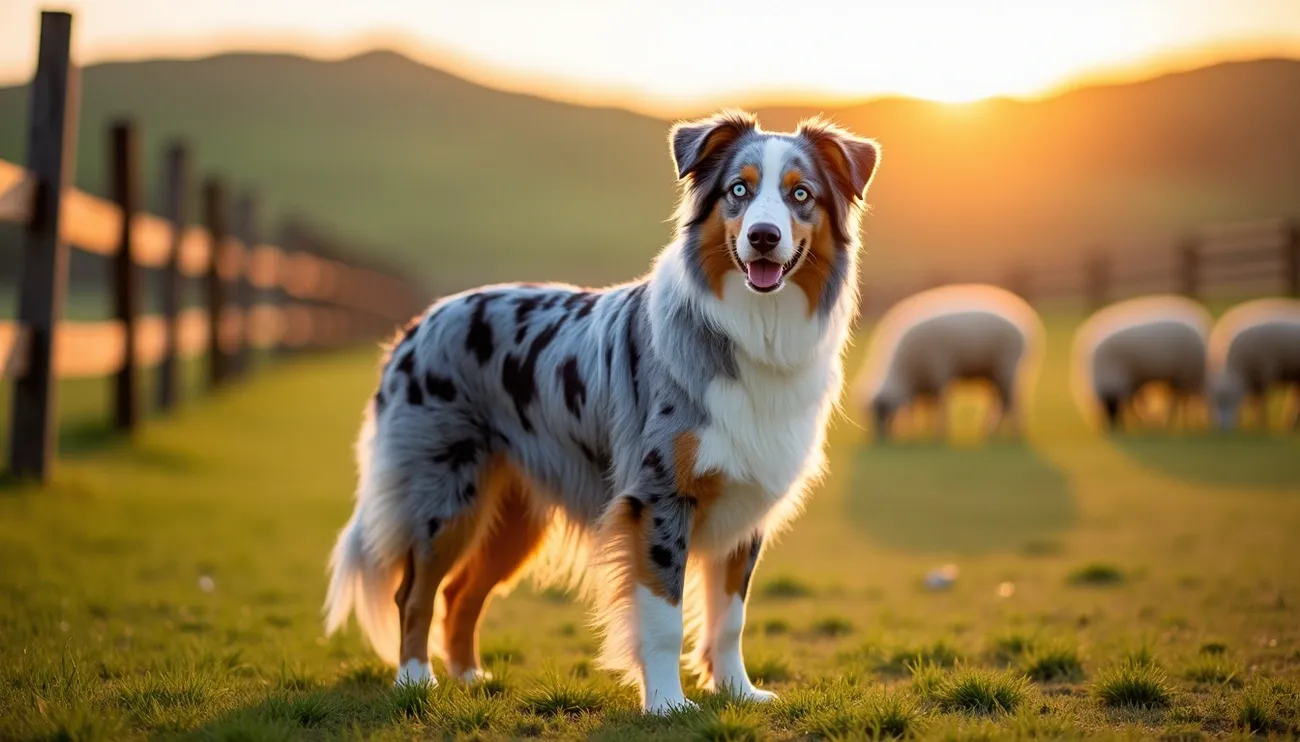 The Australian Shepherd’s name might fool you – this herding dog breed actually comes from the United States, not Australia. These working dogs got their name from Basque shepherd dogs that arrived in America from Australia back in the 1800s. Ranch work and sheep herding shaped their development in America. Today, they rank as the 12th most popular breed in the United States according to the American Kennel Club’s 2024 statistics.
These smart, energetic dogs stand between 18-24 inches tall. The males weigh 50-65 pounds, while females are a bit smaller at 40-55 pounds. A well-cared-for Australian Shepherd lives 12-15 years. Their working dog background means they need lots of exercise each day and tasks that give them purpose. These loyal family dogs love staying close to their owners.
Let me tell you more about Australian Shepherds. We’ll look at their Spanish-Basque roots, physical features, personality, health issues, and what they need to thrive. This piece will help you learn about what makes these dogs so special worldwide – perfect if you want to bring an “Aussie” into your home or just want to know more about this amazing breed.
History and Origin of the Australian Shepherd
The Australian Shepherd’s story goes deeper than most people think. This breed has a complex background that spans continents and centuries. Most dog breeds have simple family trees, but the Aussie’s past weaves together different cultures, migrations, and adaptations to working life.
From Basque shepherds to American ranches
Spanish Conquistadors brought the earliest ancestors of the Australian Shepherd to the Americas as early as the 1500s. These dogs helped manage the tough Churras sheep that Spanish settlers used to feed their soldiers and clergy. Old records link them to several European herding dogs. The Carea Leonés from northwestern Spain shares many physical traits with today’s Aussies. This smaller, energetic sheepdog might be one of their ancestors.
These Spanish-derived herders spread through the future southwestern United States over the next few centuries. They evolved into versatile sheepdogs that thrived in challenging terrain. The breed we know today started taking shape in California during the 19th century.
Big changes came with the California Gold Rush. Miners needed sheep for food, which created huge demand. America needed a steady supply of mutton and wool after the Civil War. These market forces brought more sheep and their herding dogs to American shores.
American ranchers and farmers valued these versatile working dogs because they:
- Worked well in high altitudes and rough terrain
- Had exceptional stamina for all-day herding
- Showed intelligence and learned quickly
- Possessed strong herding instincts
American stockmen refined the breed between the late 1800s and early 1900s. They bred dogs with traits that made them excellent ranch partners. These dogs could handle different types of livestock and adapt to various working conditions, making them essential on American farms.
The breed stayed mostly a working dog until after World War II. Western riding and rodeos became popular, and these talented herding dogs caught people’s attention. They appeared in rodeos, horse shows, movies, and television. Jay Sisler, a rodeo performer, showed off his Australian Shepherds’ impressive tricks at western state rodeos, which boosted the breed’s popularity substantially.
Why it’s called ‘Australian’ despite U.S. roots
The Australian Shepherd’s name puzzles many people. The breed developed right here in the United States, but its name points to the other side of the world. Several theories explain this naming mystery.
The most prominent explanation connects to Basque shepherds who came to the United States from Australia in the 1800s. These skilled shepherds from the Pyrenees region between Spain and France brought their expertise and dogs on their American journey. People knew them for their “little blue dogs” that excelled at herding.
Some historical accounts say these Basque shepherds might have mixed their dogs with Collies and Border Collies during their Australian stay before coming to America. The name might also refer to the Australian sheep these dogs herded rather than the dogs themselves.
Earl Cotton of Eastern Oregon left one of the earliest written records of these dogs around 1917. Cotton started raising sheep during World War I. He traveled to Montana or Colorado and came back with “two choice rams and several small, gray merled dogs”. He later started his own breeding program and brought two dogs from Australia around 1924. Cotton noted these dogs looked similar to his best Aussies.
The breed earned official recognition step by step. Different registries started listing Australian Shepherds in the early 1950s. A dedicated breed club started in 1957, and the United Kennel Club recognized them in 1979. The American Kennel Club finally made it official on September 1, 1991, and added the breed to the Herding Group on January 1, 1993. This formal recognition confirmed what ranchers had known for generations – they had an exceptional American working dog with an unexpected foreign name.
Physical Characteristics and Appearance
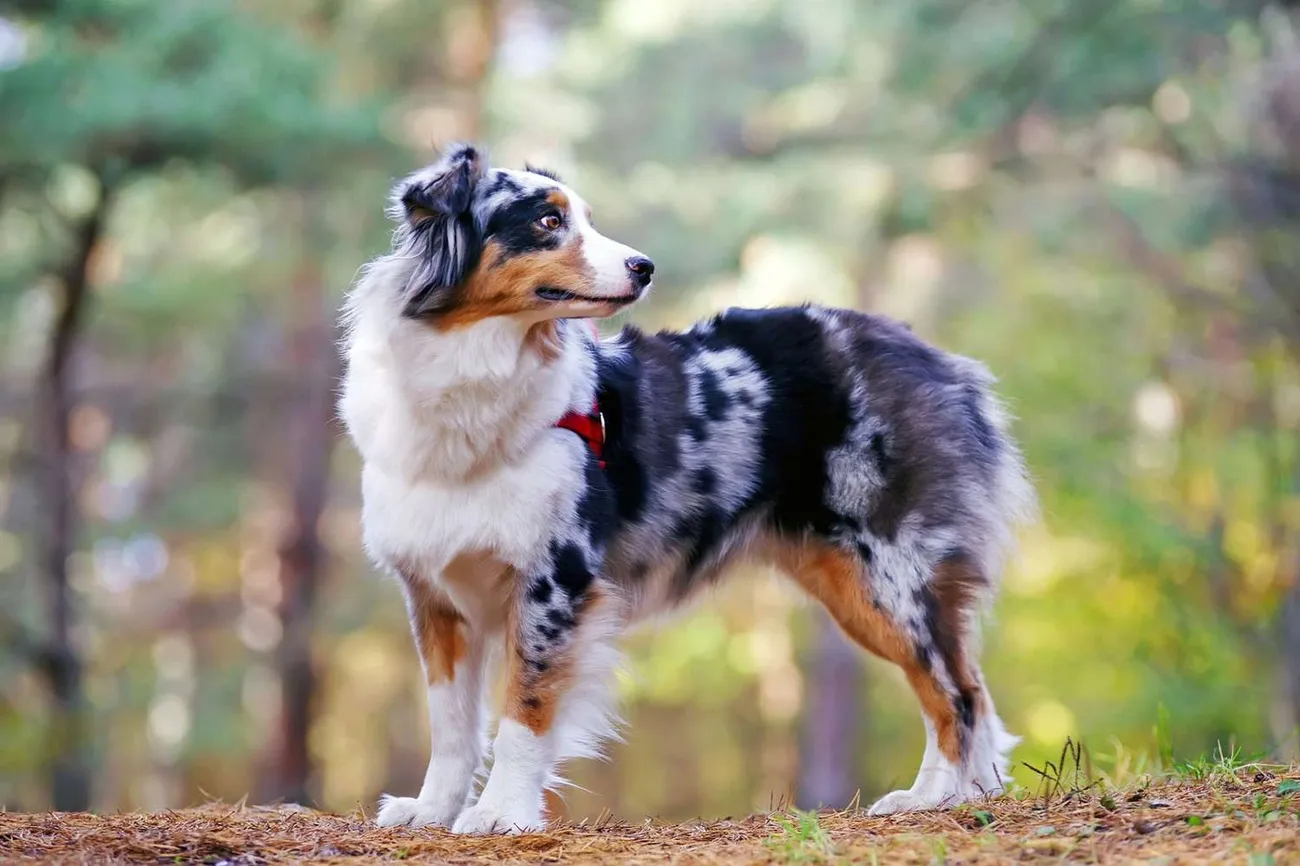
Image Source: Daily Paws
Australian Shepherds have a striking look that perfectly combines beauty with function. These dogs stand out among herding breeds with their athletic build and eye-catching color patterns. You’ll know an Aussie when you see one.
Size and weight range
These medium-sized dogs pack a lot of muscle on their sturdy frames – a testament to their working roots. Males are bigger, reaching 20-23 inches at the withers (shoulder), while females stay between 18-21 inches in height. You’ll notice this size difference in their weight too. Adult males tip the scales at 50-65 pounds, and females are lighter at 40-55 pounds.
These dogs’ bodies are just a bit longer than they are tall. This gives them the perfect balance to make quick turns when they’re herding livestock. Their build combines power and agility, making them great partners on American ranches.
Coat types and colors
The Aussie’s double coat is one of its best features. They have a thick undercoat covered by a medium-length outer layer that’s either straight or slightly wavy. This combo helps them handle both hot and cold weather – exactly what they need for outdoor work in any condition.
These dogs come in four official color patterns:
- Black – Can be solid, with white markings, or with both white and copper (tan) points
- Red – Ranging from light cinnamon to liver color, with similar marking patterns as black
- Blue Merle – A striking marbled pattern of black spots on a gray background, creating a “blue” appearance
- Red Merle – Red patches on a silver or buff background
Each color shows up in three possible patterns: solid, bi-color (with white), or tri-color (with white and tan points). The dog’s nose, lips, and eye rims match their main coat color – black dogs have black features, while red dogs show liver coloring.
The Aussie’s eyes add even more charm to their looks. Brown eyes are most common in black dogs, but blue or “marbled” eyes often show up in merles. Some Aussies even have different colored eyes, or eyes with multiple colors in the same iris.
Tail types: bobbed vs. full
The Aussie’s tail might be their most unique feature. Not every Aussie has a short tail, though many think they do. About 20% of these dogs are born with naturally bobbed tails. This comes from a specific gene that doesn’t fully express itself.
Natural bobtails (NBT) can be any length – from barely there to almost full-sized. About 47% of NBT Aussies have tails that reach quarter-length or longer. When parents carry the NBT gene, their puppies often show different tail lengths.
Back in the day, breeders would dock full-tailed Aussies to under 4 inches. This was standard practice in the United States to keep them looking uniform. The UK banned tail docking in 2007, and many countries have followed suit. That’s why you’ll see more full-tailed Aussies around the world now.
Breeders need to be careful about pairing two short-tailed NBT dogs. Puppies that get two copies of the NBT gene can develop serious spine problems. That’s why responsible breeders pay close attention to their breeding pairs.
Understanding the Australian Shepherd Temperament
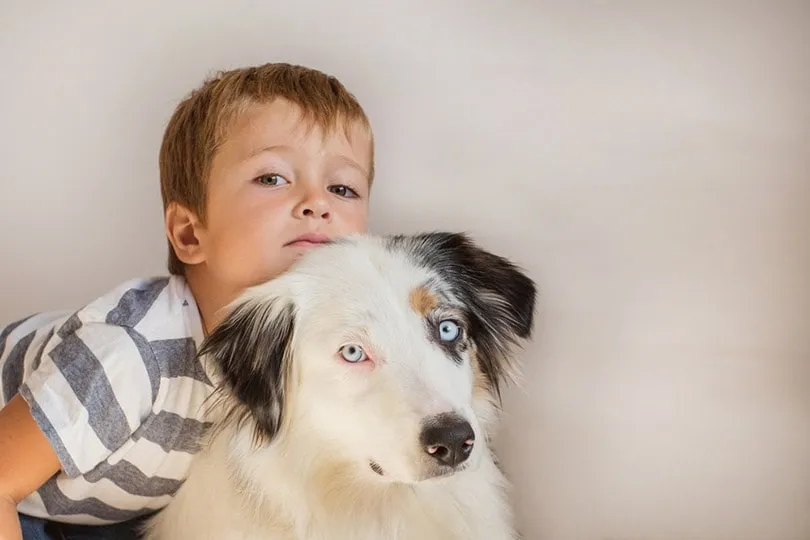
Image Source: Hepper
Australian Shepherds have a unique blend of intelligence, energy, and devotion that makes them amazing companions and challenging pets. Their striking looks hide a personality that generations of ranch work and herding have shaped.
Loyalty and protectiveness
Australian Shepherds build deep bonds with their human families. These dogs aren’t just pets—they become devoted family members who put their “pack’s” safety and well-being first. They make excellent watchdogs because they stay alert to any threats to their territory and loved ones.
Their loyalty shows up in daily life. Most Aussie owners say their dogs follow them everywhere in the house. They become their pet parents’ “shadows” and prefer to stay close rather than be alone. This attachment and protective nature can lead Australian Shepherds to become territorial or overprotective if they don’t get proper socialization.
Energy levels and playfulness
The Australian Shepherd’s most notable trait is their high energy level. These working dogs come from herding stock and have amazing stamina that needs regular outlets. They do best when they have a job—whether it’s herding, dog sports, or structured tasks.
Australian Shepherds might develop these problems without enough exercise:
- Destructive chewing or digging
- Excessive barking
- Hyperactivity, especially before age 2-3
- General restlessness or anxiety
A casual walk around the block won’t cut it for this breed. They need hours of meaningful exercise daily. Activities like agility training, frisbee games, and focused obedience work give them both mental and physical challenges.
A fenced yard alone won’t give an Aussie enough exercise. Dogs rarely exercise hard on their own—they need interactive play and structured activities, just like humans do.
Interaction with children and other pets
Australian Shepherds can become great friends with children and turn into playful, protective companions. Their herding instincts might make them try to “manage” children by circling, nipping, or other herding behaviors. This behavior isn’t aggressive—it’s an instinct that needs guidance and training.
Proper socialization helps develop positive interactions with children and other animals. Puppies need exposure to different experiences, people, and pets to learn appropriate behaviors for various situations. Good training helps Aussies channel their herding instincts into better activities.
These dogs usually get along well with other pets, especially when they grow up together. Their high energy and play style might be too much for calmer animals at first, so they need supervision until they learn each other’s signals.
Anyone thinking about getting an Australian Shepherd should understand their unique temperament. These dogs bring smarts, loyalty, and endless enthusiasm to the right home. They need dedicated owners who value their need for purpose, exercise, and consistent training.
Behavioral Traits and Herding Instincts
Australian Shepherds have a complex set of herding behaviors that shape their personality and daily behavior. These instincts usually start showing up when they’re 6-8 months old and are the foundations of their working abilities and sometimes create household challenges.
Natural herding behavior
Australian Shepherds show their herding instinct through several unique traits. They have an irresistible urge to control movement—whether it’s livestock, other pets, children, or even moving vehicles. You’ll notice this instinct through their intense eye contact, strategic positioning, and calculated movements to control their targets.
These dogs know how to “read” the animals they herd and position themselves to direct movement. Their herding style has these characteristics:
- Strategic circling and gathering behaviors
- Controlled nipping to direct movement
- Stalking and intense visual focus
- Quick responses to unexpected changes
- Protective boundary establishment
Generations of selective breeding have boosted their ability to “boss” livestock with authority. One breeder points out, “The key word here is ‘boss.’ Aussies like to have their world in order and know that they can influence creating that order”.
Common behavioral challenges
The traits that make Australian Shepherds excellent working dogs can create problems in a family setting. They often target children, other pets, or moving objects like bicycles and cars with their herding behavior. These instincts can show up as:
Heel nipping and grabbing clothes become common issues for Aussie owners. Their strong prey drive makes running children particularly tempting targets.
Their watchful nature makes them notice subtle changes that other breeds might miss. This heightened awareness often leads them to focus on moving objects or bark at what they see as threats.
Australian Shepherds will take charge of household dynamics if they sense weak human leadership. Keep in mind, they don’t do this out of defiance – it’s their deeply rooted working instincts at play.
How to redirect herding tendencies
You can channel an Australian Shepherd’s herding instincts positively through consistent management and proper outlets. Early training is vital to set boundaries and teach alternative behaviors.
Mental stimulation matters just as much as physical exercise for Aussie owners. These dogs need both types of activities to thrive. Here are some effective options:
- Structured activities like agility, flyball, or frisbee
- Training with specialized herding balls
- Interactive puzzle toys and food-dispensing devices
- Obedience training and trick learning
Redirecting works better than punishing herding behaviors. Teaching different responses to movement triggers helps control nipping and chasing. Commands like “leave it,” “wait,” and a reliable recall give you control in challenging situations.
Many Aussie owners don’t realize that mental challenges should match physical exercise. These dogs can be mentally restless even after physical exhaustion. They satisfy their problem-solving instincts through puzzles, new skills, and novel situations.
Patience plays a vital role when working with herding behaviors. Centuries of breeding have ingrained these traits – you can’t eliminate them, but you can manage and channel them into appropriate activities.
Health and Lifespan of Australian Shepherds
Australian Shepherds have a vibrant coat and boundless energy. They are a healthy breed that needs specific care. Owners who understand their health profile can give these dogs the best care throughout their lives.
Average lifespan and longevity
Australian Shepherds live longer and healthier lives compared to many other breeds. These medium-sized dogs typically live between 12 and 15 years. This is quite remarkable since most purebred dogs live 8-15 years.
Aussies are tough dogs that outlive expectations. Most medium-sized dogs live 10-13 years, but Australian Shepherds live several years longer. The miniature varieties also maintain a solid 12-13 year average.
Your Aussie’s lifespan depends on several things. Good nutrition, regular exercise, preventive care, and quick response to health issues help them live longer. Regular vet check-ups help catch problems early before they become serious.
Common genetic health issues
As with other breeds, Australian Shepherds can inherit certain health conditions. Breeders work hard to reduce these problems through careful breeding and testing.
Australian Shepherds commonly face these health issues:
- Hip and elbow dysplasia – These joint formation problems can cause pain, lameness, and arthritis. About 4-9% of Aussies develop hip dysplasia, and a similar number get elbow dysplasia.
- Eye conditions – Hereditary eye problems show up at different rates. Cataracts are most common – about 25.6% of Aussies carry this gene. They can also get progressive retinal atrophy (PRA), collie eye anomaly (CEA), and iris coloboma. These conditions affect vision or cause blindness.
- MDR1 gene mutation – This genetic issue changes how Aussies handle certain medications. More than half of Australian Shepherds carry this mutation. This makes them sensitive to drugs like ivermectin and loperamide [222].
- Epilepsy – This inherited brain condition causes seizures in 2-3% of Australian Shepherds. Dogs usually show first signs before they turn three.
- Cancer predisposition – Aussies get certain cancers more often, especially lymphoma and hemangiosarcoma. These affect about 2-3% of the breed.
Less common problems include degenerative myelopathy, hyperuricosuria, and autoimmune disorders. Most of these issues show up in adult dogs. This means well-cared-for Aussies usually enjoy healthy puppyhood and young adult years.
Importance of health screenings
Health testing is crucial because of these genetic risks. People looking to get an Aussie should find breeders who do complete genetic screening of their breeding dogs.
The Australian Shepherd Health & Genetics Institute (ASHGI) lists several must-do genetic tests for responsible breeding. Eye certification through the Canine Eye Registration Foundation (CERF) by certified vet eye specialists provides key screening. The Orthopedic Foundation for Animals (OFA) checks for joint problems through hip and elbow evaluations.
DNA tests now catch many genetic conditions before symptoms appear. Breeders use tests for MDR1 sensitivity, progressive retinal atrophy, and hereditary cataracts to make better breeding choices [202]. These screenings help reduce these conditions in future generations.
No breeder can promise puppies without any health issues. However, health clearances make these problems less likely. The best way to raise a healthy, active Australian Shepherd is through proper screening, responsible ownership, and regular vet care.
Training and Mental Stimulation Needs
Training an Australian Shepherd goes beyond teaching simple commands. You just need an approach that involves their remarkable intelligence and meets their need for mental stimulation. These dogs run on cognitive challenges, and they often require as much mental exercise as physical activity.
Why early training is essential
The period between 3-12 weeks represents a critical socialization window for Australian shepherd puppies. These young dogs are more receptive to training and conditioning than at any other point in their lives. Your puppy’s training should start right after bringing them home. This prevents most behavioral issues that commonly develop in untrained Aussies. Clear expectations and boundaries give these intelligent dogs the structure they need.
Training sessions help build a strong bond between owner and dog. This creates a foundation of trust and communication. Australian shepherds learn acceptable manners quickly with consistent training from puppyhood, thanks to their eagerness to please and quick learning abilities.
Best training methods for Aussies
Australian shepherds respond exceptionally well to positive reinforcement techniques. Clicker training with food rewards has proven especially effective for this breed. These methods build confidence instead of breaking spirit—a crucial point for sensitive Aussies who don’t handle harsh corrections well.
Success in training depends heavily on consistency. These smart dogs quickly spot loopholes in rules and commands. We noticed when something exciting catches their attention, they’ll use their intelligence to get their way. Your commands must be non-negotiable. They need to follow instructions even when more entertaining options beckon.
Brief, engaging training sessions of just 5-15 minutes can tire an Australian shepherd’s mind more than physical exercise. This mental fatigue comes from learning new skills—like how humans feel exhausted after mastering something new.
Mental enrichment ideas
Mental stimulation should emphasize activities that require deep concentration rather than hyper-energetic games that might further excite their active minds. Here are some effective options:
- Teaching a solid “down-stay” or “place” command around distractions
- Food puzzle toys that require problem-solving
- Frozen surprise water bowls with embedded treats
- Hide-and-seek games with toys or people
- Dog puzzle games that dispense treats when solved
Teaching an Australian shepherd to stay calm amid exciting distractions takes tremendous mental effort. This helps develop an essential “off-switch”. Such focused concentration tires them differently than physical activity, addressing many behavioral issues at their source.
The best results come from combining these mental challenges with proper physical exercise. This creates a balanced routine that stops destructive behaviors like excessive barking, chewing, and the “wall-trashing” that happens when an Australian shepherd doesn’t get enough stimulation.
Exercise and Activity Requirements

Image Source: Facebook
Australian Shepherds burst with energy thanks to their ranch working roots. These high-energy dogs need plenty of daily exercise to stay healthy and balanced, even as house pets.
Daily physical needs
Australian Shepherds need way more exercise than most other dogs. These athletic pups must get between 1.5-2 hours of physical activity daily. This isn’t optional – they truly need it to thrive. These amazing athletes can sprint at speeds up to 56 kilometers per hour and keep running steadily for almost nine kilometers.
A quick walk around the block isn’t enough for an Aussie. The best approach spreads their exercise throughout the day in multiple sessions. Adult Aussies benefit most from a mix of structured workouts and free play time.
Best activities for Aussies
Australian Shepherds love activities that push their bodies and minds:
- Herding-based games: Treibball lets them use their natural herding instincts as they gather exercise balls
- Dog sports: Agility, flyball, disk chasing, and dock diving give them amazing workouts
- Outdoor adventures: They thrive on hiking varied trails, swimming, and running
- Interactive play: Long fetch or frisbee games with commands mixed in keep their minds sharp
These dogs really shine in competitive activities that blend physical challenges with mental work.
Signs of under-stimulation
Spotting an under-stimulated Australian Shepherd is vital. Watch for these warning signs:
- Destructive behavior like chewing furniture or digging holes everywhere
- Restlessness, pacing, or circling rooms even after walks
- Non-stop barking or whining without clear reason
- Becoming withdrawn, seeming depressed, or sleeping too much
These behaviors don’t mean you have a “bad” dog – your Aussie just needs more purpose and activity. Mental boredom can be as harmful as lack of exercise, leading to stress hormone spikes and possible anxiety issues down the road.
Grooming and General Care Tips

Image Source: Hound Therapy
A well-groomed Australian Shepherd looks beautiful and stays healthy. These double-coated dogs need regular care to keep their natural oils and avoid skin problems.
Brushing and coat maintenance
Your Australian Shepherd’s double coat needs consistent care. You should brush them 2-3 times each week to remove dirt, spread natural oils, and stop tangles from forming. The dog will “blow” their coat during spring and fall shedding seasons, so daily brushing becomes crucial. Start with a slicker brush and then use an undercoat rake to reach the thick underlayer. The areas behind their ears and under their legs tend to mat easily, so they need extra attention to prevent painful tangles.
Bathing frequency
Australian Shepherds typically need a bath every 6-8 weeks. Too much bathing removes natural oils from their coat and can lead to dry skin, irritation, and excess shedding. Dog-specific shampoos work best since human products can throw off their skin’s pH balance. Adding conditioner after the bath makes their coat look amazing and helps prevent tangles during future brushing sessions.
Dental, ear, and nail care
Your dog’s dental health needs attention 2-3 times weekly with special dog toothpaste. Check their ears regularly to catch infections early, especially if they love swimming. Trim their nails every 2-3 weeks to prevent posture problems and joint pain. Make it a habit to check their paws weekly for cuts, swelling, or debris stuck between their toes.
Conclusion
Australian Shepherds make remarkable companions in the right homes. These intelligent, energetic dogs combine stunning looks with exceptional work ethic and steadfast dedication. Their medium-sized frames, striking coat patterns and expressive eyes catch everyone’s attention, and their 12-15 year lifespan gives families a long-term friend to cherish.
New owners should think over whether their lifestyle matches what these dogs need. Australian Shepherds just need 1.5-2 hours of daily exercise, mental challenges and regular training. The best-behaved Aussie might develop issues that stem from their herding instincts and high intelligence when these needs aren’t met.
These dogs run on activity and do best with families who value their protective nature and provide structure. Their natural herding instincts need proper channeling through sports, games or actual herding work. Regular grooming sessions help maintain their beautiful double coat and create stronger bonds between dog and owner.
Australian Shepherds reward dedication with amazing versatility and devotion. They shine in competitive sports, ranch work, therapy roles, or as active family members. Despite their name suggesting Australian roots, these dogs showcase American ingenuity. They’ve evolved from pure ranch dogs to beloved companions while keeping their sharp minds and strong work drive intact.
Active families looking for a devoted, trainable companion will find the Australian Shepherd’s mix of beauty, brains and zest for life hard to match.
Key Takeaways
Understanding the Australian Shepherd’s unique characteristics helps potential owners make informed decisions about this remarkable breed that combines beauty, intelligence, and high energy needs.
• Australian Shepherds require 1.5-2 hours of daily exercise plus mental stimulation to prevent destructive behaviors from their herding instincts.
• Despite their name, these dogs were developed in the United States, not Australia, weighing 40-65 pounds with a 12-15 year lifespan.
• Early training and socialization are essential as their natural herding behaviors can manifest as nipping at children and other pets.
• Regular grooming 2-3 times weekly prevents matting of their double coat, with daily brushing needed during seasonal shedding periods.
• Health screenings for hip dysplasia, eye conditions, and MDR1 gene mutation are crucial due to genetic predispositions in the breed.
Australian Shepherds make exceptional companions for active families who can provide consistent training, adequate exercise, and mental challenges. Their loyalty and intelligence shine when their working heritage is properly channeled into appropriate activities rather than suppressed.
FAQs
Q1. What is the typical lifespan of an Australian Shepherd? Australian Shepherds generally live between 12 to 15 years when properly cared for. This relatively long lifespan is considered above average for medium-sized dog breeds.
Q2. How would you describe the temperament of an Australian Shepherd? Australian Shepherds are known for their intelligence, loyalty, and high energy levels. They are affectionate with family but can be cautious around strangers. With proper socialization, they typically become friendly and confident dogs that interact well with people and other animals.
Q3. What are the recognized color variations in Australian Shepherds? There are four officially recognized color patterns for Australian Shepherds: black, red, blue merle, and red merle. All of these colors can have tan and white markings, potentially resulting in tri-colored Aussies.
Q4. Are Australian Shepherds considered high-maintenance dogs? Yes, Australian Shepherds are generally considered high-maintenance dogs. They require extensive daily exercise, regular grooming, and substantial mental stimulation. Their need for human companionship and activity makes them best suited for active owners who can dedicate time to their care.
Q5. How much exercise does an Australian Shepherd need daily? Australian Shepherds typically require between 1.5 to 2 hours of physical activity daily. This should ideally be split into multiple sessions and include both structured exercise and free exploration time to keep them physically and mentally stimulated.