
Persian Cat Information: Characteristics, Behavior, Temperament, Lifespan, Weight kg
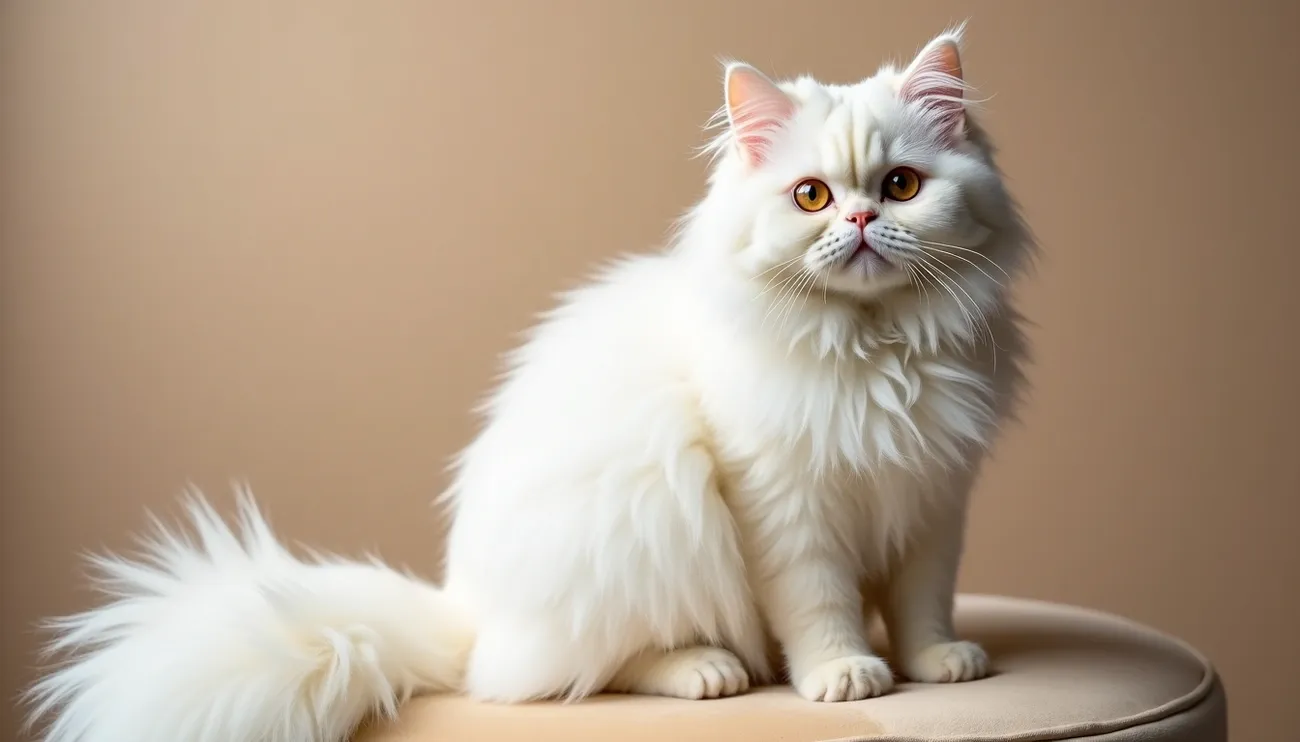 Persian cats stand as the fourth most popular cat breed worldwide, according to the Cat Fanciers’ Association in 2021. These majestic felines fascinate cat lovers everywhere. Their documented ancestors first showed up in Italy from Khorasan back in 1620.
These cats are easy to spot with their round heads, short faces, and beautiful long coats. A typical Persian weighs between seven and 12 pounds. Males tend to be bigger at 9 to 14 pounds, while females stay between 7 to 11 pounds. Their regal looks might fool you. Persians have a calm nature and love being lap cats. With good care, these fluffy companions can live 15 to 20 years.
Anyone thinking about getting a Persian should know they need lots of care. Their flat faces (brachycephalic) and long coats just need extra attention. You’ll spend time brushing their fur daily to avoid tangles. Their health needs watching too. In some countries, almost half of all Persians deal with polycystic kidney disease. These beloved pets are a joy to have, but they need dedicated owners who understand everything in their care routine.
The origin and history of the Persian cat
Persian cats have captivated people for centuries. Some records hint at their presence in ancient times, with hieroglyphic depictions dating back to 1684 BC. Most historians trace their documented history to Persia (modern-day Iran), Afghanistan, and nearby regions.
Early references from Persia and Afghanistan
Roman traveler Pietro Della Valle provided the first solid evidence of Persian longhaired cats. He spent six years exploring Persia between 1618-1623. His letters from Isfahan in June 1620 described finding “a beautiful species of cats” native to the Khorasan province. These cats had distinctive gray coats “without any speckles and without any spots.” Their chest and stomach showed lighter colors with “an agreeable shade of light brown”.
These cats went by different names in their native regions. Lieutenant Irwin noted in 1839 that people “very improperly called them ‘Persian’, for very few are found in Persia, and none exported”. Afghans knew them as “Boorauk” or “boorrak.” Local people enhanced their magnificent coats by washing them with soap and regular combing.
Mountstuart Elphinstone’s 1815 observations revealed that merchants exported these longhaired cats in large numbers. Everyone called them “Persian cats”, which showed their established trade value before they became famous in Europe.
Introduction to Europe in the 1600s
Persian cats’ arrival in Europe changed the breed’s history forever. Though some accounts suggest they reached Europe during the Crusades in the 1300s, their first documented arrival came in the early 17th century.
Pietro Della Valle brought the first Persian cats to Italy around 1620. Nicolas-Claude Fabri de Peiresc introduced similar longhaired cats from Damascus, Syria, to France at about the same time. European nobility quickly fell in love with these exotic felines.
These beautiful cats spread across Turkey, France, and Great Britain throughout the 17th century. Persian cats became favorites among European royalty and aristocracy by the 1800s. Queen Victoria of England loved them deeply, which boosted their prestigious status in Western Europe.
Evolution through selective breeding
Today’s Persian cat emerged from centuries of careful breeding. European breeders first mixed them with Turkish Angoras, which also had long coats. English breeders then focused on enhancing the Persian’s unique features.
London’s Crystal Palace hosted the world’s first formal cat show in 1871, a pivotal moment for Persian breeding. Harrison Weir, who organized that first show, refined the Persian breed standard in 1889. Breeders concentrated on developing the cats’ round faces, short muzzles, large eyes, and flowing coats.
These refined Persian cats reached the United States in the late 19th century. American breeders continued developing the breed. Madison Square Garden in New York hosted the first major American cat show in May 1895.
Recent genetic research reveals a surprising twist – modern Persian cats share closer genetic ties with Western European breeds like the British Shorthair, Chartreux, and American Shorthair. This shows how European and American breeding programs transformed the original Persian cats into the distinctive breed we know today.
Development of Persian cat types
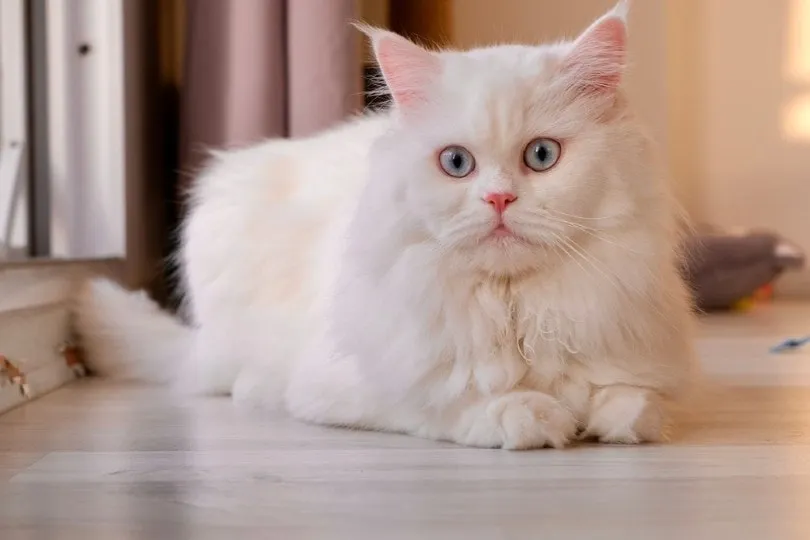
Image Source: Hepper
Persian cats have changed dramatically through their breeding history. These changes created such different variations that you might not even recognize them as the same breed. Breeders and show judges pushed for these changes based on their priorities, sometimes at the cost of the cats’ health.
Traditional vs. modern Persian cats
Traditional Persian cats, known as “doll face” Persians, show us what the original breed looked like. Their appearance stayed mostly the same when compared to photos from the late 1800s. These cats have a natural, balanced look with a nose that fits their face’s proportions. Their rounded faces aren’t too flat, which helps them avoid the breathing and eye problems that modern Persians often face.
The Persian breed’s biggest transformation started during World War II. A brachycephalic mutation appeared in the United States, and this genetic change would reshape Persian breeding forever. Breeders worked hard after the war to create Persians with rounder heads and smaller ears than their ancestors. These brachycephalic features led to the snub noses that now define modern Persian standards.
Research published in Genomics magazine in December 2007 showed that today’s Persian is more European than Persian. Modern Persians share closer genetic ties with British Shorthair, American Shorthair, and Chartreux cats than their Middle Eastern ancestors because of years of cross-breeding.
Rise of the doll face Persian cat
Modern flat-faced Persians became popular, and the traditional form started vanishing from cat shows. In spite of that, the older Persian cat style became famous with the public through movies, showing up in eight James Bond films starting with “From Russia with Love” in 1963.
Breeders and cat lovers created the term “doll face” to tell these traditional Persians apart from their increasingly flat-faced relatives. Doll-faced Persians breathe better because their nose sticks out slightly. You can spot this feature right after birth – the nose’s top sits lower than the bottom eye level.
Doll-faced Persians have stayed healthier over the years. Their natural facial structure helps them avoid many breathing difficulties and eye problems. These cats usually dodge the health issues that trouble modern Persians, but good breeders still need to maintain genetic diversity and avoid inbreeding.
The punch face Persian cat and ultra-typing
The flat-faced Persian really took off in the 1950s after a genetic mutation showed up in red tabby Persians. The “peke-face” Persian, named because it looked like a Pekingese dog, had a very flat face with a sharp stop between the forehead and nose. The Cat Fanciers’ Association (CFA) registered this look as a separate breed, but it faded away by the mid-1990s due to health problems—only 98 cats were registered between 1958 and 1995.
People in India nicknamed this very flat-faced Persian the “punch face”. Breeders called their practice of creating more extreme features “ultra-typing”. American Persians changed dramatically during the mid-1970s and early 1980s as breeders chased this extreme head type. Some people joked about these cats, calling them “pigs” or saying they had a “piggy expression” because of their narrow, ultra-high noses and tiny eyes.
The CFA and other registries updated their standards to allow and even encourage these extreme features. Cat associations made such extreme facial appearances mandatory, which some compared to “an addiction to ‘refine’ appearance”. Many critics pointed out that this created health problems instead of true refinement.
Cat fanciers recognized the problems with extreme breeding by 2004, so they changed standards to limit overdevelopment. Standards changed again in 2007 to reflect the flat face, stating that the forehead, nose, and chin should line up vertically.
Popular Persian cat variants
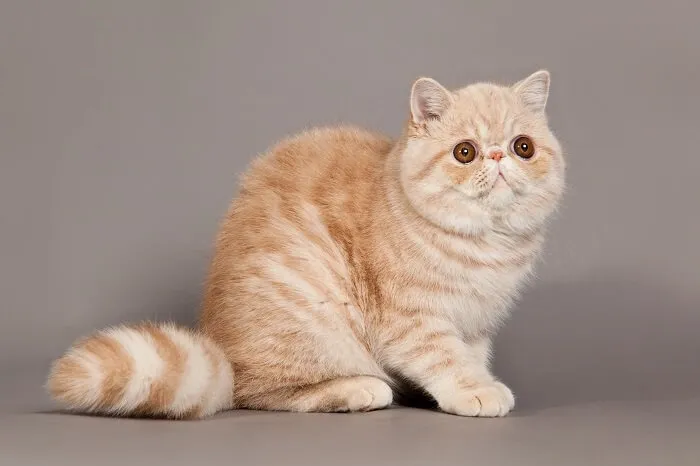
Image Source: Cats.com
Persian cats have evolved beyond their traditional doll face and punch face variations. Selective breeding and crossbreeding have led to several unique variants that keep core Persian traits while developing their own special characteristics.
Himalayan Persian cat
The Himalayan Persian cat (known as Colourpoint Longhair in Europe) came to life in the 1930s [link_1]. Breeders crossed Persian cats with Siamese cats to create this unique breed. This mix produced a cat that combined the Persian’s luxurious coat with the Siamese’s striking blue eyes and pointed coloration pattern.
These cats are medium to large with a cobby body and short legs. They have the Persian’s round, massive head structure with pushed-in noses and small, round-tipped ears that tilt forward slightly. Blue eyes set them apart from standard Persians – a trait they got from their Siamese ancestors.
The Cat Fanciers’ Association (CFA) made the Himalayan an official breed in 1957. Notwithstanding that, the CFA merged Himalayans with Persians in 1984, despite objections from both breeds’ councils. The CFA created a special system to track Persian purity. Persians with Himalayan blood got registration numbers starting with 3, which breeders call “colourpoint carriers” or “3000-series cats”.
Himalayans share health issues with other Persians. Their flat faces cause breathing problems and eye issues like epiphora (too much tearing). They also run a higher risk of polycystic kidney disease, feline asthma, and hip dysplasia.
Exotic Shorthair
People call the Exotic Shorthair “the relaxed person’s Persian” because it offers everything great about Persians without the demanding coat care. The breed has an interesting start – American Shorthair breeders quietly used Persians to “improve” their breed in the late 1950s.
Show rings loved this new crossbred look. American Shorthair purists fought back and won rules that would disqualify cats showing Persian traits. One smart breeder saw potential in these crosses and suggested a new category. The CFA ended up recognizing the Exotic Shorthair in 1966.
Modern Exotic Shorthairs look just like Persians except for their coat, which stays short, dense, and plush. They have the same round face, large expressive eyes, and sweet teddy bear look that Persian fans love. Some Exotics carry a hidden longhair gene. Two such cats can have longhaired kittens – what some registries call Exotic Longhairs.
These cats face similar health challenges as Persians due to their flat faces. They can develop breathing problems, corneal sequestrum, and birthing difficulties. On top of that, about 40-50% of Exotic Shorthairs in developed countries have polycystic kidney disease. This has led to calls for DNA testing in breeding programs.
Chinchilla Longhair
The Chinchilla Longhair started by chance in England in 1882. A silver tabby and smoke-colored Persian produced Silver Lambkin – now known as the father of all Chinchilla Persians. The breed got its name from a South American rodent famous for thick white fur. British royalty fell in love with these cats.
These cats stand out with their clear white coats that have black-tipped fur, creating a beautiful silver shine. Black eyeliner frames their emerald green or blue-green eyes, matched by black lip liner. Their slightly longer noses help them breathe better and tear less than standard Persians.
U.S. breeders tried but failed to make silver Persians a separate “Sterling” breed. South African cat groups saw things differently. The Southern Africa Cat Council lets cats with five generations of pure Chinchilla ancestry register as Chinchilla Longhairs.
These quiet, gentle cats make wonderful pets, though they might not do well with small children. They shed a lot and need daily brushing, but with good care, they usually live 12 to 15 years.
Physical characteristics and appearance
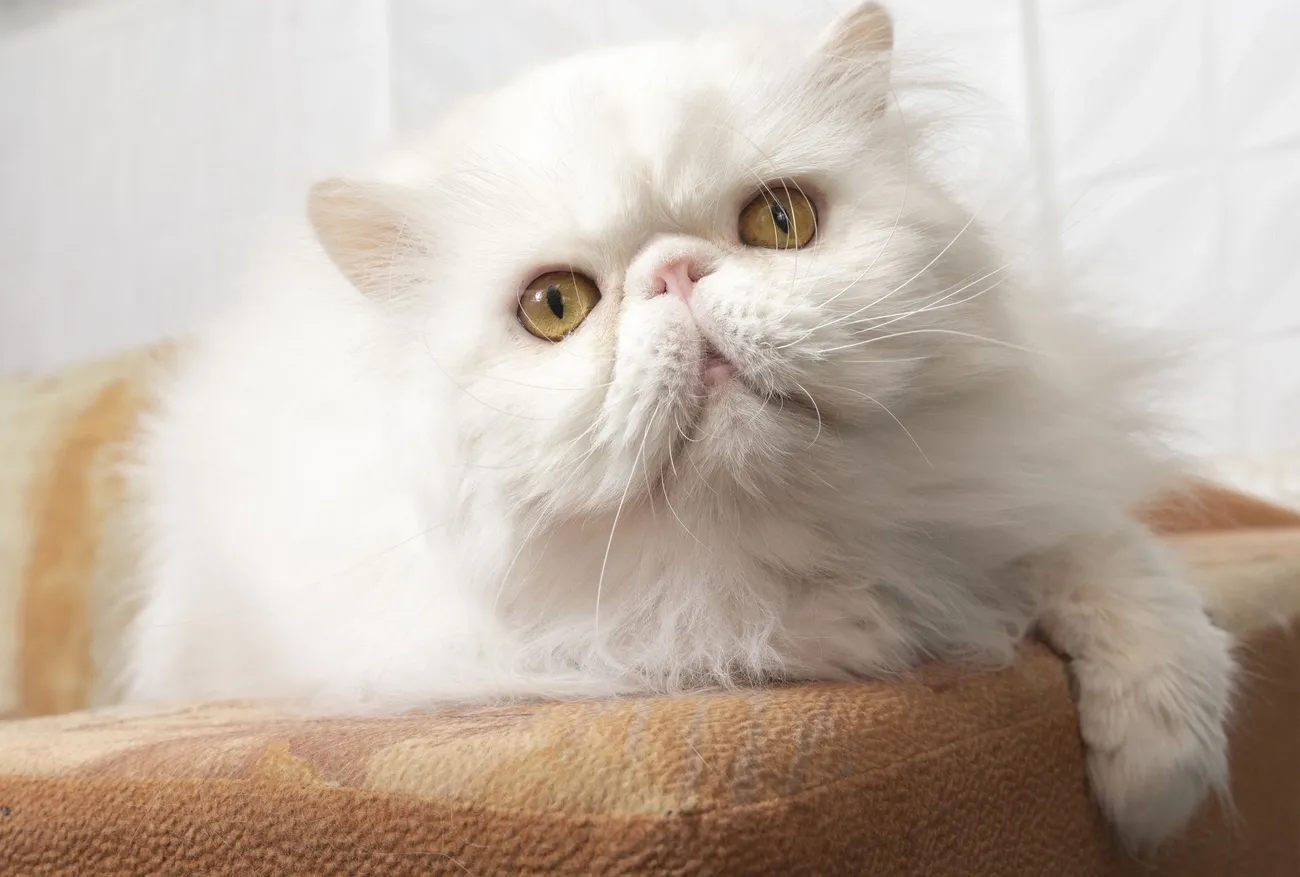
Image Source: The Spruce Pets
Persian cats grab attention wherever they go with their striking looks. These cats have become recognizable worldwide, and their features show amazing variety within the breed.
Coat types and Persian cat colors
A Persian cat’s most treasured feature is its luxurious coat – long, thick, and needing daily care to stay tangle-free. Each color variety’s coat feels unique, and some need more grooming than others. To cite an instance, white Persians have tricky “cotton” coats that tangle easily, while other colors have smoother coats that need less maintenance.
Persian cats come in a stunning array of colors and patterns. The Cat Fanciers’ Association groups them into seven divisions:
- Solid Division: This group has pure white, black, blue, red, cream, chocolate, and lilac cats. White Persians often star in ads and media, showing off their copper or deep blue eyes.
- Silver and Golden Division: These cats have Chinchilla and shaded variants with beautiful green or blue-green eyes.
- Shaded and Smoke Division: These cats look magical – they appear one color until they move, revealing lighter fur underneath.
- Tabby Division: This group has classic, mackerel, and patched tabby patterns in colors from blue to silver.
- Parti-Color Division: These cats show tortoiseshell, blue-cream, chocolate tortie, and lilac-cream combinations.
- Calico and Bi-Color Division: These cats have white coats with patches of different colors, including calico patterns.
- Himalayan Division: These cats show point coloration on their extremities with lighter body colors.
Whatever their color, breed standards say Persian coats must look shiny and luxurious. Each division follows strict color rules – black Persians must be “dense coal black, sound from roots to tip of fur” with no rust hints.
Eye color variations
All Persian kittens start life with blue eyes that change to their final color. Most kittens complete this change by six weeks, though some red/white and cream/white kittens might keep their blue eyes for up to five months.
A Persian’s coat color usually determines its eye color. Solid-color Persians typically have bright copper eyes, while chinchillas and golden Persians show green or blue-green eyes. White Persians can have deep blue or copper eyes, and sometimes one of each (odd-eyed). Himalayan Persians always have bright blue eyes.
Eye color plays a big role in breed standards. Perfect green eyes should look like “deep emerald” or “turquoise,” while copper eyes should match “a shiny penny or pumpkin pie”. These colors keep getting stronger until the cat turns about two years old.
Size and weight range in kg
Persian cats have medium-to-large frames with strong, cobby bodies. Short, powerful legs support their broad chest and sturdy frame. These cats look substantial but maintain elegant proportions.
Male Persians usually weigh between 4-7 kg (9-15 lbs), while females stay smaller at 3-6 kg (7-13 lbs). Some experts suggest narrower ranges: males at 4-6 kg and females at 3.2-4.5 kg. Weight management matters a lot since these cats can become overweight if they eat too much.
These cats have short, muscular legs, a short back, and a deep chest that creates their solid look. Healthy adult Persians should keep steady weights, though senior cats might show some natural weight changes as their metabolism shifts.
Temperament and behavior traits
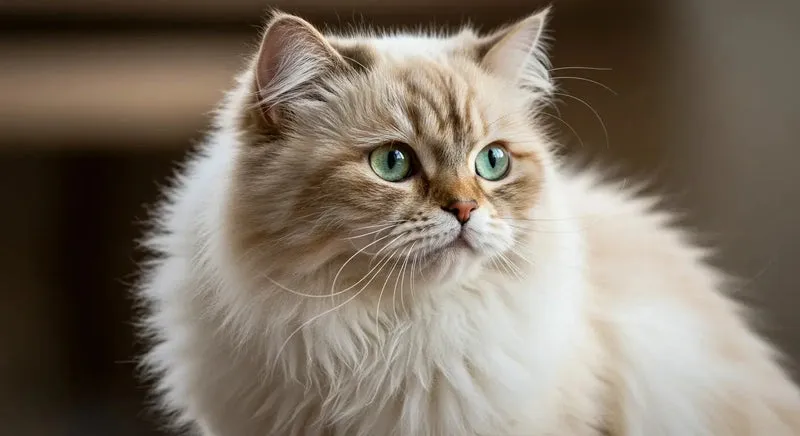
Image Source: Purebred Kitties
Persian cats stand out with their dignified demeanor. They strike a perfect balance between sweetness and independence that cat lovers worldwide find enchanting. These elegant felines have a unique personality that matches their stunning looks, making them beloved companions in homes everywhere.
Affectionate but independent
Persian cats have a gentle and sweet nature. They show affection but always do it on their own terms. These cats express their love differently from other more demanding breeds. You’ll often find them lounging nearby instead of constantly asking for attention. Many owners call their Persian companions “walking love sponges” because they seem to live just to give and receive love.
These majestic cats build strong bonds with their owners while keeping their independent spirit. Male Persians tend to show more affection, while females might act a bit more distant. They’re quiet cats too. You won’t hear them meow much – they prefer gentle purrs and meaningful looks to communicate.
Interaction with children and pets
Persian cats can become great companions for children if their interactions stay gentle and supervised. Their patient nature helps them handle careful petting, but they’ll quickly leave if play gets too rough. Parents need to teach kids the right way to approach and pet these sensitive cats. Setting clear boundaries helps respect a Persian’s need for a peaceful environment.
These cats usually adapt well to other pets with proper introductions. Their peaceful nature helps them get along with other cats and cat-friendly dogs. Success comes from taking things slow. Give each animal their own space and resources at first. This prevents territory issues and makes the transition less stressful.
Activity levels and playfulness
Persian cats enjoy playing despite their royal appearance suggesting otherwise. They keep their energy levels low to medium and prefer short bursts of activity followed by long rest periods. Adult Persians love comfort more than exercise. They’d rather watch household activities from their cozy spots than join in.
Experts suggest short, interactive play sessions to keep Persian cats healthy. Fishing-pole toys or laser pointers work great because they trigger natural hunting behaviors without demanding too much energy. Most Persians do well with 15-30 minutes of daily play split into shorter sessions. Even with their relaxed nature, these cats need mental stimulation. Simple food puzzles and new toys help prevent boredom.
Persian cats make perfect companions if you want a peaceful, low-maintenance relationship. They offer a beautiful mix of affection and respectful independence.
Health concerns and lifespan
Persian cats deal with unique health challenges throughout their lives. Studies reveal that almost two-thirds (64.9%) of these beautiful cats develop at least one health condition. Owners need to pay special attention to help their companions live healthy lives.
Common issues: PKD, eye problems, breathing
Polycystic Kidney Disease (PKD) ranks as one of the most serious genetic conditions in Persian cats. This inherited disorder creates fluid-filled cysts in the kidneys that can lead to kidney failure as cats age. Kidney disease takes the lives of many Persian cats (23.4%).
These cats’ distinctive flat faces cause several health complications:
- Brachycephalic Airway Syndrome – Short muzzles create narrow airways. This makes breathing difficult and leaves cats vulnerable to heat stress
- Eye Problems – These cats often have excessive tearing (epiphora), eye discharge (5.8%), and might develop progressive retinal atrophy
- Dental Disease – The cat’s unique jaw structure leads to dental problems in 11.3% of Persians
Haircoat disorders affect 12.7% of these cats, while 7.2% struggle with overgrown nails. Kittens with extreme brachycephaly can develop hydrocephalus[281]. Most health challenges stem from the breed’s unique physical traits.
Persian cat lifespan and age limit
Research shows Persian cats live around 13.5 years on average. Different sources suggest ranges from 10-13 years to 15-20 years. Most experts agree on 12-16 years as typical.
Good care can help these cats live longer. A brown-coated Persian named “Minky” reached an amazing 27 years. Genetics, lifestyle, diet, and preventative healthcare substantially affect their lifespan.
Preventive care and regular vet visits
Smart healthcare helps manage Persian-specific health issues. Veterinarians recommend:
Checkups every six months to track weight, dental health, kidney function, and breathing. Genetic testing helps screen for PKD, especially for those looking to adopt Persian kittens. A balanced diet and gentle exercise prevent obesity-related problems like diabetes and arthritis.
Living indoors protects these cats from accidents and infections. Daily eye cleaning prevents infections, and regular grooming keeps their beautiful long coat healthy. These simple steps help Persian cats live longer, healthier lives.
Grooming and hygiene needs

Image Source: Facebook
A Persian cat’s magnificent coat needs lots of dedication, and daily grooming is everything in ownership. Their luxurious fur needs consistent care to stay healthy and beautiful throughout their lives.
Daily brushing and coat maintenance
Daily combing is the life-blood of Persian cat care to prevent painful mats and tangles. Owners should never use a brush to remove mats. A wide-toothed metal comb works best to reach down to the root of the coat. Your cat needs extra attention behind the ears, under the chin, on the stomach, and underneath each arm.
The best results come from using a stainless steel comb with long, rounded teeth from head to tail. A slicker brush with high-grade steel pins helps remove the undercoat without damage. This process improves appearance and stops hairballs that could block intestines.
Bathing and eye cleaning routines
Persian cats need baths every 3-4 weeks, much more than short-haired breeds. Shedding seasons might call for more frequent baths to avoid tangles. Lukewarm water and cat-specific shampoo matched to your Persian’s fur color work best. Your cat needs a full dry afterward to prevent skin infections from trapped moisture.
Daily eye cleaning is vital, especially with a Persian’s facial structure. Their eyes water a lot, so daily cleaning prevents staining and possible infections. A soft cloth with special eye drops does the job – but stay away from cotton wool, as its fibers can harm delicate eye tissue.
Professional grooming tips
Many Persian owners find value in professional grooming every 1-2 months, even with good home care. Groomers help with mat removal, sanitary trims, and overall coat health. Starting grooming routines with kittens works best, and treats after each session reinforce good behavior.
Small sections of fur worked in the growth direction help minimize stress during grooming. It’s worth mentioning that proper grooming isn’t just about looks – it affects your Persian’s health, comfort, and quality of life.
Breed standards and ethical breeding
Major cat registries worldwide have different views on how to classify Persian cats and related breeds. The Cat Fanciers’ Association (CFA) sees Himalayans as color variants of both Persian and Exotic breeds. The World Cat Federation (WCF) treats them as completely separate breeds.
Registry classifications
Persian breeding standards keep evolving, and their classifications reflect this change. The CFA standard puts emphasis on the distinctive rounded head and short face that make modern Persians unique. Some European registries take a different approach. They keep separate classifications for traditional and modern Persian types because of their most important differences.
Concerns around brachycephalic breeding
Modern Persians’ extreme flat-faced look has raised serious concerns among veterinary professionals. Research teams at the Royal Veterinary College have shown that welfare problems with brachycephalic cats are similar to those in flat-faced dog breeds. These problems are systemic and go beyond looks. Cats with severe brachycephaly often struggle with breathing difficulties, eye problems, and dental malocclusion.
The FelineVMA clearly states it “does not support breeding based solely on appearance when health concerns and feline welfare are not prioritized”. Many experts now support breeding practices that move away from extreme facial flattening to give these cats a better life.
Responsible breeder practices
Responsible Persian breeders focus on:
- DNA testing for polycystic kidney disease (PKD1) and other genetic conditions
- Veterinary examinations before kittens go to new homes
- Keeping kittens with mothers until at least 12 weeks of age
- Providing detailed pedigrees showing at least four generations
Ethical breeders put their energy into breeding cats with moderate facial structures. This approach helps ensure normal breathing and eating functions.
Conclusion
Persian cats rank fourth in popularity according to the Cat Fanciers’ Association. These beautiful felines are among the most recognizable cat breeds in the world. Their stunning coats and round faces fascinate cat lovers everywhere, even though they need lots of care and attention.
The breed’s history stretches from ancient Persia to today’s modern breeding programs, and Persian cats have changed a lot over time. Traditional doll-faced Persians show the original breed features with their moderate looks. Modern flat-faced varieties reflect a sometimes controversial path in selective breeding. The breed has also inspired unique variants like the Himalayan, Exotic Shorthair, and Chinchilla Longhair that keep the core Persian traits.
Health issues are a key concern for anyone thinking about getting a Persian cat. These cats often face PKD, breathing problems, and eye conditions because of their unique facial structure. This is especially true for cats with very flat faces. Regular vet visits, genetic tests, and preventive care help these cats reach their full 12-16 year lifespan.
Persian cats need daily grooming – there’s no way around it. Their beautiful coats just need regular brushing, occasional baths, and careful eye cleaning. Owners should set aside enough time to keep these gorgeous cats healthy and looking their best.
Responsible breeding has become more important as people learn about health risks linked to extremely flat faces. Good breeders now try to balance facial features while keeping the classic Persian look. They put their cats’ health first, ahead of strict show standards.
These elegant cats make wonderful companions for dedicated owners. They have a gentle, peaceful nature and show their love in dignified ways. Persian cats need extra care and attention, but they reward their owners with a special mix of beauty and sweetness that keeps cat lovers coming back for more.
Key Takeaways
Persian cats are stunning companions that require dedicated care and informed ownership decisions. Here are the essential insights every potential Persian owner should know:
• Daily grooming is non-negotiable – Persian cats need daily brushing with metal combs to prevent painful mats and tangles in their luxurious coats.
• Health screening is crucial – Nearly 65% of Persians develop health issues, particularly PKD (kidney disease) and breathing problems from flat faces.
• Weight ranges vary by gender – Males typically weigh 4-7 kg (9-15 lbs) while females are smaller at 3-6 kg (7-13 lbs).
• Lifespan averages 12-16 years – With proper care including regular vet visits and preventive health measures, some can live up to 20 years.
• Choose traditional “doll face” types for better health – These Persians have fewer breathing and eye problems compared to extremely flat-faced varieties.
• Gentle temperament suits calm households – Persians are affectionate but independent, preferring peaceful environments over high-energy activities.
The key to successful Persian ownership lies in understanding their substantial care requirements and prioritizing health over extreme physical features when selecting a breeder.
FAQs
Q1. What is the typical temperament of a Persian cat? Persian cats are known for their gentle and calm demeanor. They are affectionate but independent, preferring peaceful environments over high-energy activities. These cats often form strong bonds with their owners while maintaining a dignified air.
Q2. How long do Persian cats typically live? The average lifespan of a Persian cat is between 12 to 16 years. With proper care, including regular veterinary check-ups and a healthy lifestyle, some Persians can live up to 20 years.
Q3. What are some common health concerns for Persian cats? Persian cats are prone to several health issues, primarily due to their distinctive facial structure. Common problems include polycystic kidney disease (PKD), respiratory difficulties, eye problems, and dental issues. Regular veterinary care and genetic screening are essential for maintaining their health.
Q4. What is the ideal weight range for Persian cats? The ideal weight for Persian cats varies by gender. Adult male Persians typically weigh between 4-7 kg (9-15 lbs), while females are slightly smaller at 3-6 kg (7-13 lbs). Maintaining a healthy weight is crucial to prevent obesity-related health issues.
Q5. How much grooming do Persian cats require? Persian cats need extensive grooming due to their long, luxurious coats. Daily brushing is necessary to prevent matting and tangles. They also require regular bathing every 3-4 weeks and daily eye cleaning. Professional grooming every 1-2 months is often recommended to maintain their coat health and appearance.