
Maltese
 The Maltese dog’s impressive heritage stretches back over 2,500 years to the island of Malta. These elegant dogs were once cherished companions of the wealthy and aristocratic, and they managed to keep their status as beloved pets through the centuries.
These tiny dogs pack plenty of personality into their compact frames. You’ll spot a Maltese by its long, silky, pure-white coat that flows gracefully. Their hanging ears and plumed tail curves beautifully over their back. The white Maltese brings a friendly nature and tends to stay healthy with a lifespan ranging from 12 to 15 years. While these playful pups will chase balls eagerly, they might not bring them back – a clear sign of their independent spirit.
This piece reveals everything about this ancient breed. From its rich history to essential care tips, temperament traits, and costs, you’ll find what you need to think over bringing a Maltese into your home.
The Ancient Origins of the Maltese Dog
The Maltese dog’s history goes back through time. These elegant dogs have been around for at least 29 centuries. They survived while many bigger, fiercer dogs disappeared forever.
Mentions in Greek and Roman literature
Greek history gives us the first solid records of the Maltese. Greek artists and philosophers were fascinated by this tiny dog. They celebrated its perfect shape in their art and writing. Aristotle (384-322 BC) called the breed “perfect in its small size” and loved its balanced features. He named it “Melitaion kunidion” (small dog from Melita).
The Cynic philosopher Diogenes of Sinope called himself a “Maltese dog.” This shows how the breed was 2,300 years old in classical Greek culture. The brilliant Hellenistic poet Callimachus (c.310-c.240 BC) wrote about these small white dogs too. He thought they came from the Adriatic island instead of Malta.
Romans wrote even more about these dogs. Marcus Valerius Martialis, or Martial (born between 38-41 AD), wrote beautiful verses about a Maltese lap dog. The dog, named “Issa,” belonged to his friend Publius, who governed Malta. His poetry shows the breed’s lively spirit: “Issa is more frolicsome than Catulla’s sparrow. Issa is purer than a dove’s kiss. Issa is gentler than a maiden”.
Cicero, Varro (116-27 BC), and Pliny also wrote about the Maltese. Their writings prove how much Romans valued these dogs.
Theories about the island of origin
Nobody knows for sure where the Maltese breed started. Ancient writers say it’s either from Malta or from Mljet (also called Melita in Latin), an Adriatic island near Corfu in modern Croatia.
Modern scholars think Malta is the breed’s true home. Historian Busuttil explains that “Melita” in Aristotle’s term “Melitaion kunidion” means Malta.
Some people think the breed’s ancestors were Spitz-type dogs from Sweden or Tibetan Terriers from ancient Asia. These possible ancestors were much bigger than today’s Maltese.
The Phoenicians might have brought these small white lapdogs to Malta. This theory makes the most sense. They controlled Mediterranean trade routes before Greece became powerful. The dogs then spread from Malta to other parts of Europe through sea trade [18, 19].
Role of Maltese dogs in ancient households
Ancient people saw Maltese dogs as more than just pets. Greek and Roman nobles kept them as status symbols. These small white dogs became maybe the world’s first “fad dog”.
Roman noblewomen always had a “Roman Ladies’ Dog” in their sleeve or close to their chest. This trend lasted for centuries, and European royal courts loved these dogs too.
Ancient Egyptians gave these dogs special treatment. Their hieroglyphics show harem women getting Maltese puppies as companions. They believed these dogs could heal people. Some would sleep near a Maltese puppy, hoping to feel better by morning.
The Greek writer Theophrastus (371-c.287 BC) wrote about people who built memorial stones for their dead Maltese. They called them “scion of Melita,” showing how much they loved these dogs. Athenaeus wrote in the early 3rd century CE that people from Sicily’s Sybaris liked Melite lap-dogs better than human friends. They even took their dogs to the gym.
The Maltese stayed popular through many cultural changes and falling empires. They kept their place as beloved companions to nobles across the Mediterranean world, making them one of history’s most enduring dog breeds.
The Evolution of the Modern Maltese Breed
The modern Maltese breed we see today has little genetic connection to those ancient white lapdogs, despite claims of an ancient lineage. The breed we know emerged during the Victorian era through careful breeding practices and standardization.
Victorian era breeding practices
The Victorian period (1837-1901) changed dog breeding forever in Europe and America. People started seeing dog breeds not just as general varieties but as distinct types with specific physical traits. These changes reshaped the entire world of dogs.
Victorian dog enthusiasts treated breed development like a manufacturing process. They believed they were “improving” dogs through selective breeding. Many took pride in their ability to transform existing breeds and bring back extinct ones. This era brought strict anatomical standards that defined the perfect example of each breed.
Victorian breeders wanted to create a Maltese with a distinctive silky white coat and refined looks. London’s toy dog lovers started importing Chinese spaniels after Edwin Landseer’s famous dog paintings. They crossed these dogs with pugs and bulldogs to create puppies with longer “feathering” on their ears and limbs.
The London market sold “Maltese” dogs that had no real connection to Malta. T.V.H. Lukey, a breeder, said his Maltese line came from the Manila Islands in 1841. R. Mandeville’s dogs won first prize at the Agricultural Hall Show in Islington in 1862. His kennels dominated shows in Birmingham, Crystal Palace, and Cremorne Gardens from 1869 to 1879. These kennels produced the finest Maltese breeding line.
Influence of other toy breeds
The Maltese we know today developed through careful breeding with other toy breeds. This refined its traits and made it more appealing. European and American breeders worked to standardize the breed in the 19th century. They focused on its unique look and gentle nature.
Poodles had a big impact on the breed. After a “Maltese Lion Dog” appeared at the first Westminster dog show in 1877, breeders sometimes crossed Maltese with poodles. Some modern Maltese still show poodle traits. This mixing helped create the silky, non-shedding coat that makes today’s Maltese special.
Poor breeding almost made the Maltese vanish in the 17th and 18th centuries. The work to save the breed led to new types of dogs – the Bichon Frise, Havanese, and Bolognese. Modern Maltese share genetic links with these breeds, showing how these small white companion dogs developed together.
Dog shows in England (until 1913) and Australia (until 1950) allowed Maltese with two-colored coats or solid non-white coats. The all-white standard we know is relatively new.
Recognition by kennel clubs
Major kennel clubs made the Maltese official as a distinct breed. The American Kennel Club (AKC) recognized it in 1888. They set standards that highlighted the breed’s long, silky coat and lovely personality.
The United Kennel Club (UKC) added the breed much later in 1948. Italy became the patron country when the Fédération Cynologique Internationale (FCI) accepted the Maltese in 1955. This completed the breed’s recognition by all major international kennel groups.
The breed’s registry started small with just two females in 1901. It grew slowly and reached only about 50 dogs in the 1950s. This shows how carefully controlled the breeding remained for many years.
Current breed standards require specific traits. Maltese must weigh less than seven pounds and have a long, straight, silky white coat. They need to move with grace and ease. These rules help maintain the breed’s special look while promoting good health.
The AKC standard describes the perfect Maltese as having “free-flowing elegance and balance” with a “compact body moving with a smooth and effortless gait”. These guidelines still help breeders and judges evaluate Maltese quality more than a century later.
Physical Characteristics of the Maltese
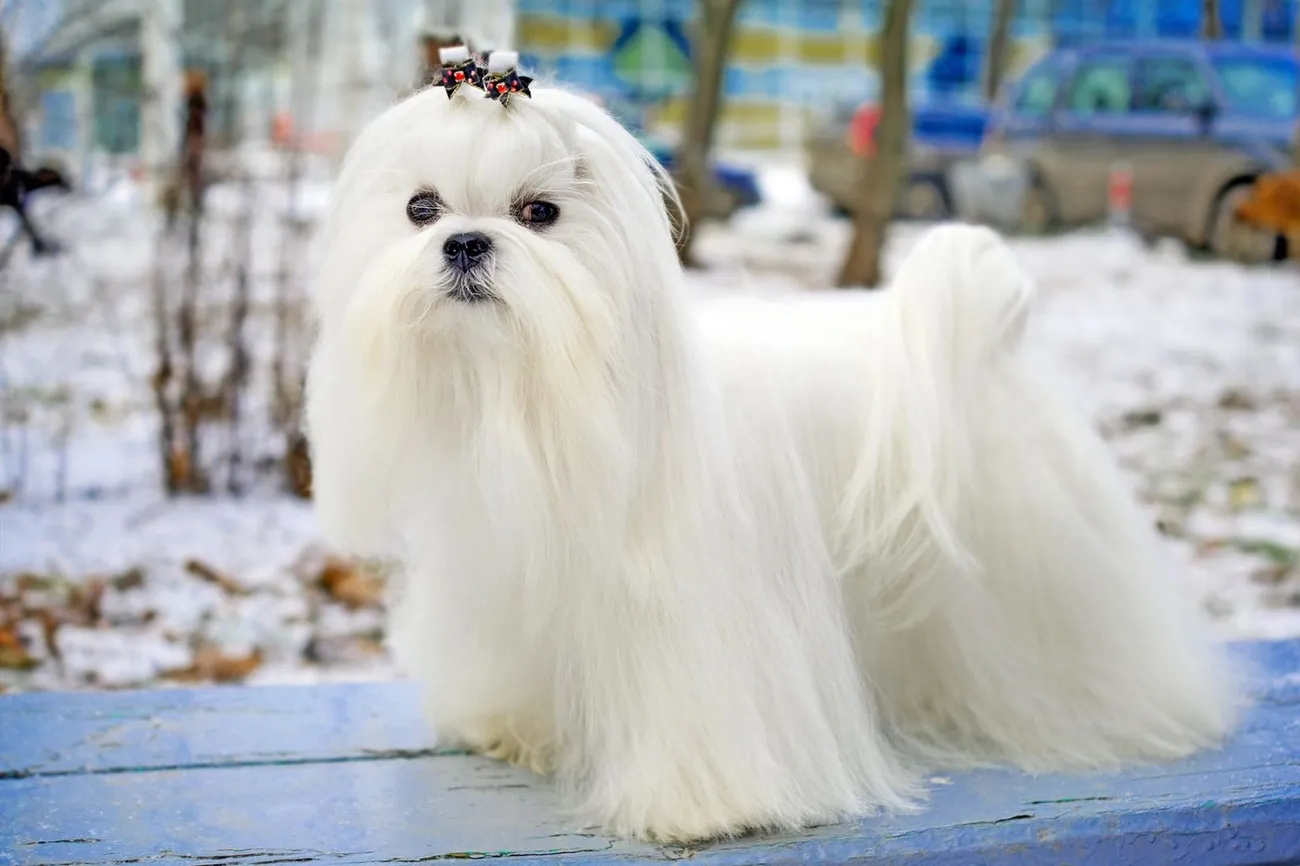
Image Source: Daily Paws
You can spot a Maltese dog quickly by looking at their unique features. These charming toy dogs have a compact body that shows both grace and strength under their glamorous coat.
Size and weight of full grown Maltese dog
Maltese dogs fit perfectly in the toy dog category with their small but sturdy build. A full-grown Maltese usually stands between 7-9 inches tall at the withers. Some male dogs might reach 10 inches in height. These little dogs must weigh less than 7 pounds. Show dogs typically weigh between 4-6 pounds.
Their small size makes them perfect lap dogs and companions. They fit well in apartments and small homes. Don’t let their tiny size fool you – these dogs are agile and athletic.
Coat type and color
The Maltese’s most beautiful feature is their stunning coat. These dogs have a single coat with no undercoat. This means they shed very little. Their hair grows long and silky, flowing down their body. A proper Maltese coat should be straight with maybe a slight wave but never curly or wooly.
The color rules for Maltese dogs are clear worldwide:
Pure white is the ideal color
Light tan or lemon marks on ears are allowed but not ideal for show dogs
Ear markings can range from dark orange to light beige
The AKC has strict rules about coat texture. They don’t want any “kinkiness, curliness, or wooly texture”. The coat must flow smoothly and feel silky.
What does a Maltese dog look like?
Maltese dogs look refined yet playful. Their rounded head features drop ears that blend naturally with their coat. Dark eyes – usually black or deep brown – give them a bright, smart look.
Black points mark their face – the eyes, nose, and lips should all be black. Many people love the black “halos” around their eyes.
Their tail curves gracefully over their back. Show dogs carry their tail with the tip touching their hip.
These little dogs move smoothly, showing off their well-balanced body. A strong frame and good muscles hide under that flowing coat.
Many pet owners choose shorter “puppy cuts” that need less grooming. Show dogs wear the classic floor-length coat that needs careful maintenance and special wrapping. Most Maltese wear a cute topknot – a small bunch of hair on top of their head that keeps fur away from their eyes.
Temperament and Personality Traits

Image Source: SpiritDog Training
A Maltese’s elegant white coat hides a personality that’s just as striking as their looks. These small dogs have grown into unique companions through their centuries of living with humans.
Typical Maltese dog temperament
We noticed that Maltese dogs are loving and friendly by nature. They build strong bonds with their owners and become very attached to family members. Their affectionate personality comes from serving as companion animals – a role they’ve played for over 2000 years [link_1].
These tiny dogs pack a fearless spirit that doesn’t match their small size. Their bravery makes them good watchdogs since they stay alert to their surroundings and strange noises. They might get defensive with strangers and bark at unfamiliar people or situations.
The breed’s intelligence stands out too. Maltese dogs learn fast and respond well to positive reinforcement. Their quick minds help them do great in dog sports like obedience and agility. All the same, training sessions might reveal their stubborn streak, so they need firm but gentle guidance.
Behavior with children and other pets
A Maltese’s compatibility with children falls somewhere in the middle. These dogs can fit well in families with kids if you take the right steps. Early socialization is a vital part of helping a Maltese get along with young ones. Dogs that don’t meet children as puppies might not warm up to them later.
Families with very young children should be careful. A Maltese’s delicate frame, weighing just 6-10 pounds, can get hurt if handled roughly. You must watch over any interaction between small children and these tiny dogs. The breed usually does better with gentle older children.
These dogs usually get along with other canines if they grow up together. They might be cautious around new dogs at first and respond by barking or trying to leave. Getting along with cats takes careful planning – keep the cat’s food and litter box where the dog can’t reach them.
Common behavioral quirks
The Maltese has several unique traits that set them apart. They often develop separation anxiety if left alone too long. This comes from their need for human company – they really shine when spending time with their owners.
The Maltese’s other notable behaviors include:
Barking tendencies – People call them vocal, but they don’t bark more than other small, lively dogs. Their alertness makes them quick to announce visitors or odd sounds.
Playful energy – Though they don’t need lots of exercise, Maltese dogs stay playful and energetic throughout their lives. Short walks and indoor games keep their active minds busy.
Lap dog expectations – A Maltese knows they’re a lap dog and expects some pampering. This shows up as stubbornness or picky behavior sometimes.
These charming little dogs have evolved into spirited companions whose big personalities overshadow their small size. Their mix of affection, smarts, and playfulness makes them wonderful pets, especially for people who can give them the attention and gentle care they need.
Health and Lifespan of the Maltese
Maltese dogs show amazing resilience despite their small size. Future owners should learn about health issues that affect this breed. These elegant companions can live long, vibrant lives with their human families if they receive proper care.
Common health issues
Future owners should know several hereditary conditions that affect the Maltese breed. Dental disease stands out as the most common problem, affecting 80% of all dogs by age two, and Maltese dogs face an even higher risk. Their small mouths create overcrowded teeth, which leads to tartar buildup.
These dogs often develop orthopedic problems, especially luxating patellas (slipping kneecaps). The kneecap slides out of position during movement and causes a distinctive “skipping” motion.
These tiny canines face respiratory challenges such as:
Collapsed trachea – which creates a distinctive “honking” cough as the windpipe folds inward
Breathing difficulties – linked to asthma or other respiratory conditions
Heart problems pose substantial risks. Cardiovascular disease causes most deaths in Maltese dogs (21.1%). Heart murmurs and congestive heart failure appear more in senior dogs aged 10 and older.
White Dog Shaker Syndrome sets Maltese dogs apart. This condition causes full-body tremors. The good news? Experts believe affected dogs don’t experience pain or discomfort.
Maltese dog lifespan expectations
The Maltese breed boasts impressive longevity despite these health challenges. Most live between 12 and 15 years, with 13.5 years as the average natural lifespan. Many surpass these numbers and reach 16 or 17 years.
Maltese dogs outlive many other breeds that average around 12 years. Female Maltese typically live about one year longer than males.
Tips for a long and healthy life
Your Maltese needs careful attention in several areas. Adult dogs need yearly checkups, while seniors (8+ years) should visit the vet twice yearly. These complete appointments include physical exams, stool testing, urinalysis, and vital organ assessments.
Weight control helps extend your Maltese’s life. Extra pounds increase risks for breathing problems and joint issues. Fat accumulates around airways and can worsen conditions like collapsed trachea.
Dental care needs special focus with this breed. Daily tooth brushing works best to prevent problems. Dental chews and supplements help too. Just one minute of brushing each day reduces dental disease risk substantially.
Dogs with breathing issues do better with harnesses instead of collars. This reduces pressure on the neck and trachea. Removing airborne irritants from your home helps prevent respiratory problems.
These small dogs need protection from injuries due to their delicate build. Trauma causes many premature deaths, especially in puppies. Use certified car seats, teach proper handling, and maintain leash discipline outdoors to keep your tiny companion safe.
Grooming Needs and Coat Care

Image Source: www.pawparentacademy.com
A Maltese’s signature silky coat looks beautiful but needs regular care. The right grooming techniques can turn this challenging task into an easy routine. Their distinctive white coat needs consistent maintenance to keep both its beauty and your dog comfortable.
Daily brushing and bathing
Regular brushing is the foundation of Maltese coat care. Dogs with longer coats need daily brushing to stop mats and tangles. Those with shorter puppy cuts can get by with brushing every 2-3 days. The right tools make all the difference. Pin brushes work best on moderate to long coats, while bristle brushes are perfect for shorter styles.
You should bathe your Maltese in moderation. Too much bathing removes natural oils and dries the skin. Not enough leads to oil buildup and odor. A bath every 3 weeks works best. Your dog needs thorough drying after each bath. Wet spots can lead to skin irritation, infection, or mildew.
Dog-specific whitening shampoos help keep that pristine white look without harsh chemicals. A good conditioner helps lock in moisture and stops matting between grooming sessions.
Managing tear stains
Tear stains are the biggest problem Maltese owners face. These reddish-brown marks under the eyes come from porphyrins – iron molecules in tears. Red yeast or bacteria can make things worse.
You can manage tear stains by:
Cleaning the face 2-3 times daily, especially after meals
Using stainless steel bowls instead of plastic that might cause allergies
Giving filtered water to cut down on stain-causing minerals
Keeping the hair around the eyes short to stop tears from spreading
Eye Envy Tear Stain Remover works well on existing stains. Some owners mix cornstarch and boric acid to dry the hair and slowly lighten the stains.
Popular Maltese haircuts
Maltese coats are versatile enough for many stylish cuts that look good and stay practical. The puppy cut ranks as a favorite – keeping the hair 1-2 inches long all over. This easy-care style needs brushing every 2-3 days and helps puppies get used to grooming.
The teddy bear cut creates an adorable stuffed-animal look with shorter facial trimming. Many owners choose short summer cuts when it’s hot. These cuts keep their Maltese cool but protect their sensitive skin from sun.
Show dogs usually wear the traditional floor-length coat that shows off the breed’s elegant look. This glamorous style needs daily grooming and careful attention to avoid tangles.
Feeding and Nutrition Guidelines

Image Source: Hypro Premium
Proper nutrition is the life-blood of health for the Maltese breed. These dogs need specific dietary requirements to support their unique physiology and magnificent white coat.
Best food for Maltese dogs
Your Maltese’s food choice depends on understanding what works best. Wet food appeals to picky eaters and adds hydration, but it might lead to plaque buildup. Dry kibble helps clean teeth and costs less, though you’ll need to ensure your dog drinks enough water.
Quality ingredients make a big difference for this breed. Your dog’s food should list real animal proteins like chicken, beef, fish, or lamb as main ingredients. Foods with omega-3 fatty acids will help maintain healthy skin and enhance your Maltese’s signature silky coat.
Feeding schedule for puppies and adults
Maltese puppies need more frequent meals than adult dogs. They should eat 3-4 times daily to support their quick growth and development. This schedule helps their energy levels stay consistent and improves digestion.
Adult Maltese dogs do best with two meals a day—breakfast and dinner. This schedule prevents them from overeating and gaining weight, which matters a lot for small breeds like the Maltese.
Adult Maltese weighing 2-4 pounds usually need about ¼-½ cup of food daily. Dogs over 5 pounds might need ½-¾ cups per day.
Supplements for joint and coat health
Maltese dogs often benefit from glucosamine and chondroitin supplements, especially after age 6. These supplements keep joints strong and cartilage healthy, which might slow down conditions like osteoarthritis.
Fish oil supplements with omega-3 are a great way to get better coat health. They help maintain skin moisture, elasticity, and ideal coat texture. Liquid supplements work well because you can mix them easily with food, and most Maltese dogs enjoy them.
Buying or Adopting a Maltese
Anyone who wants to add a Maltese to their family should know about both money and ethics. These fluffy companions need more than just the money you pay to bring them home.
Maltese dog price and cost factors
Several key elements determine how much a Maltese puppy costs. A breeder’s reputation plays a big role in pricing. 20-year old breeders often charge more because of their expertise and care. Age is another factor – puppies between 8-12 weeks usually cost more than older dogs. The bloodline quality creates three price levels: simple quality (no pedigree papers), KCI-registered, and show/champion bloodlines. Health certificates, vaccines and deworming also affect the final price.
Maltese puppy price in India and other regions
In India, Maltese puppies cost between ₹50,000 and ₹1,50,000. Different cities have different prices:
Mumbai and Delhi: ₹50,000 to ₹1,50,000
Bangalore: ₹50,000 to ₹1,50,000
Chennai and Hyderabad: ₹50,000 to ₹1,40,000
What to ask breeders or shelters
You should ask breeders about their experience, vaccination schedules, and how they socialize puppies. Make sure to meet both parents and all the puppies to see their personality and living conditions. Good breeders will ask you many questions about your home and experience with pets. They also give health guarantees and help you throughout your dog’s life.
Conclusion
The Maltese dog shows evidence of amazing canine companionship across centuries. Only a handful of breeds can trace their heritage back 2,500 years and still keep their unique looks and personality. These elegant dogs may be tiny, but they pack huge personalities that have won hearts from ancient Greek philosophers to families worldwide.
A silky white coat makes these dogs instantly recognizable, though it needs dedicated care. The pristine look comes from daily brushing, regular baths, and careful attention to tear stains. These smart and loving dogs make great companions in homes of all types, especially when they get steady attention and gentle handling.
Smart owners keep an eye on breed-specific health issues while enjoying their impressive 12-15 year lifespan. Good nutrition plays a vital role in their wellbeing. Quality ingredients and proper feeding schedules substantially improve their overall health and coat condition.
You should think over both the pleasures and duties of owning a Maltese. Beyond the original purchase price, you’ll need money for grooming, quality food, and preventive healthcare. Notwithstanding that, these dogs reward their owners with boundless love and a spirited personality.
The Maltese has adapted to centuries of cultural changes and different human lifestyles while keeping its charm intact. This ancient breed thrives as a family pet today. It proves the best companions sometimes come in the smallest packages. Their mix of historic importance, graceful looks, and loving nature will make the Maltese a cherished companion for future generations.
Key Takeaways
The Maltese is an ancient toy breed with over 2,500 years of history, offering modern families a perfect blend of elegance, companionship, and manageable size for various living situations.
• Ancient heritage meets modern appeal: Maltese dogs boast 2,500+ years of documented history as companions to nobility, maintaining their status as beloved lapdogs today.
• Small size, big personality: Weighing under 7 pounds and standing 7-9 inches tall, these fearless dogs pack intelligence, affection, and watchdog instincts into tiny frames.
• High-maintenance beauty: Their signature silky white coat requires daily brushing, regular professional grooming, and consistent tear stain management to maintain pristine appearance.
• Excellent longevity with proper care: Maltese typically live 12-15 years when provided quality nutrition, regular veterinary care, and protection from injuries due to their delicate build.
• Significant financial commitment: Beyond initial costs of ₹50,000-₹1,50,000 in India, ongoing expenses include professional grooming, premium food, and preventative healthcare throughout their lifetime.
When properly cared for, the Maltese transforms from a high-maintenance luxury into a devoted family member whose unwavering affection and spirited personality justify the investment for those seeking an elegant, long-lived companion.
FAQs
Q1. How much grooming does a Maltese require? Maltese dogs need daily gentle brushing and combing to prevent matting, along with regular baths and coat conditioning. Their fast-growing nails also require frequent trimming. While high-maintenance, proper grooming keeps their signature coat looking beautiful.
Q2. Are Maltese suitable for apartment living? Yes, Maltese dogs are excellent apartment pets. Their small size and moderate exercise needs make them ideal for compact living spaces. They adapt well to indoor environments and don’t require a large yard to stay happy and healthy.
Q3. How challenging is it to potty train a Maltese? Maltese dogs are generally not difficult to potty train due to their intelligence and adaptability. They can quickly grasp commands and routines, making it easier to establish a consistent bathroom schedule. However, patience and positive reinforcement are key to successful training.
Q4. Can Maltese dogs be left alone during a workday? Adult Maltese can typically handle being alone for 4-6 hours if provided with adequate mental stimulation. However, leaving them alone for more than 6-8 hours regularly is not recommended. Puppies require more frequent attention and should not be left alone for extended periods.
Q5. What is the average lifespan of a Maltese dog? The average lifespan of a Maltese dog ranges from 12 to 15 years. With proper care, including quality nutrition, regular veterinary check-ups, and protection from injuries, many Maltese can live even longer, sometimes reaching 16 or 17 years of age.