
Whippet
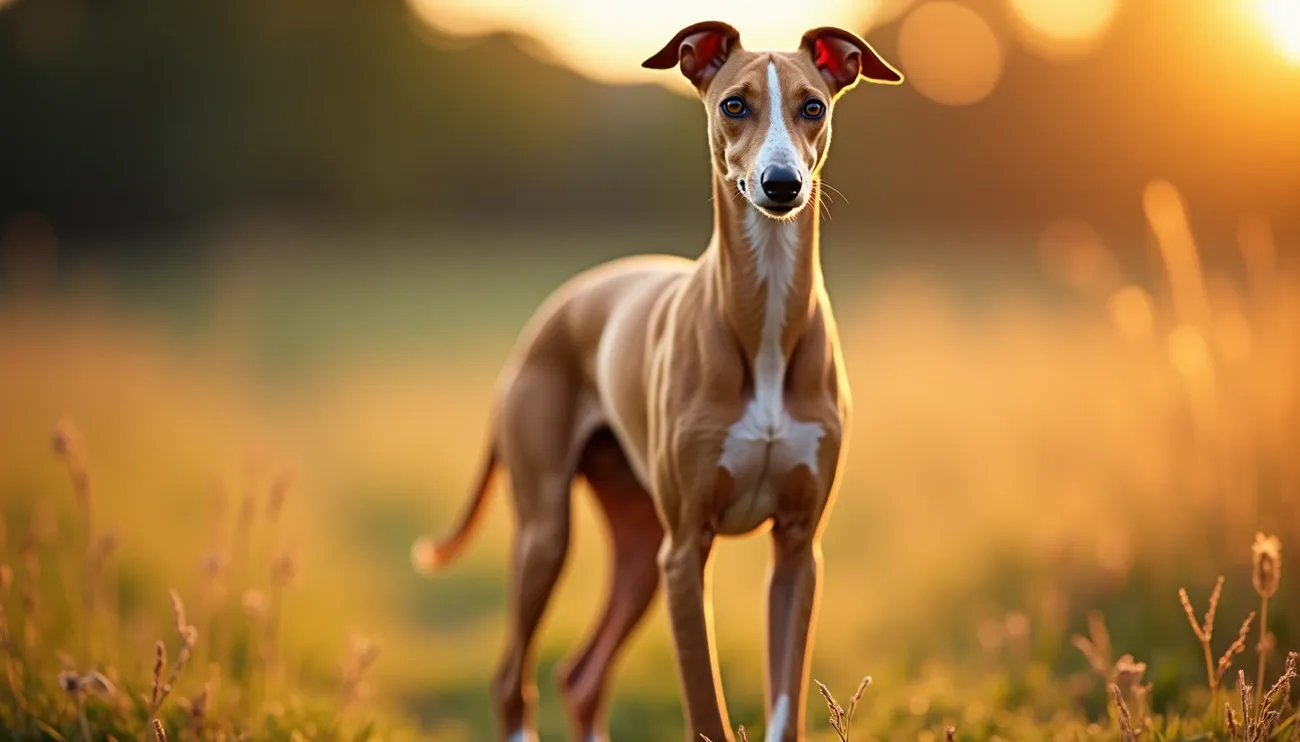 Whippets can reach astonishing speeds of up to 35 miles per hour (56 km/h). These incredible dogs dominate their weight class as the fastest runners. The British sighthound breed combines quick acceleration with a gentle, affectionate temperament that makes them perfect companions.
People often call them the “poor man’s Greyhound,” but whippets have carved their own unique identity. These athletic dogs showcase a sleek frame, deep chest, and graceful legs while standing 18-22 inches tall at the shoulder. On top of that, they live quite long – typically 12-15 years. The American Kennel Club first recognized whippets in 1888, and their popularity has grown steadily. By the 2000s, they had become one of Britain’s most beloved dog breeds [-3].
This complete guide will help you learn about the whippet’s fascinating origins, physical traits, temperament, care needs, and impressive sporting history.
The origin and meaning of the Whippet
The word “Whippet” has a rich etymology that tells us about the breed’s traits and historical importance. This elegant sighthound’s name reveals a lot about how people noticed these dogs throughout history.
Define Whippet: What the name means
The term “Whippet” (or variations of it) showed up in English texts back in the sixteenth century first appeared in English texts as early as the sixteenth century. The original meaning was quite different from today’s definition. Etymology experts believe the name comes from an early 17th-century term that meant “to move briskly” or “move quickly”. This link to swift movement matches the breed’s amazing speed and agility.
The Oxford Dictionary gives us an interesting definition of a Whippet from 1550 – “a lively young woman; a light wench”. The meaning changed by 1610 to describe “a nimble, diminutive or puny person,” and that’s about the time people started using it to describe “a small breed of dog”. Some language experts think the name might be a misspelling of “wappet,” an old word for a small, yapping cur.
The spelling changed to include “wh-” because it better captured the motion or sound of these quick dogs. The name also matches the English slang “whip it,” which refers to using a whip to make horses run faster—a perfect comparison for this lightning-fast breed.
Historical references to the breed
People have written about Whippet-like dogs for hundreds of years. The first time “whippet” appeared in writing to describe a specific type of dog was in 1610. John Taylor wrote about “The little curre Whippet or house dog” in his 1628 book “A dogge of Warre, or the Travels of a Drunkard”.
The breed’s definition kept changing well into the 19th century. Even in 1841, people described Whippets as “a dog bred betwixt a greyhound and a spaniel”.
Art gives us more proof of the breed’s history. Jean-Baptiste Oudry (1686-1755) painted two dogs named “Misse” and “Turlu” that belonged to Louis XV. These dogs look like Whippets or similar small, smooth-coated sighthounds. A 1758 painting by Pompeo Batoni shows a whippet-like dog next to Charles Compton, 7th Earl of Northampton.
Hunting manuals from the Middle Ages talk about greyhound-type dogs in different sizes, including smaller ones that look like today’s Whippet. Edward of Norwich, 2nd Duke of York, wrote about the benefits of having “great,” “middle,” and “small-sized Greyhounds” for hunting different game in the early 15th century. John Caius later mentioned both bigger and smaller types of greyhounds in his book “De Canibus Britannicis” during the 16th century.
The ‘snap dog’ and its early uses
These dogs earned another nickname: the “snap dog”. This name probably came from how they hunted—killing rats and rabbits with quick-snapping jaws. Some historians say the name came from the dogs’ habit of turning and snapping at other dogs during races.
F.C. Hignett explained this nickname well. He said the Whippet was “too fragile in his anatomy for fighting, will ‘snap’ at his opponent with such celerity as to take by surprise even the most watchful; while the strength of his jaw, combined with its comparatively great length, enables him to inflict severe punishment at the first grab”.
Whippets started out as hunting and sporting dogs. People who couldn’t afford greyhounds in the eighteenth and nineteenth centuries often kept these smaller, Whippet-like dogs instead. The breed became known as “the poor man’s greyhound” and helped feed families through poaching and rabbit coursing.
“Snap Dog” contests put Whippets in enclosures with rabbits. The dog that caught the most rabbits in a set time won. This later turned into “rag racing,” where dogs chased fluttering rabbit-skins. That’s where today’s mechanized track racing and lure coursing came from.
How the Whippet evolved over time
The rise of the whippet tells an incredible story in dog breeding history. This elegant breed emerged through practical needs and careful breeding choices. The sort of thing I love about whippets is their remarkable progress from working dogs to show ring champions over several centuries.
Whippet ancestry and Greyhound connection
Time has blurred the whippet’s exact origins, but historical evidence shows strong ties to greyhounds. Breeders created a smaller version of the greyhound that was easier to manage. The whippet’s physical features clearly show this heritage – both breeds share that distinctive “inverted S” shape that makes sighthounds so recognizable.
Greyhounds laid the foundation, but other breeds helped shape the whippet we know today. Italian greyhounds likely contributed to the “sinuous angles and compact curves” that give whippets their unique look. Terriers played a vital role in development. These popular British countryside dogs added valuable traits, including better prey drive and what experts at the time called “devilment”.
You can still see the terrier influence in certain whippet bloodlines today. The lamb-like Bedlington Terrier, with its athletic build, shows clear evidence of these sighthound-terrier crosses that breeders managed to keep in pedigrees on both sides. This mix created a versatile hunting dog with both sighthound speed and terrier determination.
Development in 19th-century England
Whippets really came into their own during 19th-century England, especially among working class families. England’s “hardscrabble miners and mill workers” shaped what became known as the “poor man’s racehorse”. These resourceful people saw the value of a smaller, faster dog they could afford to keep for both hunting and sports.
Two distinct whippet varieties existed at first. The smooth-coated type, more common in Lancashire, Yorkshire, and the Midlands, became today’s modern whippet. A rough-coated variety from Bedlington Terrier crosses gained popularity in Durham and Northumberland where locals called it a “rabbit dog”.
People nicknamed early whippets “snap-dogs” because they could grab prey so quickly. These dogs were often the most precious possession of working-class families. They lived in their owners’ houses and sometimes received better care than the miners’ children.
British workers brought their beloved whippets to America during the 19th century. The breed quickly established itself in Pennsylvania, Massachusetts, and other New England states. Rag racing became popular across America from the Midwest to California.
Recognition by kennel clubs
The whippet’s final milestone came through official recognition by major kennel clubs. This started in the late 19th century as whippets entered show rings. The American Kennel Club (AKC) officially recognized the breed in 1888, three years before similar recognition in Britain.
The Kennel Club in the United Kingdom officially acknowledged whippets in 1891. This significant step allowed them to compete in dog shows and have their pedigrees formally recorded. The Whippet Club formed in 1899, becoming the world’s first whippet breed club.
Whippets have grown steadily more popular since these recognitions. The breed ranks among the most popular in the Hound Group, with eleven breed clubs in the United Kingdom alone. This journey from working-class racing dog to celebrated show breed shows how centuries of careful breeding created this graceful, athletic companion.
Physical characteristics of the Whippet dog breed

Image Source: Wikipedia, the free encyclopedia
The whippet’s silhouette ranks among the most striking in the dog world. These dogs perfectly balance form with function. Their elegant frame shows the classic “inverted S” lines that sighthounds are known for, with a deep chest, trim waist, and a body built for speed. Their structure serves a clear athletic purpose.
Size and weight range
Whippets fit perfectly in the medium-sized dog category, right between their bigger greyhound relatives and tinier Italian greyhound cousins. Adult male whippets typically stand between 47 to 51 cm (18.5 to 20 in) at the shoulder and weigh about 15 to 18 kg (33 to 40 pounds). Females are a bit smaller at 44 to 47 cm (17.5 to 18.5 in) tall and 12.5 to 14 kg (27.5 to 31 pounds).
The American Kennel Club and Canadian Kennel Club standards allow bigger whippets than international standards. Their upper height limits reach 57 cm (22.5 in) for males and 55 cm (21.5 in) for females. These size differences show how breeding standards vary between countries.
Whippets grow in a predictable way. They reach their full adult height between 12 and 15 months. Notwithstanding that, muscle development and final adult weight might take 2 to 3 years. These dogs grow faster during their first year, and most height gains happen in the first 8-10 months.
A healthy whippet’s frame should never carry extra weight. You should see two to four vertebrae and hipbones that aren’t hidden by fat. People used to stockier breeds might think a fit whippet looks too thin, but this lean build keeps them healthy and athletic.
Coat type and color variations
Whippets have a practical coat that’s short, smooth, and close to their body. This sleek fur enhances their streamlined look and needs little care. A weekly brush with soft bristles or a rubber mitt is enough to remove loose hair and keep their coat shiny. These dogs shed less than most breeds, mainly during seasonal changes in autumn and spring.
The breed standard states that “color is immaterial” when judging whippets. This open approach has created amazing color diversity. Base colors range from fawn, red, orange, tan, cream to black and blue. These colors show up in various patterns:
Brindle (black or blueish stripes over a lighter base color)
Solid colors from pure white to midnight black
Parti-color combinations with white markings
Water-marked patterns resembling water droplets
Sable coloration with darker hair tips
White marks often appear on the chest, paws, neck, and face. Some whippets have a distinctive mask of black or blue over their base color, while others show a contrasting streak from forehead to snout.
Pure whippets never show certain color patterns. These include merle coloration, true Dalmatian-style spotting, harlequin patterns, and true liver coloration like chocolate Labradors.
Whippet vs Greyhound vs Italian Greyhound
Whippets belong to a special family of sighthounds that includes greyhounds and Italian greyhounds. These breeds share similar proportions and silhouettes but differ mainly in size.
Greyhounds lead the pack in size, weighing 60–70 pounds and standing 27–30 inches at the shoulder. Whippets come next at 25–40 pounds and 18–22 inches tall. Italian greyhounds are the smallest at 7–14 pounds and 13–15 inches tall.
Dog breed expert Denise Nelson calls this size range “the condo dog” (Italian greyhound), “the house dog” (whippet), and “the ranch dog” (greyhound). Whippets’ size makes them versatile – strong enough for sports yet perfect for home living.
The breeds show subtle differences beyond size. Greyhounds and whippets can have brindle markings, but Italian greyhounds don’t. Italian greyhounds also have finer bones, giving them a more delicate look compared to the athletic whippets.
These three breeds share classic sighthound features despite their differences. They all have deep chests for better breathing, long slender legs, and muscular builds made for speed. Their shared heritage creates a beautiful size progression while keeping the same basic body type.
Understanding Whippet temperament and behavior
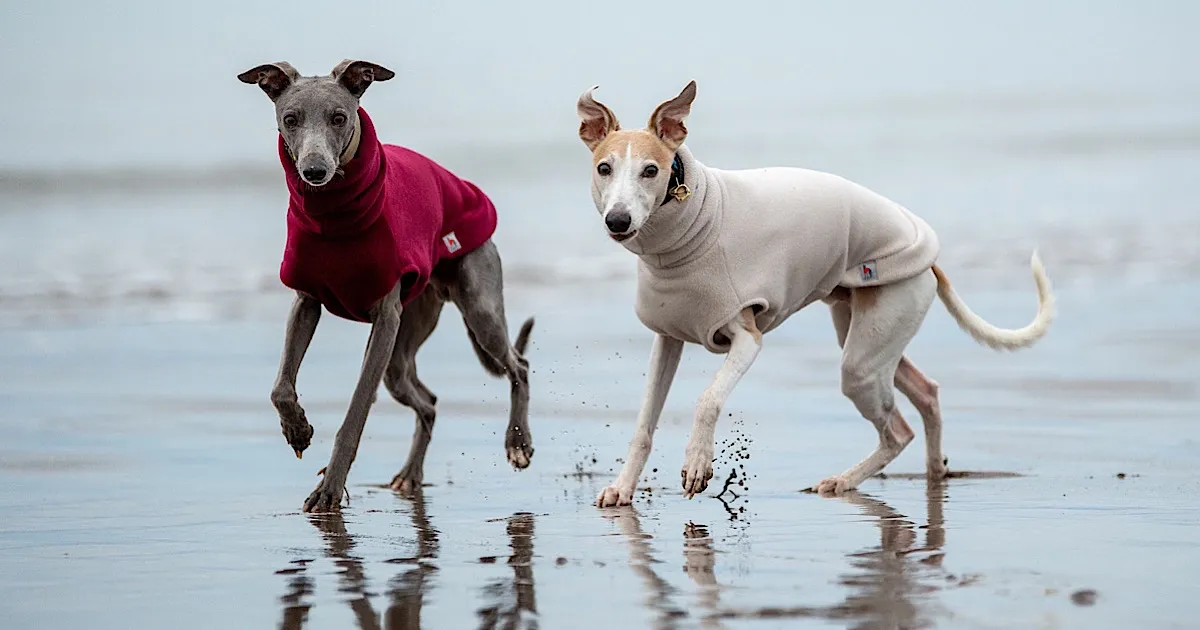
Image Source: Redhound For Dogs
The whippet’s temperament is the sort of thing I love to study because it’s full of contrasts. These elegant hounds have a surprising dual personality that catches many first-time owners off guard. You’ll need to understand how these dogs can change between two different behavior modes.
Calm indoors, energetic outdoors
Most people don’t expect such athletic dogs to be so relaxed at home. These graceful hounds become peaceful companions who love to lounge around. One expert notes they are “quiet and dignified in their owner’s living room” and make “excellent house dogs”. Their calm nature inside makes them great pets even in apartments, as long as they get enough exercise.
These dogs save their energy for the right moments. Outside, they let loose with explosive running bursts—quick, intense sprints that show off their amazing speed. They need long rest periods after these sprints, which shows how they manage their energy.
Even the most active whippets can adapt to different exercise plans. A couple of half-hour walks daily works well, mostly off-leash, or longer weekend trips of 4-6 miles. Many whippets will skip walks in bad weather and stay wrapped in blankets instead.
Affectionate but sensitive
Whippets create deep bonds with their families. They stick close to their people—following them everywhere, even to the bathroom. These dogs love cuddles and physical contact despite their slim build.
Their loving personality comes with a sensitive side. Harsh words or corrections upset them, so gentle training works best. A whippet’s emotional awareness helps them pick up on their owner’s moods and respond with empathy. Someone once said they’re “highly strung and need understanding from their owners”.
The weather affects these sensitive dogs too. Rain and cold bother many whippets—they might need sweaters when it’s cool. They love comfort so much that they take over furniture, and experts say whippets “can’t be trained not to jump on furniture”.
Prey drive and socialization needs
These gentle house dogs still have strong instincts to chase moving things. Their prey drive means they should run free only in fenced areas. Without proper barriers, they might chase small animals far away, temporarily forgetting about their owners in their excitement.
Good socialization from an early age creates well-adjusted whippets. Meeting different people, places, and situations helps prevent shyness around strangers and anxiety in new places. Whippets can become too shy or nervous without proper socialization.
Whippets can live peacefully with family cats and other pets, especially if they meet as puppies. But experts warn that even well-trained whippets “may never be safe with other cats or small animals” unless they grew up together.
To conclude, whippets blend athleticism and affection in amazing ways. Their special character—peaceful yet lightning-fast, loving yet independent, gentle but with strong hunting instincts—makes them wonderful companions for people who get their unique nature.
Whippet speed and athletic abilities

Image Source: Facebook
Whippets are among the most impressive athletes in the canine world. These sleek dogs race across the ground at incredible speeds and show off physical abilities that make them outstanding performers in competitive events.
Top speed and acceleration
Nature has designed whippets as perfect sprinters. They can reach amazing speeds of up to 35 mph (56 km/h), making them the fastest dogs in their weight class. Their acceleration stands out too – experts call them the fastest accelerating dog breed, which gives them an edge in sprint events.
Recent competitions prove their remarkable speed. A whippet named Reas finished a 100-yard dash in just 5.816 seconds at the Fastest Dogs USA competition in 2022. Reas had also won the 2021 Fast CAT event with an even better time of 5.769 seconds. Whippets dominated sprint competitions nationwide throughout 2022.
Greyhounds might be faster with top speeds of 45 mph, but many experts call whippets the speediest dogs pound-for-pound. Their streamlined build helps them outrun many larger breeds. A slim body, deep chest, and long legs work together to make them incredibly efficient runners.
Double suspension gallop explained
The “double suspension gallop” gives whippets their amazing speed [192]. This special running style shows up only in sighthound breeds like whippets and greyhounds. During each stride, all four feet leave the ground twice.
The first lift happens when the whippet stretches out completely. Their back legs extend backward while front legs reach forward, looking like Superman in flight. The front feet touch down first and move backward as the body catches up.
The dog’s back arches and pulls its back legs forward until they move ahead of the front paws. This creates a second airborne moment before the back legs hit the ground. The whippet’s flexible spine works like a spring, storing and releasing energy with each bound.
Why Whippets excel in dog sports
Whippets shine in many dog sports thanks to their natural gifts. Smart thinking, quick movements, and incredible speed make them tough competitors in activities that showcase these talents.
Lure coursing lets whippets use their natural instincts as they chase a mechanical lure that acts like prey. These athletic dogs also perform well in agility competitions, dock diving, flyball, disk sports, and speed trials.
Whippets are built for sprinting, not long-distance running. They make good partners for casual joggers, but other breeds work better for endurance running. Their body design focuses on short-distance speed rather than stamina.
People who want to compete with whippets should give them regular sprint opportunities in secure areas. Good nutrition helps maintain their athletic condition. A few short sprint sessions each week work better than long runs. This routine lets these amazing athletes show off their extraordinary speed and agility.
Common health issues in Whippets
Whippets can live a good long life of 12-15 years, but they face some breed-specific health challenges that owners need to know about. These graceful hounds need extra care to deal with certain conditions that might affect their well-being.
Heart conditions like mitral valve disease
Heart health has become one of the most important concerns in whippet populations. Mitral valve disease (MVD) stands out as the biggest problem in the breed. This happens when the mitral valve—a one-way valve on the heart’s left side—wears down over time and disrupts normal blood flow. Vets can spot the first sign of MVD, which is usually a heart murmur, during regular checkups.
Many whippet pups are born with mild murmurs and grow out of them naturally. Some develop what vets call “athletic” or “flow” murmurs that aren’t harmful. But some whippets develop actual mitral valve regurgitation that can turn into serious disease. Heart failure kills many older whippets. The American Whippet Club asks breeders to get regular echocardiograms for their breeding dogs.
Skin injuries and lacerations
A whippet’s short, thin coat doesn’t protect them much from environmental dangers. They can easily get skin tears, cuts, and lacerations—this happens a lot when they run fast. Their slender legs with little muscle coverage are most at risk.
You might notice grazing, bleeding, or limping if their paws get hurt. Small cuts heal fast with good care, but deeper cuts need a vet’s attention and might need stitches. Owners should keep their whippets away from thorny plants, barbed wire, or anything sharp.
Genetic concerns: deafness, eye issues, vWD
Whippets can inherit several health issues, though not too often. Vets can spot congenital deafness in young puppies through BAER (Brainstem Auditory Evoked Response) testing. Some whippets hear from just one ear. These dogs make great pets but shouldn’t breed.
Eye problems don’t happen often but need checking. Vets have found cases of Progressive Retinal Atrophy (PRA) and other genetic eye problems. The American Whippet Club wants all breeding dogs to get regular eye checks.
Von Willebrand Disease (vWD) affects some whippets too. It causes weird clotting patterns, bleeding gums, nosebleeds, and longer bleeding after surgery. Dogs usually show signs between ages 3-5. Breeders should test for vWD before breeding any dogs.
The Whippet Health Foundation and American Whippet Club tell breeders to test for heart, eye, and hearing issues at minimum. This watchfulness helps keep the breed healthy for future generations.
Caring for a Whippet: Grooming, feeding, and exercise
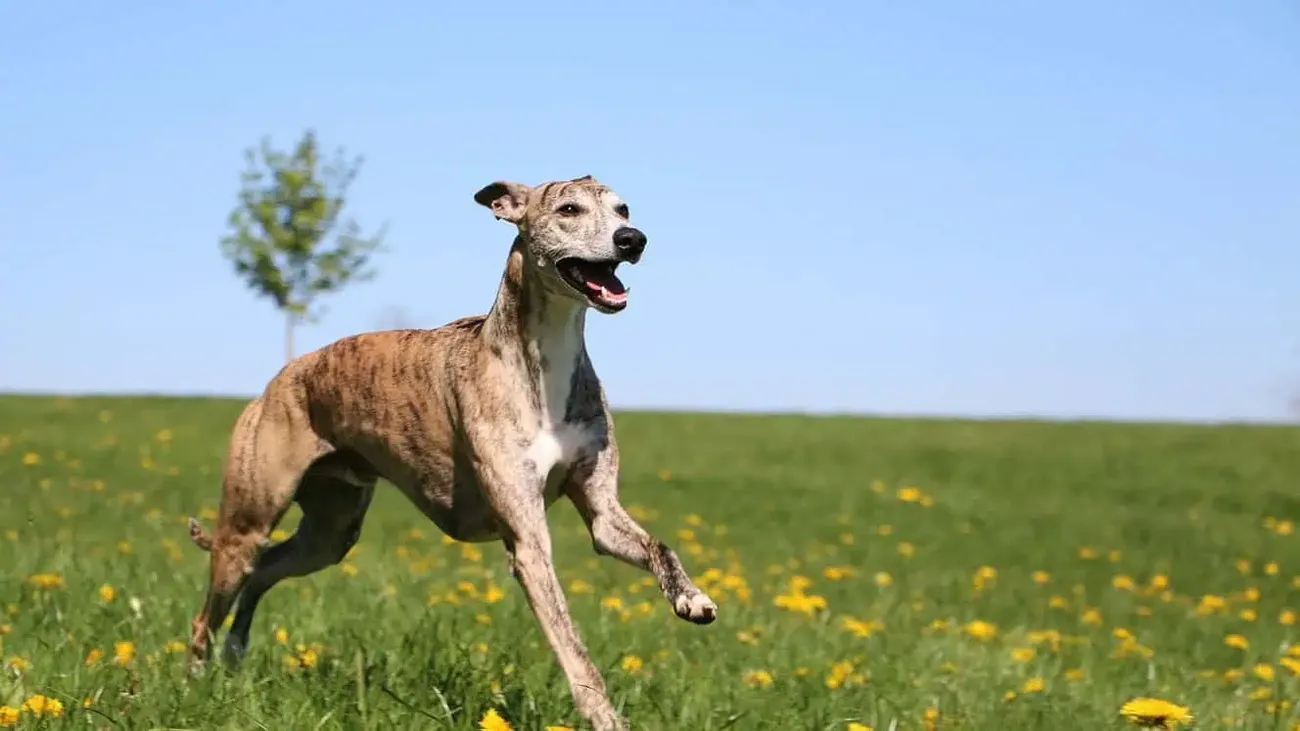
Image Source: Burgess Pet Care
Whippets are easy to care for because they’re naturally clean and need minimal maintenance. These elegant hounds make excellent companions if you want a low-maintenance pet that loves attention.
Grooming needs for short coats
A whippet’s short, smooth coat needs very little grooming. You can use a soft-bristle brush or rubber grooming mitt once a week to remove loose hair and boost circulation. These regular sessions are a great way to check for skin problems or injuries. These dogs have thin skin that cuts and scrapes easily, so check them carefully after they play outside. Use gentle dog shampoos every 4-6 weeks to avoid skin irritation. On top of that, it helps to check their ears weekly for infection signs and trim their nails every 2-3 weeks to keep them comfortable.
Feeding schedule and diet tips
Adult whippets do best with two meals a day on a fixed schedule. Young puppies need 3-4 meals daily until they’re 5-6 months old, then twice daily until fully grown. A typical adult needs about 800-1000 calories each day. Food approved by the Association of American Feed Control Officials (AAFCO) gives them the nutrients they need. Never give one big meal or leave food out all day – this helps prevent bloat. Keep treats to less than 10% of their daily calories to maintain their lean build.
Exercise requirements and safe play
Whippets may be racing dogs, but they only need about an hour of exercise daily. Split this into two sessions – a quick morning walk and a longer afternoon adventure where they can explore. These dogs need space to sprint in secure, fenced areas. Always use a leash in open spaces because of their strong prey drive. Puzzle toys, games, and activities like lure coursing or agility keep their minds sharp. Note that whippets prefer quick sprints over long-distance running.
Whippet racing and sporting history
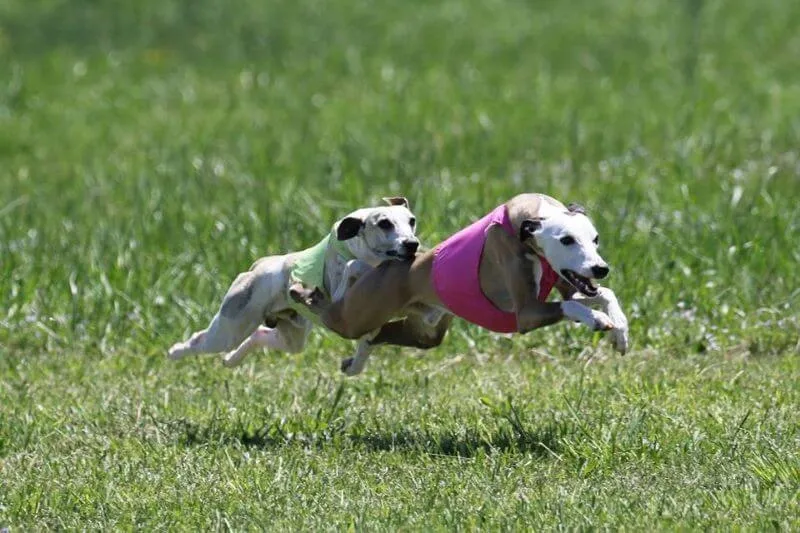
Image Source: Showsight Magazine
The whippet’s competitive legacy started in England’s working-class neighborhoods. These quick dogs transformed from practical hunting companions into dedicated sports competitors through the centuries.
From rabbit hunting to rag racing
Breeders developed whippets as “snap dogs” to catch rabbits, but these dogs soon found their calling in competitive sports. Rag racing became popular in the late 19th century. Dogs would sprint toward their handlers who waved cloth pieces frantically—giving the sport its name. Weekend events drew large crowds with prizes worth a week’s wages. Each handler would throw their dog forward when they heard the starting pistol to gain any advantage possible. The whippet’s performance on 200-yard courses remained unmatched by any similar-sized breed.
Modern lure coursing and agility
Today’s whippets compete in many sporting events. Lure coursing recreates the hunting experience without live prey. Dogs chase white plastic bags pulled along 600-1000 yard courses. The American Whippet Club, ASFA, and AKC host these events across the country. The Continental Whippet Alliance now manages professional straight racing. Modern mechanical lures have replaced the waving towels, but the dogs remain true to their nature—alert and ready to release their amazing speed.
Famous racing Whippets
Champion racers have left their mark on the sport’s history. Maid Your Point earned 14 championship titles, and What’s Your Rush won multiple national championships. These outstanding athletes show the breed’s ongoing excellence in performance sports.
Conclusion
Whippets are a remarkable blend of athletic power and gentle nature that showcases the best of dog breeding. These dogs started out as a “poor man’s greyhound” but have built their own identity over the years. Their special double suspension gallop lets them hit speeds of 35 mph, and no other dog their size comes close to matching this feat.
These amazing dogs live two lives – they’re peaceful couch potatoes at home but turn into speed demons the moment they get a chance to run. This mix makes them great pets for both city apartments and country houses. Their easy-care coat and natural cleanliness make them even more appealing as family pets.
Smart owners know to watch out for their whippet’s chase instinct and need fenced areas for exercise. These dogs build strong bonds with their families and do best with gentle training and positive reinforcement. Regular vet visits help catch breed-specific issues like mitral valve disease early.
The whippet’s graceful looks, rich sports background, and lovely personality keep drawing new fans worldwide. Years of careful breeding have created these elegant hounds that blend athletic skill with loyal companionship. People lucky enough to live with whippets find faithful friends who mix blazing speed with tender love – they really do have it all.
Key Takeaways
Discover the essential insights about whippets – from their remarkable speed capabilities to their unique dual personality that makes them exceptional companions.
• Whippets reach speeds up to 35 mph using a unique “double suspension gallop” where all four feet leave the ground twice per stride cycle.
• These dogs have a distinctive dual personality: calm, gentle indoor companions who transform into explosive sprinters when outdoors.
• Despite their athletic build, whippets require only moderate exercise – about one hour daily with opportunities for short sprint bursts in secure areas.
• Their short, smooth coat needs minimal grooming (weekly brushing), but their thin skin makes them prone to cuts and cold sensitivity.
• Originally bred as “snap dogs” for rabbit hunting, whippets evolved from working-class racing dogs to beloved family pets with 12-15 year lifespans.
The whippet’s combination of lightning-fast athleticism and affectionate temperament creates a unique companion that adapts well to various living situations while maintaining their instinctual need for speed and chase.
FAQs
Q1. Are Whippets suitable as family pets? Whippets make excellent family companions. They have a gentle temperament, are generally quiet, and adapt well to indoor living. However, they do require regular exercise and have a strong chase instinct, so secure outdoor areas are important.
Q2. How much grooming do Whippets need? Whippets are low-maintenance in terms of grooming. Their short, smooth coat typically only requires weekly brushing to remove loose hair and maintain skin health. Bathing is only necessary every 4-6 weeks unless they get particularly dirty.
Q3. What are the exercise requirements for a Whippet? Whippets need about an hour of exercise daily, ideally split into two sessions. They thrive on short bursts of intense activity, like sprinting in a secure area, rather than long-distance running. Mental stimulation through games and toys is also important.
Q4. How fast can Whippets run? Whippets are incredibly fast, capable of reaching speeds up to 35 mph (56 km/h). They are considered the fastest dogs of their weight class and use a unique “double suspension gallop” that contributes to their impressive acceleration and speed.
Q5. What health issues are common in Whippets? While generally healthy, Whippets can be prone to certain conditions. These include heart issues like mitral valve disease, skin injuries due to their thin coats, and genetic concerns such as deafness and eye problems. Regular veterinary check-ups are important for early detection and management of these issues.