
Dobermann
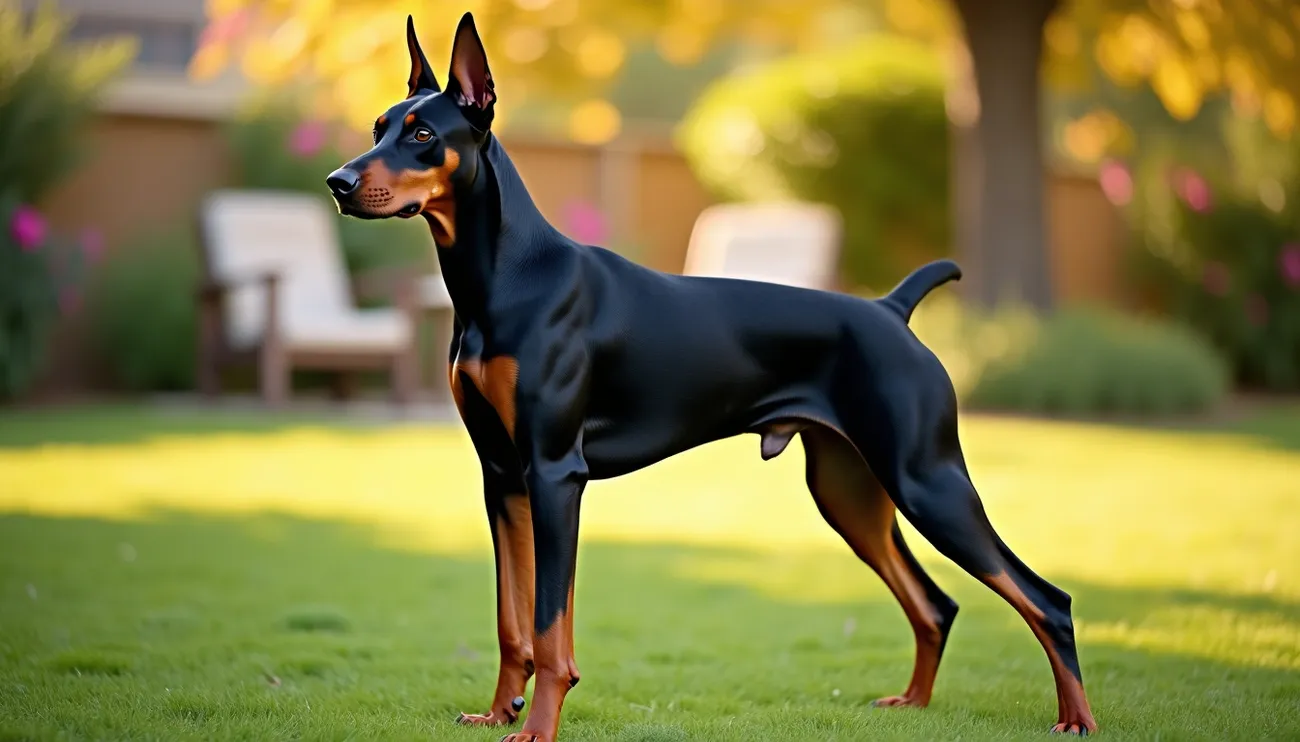 The Dobermann ranks among the world’s most capable working dog breeds. Louis Dobermann, a tax collector from Thuringia, Germany, created this remarkable breed around 1890. These dogs quickly became known for their sleek, muscular bodies, long heads, and traits like fearlessness, alertness, loyalty, and intelligence. The breed almost vanished during World War I because Europeans couldn’t afford large dogs. Their roles in military and police work helped them survive this challenging period.
Male Dobermann pinschers stand 26-28 inches tall, while females measure 24-26 inches. Their short smooth coats come in black, blue, fawn, or red with rust markings in specific areas [-4]. The American Kennel Club recognized these powerful dogs in 1908. They managed to keep their popularity through the years and ranked 15th in AKC registrations in 2009 with 10,233 new registrations [-4]. A global survey from 2013 showed Dobermanns as the 26th most registered breed worldwide, with 20,941 new registrations each year.
This piece dives into essential information that future Dobermann owners should know. The sort of thing I love about these dogs starts with their origin story and distinctive physical traits. Their renowned temperament, training requirements, and health aspects make them both cherished companions and respected working dogs with a lifespan of 10-12 years.
The origin of the Dobermann breed
A unique breed emerged from one man’s need for protection in late 19th century Germany. This breed would become one of the world’s most respected working dogs. Unlike other breeds that developed over centuries for specific tasks, the Dobermann’s story starts with one person.
Louis Dobermann and the need for a guard dog
Karl Friedrich Louis Dobermann played multiple roles in the small town of Apolda in Thuringia, Germany. He was a tax collector, night watchman, dog catcher, and keeper of the local dog pound. These jobs created the perfect setting for developing a new breed. His work as a tax collector often took him through dangerous neighborhoods with large sums of money. This made him an easy target for thieves and he needed protection during his collection duties.
Running the local dog pound gave Dobermann a special advantage – he could access dogs of all types. He watched the various dogs in his pound and picked those that showed the strongest, steeliest personalities and highest intelligence. These dogs would accompany him on his tax collecting rounds. A steady temperament proved vital for this dangerous work.
Dobermann then started creating what we might call the first purpose-bred personal protection dog. The Dobermann pinscher stands out as maybe the only breed specifically developed to protect a person, unlike others bred for herding, hunting or guarding property.
Breeds believed to be part of the Dobermann mix
Dobermann didn’t keep detailed breeding records, so we can’t be sure about the exact mix of breeds he used. But experts have made educated guesses based on early Dobermanns’ traits:
Old German Shepherd (now extinct): Added intelligence, trainability, and stamina
Rottweiler/Butcher Dog: Brought strength, the black-and-tan pattern, and natural guarding ability
German Pinscher: Added speed and terrier-like qualities
Weimaraner: Likely contributed scenting ability vital for working dogs
Manchester Terrier: Brought refinement to the breed around 1895
Greyhound: Added streamlined movement at the start of the 20th century
Beauceron: Possibly came through Prussian breeding lines
During his early breeding program, Dobermann worked with two other local dog enthusiasts: fellow night watchman Herr Rebel and Herr Stegmann, who often traveled with butcher’s dogs to buy cattle. “Schnuppe,” one of their first breeding dogs, was a smooth-coated, mouse-gray female about terrier size.
Development of the breed post-Dobermann
The breed got its name “Dobermann-pinscher” after Louis Dobermann died in 1894. Breeders started focusing on the dog’s appearance along with its working abilities.
Otto Goeller became a key figure in the breed’s growth. He started the first Doberman Pinscher club in 1899 during Apolda’s yearly dog market. Through his von Thuringen kennel, which housed about 80 dogs, Goeller helped write the first breed standard and sent many Dobermanns abroad.
Manchester Terrier and Greyhound crosses refined the breed’s look around 1900, creating more efficient movement. Early Dobermanns looked so much like Rottweilers that at an 1899 show, people could barely tell the difference between a poor Rottweiler and a good Dobermann among the 12 present, including the winner Graf Belling.
The German Kennel Club officially recognized the breed in 1900. The breed reached the United States and got registered with the American Kennel Club in 1908. Westminster show enthusiasts formed the Doberman Pinscher Club of America in 1921 to promote their little-known breed.
Many countries later dropped the “pinscher” part of the name and one “n” from Dobermann’s surname. The United States and Canada still use both “Pinscher” and the shorter spelling.
Physical characteristics of the Dobermann
The Dobermann’s sleek silhouette and athletic build create a powerful yet elegant appearance that few other breeds can match. These dogs have physical features that blend strength, speed and agility perfectly.
Size and weight standards
American Doberman Pinschers and European Dobermanns show subtle but important differences in their physical standards. The American Kennel Club says male American Doberman Pinschers stand 26-28 inches at the shoulder and weigh 75-100 pounds. Female dogs are a bit smaller at 24-26 inches tall and 60-90 pounds.
The Federation Cynologique Internationale (FCI) standard sets different measurements for European Dobermanns. Males should be 68-72 cm (26.8-28.3 inches) and weigh 40-45 kg (88-99 pounds). Females measure 63-68 cm (24.8-26.8 inches) and weigh 32-35 kg (71-77 pounds).
Adult male Dobermanns usually weigh around 88 pounds, while females average 75 pounds. European Dobermanns tend to be bulkier and more muscular, with thicker bones that show up most in their broader chest and blockier head. These dogs reach their full height by age one but need another year to fill out to their adult weight.
Coat types and colors
A Dobermann’s coat feels smooth, short, hard, and thick while lying close to the body. Some dogs might have an invisible gray undercoat on their neck, which breed standards allow. This sleek coat gives them their elegant look and needs little maintenance.
American Dobermanns come in four standard colors:
Black and rust (most common)
Red (various shades of reddish-brown) and rust
Blue (a diluted black appearing as bluish-gray) and rust
Fawn (also called Isabella, a diluted red appearing beige) and rust
A dilution gene creates the blue and fawn colors – blue comes from diluted black, while fawn comes from diluted red. Black Dobermanns have the thickest coat with more hair per square inch, while fawn Dobermanns have the thinnest.
The rust markings must be clearly defined and appear in specific spots: above each eye, on the muzzle, throat, forechest, all legs and feet, and below the tail. A small white chest patch is okay but should stay smaller than a dime – about half a square inch.
Tail and ear modifications
Dobermanns naturally have floppy ears and long tails, like Labradors or hound dogs. Through the breed’s history, people often cropped ears and docked tails to change how these dogs look.
Vets crop ears through surgery when puppies are 7-9 weeks old, before their ear cartilage hardens. The ears need “posting” (taping to a hard surface) for several weeks while healing so they’ll stand up straight. Owners can choose different cropping styles: short, medium, or the longer “show crop”.
Tail docking happens much earlier – when puppies are just 2-4 days old. Vets cut the tail at the second vertebra. A natural Dobermann tail grows to about 18 inches (45.7 cm), while a docked tail stays at 2-3 inches.
People used to say these changes helped working dogs – cropped ears improved hearing and stopped opponents from grabbing them, while docked tails prevented injuries during protection work. Today, many countries ban these practices. The European Convention for Protection of Pet Animals outlaws docking and cropping throughout the European Union, UK, and Australia. The AKC standard still lists a tail “docked near the 2nd vertebra” for Doberman Pinschers.
Understanding Dobermann temperament

Image Source: YouTube
A Dobermann’s intimidating looks mask a complex personality that most people don’t fully understand. Research shows these dogs have stable psychological traits and intelligence levels that go far beyond common stereotypes.
Loyalty and protectiveness
Dobermanns show remarkable loyalty and create deep bonds with their families. People call them “velcro dogs” because they stick close to their owners. This devoted nature comes from their origins – they’re the only breed specifically created to be personal protection dogs.
Research on Dobermann personality traits shows they score high in playfulness, average in curiosity/fearlessness, and low in both aggressiveness and sociability. Another study found they rank low in reactivity/surgence, high in aggression/disagreeableness, and high in openness/trainability.
Their protective instincts work differently than pure aggression. Studies show Dobermanns might be wary of strangers but rarely show aggression toward their owners. The numbers tell an interesting story – Dobermanns bite humans less often than many breeds people consider friendly, such as Cocker Spaniels, Dalmatians, and Great Danes.
Interaction with children and families
Dobermann pinschers usually treat children in their families with gentleness and patience. These dogs see kids as valuable pack members who need both protection and love. Early socialization remains crucial.
These dogs pick up on household emotions quickly. They react to raised voices, tension, and emotional situations. This emotional awareness helps them build strong family bonds, though they might become especially attached to one family member.
Families with children should know:
These dogs show patience with young kids but their playful energy could knock small children over
They work better with older children who know how to interact with dogs
Adults should always watch interactions between Dobermanns and children
Behavior with strangers and other pets
A Dobermann’s protective background shapes how they react to strangers. Dogs without proper socialization might distrust unfamiliar people. Two things determine their behavior around strangers: their socialization level and their family’s comfort with the situation.
These dogs have natural hunting instincts that can make living with cats and smaller pets challenging. Good socialization from an early age can create peaceful multi-pet homes. Their relationships with other dogs vary – some enjoy canine company while others show dominance or territorial behavior, especially during walks.
CDC data from 1979 to 1998 shows Dobermanns caused fewer fatal attacks than Pit bulls, German Shepherds, and Rottweilers. The owner’s responsibility level affects dog bite incidents more than the breed itself.
Dobermann intelligence and trainability
Dobermanns stand out globally for their remarkable brainpower. These dogs combine smarts, dedication to work, and ease of training that puts them in a class of their own. Their mental gifts and physical prowess make them versatile working companions.
Ranking among intelligent breeds
Stanley Coren’s landmark book “The Intelligence of Dogs” ranked Dobermann pinschers fifth among the most intelligent dog breeds. His complete survey of 208 dog obedience judges across North America backed this finding. Dobermanns earned their spot in Coren’s “Brightest Dogs” category. They learn new commands in less than five tries and follow first commands 95% of the time or better.
The American Kennel Club calls the Dobermann “the valedictorian of the Working Group”. Their smarts come from their original purpose. Breeders developed them for jobs that needed quick thinking, good judgment, and sharp awareness.
Response to obedience training
Dobermanns learn at an amazing pace. Their intelligence and desire to please help them adapt to new situations and pick up commands quickly. Their natural drive to bond with handlers makes training even easier.
Marc Goldberg, who earned his place in the International Association of Canine Professionals Members Hall of Fame, suggests starting training young:
“Eight weeks old is the perfect age to slowly introduce the concept of come when called,” he notes, adding that “it won’t be long before she will be able to outrun you. So the recall, or come command, is critical for Dobermanns of all ages”.
These dogs respond best to:
Positive reinforcement with treats, praise, and other rewards
Consistent commands and clear expectations
Early socialization with various people, situations, and surfaces
Progressive training that builds complexity gradually
Mental stimulation needs
Anyone thinking about getting a Dobermann should know about their mental exercise needs. They rank among the world’s top five smartest breeds, so they need more than just physical workouts to stay happy.
One expert puts it simply: “If you want a calm, well-behaved Dobermann, you must tire out their brain, not just their body”. Without enough mental challenges, these dogs often turn destructive. They might chew furniture, bark non-stop, dig holes, try to escape, or follow their owners everywhere.
Daily training gives Dobermanns the best mental workout. Puzzle toys challenge their problem-solving skills. Trick training builds confidence and teaches self-control. Mental enrichment activities help them learn to relax.
Mental focus tires these dogs more than physical exercise alone. Trainers compare it to students taking exams – the concentration needed to behave when they’d rather do something else leaves them mentally exhausted.
Training means more than just good behavior for Dobermanns. Regular sessions give them the guidance they naturally seek. Without this mental engagement, they might develop anxiety that shows up as destructive behavior, separation issues, excessive barking, or in worst cases, biting problems.
Common health issues in Dobermanns
Dobermann pinschers may look tough and athletic, but they deal with several breed-specific health challenges that future owners need to know about. These health issues can substantially affect their lifespan and well-being, ranging from heart problems to blood disorders and structural issues.
Dilated cardiomyopathy (DCM)
DCM poses the greatest health threat to Dobermanns. This progressive heart muscle disorder hits Dobermanns harder than any other breed. European Dobermanns show an alarming prevalence rate of over 50%. Some regions report that 58% of all Dobermanns show signs of this disease.
The heart muscle becomes thin and weak with DCM, which can lead to two deadly outcomes: congestive heart failure or sudden death from cardiac arrhythmia. One-third of affected dogs die suddenly without showing any previous symptoms. Dogs typically show signs between ages 3-5 years, though some might not display symptoms until around 7.5 years of age.
Genetic tests reveal DCM follows an autosomal dominant inheritance pattern in Dobermanns. A dog’s risk varies based on genetic mutations: DCM1 carriers face a 40% chance of developing the disease, DCM2 carriers have a 50% risk, and dogs with both mutations have much higher chances of severe disease.
Von Willebrand’s disease
Von Willebrand’s disease (vWD) ranks as dogs’ most common inherited bleeding disorder, and Dobermanns top the list for occurrence among all breeds. Dogs with this condition lack enough von Willebrand Factor (vWF), a protein they need for blood clotting.
The numbers paint a concerning picture – studies show 70-75% of American Dobermanns were affected by 1990, and these numbers keep rising. Most affected Dobermanns have Type I vWD, with only 5-10% of normal vWF levels, which creates mild to moderate bleeding risks.
Dogs with vWD bruise easily and bleed longer from small wounds. They might get nosebleeds and bleed excessively during surgeries like spaying, neutering, tail docking, or ear cropping. Vets diagnose vWD through blood tests that measure clotting time and vWF levels, plus genetic testing to spot carriers.
Wobbler syndrome and other skeletal issues
Wobbler syndrome affects the neck’s spine and creates another major health concern for the breed. This condition shows up most often in Dobermanns and Great Danes, affecting about 5.5% of Dobermanns. Dobermanns usually develop it around age 6, while Great Danes get it earlier.
The spinal cord gets compressed, causing a distinctive “wobbly” walk that starts in the back legs. As things get worse, all four legs can become affected. Dogs struggle to get up, become weak, and experience neck pain. Treatment options include anti-inflammatory drugs with restricted activity, which helps about 50% of cases, or surgery with an 80% success rate.
Skin and coat conditions
Skin problems often plague Dobermanns, affecting both their comfort and looks. These range from allergies to specific conditions like color dilution alopecia (CDA).
Blue and fawn Dobermanns face the highest risk of CDA. Research shows it affects up to 93% of blue Dobermanns and 75% of fawn Dobermanns. This genetic condition causes their hair to thin or fall out and sometimes leads to skin infections.
The breed also deals with demodectic mange, allergic dermatitis, folliculitis, seborrhea, and bacterial infections like pyoderma. These conditions can cause itchiness, redness, hair loss, or flaky skin. Environmental allergies cause most of the breed’s skin problems, which often lead to chronic ear infections, itchy skin, and excessive foot licking.
Lifespan and care considerations
Dobermann owners need to understand their dog’s unique health needs and take proactive steps to ensure their well-being throughout their lives. Good care goes beyond simple needs and includes regular vet monitoring and genetic considerations.
Average life expectancy
Dobermann pinschers live shorter lives compared to many other breeds. Research shows varying figures across regions. American sources show an average lifespan of 10-12 years. European studies paint a less optimistic picture. A 2024 UK study reveals Dobermanns live about 11.2 years on average – nowhere near the 12.7-year average for purebreds overall. The numbers look even more concerning in a 2024 Italian study that shows a lifespan of just 8 years.
Swedish mortality data reveals that 68% of Dobermanns die by age 10, while only 35% of dogs overall die by that age. The Doberman Pinscher Club of America reports their dogs live approximately 9.6 years, and females tend to outlive males.
Preventive health screenings
Heart screening is the life-blood of preventive care for Dobermanns. Veterinary experts suggest starting screenings for occult dilated cardiomyopathy (DCM) when dogs turn three. These screenings should include:
Annual Holter monitoring (24-hour ECG recording)
Echocardiography using Simpson’s method of disks (SMOD)
Cardiac biomarkers testing as a complementary measure
Holter results that show fewer than 50 single ventricular premature complexes (VPCs) in 24 hours fall within normal range, though any VPCs raise concerns. Results that show more than 300 VPCs in 24 hours, or two recordings with 50-300 VPCs within a year, that indicates occult DCM regardless of echocardiographic findings.
Blood testing before surgery helps identify potential issues that might increase anesthetic risk. Annual complete check-ups should include blood counts, chemistry panels, thyroid screening, and appropriate infectious disease testing.
Genetic testing and responsible breeding
Genetic health tests are the foundations of responsible Dobermann breeding programs. Several significant genetic tests are now accessible for this breed:
DCM1 (PDK4) and DCM2 (TTN) mutations for dilated cardiomyopathy
Von Willebrand Disease Type 1 testing
Narcolepsy testing
Degenerative Myelopathy testing
Deafness with Vestibular Dysfunction (DVD/DINGS) testing
Understanding inheritance patterns makes a vital difference—DCM appears to pass down in an autosomal dominant fashion, which means even one mutated gene copy can cause disease. Dogs with the DCM1 mutation face about 40% chance of developing DCM, while DCM2 carriers have about 50% risk. Dogs carrying both mutations face the highest risk at about 60%.
Genetic test results should guide breeding decisions and help create monitoring protocols for at-risk dogs.
Exercise and activity needs
A Dobermann runs on a perfect balance of physical exercise that matches their boundless energy and sharp mind. These dogs need equal attention to their body and brain. This approach helps prevent bad behavior and keeps them healthy.
Daily physical requirements
Adult Dobermanns need substantial daily exercise—usually between 1.5 to 2 hours. They should get brisk walks, jogs, and runs in secure fenced areas. Puppies need different exercise levels because their growing bones and joints shouldn’t handle too much high-impact activity.
A Dobermann’s exercise needs change as they age:
Adolescent Dobermanns: Need at least one hour daily of physical activity
Adult Dobermanns: Need 1-2 hours daily, though some experts suggest at least 70 minutes
Senior Dobermanns: Do better with gentle exercise in shorter, more frequent sessions
Dobermanns that don’t get enough exercise often start chewing furniture, bark too much, dig holes, or try to escape. Regular exercise isn’t just good for them—it’s vital.
Mental enrichment through play
Mental workouts matter just as much as physical exercise for Dobermanns. A 15-minute brain workout equals an hour of physical exercise. Even a tired Dobermann can misbehave if their mind stays unstimulated.
Good mental enrichment activities include:
Interactive puzzle toys that test problem-solving skills
Obedience training to reinforce good behavior
Scent work that taps into natural instincts
Learning new commands or tricks
Vets point out that these smart dogs often act up without proper mental challenges, even after physical exercise.
Best activities for Dobermanns
Dobermanns shine in activities that mix physical exercise with mental challenges:
Running/jogging: Matches their natural running instinct
Agility training: Tests both physical skills and mental focus
Swimming: Offers great low-impact exercise, perfect for older dogs
Fetch/Frisbee: Works with their prey drive while teaching retrieval
Scavenger hunts: Gets them thinking as they search for hidden treats
Biking with proper gear: Lets them move at their natural speed
Mix-and-match activities ended up being vital for Dobermanns. Different activities keep these smart dogs interested and engaged.
Grooming and maintenance
Dobermann owners can breathe easy. These elegant dogs need minimal grooming compared to other breeds, which makes them easy to care for despite their sophisticated looks.
Coat care and shedding
A Dobermann’s coat sheds moderately throughout the year with little seasonal change. Their short, single-layer coat benefits from a weekly brush that spreads natural oils, boosts blood flow, and removes dead skin cells. The best results come from:
A rubber curry brush or grooming mitt with short to medium nibs
Small circular brushing motions across the body
Outdoor brushing sessions to keep the house clean
The dog needs a bath every 6-8 weeks, with quick wipe-downs between baths. Black Dobermanns have thicker coats and shed more than their blue or fawn-colored counterparts.
Ear and nail care
A monthly ear cleaning helps prevent infections, which often trouble Dobermanns. The cleaning process needs a cotton ball dampened with vet-approved solution. Just wipe the outer ear gently and stay away from the ear canal.
Nail care takes about 10 minutes each month. Most owners reach for nail grinders instead of clippers. This helps them avoid the quick—the sensitive area full of blood vessels.
Legal and ethical considerations of cropping and docking
Ear cropping and tail docking face growing criticism worldwide. These procedures started as ways to protect ears during fights and prevent tail injuries at work. Now they serve mostly cosmetic purposes.
The European Union, UK, Australia, and parts of North America have banned these practices. Many veterinary groups, including the AVMA, stand against these procedures that serve only cosmetic purposes.
Conclusion
Dobermanns are remarkable dogs with a rich history and unique qualities that set them apart from other breeds. These intelligent animals started as personal protection dogs and evolved into versatile companions while keeping their loyalty, alertness, and capability. Their sleek looks and exceptional smarts make them perfect partners for active people and families who can handle their physical and mental needs.
Well-socialized Dobermanns show gentle temperaments toward their families despite their commanding presence. They still keep their protective nature though. The breed ranks fifth among intelligent dogs, which shows how trainable and adaptable they are. These quick learners do best with regular mental challenges.
Health issues should be top priority for anyone wanting a Dobermann. More than half of these dogs develop dilated cardiomyopathy, while von Willebrand’s disease can cause bleeding risks that need careful monitoring. These conditions can be managed better with regular preventive screenings, especially heart checks starting at age three.
You should think about both the joys and duties of having a Dobermann. These dogs need 1-2 hours of daily exercise plus mental stimulation to thrive. Their short coat makes grooming pretty simple, but they live just 10-12 years on average – shorter than other breeds mainly because of genetic health issues.
The debate about ear cropping and tail docking needs attention. These changes used to serve a purpose but now face growing restrictions worldwide. Many countries have completely banned these practices as views change about cosmetic alterations to animals.
These dogs give devoted companionship and exceptional abilities to owners who get their special needs. Their mix of intelligence, loyalty, and athletic ability creates an amazing canine partner if you’re ready to invest time in training, exercise, and preventive healthcare. People who understand what it takes to care for this extraordinary breed will find a faithful, capable companion like no other.
Key Takeaways
Understanding the Dobermann breed requires recognizing their unique combination of intelligence, loyalty, and specific care needs that make them exceptional yet demanding companions.
• Dobermanns rank 5th among most intelligent dog breeds, requiring 1-2 hours daily of both physical exercise and mental stimulation to prevent destructive behaviors.
• Over 50% of Dobermanns develop dilated cardiomyopathy (DCM), making annual cardiac screenings essential starting at age 3 for early detection.
• Despite their intimidating appearance, properly socialized Dobermanns are gentle with families and show low owner-directed aggression compared to many other breeds.
• Originally bred by tax collector Louis Dobermann in 1890s Germany for personal protection, they remain naturally protective while being trainable companions.
• Their average lifespan of 10-12 years is shorter than many breeds due to genetic health issues, emphasizing the importance of preventive care and responsible breeding.
When properly cared for with adequate exercise, training, and health monitoring, Dobermanns offer unmatched loyalty and intelligence to owners who understand their substantial physical and mental needs.
FAQs
Q1. Are Dobermanns good family dogs? Properly socialized Dobermanns can be excellent family dogs. They are typically gentle and patient with children in their families, viewing them as pack members to protect. However, their high energy levels mean supervision is necessary around small children. They do best with older kids who understand how to interact with dogs.
Q2. How much exercise does a Dobermann need daily? Adult Dobermanns require significant daily exercise, typically between 1.5 to 2 hours. This should include brisk walks, jogging, and running in secure areas. Mental stimulation is equally important, with activities like puzzle toys and training sessions. A combination of physical and mental exercise is crucial to prevent behavioral issues.
Q3. What are the most common health issues in Dobermanns? The most serious health concerns for Dobermanns are dilated cardiomyopathy (DCM) and von Willebrand’s disease. Over 50% of Dobermanns may develop DCM, a progressive heart condition. Von Willebrand’s disease, a blood clotting disorder, is also common. Other issues include Wobbler syndrome and various skin conditions, particularly in blue and fawn-colored dogs.
Q4. How intelligent are Dobermanns compared to other breeds? Dobermanns are highly intelligent, ranking fifth among the most intelligent dog breeds according to canine psychology research. They typically understand new commands in fewer than five repetitions and obey first commands 95% of the time or better. This intelligence makes them highly trainable but also means they require significant mental stimulation to prevent boredom and destructive behaviors.
Q5. What is the average lifespan of a Dobermann? The average lifespan of a Dobermann is generally between 10-12 years, though some studies suggest it may be shorter. Factors affecting lifespan include genetics, diet, exercise, and preventive healthcare. Regular health screenings, particularly for heart conditions, can help manage potential health issues and potentially extend their lifespan.